- Core idea: Giving a reference is a transfer of your credibility, so treat “yes” as a high-stakes decision.
- Why peers matter: Managers see output, peers see process, so recruiters call you for the truth about collaboration, stress, and culture.
- Before you write: Do a quick “reference interview” to align on the candidate’s story, likely red flags, and the top job-specific must-wins.
- Write with evidence: Replace buzzwords with scenes using STAR plus Team impact, and use strong templates for letter, LinkedIn, or quick email replies.
- Handle risk cleanly: Prepare for trap phone questions, decline gracefully when you cannot endorse, and avoid legal, salary, and resume-lie pitfalls.
For the broader post-resignation process, see our guide to resignation etiquette.
The Reputation Stake: Why Saying “Yes” Is a High-Stakes Decision
Imagine this scenario: A former colleague, someone you liked having lunch with but whose work was… inconsistent, emails you on a Tuesday morning. “Hey! I’m applying for a Senior Director role at Google. Can I list you as a reference?”
Your stomach drops. You want to be helpful. You don’t want to burn a bridge. But you also know that if you vouch for them, and they fail, it is your credibility on the line. Conversely, imagine a superstar colleague asks you. You want to help them shine, but you are staring at a blank screen, terrified that your writing won’t do justice to their brilliance.
Providing reference for a colleague is not just an administrative favor; it is a transfer of professional capital. You are lending them your good name. When a hiring manager calls you, they are looking for the “unvarnished truth” that isn’t in the resume. They trust you to be the arbiter of reality.
In this comprehensive guide, we will master the delicate art of the endorsement. We will cover how to write a letter that actually moves the needle, how to handle the dreaded phone call (and the trap questions within it), and – perhaps most importantly – how to say “No” without destroying a friendship when you cannot honestly recommend someone.
The “Peer Advantage”: Why Recruiters Want to Talk to YOU
You might wonder: “Why do they want to talk to me? I wasn’t their boss.”
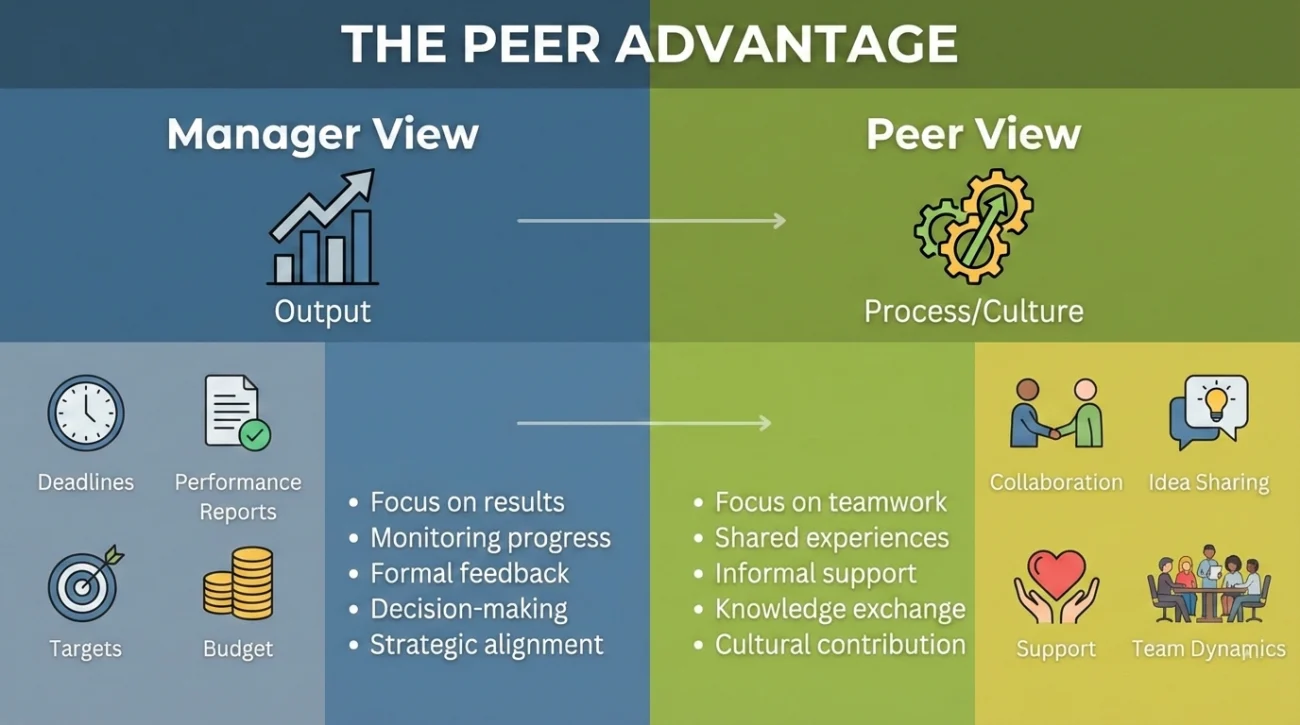
This is exactly the point. Managers see the output (did they hit the quota?). Peers see the process (how did they handle the stress?). In modern, flat organizations, cultural fit is paramount. Recruiters call peers to answer the questions a boss can’t:
- “Are they a nightmare to work with on a tight deadline?”
- “Do they hoard information or share it?”
- “When the project failed, did they blame others or help fix it?”
Your perspective provides the “3D texture” to the candidate’s 2D resume. Understanding this unique value proposition is the first step to writing a killer reference.
The “Reference Interview”: What to Do Before You Write a Word

Don’t just say “Sure” and start typing. To give a great reference, you need to be strategic. Treat this like a mini-project. Schedule a 10-minute call with your colleague and ask them:
- The Narrative Arc: “What is the main story you are telling this company? Are you the ‘Turnaround Expert,’ the ‘Culture Builder,’ or the ‘Technical Wizard’?” (You want your letter to reinforce this theme, not contradict it).
- The Trap Doors: “Is there anything on your resume that might raise a red flag? Any gaps or short tenures?” (You can help smooth these over if you know about them).
- The “Must-Wins”: “What are the top 3 skills this specific job description asks for?” (If the job is about leadership, don’t write 5 paragraphs about their coding skills).
This preparation ensures you aren’t just writing a “nice” letter, but a “strategic” one.
The Anatomy of a Killer Reference: Show, Don’t Tell
The average reference letter is a soup of buzzwords: “Hard worker,” “Team player,” “Nice person.” Recruiters ignore these. They act as white noise. To be effective, you must provide evidence.
When writing a reference for an employee or a colleague, follow the modified “STAR” method (Situation, Task, Action, Result + Impact on Team).
The “Generic” vs. “High-Impact” Comparison
| Generic (Useless) | High-Impact (Hired) |
|---|---|
| “Sarah is a great leader.” | “I watched Sarah take a demoralized team of 5 and turn them into the highest-performing unit in the division within 6 months. She instituted a ‘no-blame’ retrospective policy that changed our entire culture.” |
| “John is good at sales.” | “John didn’t just hit his quota; he redesigned our entire lead-gen process, which increased team revenue by 20%. He then taught that system to the junior reps.” |
| “Mike is reliable.” | “When our server crashed on Black Friday, Mike stayed online for 36 hours straight until it was fixed. He is the person you want in a foxhole.” |
Your goal is to provide the “B-Roll” footage for their career movie. Give the recruiter a specific scene they can visualize.
The Master Scripts: Copy, Paste, and Customize
Whether you are writing a formal letter or replying to an email, these templates strike the perfect balance between professional and enthusiastic.
1. The Formal Written Letter (The “Gold Standard”)
This is a sample reference email for colleague applications where a PDF or formal email body is required. It uses a structure of: The Hook, The Evidence, The “Human” Factor, and The Closer.
Subject: Recommendation for Marcus Chen – Senior Product Manager Position
To the Hiring Team,
[The Hook]
It is my absolute pleasure to recommend Marcus Chen for the Senior Product Manager role at [Company Name]. I served as Marcus’s peer at TechFlow for four years, where we co-led the “Project Alpha” initiative. I have worked with dozens of PMs in my career, and Marcus ranks among the top performers I’ve worked with.
[The Hard Skills Evidence]
I judge my colleagues on their ability to execute amidst chaos. Marcus led our Q3 migration, a project that was historically behind schedule and over budget. He didn’t just manage the timeline; he restructured the agile workflow. He rallied the engineering team, translated complex business requirements into clear technical specs, and not only delivered on time but under budget. His ability to translate “tech-speak” to executives and “business-speak” to engineers is a rare superpower.
[The Soft Skills/Culture Evidence]
Beyond his output, Marcus is simply a good human. In high-pressure environments, he acts as a shock absorber for the team. I recall a specific incident where a client was furious about a bug. Marcus didn’t throw the devs under the bus; he took ownership, calmed the client, and worked with the team to fix it overnight. He raises the morale of every room he enters.
[The Closer]
If I were building a company today, Marcus would be my first hire. He has my highest recommendation. If you have any specific questions, please call me directly.
Sincerely,
Sarah Martinez
Director of Product, TechFlow
(555) 123-4567
2. The LinkedIn Recommendation (The Public Endorsement)
This is shorter, punchier, and designed for public consumption.
“Marcus is the rare Product Manager who can code, sell, and lead. We worked together at TechFlow for 4 years, and I watched him single-handedly salvage our analytics dashboard project. He combines a data-driven mindset with high emotional intelligence. If you need someone to turn ambiguity into a shipped product, Marcus is your guy. Any team would be lucky to have him.”
3. The Quick Email Response (The “Check-In”)
Sometimes a recruiter just emails you asking, “Can you verify you know Marcus?” This is your chance to replying to reference check email requests with a “value-add.”
Subject: Reference for Marcus Chen
Hi Jennifer,
Yes, I can confirm that I worked with Marcus at TechFlow from 2020-2024. We were on the same product team.
While I know you are likely just verifying dates, I feel compelled to add that Marcus was one of the strongest collaborators I’ve ever worked with. His work on our analytics dashboard was transformative for our client retention.
If you need a more detailed call to discuss his qualifications, I am happy to make time. I have a lot of good things to say!
Best,
Sarah
The Phone Call: Surviving the Interview
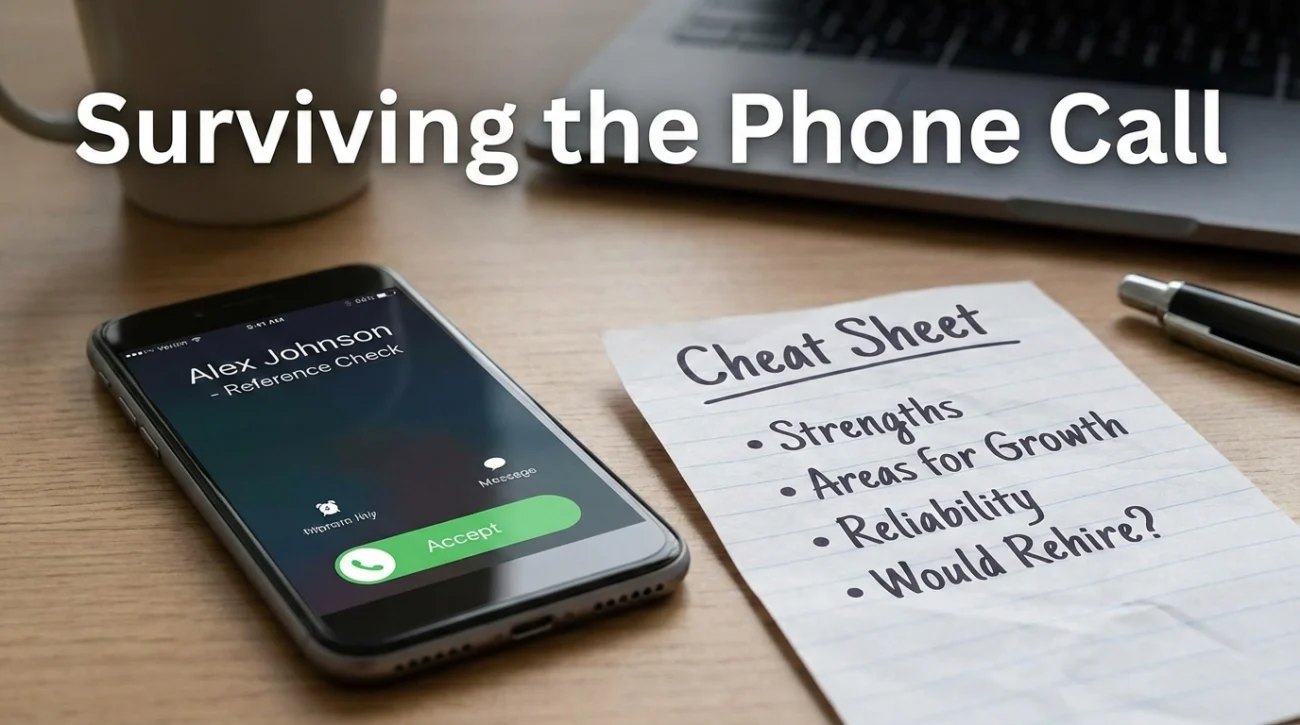
Most serious reference checks happen over the phone. Recruiters do this because they want to hear your tone of voice. They want to hear if you hesitate. This can be nerve-wracking. Here is your cheat sheet for the toughest questions.
The Trap Question 1: “What are his weaknesses?”
The Goal: They want to know if he is unmanageable.
- Don’t say: “He works too hard” (Fake humblebrag) or “He is disorganized” (Career killer).
- Do say (The “Fit” Frame): “Marcus is a high-speed executor. He moves very fast. In environments that are incredibly bureaucratic or slow-moving, he might feel frustrated because he wants to ship. He thrives where he has autonomy to move quickly.” (Frames a potential negative as a positive trait in the right context).
The Trap Question 2: “Why did he leave?”
The Goal: Was he fired?
- Do say: “He had hit the ceiling of what was possible at our company. He mastered his role, and we didn’t have a ‘Head of Product’ slot open for him. Ideally, he needs a bigger stage to play on.” (Frames leaving as ambition).
The Art of the “No”: How to Decline Gracefully
Sometimes, you simply cannot vouch for someone. Maybe they were fired. Maybe they were toxic. Maybe you just don’t know them well enough. Saying “Yes” and giving a bad reference is a betrayal. Saying “No” is an act of integrity.

Scenario A: The “I Don’t Know You Well Enough” Decline
Hi Alex,
Thanks so much for thinking of me! While I’m flattered, I honestly don’t feel I worked closely enough with you on [Project] to provide the kind of detailed, specific reference you deserve for a Director-level role.
Recruiters usually dig pretty deep into daily workflows, and I wouldn’t want to do your candidacy a disservice by being unable to answer those specific questions. I think you would be better served by asking someone like [Name] who saw your daily contributions more directly.
Best of luck with the application!
Scenario B: The “Performance Issue” Decline
This is awkward, but necessary if you fired them or they performed poorly. Be vague but firm.
Hi David,
Thanks for reaching out. Given the circumstances of your departure/our work together, I don’t think I am the right person to provide a reference for you this time.
I believe references should be able to provide an unqualified, enthusiastic endorsement, and I want to be honest that I wouldn’t be able to provide that for this specific role. I hope you understand.
Wishing you the best in your search.
Final Thoughts: Professional Karma
Writing a reference is a chore. It pays nothing. It takes time. But it is one of the highest forms of “Professional Karma.”
When you take the time to craft a beautiful, specific, and supportive letter for a deserving colleague, you aren’t just helping them get a job. You are building a loyal ally for life. The Junior Analyst you recommend today might be the VP you need to hire you in 10 years. Or they might be the person who introduces you to your biggest client.
So, if they deserve it, don’t just write it. Write it well. Be the champion you would want in your corner.
For more insights on career management and networking integrity, explore our full library at ResignSmartly.
⚠️ Legal Disclaimer: ResignSmartly provides general informational guidance about resignation, workplace communication, notice periods, handovers, and career transitions. Content does not constitute individualized legal advice. Employment laws, contracts, workplace policies, and individual circumstances vary, so review the requirements that apply to your situation and consult an appropriate qualified professional when needed.