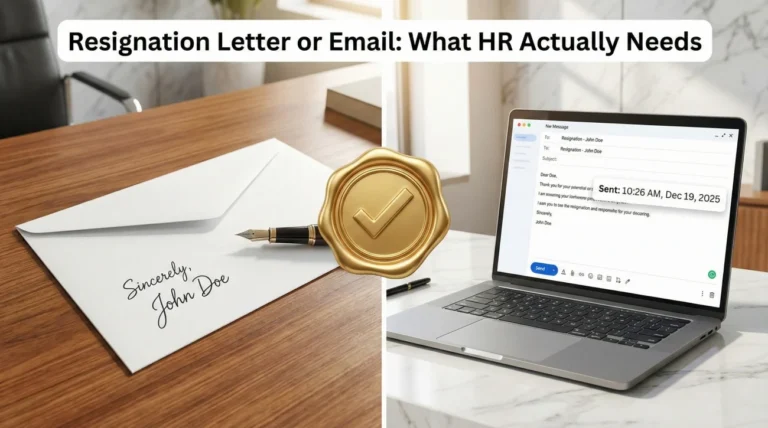

- Core idea: A sincere resignation letter is a tightrope, Real gratitude with professional boundaries because the letter becomes a permanent record.
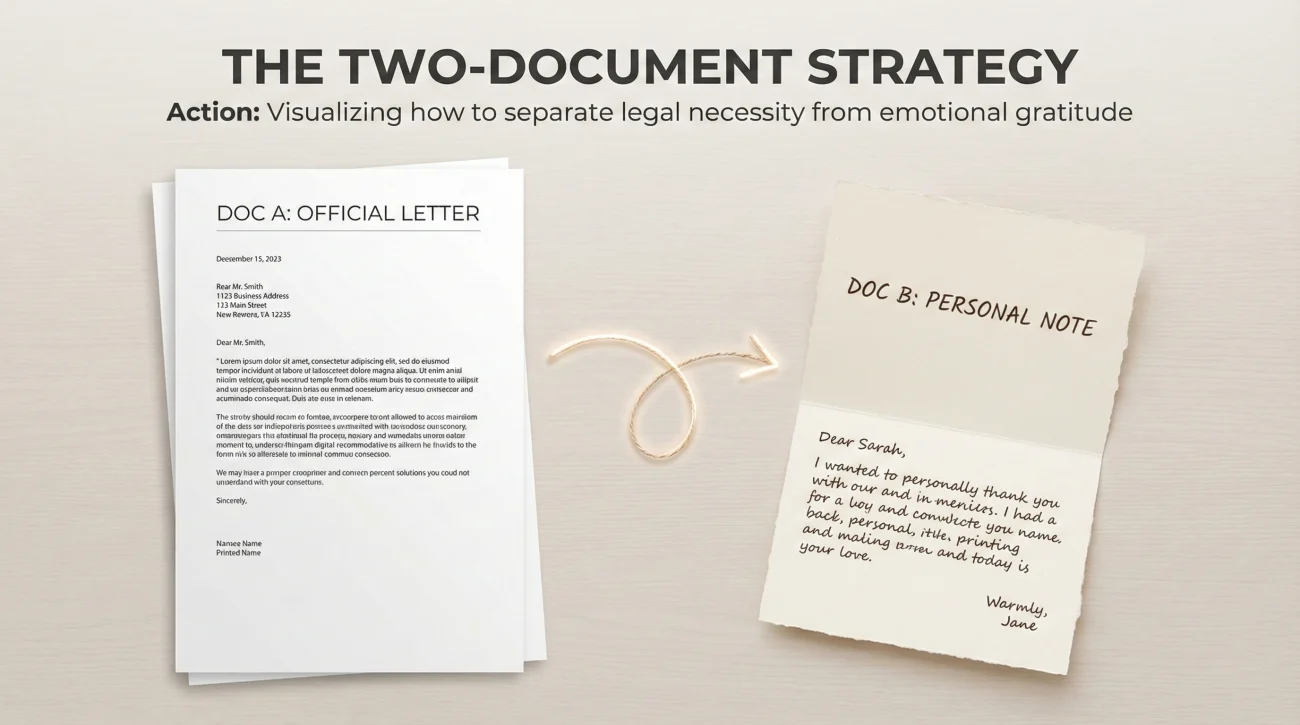
- Strategy: Use a two-document approach, Official letter for HR plus a separate personal note for your boss when you want to say more.
- Gratitude rule: Specificity is currency, Name one skill, one crisis moment, or one risk they took on you instead of generic praise.
- Risk control: Avoid the “too much information” trap, No guilt-apologies, no corporate blame, no oversharing, and keep your reason framed as growth.
- Delivery: The meeting matters more than the letter, Tell them face to face first, then hand over the document as the clean receipt and handover promise.
The Paradox of the “Good” Resignation: Leaving Loyalty Behind
Resigning from a toxic job is easy. You type the letter with a sense of liberation, hand it over, and never look back. But resigning from a job where you were valued, mentored, and championed? That is a different kind of heartbreak. It triggers a complex mix of guilt, loyalty, and fear of disappointing the very person who helped you grow. In these moments, a standard, cold corporate notice feels insufficient, even insulting.
However, this emotional turmoil creates a dangerous trap. Professionals often over-correct, turning their resignation letter into a gushing, four-page love letter. They blur the lines between a legal document and a personal diary entry. This is a mistake. Your resignation letter is still an official record. It will live in a file long after the emotions have faded.
The art of the sincere resignation letter lies in walking a tightrope: expressing authentic, specific gratitude while maintaining the rigid boundaries of professional documentation. This guide is for those who are leaving on a high note. We will show you how to honor a great boss without compromising your professional stature, ensuring your legacy is defined by class, gratitude, and impeccable judgment.
The Strategy of Sincerity: Why “Nice” Matters
In the transactional world of business, is there really room for feelings? Absolutely. But sincerity is not just about being nice; it is a retention strategy for your professional network. When you write a heartfelt resignation letter, you are effectively converting your boss from a “manager” into a lifelong “advocate.”
Specificity Is the Currency of Gratitude
The difference between a generic “nice” letter and a truly sincere one is specificity. Generic praise (“You are a great leader”) is forgettable. Specific praise (“You taught me how to negotiate contracts”) is unforgettable. It proves you were paying attention. It validates their investment in you.
The “Two-Document” Strategy
Here is the secret that executives use: they often separate the legal resignation from the emotional resignation.
Document A (The Official Letter): This goes to HR. It captures the dates, the resignation statement, and a paragraph of polished, professional gratitude.
Document B (The Personal Note): This is a handwritten card or a private email sent only to the boss. This is where you pour your heart out.
In this guide, we will focus on crafting Document A – the official sincere resignation letter that strikes the perfect balance.
The Core Sincere Resignation Template
This template is designed for the manager who was a true mentor. It is warm enough to be felt, but professional enough to be filed. It uses the letter format because a mentor deserves the respect of a formal document.
[Your Full Name]
[Your Address]
[City, State, Zip Code]
[Date]
[Manager’s Name]
[Title]
[Company Name]
Dear [Manager’s Name],
It is with mixed emotions that I write to formally resign from my position as [Your Job Title] at [Company Name]. My final day will be [Specific Date].
This was not an easy decision. Leaving a team that has been so supportive, and a role that has been so fulfilling, is incredibly difficult. However, I have decided to accept a new opportunity that will allow me to apply the skills you have helped me develop in a new context.
I want to express my deepest gratitude for your mentorship over the past [Number] years. Specifically, your guidance during the [Specific Project, e.g., merger integration] taught me lessons about leadership and resilience that I will carry for the rest of my career. You saw potential in me before I saw it in myself, and for that, I will always be grateful.
I am fully committed to ensuring that my departure is as smooth as possible. I will work diligently to hand over my responsibilities and train my successor to the high standards this team deserves.
I hope we can stay in touch as I embark on this next chapter. Thank you for everything.
Sincerely,
[Your Signature]
[Your Printed Name]
Why This Works
- ✅ “Mixed Emotions”: This phrase signals humanity. It tells the reader that this isn’t just a transaction for you.
- ✅ The “Pivot”: Notice how it frames the departure: “apply the skills you helped me develop.” This honors the boss. It says, “I am leaving because you made me too good for this role,” which is the ultimate compliment to a mentor.
- ✅ Specific Mention: Citing a specific project anchors the gratitude in reality.
Tailored Templates for Unique Bonds
Not all “good” bosses are the same. Some are defenders who fought corporate battles for you; others are like family members. Here are tailored templates for those unique dynamics.
The “Advocate” (Who Fought for You)
This is for the boss who got you that raise, defended you in meetings, or protected you from corporate politics. A resignation letter to a good boss like this needs to acknowledge their political capital formally.
[Your Full Name]
[Your Phone] | [Your Email]
[Date]
[Manager’s Name]
[Title]
[Company Name]
Dear [Manager’s Name],
Please accept this letter as my formal resignation as [Job Title], effective [Date].
I want to thank you for being such a fierce advocate for me during my time here. I know that you often went to bat for me – securing my promotion last year and ensuring I had the resources to succeed on the [Project Name]. Having a manager who genuinely believed in my value has meant the world to me.
I will ensure a comprehensive handover of all my projects before my departure to honor the investment you have made in my career.
Thank you for being in my corner.
Best regards,
[Your Signature]
[Your Printed Name]
The “First Boss” (The Teacher)
Your first boss sets the trajectory for your entire career. This kind resignation letter acknowledges that foundational impact.
[Your Full Name]
[Your Contact Info]
[Date]
[Manager’s Name]
[Company Name]
Dear [Manager’s Name],
I am writing to resign from my position as [Job Title], effective [Date].
As my first manager, you taught me what it means to be a professional. From teaching me how to navigate client expectations to showing me the ropes of [Specific Industry Skill], the foundation you helped me build is something I will use every day in my career. I could not have asked for a better start.
I will do everything I can to support the team during this transition.
With gratitude,
[Your Signature]
[Your Printed Name]
The “Family” Boss (Small Business)
Leaving a small business or family-owned company often feels like a betrayal. This template emphasizes that the relationship transcends the employment contract. A formal letter is best here to show deep respect.
[Your Full Name]
[Your Address]
[Date]
[Owner’s Name]
[Company Name]
Dear [Owner’s Name],
It is with a heavy heart that I submit my resignation as [Job Title], effective [Date].
Working here has felt less like a job and more like being part of a family. The trust you placed in me and the kindness you showed me when [mention a personal kindness, e.g., “my daughter was sick”] are things I will never forget. You have created a special culture here, and I am proud to have been a part of it.
I am committed to leaving you in a strong position. I will help recruit and train my replacement to ensure they fit this unique environment.
Thank you for everything.
Sincerely,
[Your Signature]
[Your Printed Name]
The Art of Specificity: How to Draft the Gratitude Paragraph

The hardest part of writing a nice resignation letter is filling in the blanks about gratitude. “Thanks for everything” is lazy. To be truly sincere, you need to dig deeper. Ask yourself these three questions to find the right words:
1. What can I do now that I couldn’t do before?
Did they teach you how to read a P&L statement? Did they show you how to code in Python? Mention the hard skill.
Example: “Thank you for patiently teaching me the nuances of contract negotiation. I now walk into client meetings with a confidence I didn’t have two years ago.”
2. How did they treat me during a crisis?
Did you mess up a big project? Did you have a family emergency? How they reacted defines their leadership.
Example: “I will never forget your support when I made that error on the Q3 report. Instead of blaming me, you helped me fix it and turn it into a learning moment.”
3. What risk did they take on me?
Did they hire you when you were underqualified? Did they promote you early?
Example: “Thank you for taking a chance on me when I was pivoting from marketing to sales. Your belief in my potential drove me to work harder.”

When you resign from a good boss, they will likely fight to keep you. They might offer more money, a new title, or flexible hours. This is the ultimate test of your sincere resignation letter.
If you are truly leaving for growth (and not just money), you must stand firm without hurting their feelings. The key is to reiterate that the decision is about trajectory, not conditions.
Script for the follow-up conversation: “I am incredibly flattered by this counter-offer. It validates everything I love about working here. However, my decision to leave is based on a need to explore a completely different industry/role, which is something I can’t do here. I hope you understand.”
The “Too Much Information” Trap
Sincerity has a limit. Even when writing a heartfelt resignation letter, you must avoid crossing professional lines that could make things awkward or legally complicated.
| The Impulse (Don’t Do This) | The Professional Approach (Do This) |
|---|---|
| “I’m so sorry for leaving you! I feel terrible!” | “This was a difficult decision.” (Don’t apologize for growing). |
| “I’m leaving because corporate is ruining your team.” | “I am leaving to pursue a new growth opportunity.” (Don’t create a wedge). |
| “You are the only competent person here.” | “I have appreciated your exceptional leadership.” (Don’t insult others). |
Don’t Apologize for Your Ambition
A common mistake in sincere letters is excessive apologizing. “I’m so sorry to do this to you.” Stop. You are an employee selling labor, not a family member abandoning a child. Resigning is a normal business function. Apologizing suggests you are doing something wrong, which creates an unhealthy dynamic. Be grateful, not guilty.
The Delivery: Why the Meeting Matters More Than the Letter

If you are writing a sincere letter, you owe your manager a sincere conversation. Do not just email this letter. The letter is the receipt; the meeting is the transaction.
Schedule a private face-to-face (or video) meeting. Tell them verbally first. “I have some tough news. I’ve accepted another offer. I really value what we’ve built here, but this is the right next step for me.”
Hand them the letter after you have broken the news. This allows the document to serve its purpose – confirming the details – while you manage the relationship in real-time. For more scripts on how to handle this conversation, refer to our comprehensive guide.
❓ FAQ
💭 Can I be too emotional in a resignation letter?
Yes. A resignation letter goes into a permanent file that HR, legal, and future hiring managers might see. Avoid phrases like “I love you guys” or “I’m heartbroken.” Stick to professional words like “grateful,” “valued,” and “difficult decision.” Save the tears for the farewell drinks.
⏰ Should I tell my boss where I’m going?
If you have a high-trust relationship, you can tell them verbally during the meeting. However, keep it out of the written resignation letter. Once it is written down, it becomes data that can be used for non-compete enforcement. Keep the letter vague (“a new opportunity”).
💼 How do I ask for a reference without ruining the moment?
The best way to ask for a reference is to earn it during your notice period. In your letter, say “I hope we can stay in touch.” Then, a week before you leave, after you have worked hard to hand everything over, ask them verbally. They will almost certainly say yes.
📧 Is a handwritten note better than a typed letter?
For the official resignation, always use a typed letter (or PDF) for clarity and legal reasons. However, a supplemental handwritten card thanking them personally is a classy touch that leaves a lasting positive impression.
Final Thoughts: Your Legacy Is How You Leave
Leaving a job you love is one of the hardest things you will do in your career. But it is also a graduation. A sincere resignation letter is your commencement speech. It honors where you came from while signaling that you are ready for what is next.
By balancing emotion with professionalism, and specificity with boundaries, you ensure that your relationship with your manager survives the end of your employment contract. You are not burning a bridge; you are building a monument to the work you did together.
⚠️ Legal Disclaimer: ResignSmartly provides general informational guidance about resignation, workplace communication, notice periods, handovers, and career transitions. Content does not constitute individualized legal advice. Employment laws, contracts, workplace policies, and individual circumstances vary, so review the requirements that apply to your situation and consult an appropriate qualified professional when needed.