
- Executive resignations are market events: They affect investors, morale, succession clauses, and your legacy.
- Rules change at the top: Fiduciary duty, contract terms, and legal exposure make “two weeks” unrealistic.
- Notice periods are strategic: Garden leave, severance definitions, and non-compete compliance drive the timeline.
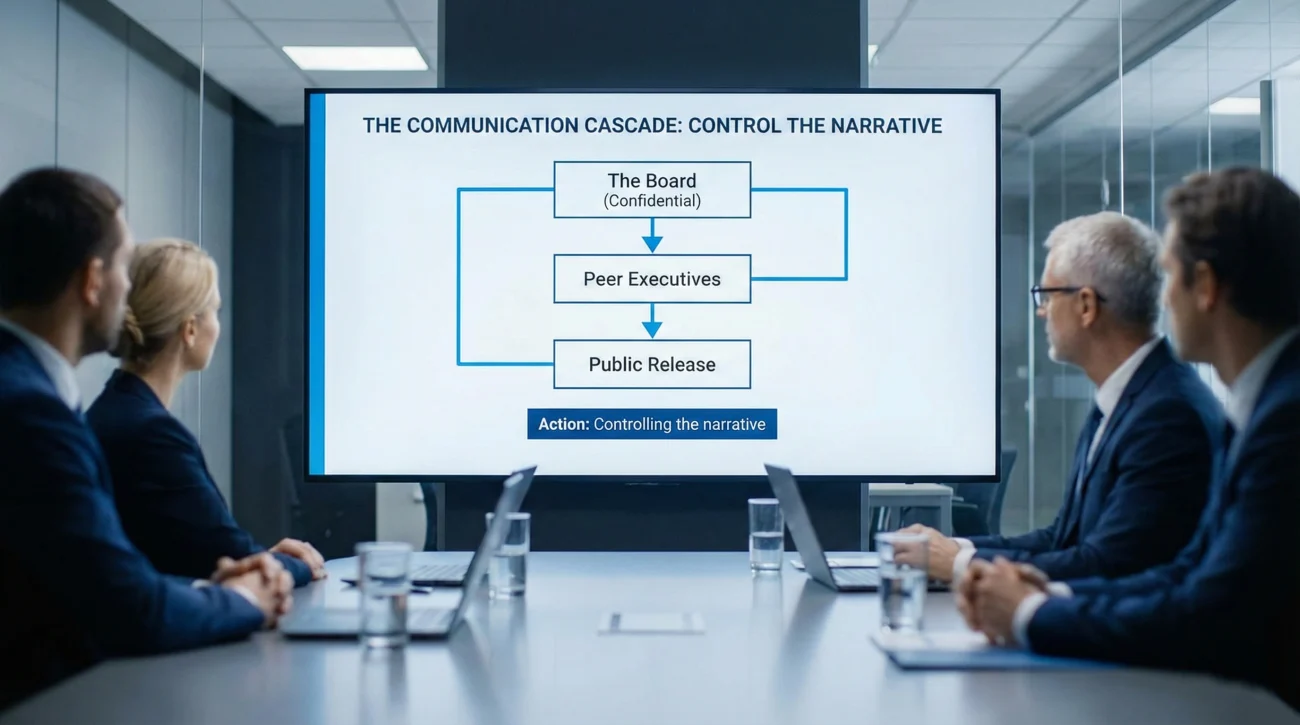
- Control the narrative with a cascade: Board first, then peer execs, then direct reports, then company-wide or public.
- Exit like governance, not goodbye: Send formal notice after the private pre-meeting, build a transition dossier, and keep messaging consistent.
The High Stakes of Stepping Down
Drafting an executive resignation email is one of the most consequential acts of leadership you will perform. Unlike a standard employee departure, which is primarily an HR event, a C-suite or Director-level exit is a market event. It impacts stock prices, shakes employee morale, triggers succession clauses, and tests the resilience of the organizational culture you helped build.
For senior leaders, “two weeks’ notice” is a myth. Executive departures are strategic operations that often require months of confidential planning, board alignment, and carefully choreographed communication. The risk of a leak or a poorly worded announcement can cause reputational damage that outlasts your tenure. Whether you are a CEO negotiating a quiet exit or a Director moving to a competitor, your resignation is not just a goodbye – it is a final act of governance.
This comprehensive guide provides the strategic framework for high-level transitions. We will dissect the protocol for notifying the Board, the nuances of the C-level resignation email, and how to craft a narrative that protects your legacy while ensuring business continuity.
Why Executive Resignations Are Fundamentally Different
If you treat your resignation like a standard employee exit, you risk legal breach and professional suicide. Here is why the rules change at the top.
1. Fiduciary Duty & Legal Exposure
Executives and Board members have a fiduciary duty to the organization. Resigning abruptly without a transition plan can be interpreted as a breach of this duty, especially if it causes material harm to the company. Your leadership resignation email is a legal document that may be scrutinized by investors or regulators. Unlike at-will employees, your departure is often governed by complex contractual obligations that supersede standard labor laws.
2. The “Garden Leave” & Notice Periods
Forget two weeks. Executive contracts typically mandate notice periods of 3 to 6 months. Often, you will be placed on “Garden Leave” – paid to stay home and not work for a competitor – while the company manages the transition. This period is crucial for:
Non-Compete Compliance: Ensuring you don’t inadvertently violate restrictive covenants.
Severance Negotiation: Determining the terms of your exit package based on “Good Reason” vs. “Voluntary Resignation” clauses.
🗝️ Key Strategy: Check your employment agreement carefully. The distinction between resigning for “Good Reason” (e.g., change in control, reduction in duties) and a simple voluntary resignation can mean a difference of millions in severance.
3. The Communication Cascade
You do not just “tell your boss.” You must execute a communication cascade to control the narrative:
- Phase 1: The Board / Chairman (Private & Confidential)
- Phase 2: Peer Executives (Confidential Briefing)
- Phase 3: Direct Reports (Personal Notification)
- Phase 4: Company-Wide / Public (Press Release & Town Hall)
Protocol: How to Resign to the Board
The Board of Directors should never read about your resignation in an email first. Follow this strict protocol to maintain your professional standing.
- 🕴️ The Pre-Meeting: Schedule a private conversation with the Chairman of the Board or the CEO (if you report to them). This is where the real resignation happens. It allows for a frank discussion about timing and messaging without a paper trail initially.
- 📄 The Formal Notice: Immediately after the handshake agreement, send the board resignation email to formalize the timeline. This starts the legal clock and serves as the official record.
- 🤐 The Silence Period: Agree on a strict embargo period where no one else is told until a succession plan is ready. Leaks create chaos and can destabilize stock prices for public companies.
Master Templates: Leadership Departure Scenarios
These templates are crafted for gravity and grace. Select the one that matches your specific role and circumstances. Remember, at this level, less is often more.

Scenario 1: The CEO/President Resignation (To the Board)
This ceo resignation email is the most formal. It assumes you are leaving on good terms and will assist with the succession. It sets the tone for the entire transition.
Subject: Formal Resignation – [Your Name] – Chief Executive Officer
Dear Members of the Board,
Please accept this letter as formal notification of my resignation as Chief Executive Officer of [Company Name], effective [Date].
Leading this organization for the past [Number] years has been the privilege of my career. Together, we have [mention 1-2 major strategic wins, e.g., expanded into new markets/navigated the IPO]. I believe the company is now standing on a solid foundation, making this the right moment for a leadership transition.
I am fully committed to ensuring a seamless handover. Over the next [Notice Period, e.g., 90 days], my priority will be to assist the Board in the search for my successor and to execute the transition plan we have discussed. I will focus on [Key Priority 1] and [Key Priority 2] to ensure momentum is maintained.
Thank you for your trust, partnership, and the opportunity to serve.
Respectfully,
[Your Name]
CEO, [Company Name]
Scenario 2: The Director/VP Resignation (To the CEO)
Use this director resignation email when resigning to your direct executive leader. It balances gratitude with a clear timeline and emphasizes continuity.
Subject: Resignation – [Your Name] – [Title]
Dear [CEO Name],
I am writing to formally resign from my position as [VP/Director] of [Department], effective [Date].
This was a difficult decision, but I have decided to [pursue a new opportunity/focus on personal priorities] that will require my full attention. I am incredibly proud of what the [Department] team has achieved under my tenure, specifically [mention a key metric or project].
I intend to use my notice period to finalize the [Strategic Plan/Budget] and ensure that [Successor Name or Interim Lead] is fully briefed on all critical initiatives. My goal is to leave the department in a position of strength.
I am grateful for your mentorship and the latitude you gave me to lead.
Sincerely,
[Your Name]
Scenario 3: Resigning FROM a Board Seat
Board members often resign due to conflicts of interest or time constraints. This board resignation email should be brief and compliant with bylaws.
Subject: Resignation from Board of Directors – [Your Name]
Dear Chairman [Name] and the Board of Directors,
Please accept my resignation from the Board of Directors of [Company Name], effective [immediately/Date].
Due to [increasing professional commitments/a potential conflict of interest], I feel I can no longer dedicate the necessary time to fulfill my fiduciary duties to the standard this organization deserves.
It has been an honor to serve alongside you. I remain a strong supporter of [Company Name]’s mission and am confident in the company’s future direction.
Best regards,
[Your Name]
Scenario 4: The Team Announcement (Internal)
After the official news breaks, you need a personal note to your staff. This manager resignation email is about them, not you. It’s about reassurance.
Subject: A Personal Update
Team,
By now, you may have seen the official announcement regarding my departure. I wanted to reach out to you directly to share my decision to step down as [Title], effective [Date].
Leading this team has been the highlight of my time at [Company]. The resilience and talent you show every day is what built [Project/Success]. While I am moving on to a new chapter, I do so knowing that this department is in the strongest possible hands – yours.
I will be working closely with [Interim Leader] over the coming weeks to ensure you are supported during this change. Please know that I am your biggest fan and will be cheering for your continued success.
Thank you for everything.
[Your Name]
Scenario 5: The Public/Client Statement
For key stakeholders or a press release draft, keep the message focused on continuity and confidence. This manages external perception.
Subject: Leadership Transition at [Company Name]
Dear [Client/Partner Name],
I am writing to share that after [Number] wonderful years, I will be transitioning out of my role as [Title] at [Company Name] on [Date].
While I will miss our collaboration, I leave with total confidence in the future of the firm. [Successor Name], whom many of you know, will be stepping in to ensure our partnership continues without interruption. I have briefed [Successor Name] on our strategic goals and [He/She/They] is excited to continue our work.
Thank you for your friendship and trust over the years.
Warmly,
[Your Name]
The Exit Strategy: Protecting Your Legacy
Your legacy is defined by how you leave, not just what you built. A chaotic exit can overshadow years of success. Use your notice period to cement your reputation.
1. The Transition Dossier
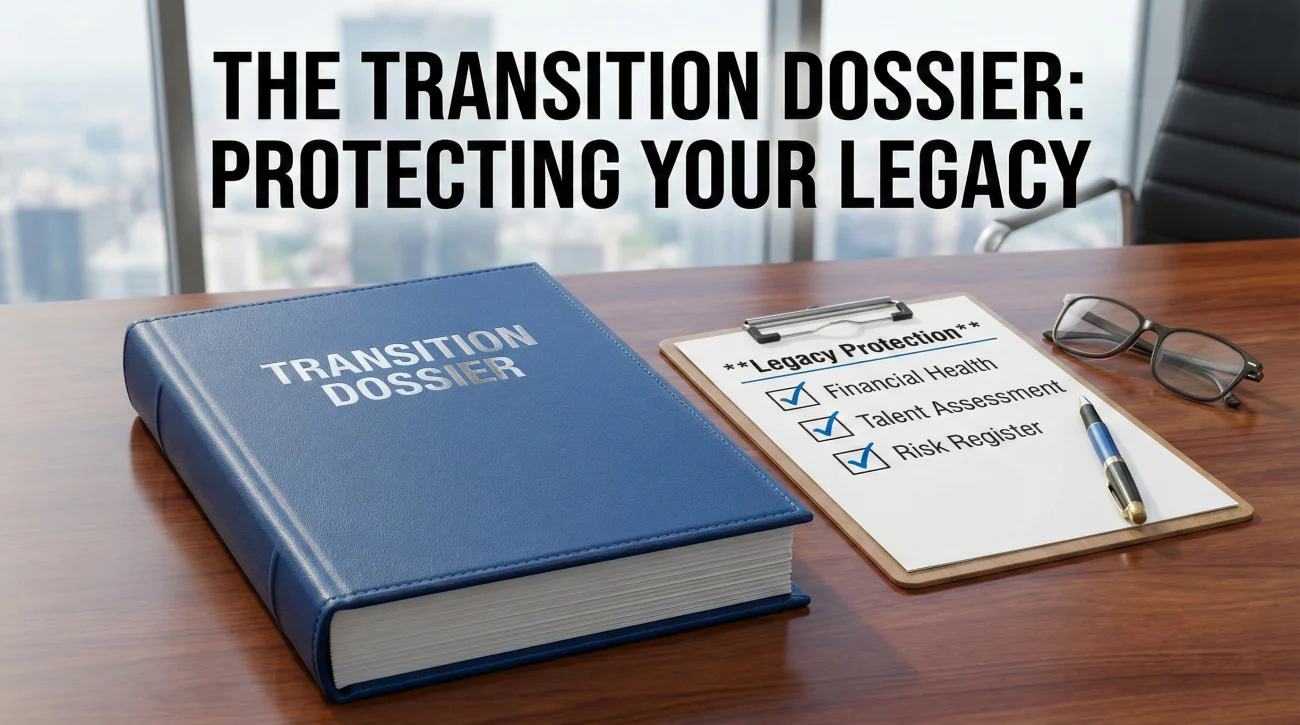
Do not just hand over keys. Create a strategic “State of the Union” document for your successor. This confidential document should include:
– Financial Health: Status of all major P&L items and budget forecasts.
– Talent Assessment: Honest assessment of talent (Who are the flight risks? Who are the stars? Who needs development?).
– Risk Register: Outstanding legal, compliance, or operational risks that need monitoring.
– Relationship Map: Key contacts among stakeholders and notes on managing those relationships.
2. Controlling the Narrative
Coordinate strictly with the PR/Comms team. Ensure that your internal email, the press release, and your LinkedIn update all tell the exact same story. Any discrepancy fuels rumor mills. Prepare Q&A points for managers to answer employee questions consistently.
3. The Alumni Mindset
Join the “Corporate Alumni” network immediately. Treat your former company as a client. Executives often return as Board members or advisors later; never burn the bridge on the way out. Maintaining a positive relationship with your successor is also key – they are the custodian of your legacy.
❓ FAQ: Executive Transition Nuances
📅 Does “Effective Immediately” ruin my reputation?
🗣️ Should I tell my team before the official announcement?
📝 What about my unvested stock options?
🤝 Do I need a lawyer?
🤐 How do I answer “Why are you leaving?” in interviews?
Final Thoughts
An executive resignation is a high-wire act of diplomacy. It requires you to balance your personal career ambitions with your fiduciary duty to the organization. By planning your exit with the same rigor you applied to your tenure, you ensure that your departure is seen not as a desertion, but as a graduation.
Lead strong until the very last day. Your team is watching.
For more specific templates on leaving jobs, check our guide on resignation email examples or read our detailed breakdown on how to write a resignation email. For other career transition advice, visit the homepage.
⚠️ Legal Disclaimer: ResignSmartly provides general informational guidance about resignation, workplace communication, notice periods, handovers, and career transitions. Content does not constitute individualized legal advice. Employment laws, contracts, workplace policies, and individual circumstances vary, so review the requirements that apply to your situation and consult an appropriate qualified professional when needed.