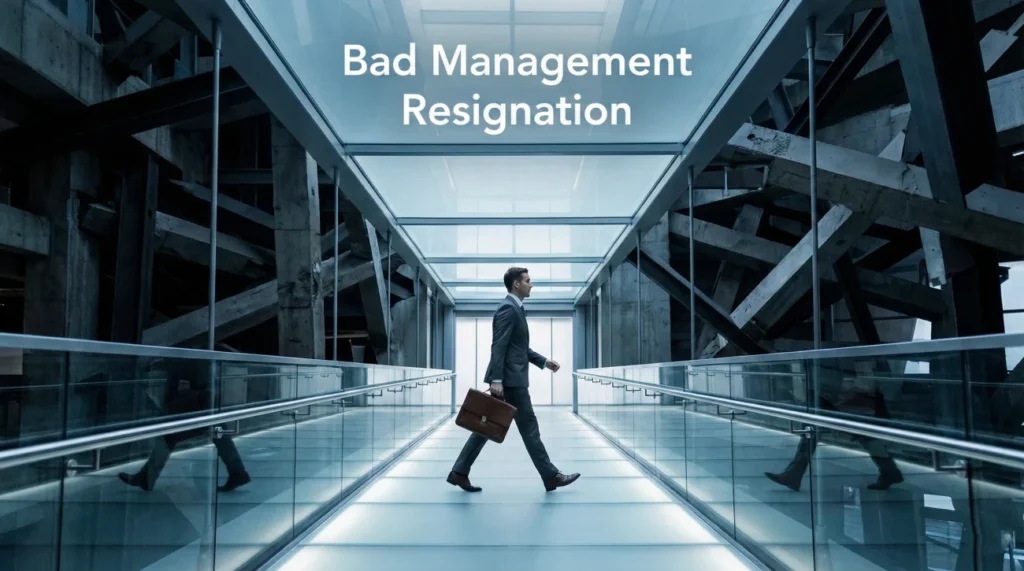
- Risk: Leaving because of bad management can wreck references if your letter reads like a complaint.
- Language: Use neutral “fit” phrasing like different leadership styles, different approaches, or working style alignment.
- Avoid: Do not write toxic, abusive, incompetent, micromanaging, or specific incidents unless you are filing a formal complaint through proper channels.
- Structure: Keep it forward-looking, state your last day, and promise a clean transition with documentation and handover.
- Exit strategy: Keep verbal feedback diplomatic too, and treat the letter as a permanent record that should never sound petty.
When Leadership Becomes the Problem
A resignation letter due to bad management requires extreme diplomatic skill because you’re leaving due to your boss while potentially needing that same person for references. You might be escaping micromanagement, incompetence, favoritism, or leadership styles that make work unbearable – yet your resignation letter can’t say any of this directly without creating written documentation that damages your professional reputation and closes doors you might need later.
The challenge lies in communicating enough to validate your decision without creating permanent records of complaints that follow you professionally. Management-driven resignations demand coded language that colleagues understand while maintaining plausible deniability about criticizing leadership.
Master Diplomatic Language for Management Conflicts
Your resignation letter bad boss should use neutral professional language that acknowledges fit issues without explicit criticism. Understanding this diplomatic vocabulary helps you communicate honestly while protecting your reputation.

The Professional Code Language
Certain phrases communicate management problems to those who understand workplace dynamics while maintaining professional veneer that protects you legally and reputationally. “Different management styles” signals style conflicts. “Seeking environments that better align with my working preferences” suggests current environment doesn’t align. “Pursuing opportunities with different organizational cultures” implies current culture has problems.
These coded phrases allow knowledgeable readers – HR professionals, future employers, colleagues – to read between lines and understand management drove your resignation while giving you cover that you simply sought better fit rather than fled bad leadership. This deniability matters when former managers read your resignation or when reference calls happen.
Language That Backfires
Never use terms like “hostile,” “toxic,” “abusive,” “incompetent,” “micromanaging,” or “unethical” in resignation letters unless you’re filing concurrent formal complaints through proper channels with legal representation. These words create documentation that employer attorneys use against you, damage your professional image as someone who burns bridges, and often accomplish nothing except momentary catharsis that costs you professionally for years.
Similarly, avoid passive-aggressive phrasing like “I hope future management will be more competent” or “Perhaps my successor will receive the support I lacked.” These barely-veiled criticisms accomplish same damage as direct complaints while making you appear petty rather than professional. If you can’t say something diplomatically, say nothing at all.
Frame as Forward-Looking, Not Backward-Criticizing
Instead of “I’m leaving because management is terrible,” frame as “I’m pursuing opportunities that better align with my professional goals and preferred working styles.” Same underlying message – current management doesn’t work for you – but phrased as your proactive career management rather than reactive flight from bad leadership.
This positive framing serves multiple purposes: maintains professional tone, positions you as strategic career manager rather than complainer, provides face-saving narrative that bad managers might accept rather than fight, and creates resignation documentation that doesn’t haunt you when future employers conduct background checks.
“Different Leadership Styles” as Universal Exit Phrase
The phrase “different leadership styles” or “different management approaches” serves as Swiss Army knife of resignation letter management style communications – it works for almost any management problem while maintaining diplomatic neutrality.

Why This Phrase Works
Leadership style differences covers virtually any management problem without requiring specifics: micromanagement versus autonomy preference, directive versus collaborative approaches, formal versus casual communication, strategic versus tactical focus, people-oriented versus results-oriented leadership. Whatever your actual complaint about management, “style differences” encompasses it without detailing specifics that create problems.
Moreover, this phrasing treats management conflict as neutral compatibility issue rather than judgment that someone’s wrong. It’s not “my manager is bad” – it’s “we have different styles that don’t align well.” This diplomatic framing allows both parties to save face while honestly acknowledging incompatibility exists.
How to Use Style Language
Effective implementation: “I’ve realized that my preferred working style and approach to [projects/collaboration/communication] differ significantly from the management approach in this role. I’m pursuing opportunities where leadership and working styles align more naturally with how I operate most effectively.”
This phrasing accomplishes several things: acknowledges you’ve identified misalignment (not just complaining), focuses on your preferences rather than criticizing manager’s approach, frames departure as seeking better fit rather than fleeing problems, and maintains professional tone throughout. Anyone reading this understands management drove your resignation while you’ve maintained plausible deniability about criticizing leadership.
Alternative Neutral Phrases
If “style differences” feels overused or you want variety: “different approaches to workplace collaboration,” “varied perspectives on team management,” “distinct organizational philosophies,” or “different communication preferences.” All convey same underlying message – management doesn’t work for you – while maintaining diplomatic professional language that protects your interests.
Diplomatically Neutral Templates
These templates communicate management-driven departures using coded professional language that maintains bridges. For broader guidance, see our resignation letter with reason guide.
Professional Mismatch Template
Jennifer Martinez
456 Oak Street
Portland, OR 97204
March 15, 2024
David Chen
Human Resources Director
Pacific Northwest Solutions
Dear David,
I am writing to resign from my position as Marketing Coordinator, effective March 29, 2024.
After careful consideration, I’ve determined that my working style and professional approach would be better suited to environments with different organizational structures and management approaches. I’m pursuing opportunities that align more closely with how I operate most effectively in professional settings.
I appreciate the experience gained during my time at Pacific Northwest Solutions and wish the organization continued success.
I will work with my team during my remaining time to ensure appropriate transition of my responsibilities.
Sincerely,
Jennifer Martinez
This diplomatic resignation letter bad management uses “working style” and “management approaches” to signal management problems without explicit criticism. The phrase “better suited to environments with different organizational structures” diplomatically suggests current structure doesn’t work without detailing why. The brevity prevents oversharing while hitting necessary professional notes.
Leadership Style Template
Michael Thompson
892 Pine Avenue
Seattle, WA 98101
April 8, 2024
Sarah Williams
Department Manager
Northwest Technology Group
Dear Sarah,
I am submitting my resignation from my position as Systems Engineer, effective April 22, 2024.
I’ve come to recognize that my preferred approach to project management and team collaboration differs from the leadership style in my current role. I’m seeking opportunities where these professional preferences align more naturally with organizational approaches, which I believe will benefit both myself and the organizations I work with.
I’ve valued the technical challenges I’ve encountered at Northwest Technology and appreciate the opportunities provided during my tenure.
I will ensure comprehensive documentation and knowledge transfer during my notice period.
Thank you for your understanding.
Sincerely,
Michael Thompson
This template directly addresses “leadership style” differences without criticizing specific behaviors. The phrase “differs from the leadership style in my current role” describes his manager’s approach neutrally – not “bad” or “wrong,” just different from his preferences. The suggestion that better alignment benefits both parties maintains diplomatic tone while honestly acknowledging incompatibility.
What Never Goes in Writing About Bad Bosses
Understanding what to exclude from resignation letters protects you from documentation that haunts your career long after you’ve escaped bad management.
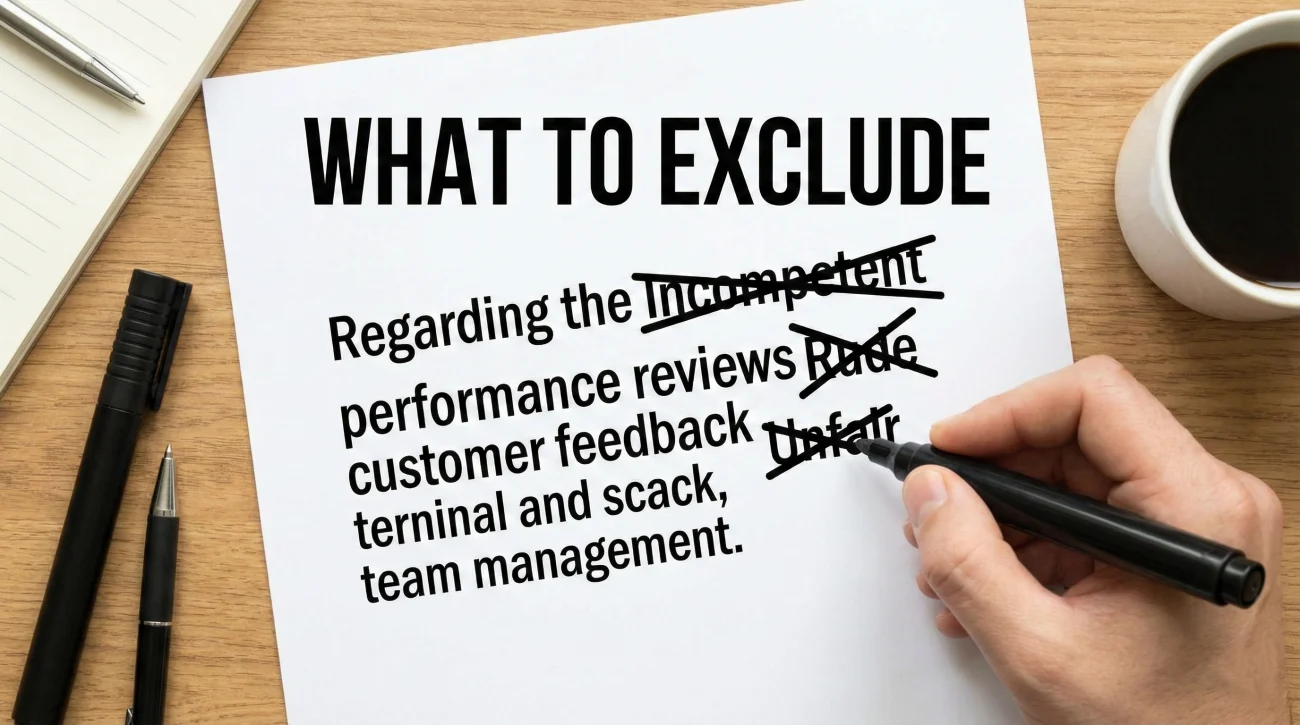
Skip Specific Management Failures
Don’t detail specific incidents: “After you publicly berated me…” or “Your consistent failure to provide direction…” These specific complaints create documentation that makes you appear difficult and accomplishes nothing except giving your bad manager ammunition.
If incidents were serious enough – harassment, discrimination, ethics violations – document them through formal HR complaints or legal channels with attorney guidance, not through resignation letters.
Avoid Criticizing Manager’s Competence
Never question your manager’s competence, intelligence, ethics, or professionalism: “Your inability to manage…” or “Your lack of knowledge…” These personal attacks serve no legitimate purpose and create permanent documentation of your unprofessionalism regardless of whether criticisms are accurate.
Remember that resignation letters become part of your employment record. Future employers conducting background checks might see these documents. You want potential employers reading professional departure notices, not attack letters about former managers.
❓ FAQ
🤐 Should I tell my boss the real reason I’m leaving?
In verbal exit conversations, you might diplomatically reference “different working styles” or “seeking better management alignment,” but detailed criticism rarely benefits you. Even verbal feedback gets documented in exit interview notes. If your boss asks directly, brief diplomatic response works: “I’ve realized we have different approaches to projects and communication that make this role less ideal fit for me.” Don’t provide detailed laundry list of management failures – it accomplishes nothing except confirming boss’s negative impressions and potentially damaging references.
💼 Will my bad boss give me a good reference?
Depends on relationship and how you handle departure. Diplomatic resignation letters that avoid direct criticism improve chances of neutral or positive references. Bad managers who feel attacked often retaliate through negative references, while those given face-saving departure narratives might provide adequate references even if they’re glad you’re gone. Consider using HR as reference source or relying on other colleagues rather than direct manager. Some companies have policies limiting references to employment verification only, which protects you from manager’s personal opinions.
📝 Should I file formal complaint about management before resigning?
Only if you’re documenting illegal behavior – discrimination, harassment, ethics violations – and have attorney guidance. Formal complaints about “bad management” style differences rarely accomplish anything except putting target on your back. However, if manager’s behavior violates law or company policy, formal complaints before resignation establish patterns that protect both you and potentially others. Consult employment attorney about whether your circumstances warrant formal complaints versus quiet departure that preserves your professional reputation and references.
🎯 Can I discuss bad management in exit interviews?
Use caution – exit interview feedback gets documented and potentially shared with your manager. If HR seems genuinely interested in improving management practices and you want to help future employees, provide constructive feedback framed diplomatically: “Different communication styles created challenges for me” rather than “Manager is terrible communicator who micromanages everything.” Focus on specific changeable behaviors rather than personal attacks. However, remember exit interviews primarily protect company interests, not departing employees. Your honest feedback might help future employees or might simply confirm you’re disgruntled former employee with axe to grind.
🔄 What if others are leaving for same management reasons?
High turnover from same manager sends clear messages to organizations without requiring detailed complaints from each departing employee. Your diplomatic resignation letter maintains your professionalism while contributing to patterns organizations should notice. Don’t coordinate with other departing employees to submit joint complaints or matching resignation letters – this appears orchestrated and vindictive rather than multiple independent assessments of management problems. Trust that HR tracks turnover patterns and draws appropriate conclusions when same manager consistently loses employees.
Final Thoughts

A resignation letter due to bad management tests your diplomatic skills and professional maturity. You’re leaving because someone made work unbearable, yet you must exit gracefully without burning bridges or creating written documentation that haunts your career. This requires swallowing frustration, anger, or resentment to maintain professional facade that serves your long-term interests even when it feels unfair that bad managers escape accountability.
The unfortunate reality is that professionally attacking bad managers in resignation letters damages your reputation more than theirs. Organizations often protect management from employee criticism while quietly noting departing employees as “difficult” or “complainers.” Your best revenge against bad management isn’t detailed resignation letter complaints – it’s professional departure that preserves your reputation, maintains references, and allows you to move forward to better opportunities while they continue driving away good employees.
Remember that truly bad managers eventually face consequences through turnover patterns, team performance failures, or employee complaints that accumulate over time. Your role isn’t forcing those consequences through resignation letter attacks – it’s protecting your professional interests by exiting diplomatically, preserving relationships that might benefit your career, and focusing energy on finding better management in your next role rather than fighting battles with managers you’re leaving anyway.
⚠️ Legal Disclaimer: The resignation templates, email samples, and professional guidance provided in this guide are for informational purposes only and do not constitute legal advice. Employment laws and contract requirements vary by jurisdiction and individual circumstances. Please review your employment agreement and consult your HR department and/or a qualified attorney to ensure compliance with applicable laws and policies.