- Counter-offer trap: It feels like validation, but it is usually a short-term move to stop disruption, not a real fix.
- Numbers reality: Most people who accept a counter-offer still leave within 6–12 months, and the rate climbs higher by 18 months.
- Trust impact: Once you resign, you are seen as a flight risk, which can limit promotions, projects, and protection in layoffs.
- Why the money appears: If they can pay now, they could have paid earlier, and the cash often comes from future raises or bonuses.
- Best decision rule: Stay only if it was purely about pay or a real structural change, otherwise decline politely and finish with a clean handoff.
The Fatal Allure of the Counter-Offer
You’ve done it. You’ve gone through the grueling interview process, secured a better offer, and finally handed in your resignation. But then, it happens. Your current boss looks genuinely shocked, tells you how indispensable you are, and hands you a piece of paper with a number that makes you blink. They offer you more money, a better title, or that remote-work flexibility you’ve been asking for months.
It feels like a victory. For a split second, you think, “Maybe they finally see my value.” But in reality, you’ve just walked into the counter offer trap. While it’s tempting to take the immediate financial gain and stay in your comfort zone, history and data show that for the vast majority of professionals, accepting a counter-offer is the beginning of the end of their tenure at that company.
In this guide, we will break down the brutal psychology behind why companies make these offers, the long-term damage to your professional reputation, and the rare 1% of cases where staying might actually make sense. If you are currently standing at this crossroads, put down the pen and read this before you sign anything.
The Brutal Reality: Counter-Offer Statistics
If you think you can be the exception to the rule, the numbers are against you. Industry research consistently paints a grim picture for those who decide to stay after trying to leave.
Why Retention Efforts Often Fail
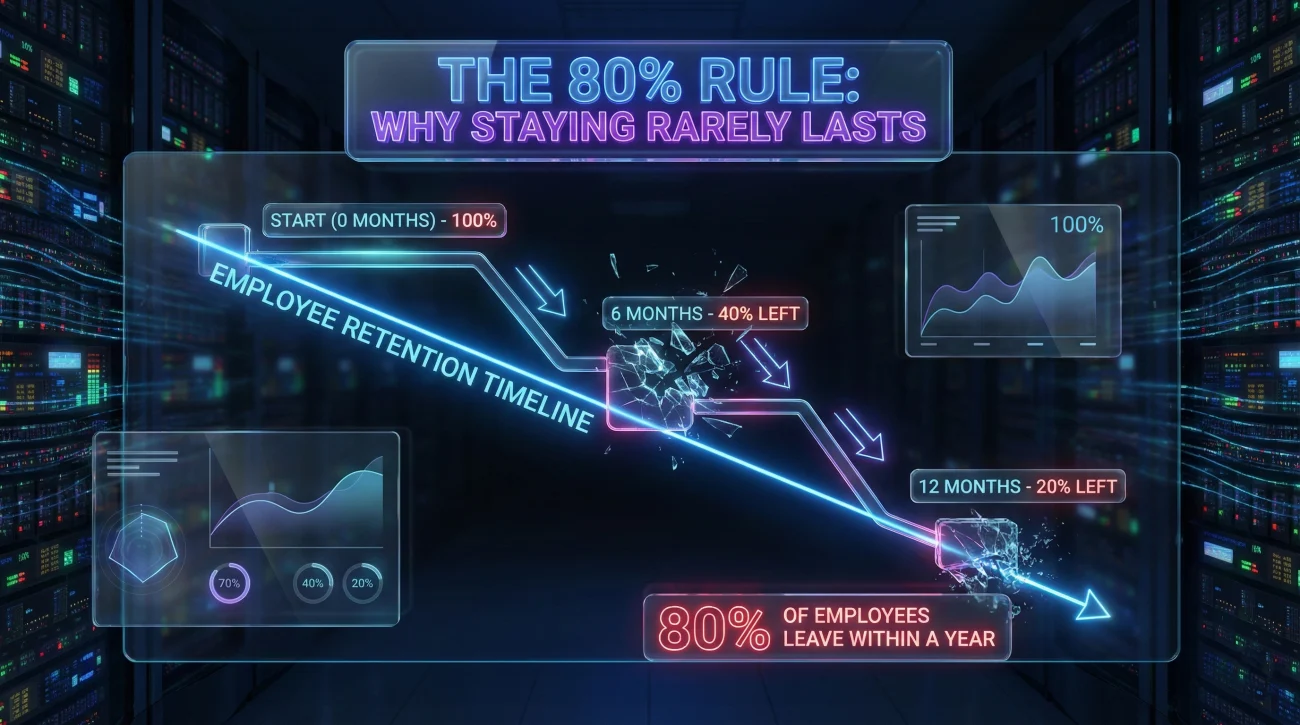
According to various counter offer statistics from recruitment firms like MRI Network and Eclipse Software, the long-term success rate of staying is shockingly low:
- 📊 The 6-Month Rule: Approximately 80% of employees who accept a counter-offer end up leaving the company (voluntarily or involuntarily) within six to twelve months.
- 📊 The 1-Year Mark: Within 18 months, that number rises to over 90%.
- 📊 Broken Trusts: Managers often begin searching for your replacement the moment you accept, using the counter-offer only as a “bridge” to prevent immediate disruption.
The core issue is that a salary bump is a cosmetic fix for a systemic problem. Whatever made you want to leave in the first place – whether it was a toxic culture, lack of growth, or poor management – will still be there once the “dopamine hit” of the extra cash wears off.
The “Traitor” Label: Why Trust Is Forever Broken

The moment you hand in that resignation letter, the relationship with your employer changes fundamentally. You are no longer “part of the family” – you are a flight risk. This is one of the most significant counter offer risks that employees fail to consider.
The Manager’s Perspective
Even if your boss is your friend, they are also a business manager. From their perspective, you’ve already shown that your loyalty has a price tag or that you’re willing to “extort” them for a raise by using another offer as leverage. Once that seed of doubt is planted, it never truly goes away.
When the next round of layoffs comes, who do you think is first on the list? The “loyal” employee who never looked elsewhere, or the one who already had one foot out the door? When a high-stakes, long-term project needs a leader, will they give it to someone they suspect is still browsing LinkedIn? Accepting the offer often results in being sidelined for future promotions because your “commitment” is now a question mark.
The “Why Now?” Question: Unmasking the Money Source
This is the most insulting part of the counter offer trap that most employees ignore in the heat of the moment. If your company suddenly found an extra $15,000 to keep you from leaving, you must ask yourself: Where was that money during my last performance review?
| The Reality Check | What They Say | What It Actually Means |
|---|---|---|
| Budgeting | “We found some extra budget.” | They are taking it from next year’s raise or your bonus. |
| Value | “We didn’t realize how much you do.” | They knew, they just didn’t want to pay for it until forced. |
| Timing | “The timing was just bad before.” | It’s cheaper to pay you more than to lose you during a busy quarter. |
In most corporate structures, a counter-offer isn’t a “raise” in the traditional sense. It’s an emergency expense. Companies know that the cost of replacing a mid-level professional – including recruitment fees, lost productivity, and training – can be 1.5x to 2x their annual salary. Paying you a 10% bump to stay for six more months is simply a cost-saving measure for them, not a reward for you.
The 1% Rule: When Should You Actually Stay?
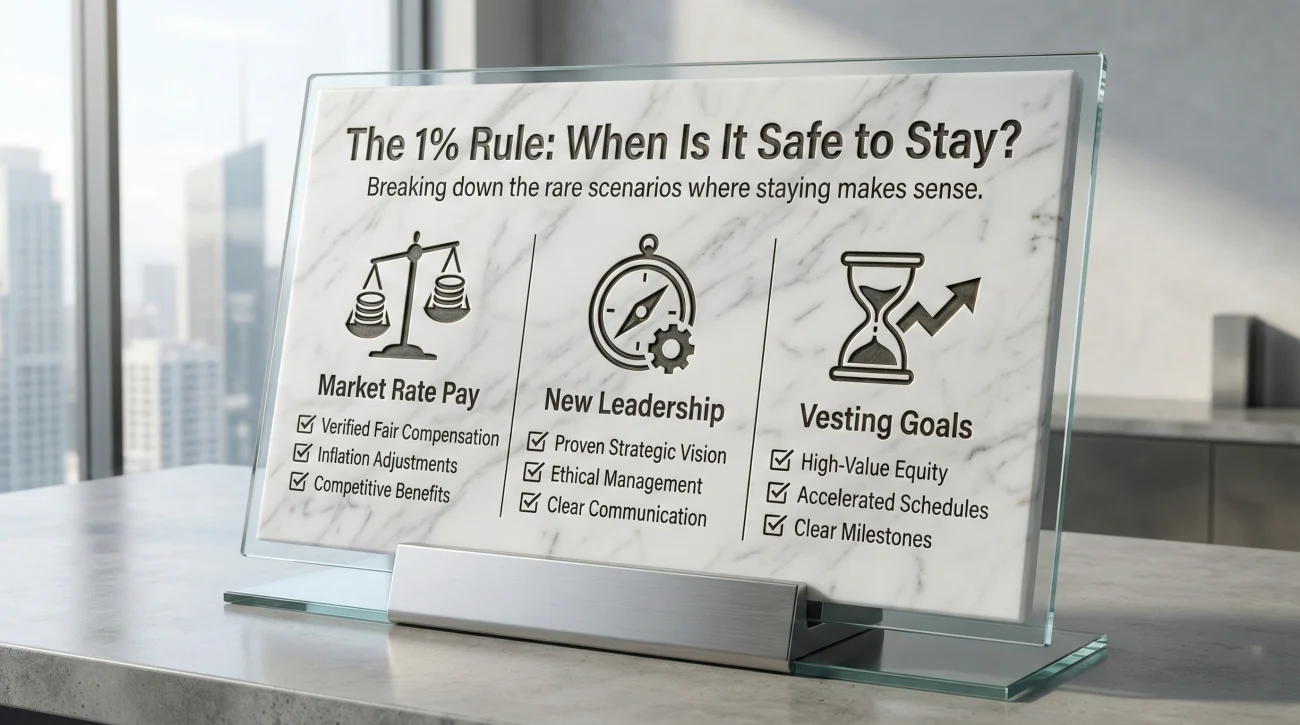
I rarely advise clients to stay, but I am a pragmatist. There are rare scenarios where the question “should i accept a counter offer?” might be answered with a cautious “yes.”
Criteria for a “Successful” Stay
- ✅ It was ONLY about the money: If you love your boss, your team, and your work, and the only thing missing was market-rate pay, and they fix it permanently, it might work.
- ✅ A major structural change: If the person making your life miserable (a toxic manager) is being moved, and the counter-offer includes a report to a new, better leader.
- ✅ Leverage for a specific goal: If you only need 3-4 more months to hit a vesting cliff for stock options or a specific bonus, staying might be a purely financial calculation.
Even in these cases, you must proceed with extreme caution and document the new terms in a formal contract. A verbal promise during a “stay interview” is worth nothing once the crisis has passed.
Professional Way to Decline a Counter Offer
The key to declining a counter-offer is to remain appreciative but firm. You want to leave with your bridges intact and your professional reputation pristine. Do not make it about the money – make it about the opportunity.

Email/Script: Declining the Offer Gracefully
Subject: Resignation Update – [Your Name]
Dear [Manager’s Name],
Thank you very much for the generous counter-offer and for the confidence you’ve expressed in my work. I truly appreciate the effort you’ve made to keep me on the team.
After giving it a great deal of thought, I have decided to proceed with my original decision to move to the new role. My decision is based on the specific career growth and new challenges this next step provides, which I feel are the right move for my professional development at this time.
I am fully committed to ensuring a seamless transition of my responsibilities over the next [Notice Period]. Thank you again for your understanding and for the opportunities I’ve had here at [Company Name].
Best regards,
[Your Name]
Using this professional way to decline a counter offer ensures that you aren’t seen as someone who was just “playing games” for more money. It keeps the conversation focused on your career path, which is much harder for a manager to argue against.
Planning Your Clean Break
Once you’ve said no to the trap, focus on the finish line. Don’t let the “guilt-tripping” or “future-faking” from your current employer slow you down. If they start promising things like “We’ll promote you in Q3,” remember why you looked for a job in the first place.
Maintain your resignation etiquette by staying productive until your very last hour. If you haven’t prepared your formal documents yet, you can use our resignation letter template to ensure your exit is as professional as possible.
Final Thoughts: Don’t Look Back
The counter offer trap is built on the fear of the unknown. It’s easier to stay in a familiar environment with a little more money than to start over at a new company. But growth only happens in the new and the challenging.
Your original reasons for leaving were valid. Don’t let a temporary financial band-aid fix a long-term career misalignment. Stand firm, say your thank yous, and step into your new role with your head held high. Your future self will thank you for having the courage to walk away from the trap.
⚠️ Legal Disclaimer: ResignSmartly provides general informational guidance about resignation, workplace communication, notice periods, handovers, and career transitions. Content does not constitute individualized legal advice. Employment laws, contracts, workplace policies, and individual circumstances vary, so review the requirements that apply to your situation and consult an appropriate qualified professional when needed.