- Core balance: Family obligations require your full attention, but you do not owe detailed explanations or private medical information.
- Right tone: Sound serious and calm, avoid drama, and never use guilt-heavy details that pressure the employer emotionally.
- Wording strategy: Be “specifically vague” with phrases like family circumstances or caregiving needs, and share only minimal context if it prevents bad assumptions.
- Timing matters: Use immediate resignation language only for true emergencies, otherwise give standard notice to protect relationships and professionalism.
- Clean exit approach: State last day, offer an orderly handoff, keep confidentiality tight, and set boundaries when coworkers ask for details.
When Family Obligations Override Career
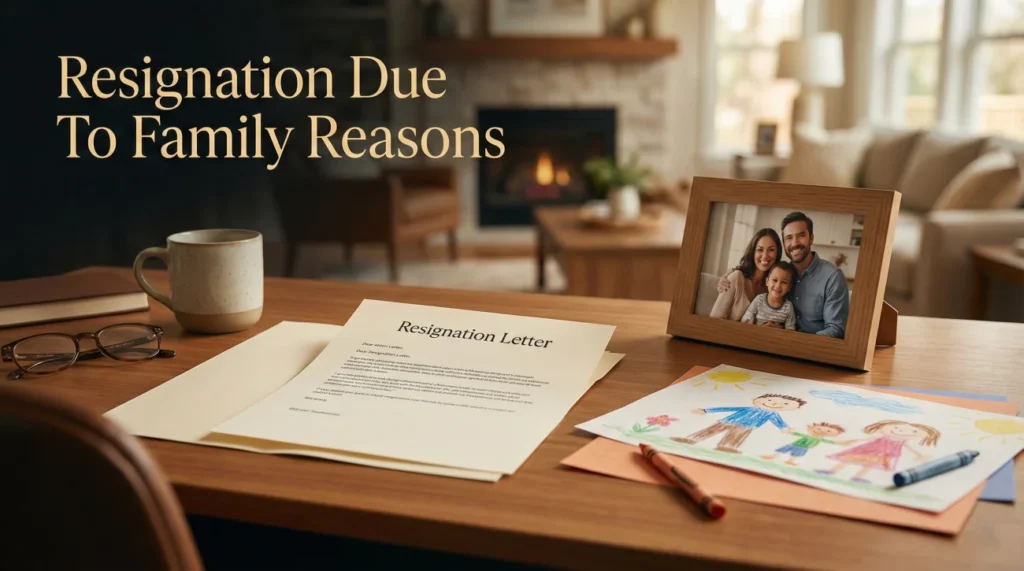
A resignation letter due to family reasons walks a delicate balance between establishing legitimate departure grounds and protecting private family information. You’re leaving because family needs your attention – caring for sick relatives, managing family emergencies, supporting children through difficult transitions, or addressing situations that make full-time employment impossible. Yet the specific details of these family circumstances aren’t your employer’s business unless you choose to share them.
Family-related resignations invoke empathy while demanding privacy boundaries. Most people understand that family obligations sometimes require difficult professional sacrifices. This universal understanding works in your favor, allowing relatively brief explanations that satisfy employer curiosity without requiring detailed disclosure of private family matters.
Invoke Empathy Without Oversharing Details
Your family emergency resignation letter needs to communicate that legitimate family needs require your departure while maintaining boundaries around specific circumstances that are frankly none of your employer’s business.

Family Obligations Are Universally Understood
Most people have experienced or witnessed family situations requiring professional sacrifices – caring for aging parents, supporting spouses through illness, managing children’s needs during crises. This shared understanding means you can reference “family obligations” or “family circumstances” without extensive explanation, and most employers will accept these reasons at face value.
The key is striking appropriate tone: serious enough to convey genuine necessity without being dramatic or overly emotional. “Family circumstances require my full attention” communicates urgency and legitimacy without requiring you to detail exactly what those circumstances are or justify why they necessitate resignation rather than leave or accommodation.
Don’t Manipulate Through Guilt
While family situations often involve genuine hardship, avoid using emotional details to manipulate employer sympathy or avoid standard resignation procedures. Statements like “My mother is dying and I need to be with her” might seem like they strengthen your position, but they actually create uncomfortable dynamics where employers feel pressured to respond to personal tragedy rather than processing standard resignation.
More professional approach: “I need to care for my aging mother whose health has declined significantly, requiring my full-time attention.” This conveys seriousness without emotional manipulation, maintains your dignity, and creates appropriate professional tone even while discussing difficult personal circumstances.
Caregiving as Valid Professional Decision

Society increasingly recognizes care taking resignation as legitimate career interruption rather than professional failure. Many professionals temporarily leave careers for caregiving responsibilities – raising young children, supporting elderly parents, or helping family members through extended illness – and successfully return to work when circumstances permit.
Frame your decision confidently: “I’m stepping back from my career temporarily to focus on family caregiving responsibilities” rather than apologetically suggesting you’re abandoning career commitments. Caregiving is work – unpaid, often exhausting work that society depends on. Your resignation acknowledges this reality rather than apologizing for it.
Balance Privacy with Legitimacy
Your resignation letter for family matters must establish genuine family needs require departure without disclosing private information you’d prefer confidential.

Be Specifically Vague
Provide enough context to establish legitimacy without excessive detail: “I need to care for a family member” establishes caregiving responsibility without specifying which family member or their medical condition. “Family circumstances require my relocation” acknowledges geographic necessity without explaining whether you’re following a spouse or caring for parents.
This “specifically vague” approach satisfies employer need for context while protecting private family information. Most reasonable managers don’t press for details beyond general statements.
When Additional Detail Helps
Occasionally, slightly more specificity serves your interests. If caring for elderly parents, mentioning this generally helps: “I need to provide care for my elderly parents whose health situations require family support.” This prevents speculation about whether you’re fleeing workplace problems.
However, resist pressure to disclose medical diagnoses, prognoses, or treatment details. “My father’s health requires family support” suffices without explaining his specific condition.
Family Obligation Templates
These templates establish family necessity while protecting privacy and maintaining professional dignity. For broader guidance, see our resignation letter with reason guide.
Child Care Responsibilities Template
Rachel Martinez
456 Oak Street
Portland, OR 97204
March 15, 2024
David Chen
Human Resources Director
Pacific Northwest Solutions
Dear David,
I am writing to resign from my position as Project Manager, effective March 29, 2024.
My family circumstances require me to focus full-time on child care responsibilities that have become incompatible with continued full-time employment. After considerable thought and planning, I’ve determined that stepping back from my career temporarily is necessary to meet my family’s needs.
I’ve valued my time at Pacific Northwest Solutions and the professional development opportunities provided here. The project management skills and leadership experience I’ve gained will serve me well when I’m able to return to professional work in the future.
During my remaining two weeks, I will ensure comprehensive documentation of all active projects and work closely with my team to transition my responsibilities smoothly.
Thank you for your understanding regarding these family circumstances.
Sincerely,
Rachel Martinez
This letter establishes child care necessity without specifying children’s ages, special needs, child care challenges, or family structure details. The phrase “incompatible with continued full-time employment” acknowledges she explored options before resigning. The mention of potentially returning “when able” leaves door open without committing to specific timeline.
Elder Care Template
James Thompson
892 Pine Avenue
Seattle, WA 98101
April 8, 2024
Michelle Roberts
Department Manager
Northwest Technology Group
Dear Michelle,
I am submitting my resignation from my position as Systems Engineer, effective April 22, 2024.
I need to provide care for my elderly parents whose health situations require family support that I cannot provide while maintaining full-time employment. This decision follows extensive discussion with my family about how best to address these caregiving needs.
My time at Northwest Technology has been professionally rewarding. The technical expertise and problem-solving skills I’ve developed here represent valuable experience I’m grateful to have gained.
I will complete comprehensive documentation of all systems and processes I manage and ensure thorough knowledge transfer during my notice period.
I appreciate your understanding regarding these family obligations.
Sincerely,
James Thompson
This urgent family reason resignation template mentions elderly parents generally without specifying medical conditions, whether one or both require care, or exact nature of health situations. The phrase “extensive discussion with my family” signals this isn’t impulsive but rather a thoughtful family decision, lending legitimacy without requiring detailed family dynamic explanations.
Emergency vs Planned Departures
Family-related resignations range from sudden emergencies requiring immediate departure to planned transitions for anticipated needs. Your letter should reflect which situation you’re navigating.

True Family Emergencies
When genuine emergencies strike – sudden serious illness, accidents, or crises requiring immediate family attention – standard notice periods may be impossible. Acknowledge this: “Due to a family emergency requiring immediate attention, I must resign effective immediately. I apologize for the inability to provide standard notice given these urgent circumstances.”
Most employers understand true emergencies sometimes prevent proper notice. However, use this only for genuine emergencies – hospitalization-level crises where days matter, not simply stressful family dynamics that have existed for months.
Anticipated Family Needs
Many family situations develop over time – elderly parents gradually declining, children’s needs becoming difficult to balance with work. These situations allow standard or extended notice demonstrating professionalism while acknowledging family necessity.
For planned transitions, provide adequate notice: “I will resign effective [date] to focus on family responsibilities that have become increasingly difficult to balance with full-time employment.”
This shows you managed competing priorities as long as possible before determining resignation was necessary.
❓ FAQ
🏥 Do I need to provide medical documentation for family health reasons?
Generally no for resignations, though FMLA leave requests would require documentation. You’re resigning, which is your right regardless of reasons. Employers might request documentation if processing benefits or disability claims, but standard resignations for family reasons don’t require medical proof. If pressed, respond: “I prefer to keep family medical details private but am resigning to address legitimate family care needs.” Most employers respect this boundary.
👶 Should I mention if I’m resigning to be a stay-at-home parent?
Optional based on your comfort level. Some parents openly share this decision; others prefer more general “family care responsibilities” language. Consider your workplace culture – if your organization respects diverse family choices, being specific might be fine. If you sense judgment about parents leaving careers, vaguer “family obligations” language protects you from unsolicited opinions about your family decisions. There’s no professional requirement to specify that child care is stay-at-home parenting rather than other child-related needs.
⏰ Can I request extended unpaid leave instead of resigning?
Worth exploring if your family situation might be temporary. Many organizations offer extended unpaid leave for family care situations, sometimes through FMLA, sometimes through additional company policies. However, most leave policies have time limits (weeks to months, not years), so truly long-term family care usually requires resignation. Discuss options with HR before submitting resignation – you might discover leave possibilities you didn’t know existed.
🔄 Will family resignations hurt my career if I want to return later?
Increasingly less than in past decades as society recognizes caregiving as legitimate career interruption. Many professionals successfully return after family care periods, though you might face questions about employment gaps. Frame your return positively: “I took time to address family care responsibilities and am now ready to return to my career” rather than apologetically explaining long absences. Organizations that respect work-life balance increasingly value employees who made difficult family decisions and maintained skills during career breaks.
💬 How do I handle colleagues asking for family details?
Share what you’re comfortable sharing, maintain boundaries around what you’re not. Responses like “I prefer to keep family details private but appreciate your concern” or “It’s a difficult family situation that requires my full attention” acknowledge curiosity without requiring detailed explanations. Most colleagues respect privacy boundaries when stated clearly. If someone presses inappropriately, you can be firmer: “I appreciate your interest, but these are private family matters I’m not comfortable discussing in detail.”
Final Thoughts
A resignation letter due to family reasons acknowledges a fundamental truth: sometimes family obligations must take priority over professional ambitions. This isn’t professional failure – it’s human reality that work exists to support life rather than consuming it entirely. How you communicate these family priorities shapes whether you exit with dignity and preserved relationships or with damaged professional reputation.
Handle family resignations with appropriate balance between establishing legitimate necessity and protecting private information. You don’t owe employers detailed explanations of family medical conditions, child care challenges, or personal circumstances that led to your decision. General acknowledgment of family obligations suffices while maintaining privacy boundaries that protect you and your family.
Remember that many professionals navigate similar choices throughout careers – temporarily stepping back for family needs, then returning when circumstances permit. Your resignation doesn’t end your career unless you want it to. It marks a period when family needed you more than any employer could, a choice that most reasonable people understand and respect even when it creates temporary workplace challenges.
⚠️ Legal Disclaimer: The resignation templates, email samples, and professional guidance provided in this guide are for informational purposes only and do not constitute legal advice. Employment laws and contract requirements vary by jurisdiction and individual circumstances. Please review your employment agreement and consult your HR department and/or a qualified attorney to ensure compliance with applicable laws and policies.