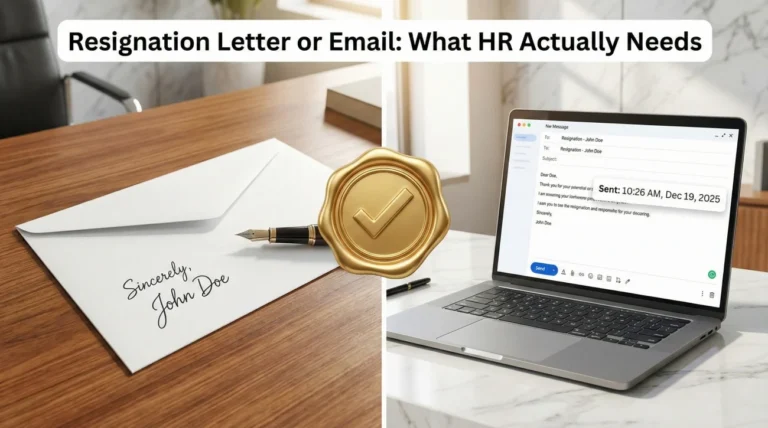
- A resignation letter for a toxic environment is a risk document: Keep it neutral so it can’t be used against you later.
- Neutral language protects your options: It preserves references, unemployment narratives, and any future legal path.
- Document problems elsewhere: Use HR complaints, dated emails, witnesses, and legal advice before you resign.
- Use a safe template: State your last day, offer a clean handoff, and ask about return-of-property and exit steps.
- Never put accusations or legal words in writing: Avoid names, incidents, “hostile,” “discrimination,” and emotional explanations.
When Workplace Toxicity Forces Your Hand
A resignation letter for toxic environment demands strategic thinking that other resignations don’t require. You’re leaving because conditions became intolerable – harassment, discrimination, hostile management, or unbearable stress. Yet your resignation letter isn’t the place to detail those grievances. What you write creates permanent documentation that can either protect or undermine potential legal claims, references, and future employment opportunities.
The instinct to explain why you’re fleeing – to document the injustices that drove you out – can backfire spectacularly. Employment attorneys defending your former employer will use your own words against you, characterizing complaints as exaggeration, you as difficult, or your departure as voluntary rather than constructive discharge. Your resignation letter must navigate this treacherous terrain: acknowledge you’re leaving without explaining why in ways that compromise your position.
Neutral Language as Legal Shield
When leaving hostile work environment, your resignation letter’s primary function is creating a clean exit record that doesn’t compromise future legal options or damage your professional reputation. This requires deliberate neutrality that feels counterintuitive when you’re angry, hurt, or desperate to escape.

Why Neutral Letters Serve You Better
Toxic workplace complaints in resignation letters create multiple problems. First, they give employer legal teams ammunition to characterize you as disgruntled, unreasonable, or prone to exaggeration. Second, they create documentation suggesting you voluntarily resigned rather than being constructively discharged – undermining potential wrongful termination claims. Third, they become permanent records that future employers might see during background checks, raising red flags about whether you’re difficult to work with.
Contrast this with neutral resignation letters that simply state you’re leaving. These documents preserve all your options: pursuing legal claims through proper channels, maintaining professional references, and explaining your departure verbally in contexts where nuance is possible. You’re not hiding what happened – you’re refusing to create written evidence that could be weaponized against you.
Preserving Constructive Discharge Claims
If workplace conditions became so intolerable that a reasonable person would feel compelled to resign, you might have constructive discharge claims. But these claims require careful evidence building before resignation – not complaints in your resignation letter itself.
Your resignation letter toxic workplace should remain professionally neutral while you’ve already documented specific incidents through formal HR complaints, emails describing problematic behavior, written requests for intervention that were ignored, and consultation with employment attorneys. Let your lawyer connect those documented patterns to your resignation. Don’t try making legal arguments yourself in resignation letters where you lack the expertise to phrase claims properly.
Protecting Future References
Even when fleeing toxic environments, you need references from someone at that organization – colleagues who weren’t part of the toxicity, managers from earlier in your tenure, or HR professionals who witnessed your professionalism despite circumstances. Resignation letters filled with workplace complaints make everyone defensive, including people who might otherwise support you.
Neutral resignation letters allow potential references to describe your departure without taking sides in disputes: “She resigned to pursue other opportunities” sounds better than “She quit after filing extensive complaints about management.” The former keeps doors open; the latter broadcasts conflict that makes you seem risky to future employers regardless of who was actually at fault.
Document Problems Through Proper Channels
You absolutely should document toxic workplace conditions – but through appropriate venues that build legal cases rather than undermining them. Your resignation letter isn’t that venue.
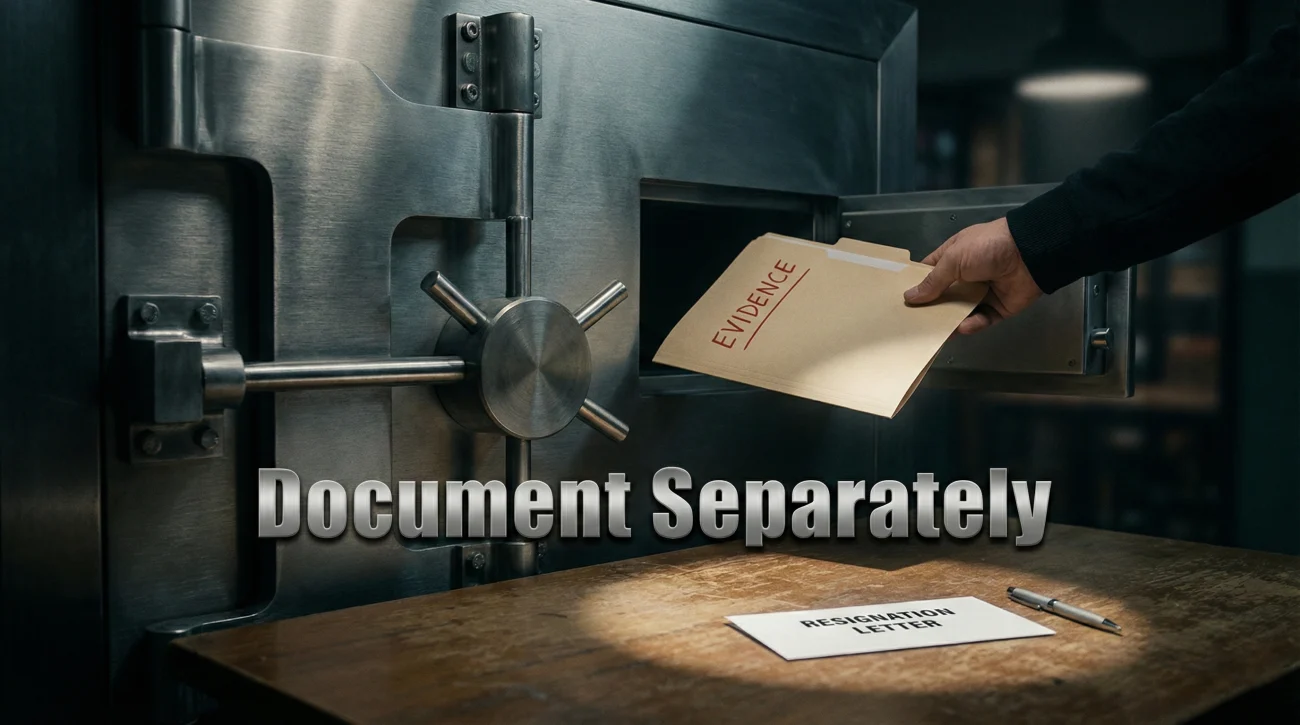
File Formal Complaints First
Before resigning, document problems through official channels: formal HR complaints about harassment or discrimination, written reports of specific incidents with dates and witnesses, emails to management requesting intervention, and consultations with employment attorneys.
This documentation creates the evidence trail that supports potential claims. Your resignation becomes the endpoint of documented patterns showing conditions became intolerable. But the resignation letter itself remains neutral – the story is told through documentation that preceded it.
Consult Lawyers Before Resigning
If pursuing legal claims for harassment, discrimination, or constructive discharge, consult employment attorneys before submitting resignation. They’ll advise on documentation needed, timing that protects claims, and whether taking leave before resigning strengthens your position.
Your resignation letter due to bullying circumstances might benefit from attorney review to ensure you’re not inadvertently forfeiting rights. This consultation costs far less than fixing problems created by poorly worded resignation letters.
Safe Exit Letter Templates
These templates demonstrate professional neutrality that protects your interests while documenting your departure. For broader resignation guidance, see our resignation letter with reason guide.
Professional Neutral Template
Jennifer Martinez
456 Oak Street
Portland, OR 97204
March 15, 2024
Robert Chen
Human Resources Director
Pacific Solutions Group
Dear Robert,
I am writing to resign from my position as Marketing Manager, effective March 29, 2024, providing two weeks’ notice.
I have accepted another opportunity that better aligns with my current career objectives. I will work with my team during my remaining time to ensure proper transition of my responsibilities and active projects.
Please let me know the procedures for returning company property and completing exit paperwork.
Sincerely,
Jennifer Martinez
This letter provides zero indication that Jennifer is fleeing toxicity. It’s professionally bland, which serves her perfectly. She’s documented harassment through separate HR complaints, consulted an attorney, and preserved emails showing she reported problems. Her resignation letter simply notifies them she’s leaving – the story of why gets told through other documentation and legal channels if necessary.
Immediate Departure Template
Michael Thompson
892 Pine Avenue
Seattle, WA 98101
April 8, 2024
Sarah Williams
Department Manager
Northwest Technology
Dear Sarah,
I am resigning from my position as Systems Analyst, effective immediately.
Due to circumstances that require my immediate departure, I am unable to provide the standard notice period. I apologize for any inconvenience this creates and am available to answer questions by phone or email regarding transition of my responsibilities.
Please advise on procedures for returning equipment and processing final paperwork.
Sincerely,
Michael Thompson
This unfair treatment resignation template handles situations where staying even two more weeks feels impossible – safety concerns, severe harassment, or medical stress from the environment. The phrase “circumstances that require immediate departure” acknowledges urgency without detailing what those circumstances are. Michael might later explain in legal proceedings or unemployment hearings, but his resignation letter remains neutral.
What Never Goes in Writing
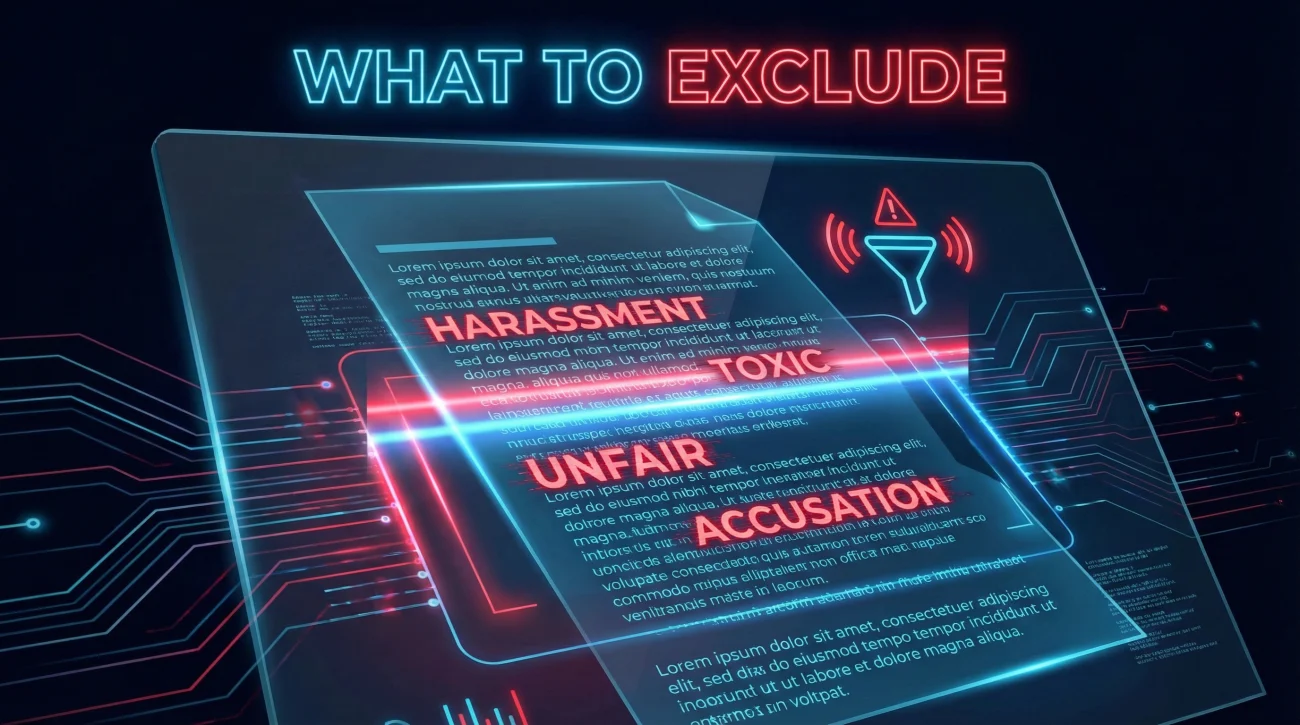
Understanding what to exclude from toxic workplace resignation letters protects your legal position and professional reputation as much as knowing what to include.
Skip Specific Accusations
Don’t name individuals who harassed you, describe specific discrimination incidents, or detail management failures. These accusations create written records that get picked apart by employer legal teams looking for inconsistencies or exaggerations.
Bad: “I’m resigning because John Smith’s constant harassment and Rebecca Jones’s discrimination created an intolerable hostile environment despite my repeated complaints to HR.”
This hands attorneys multiple attack points: Was it really “constant” or occasional conflicts? Were complaints truly “repeated” or just one? They’ll use your words to minimize your experience.
Avoid Legal Terminology
Skip terms like “hostile,” “toxic,” “unbearable,” “discriminatory,” or “retaliatory.” These words carry specific legal meanings you might not be using precisely, creating opportunities for employer defense attorneys to argue you’re misapplying legal concepts.
Emotional language also makes you appear reactive rather than professional. Future employers reviewing your file see someone who burned bridges rather than handled difficult situations with composure.
❓ FAQ
⚖️ Won’t staying silent make it seem like I left voluntarily?
No, if you’ve documented conditions through proper channels before resigning. Constructive discharge claims don’t require dramatic resignation letters – they require evidence showing intolerable conditions that forced departure. Your formal HR complaints, emails requesting intervention, and attorney consultations tell that story. Your neutral resignation letter simply documents when you left, which your attorney then connects to the documented pattern of problems. Silence in resignation letters protects rather than undermines claims when accompanied by proper documentation through other channels.
💼 Should I mention if I’m filing EEOC or other complaints?
No, keep resignation letters completely separate from legal proceedings. File EEOC complaints, discrimination claims, or other legal actions through proper administrative and legal channels – but don’t reference them in resignation letters. Your letter documents employment termination; legal complaints document alleged violations. Mixing these creates confusion and potential procedural problems. Let your attorney coordinate timing and messaging across different processes rather than trying to address everything in one resignation letter.
🏃 Can I resign effective immediately due to hostile environment?
Yes, though this carries risks and benefits to evaluate carefully. Immediate resignation documents that conditions were intolerable enough to forfeit notice period – supporting constructive discharge claims. However, it also forfeits final paychecks for notice period you didn’t work. Consult employment attorneys about whether immediate departure strengthens or complicates your specific situation. If resigning immediately, your letter should acknowledge you’re unable to provide standard notice due to circumstances requiring immediate departure – without detailing what those circumstances are.
📝 Will neutral resignation letters hurt my unemployment claim?
No, unemployment hearings allow you to explain verbally why you resigned. Your neutral letter documents departure date; your testimony at hearing explains the hostile conditions that forced it. This separation actually helps – your resignation letter can’t be used to show you voluntarily quit for non-qualifying reasons because it doesn’t state reasons at all. You explain circumstances in appropriate forum (unemployment hearing) where you can provide full context and respond to questions, rather than trying to explain complex hostile environment situations in brief resignation letters.
🤐 How do I explain the gap to future employers?
In interviews, frame it professionally without badmouthing: “The position wasn’t the right fit for my working style and career goals” or “I realized the organizational culture didn’t align with my values.” If pressed, you might add “There were some challenging dynamics that made me realize it was time to move on.” Future employers understand that workplace cultures vary and not every fit works out. Your neutral resignation letter supports this narrative because it documents professional departure rather than dramatic conflict. Most interviewers won’t press for toxic workplace details if you signal discomfort continuing the topic.
Final Thoughts

A resignation letter for toxic environment demands restraint that feels impossible when you’re hurt, angry, or desperate to expose the injustices you’ve endured. Yet that restraint serves your interests far better than cathartic complaints that create permanent documentation undermining your legal position and professional reputation.
Remember that your resignation letter represents just one small piece of your departure strategy. Document problems through formal HR complaints, preserve evidence of hostile conditions, consult employment attorneys about your rights, and explain circumstances verbally in contexts where nuance is possible. But keep your resignation letter professionally neutral – it documents when you left, not why, preserving all your options for addressing the “why” through appropriate channels.
Most importantly, prioritize your wellbeing and safety over workplace obligations. No job is worth enduring harassment, discrimination, or conditions that damage your mental or physical health. Exit strategically to protect your legal rights and professional reputation, but exit – don’t stay in toxic environments trying to tough it out or fix situations that aren’t your responsibility to repair.
⚠️ Legal Disclaimer: ResignSmartly provides general informational guidance about resignation, workplace communication, notice periods, handovers, and career transitions. Content does not constitute individualized legal advice. Employment laws, contracts, workplace policies, and individual circumstances vary, so review the requirements that apply to your situation and consult an appropriate qualified professional when needed.