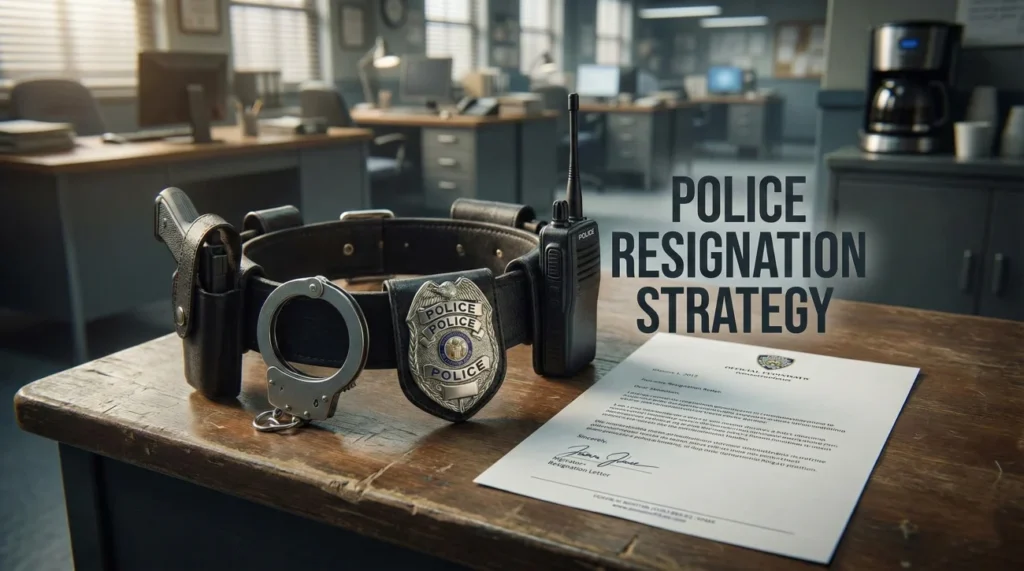
- Core idea: Police resignations are not normal quits, you are surrendering sworn authority, returning weapons and credentials, and protecting a long-term law enforcement reputation.
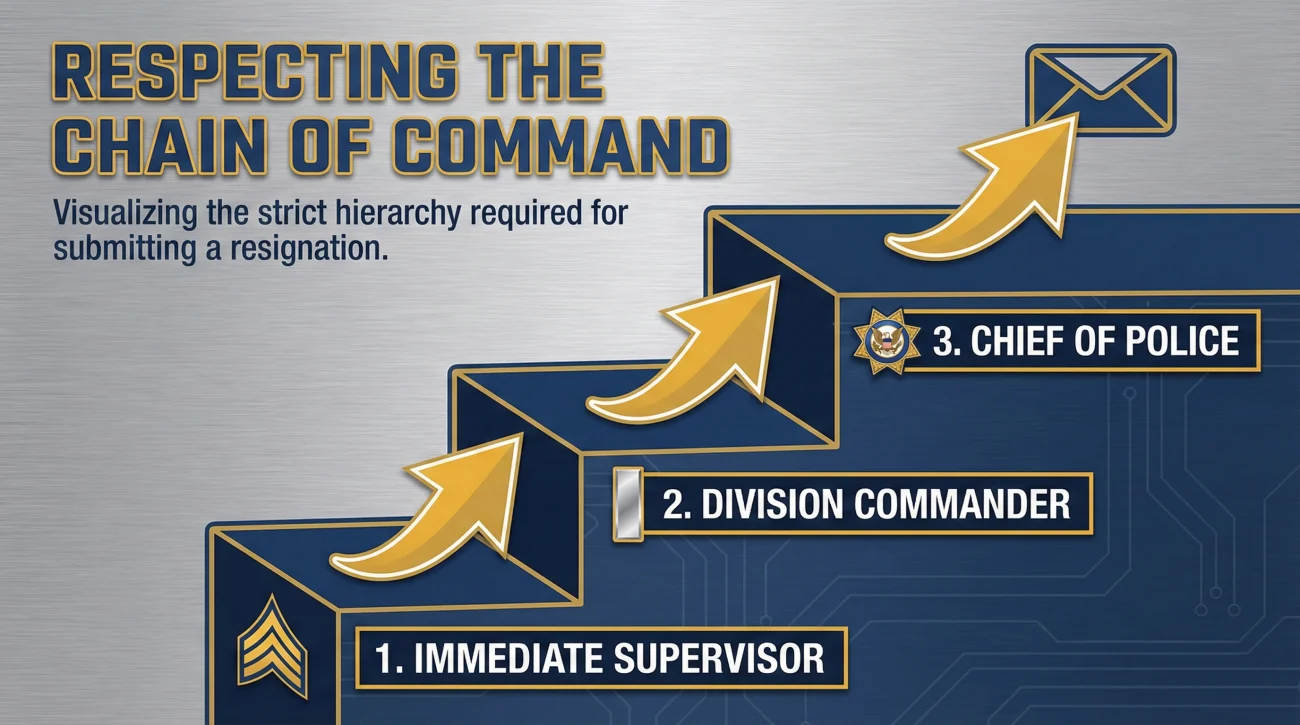
- Chain of command: Notify your immediate supervisor first, then submit a formal written letter that routes upward, never skip levels.
- Non-negotiables: Return all department property with proper verification, close reports, transfer active cases and evidence custody, and plan for court subpoenas that still apply after you leave.
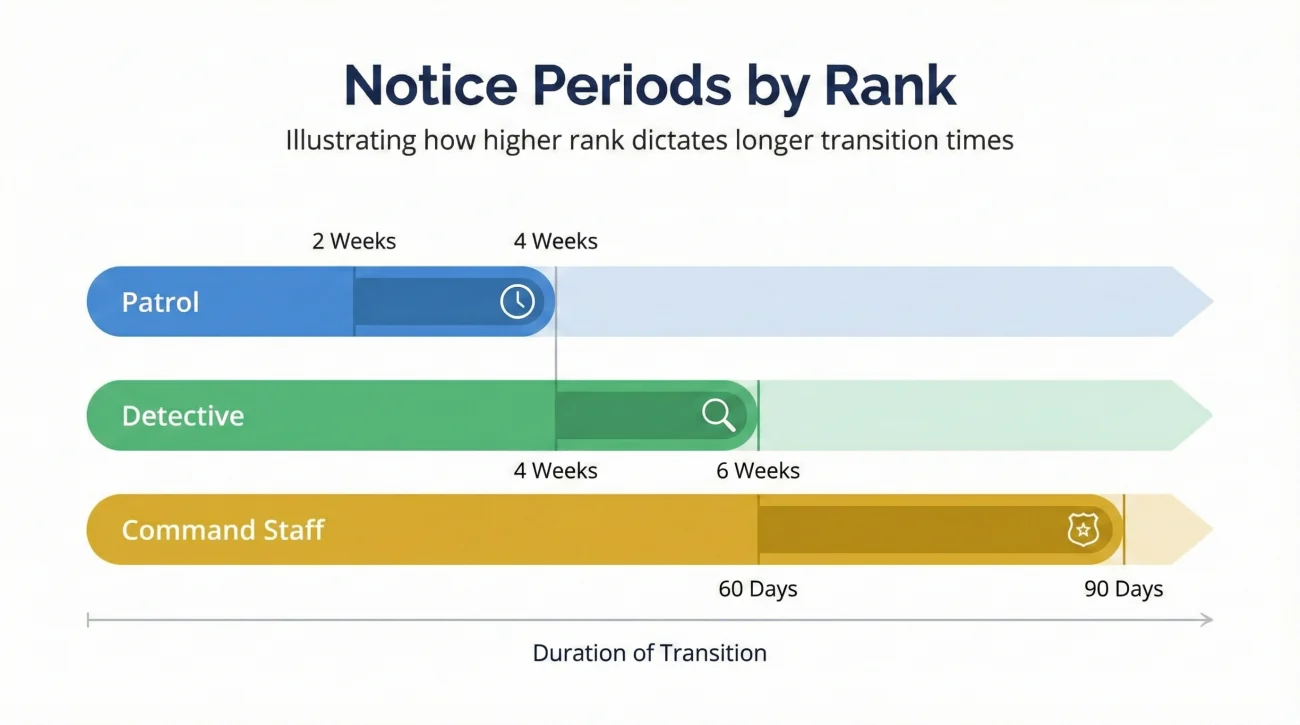
- Notice expectations: Plan by role, Patrol 2 to 4 weeks, Detective 4 to 6 weeks, Sergeant 4 to 8 weeks, Command staff 60 to 90 days, confirm union and policy rules.
- Edge scenarios: Immediate exits, resigning during an investigation, or lateral moves require extra caution, keep the letter brief, coordinate returns and handoffs, and get union or legal support when needed.
Understanding Police Officer Resignation
Leaving law enforcement involves more than ending employment – you’re relinquishing sworn authority, returning weapons and credentials, and stepping away from the brotherhood and public trust that define police work. A professional police officer resignation letter addresses these unique requirements, follows proper chain of command protocols, and maintains the law enforcement relationships that shape your career and community standing.
Police resignations differ fundamentally from civilian employment transitions. You carry a badge, weapon, and legal authority that must be formally surrendered. Your departure affects shift coverage, partner assignments, and case continuity in ways that impact public safety.
This guide provides templates for various law enforcement scenarios – from patrol officers to detectives, covering proper chain of command notification, essential equipment return procedures, and how to resign while preserving your professional reputation.
What Makes Police Resignations Different
Following Chain of Command Protocol
Your police resignation letter must follow strict departmental hierarchy:
- ⭐ Immediate supervisor first: Direct supervisor receives notification before anyone else
- 📋 Written documentation: Formal letter required even if verbal notification given first
- 🔺 Up the chain: Letter routes from supervisor to commander to chief following proper channels
- 🚫 Never skip levels: Going around chain of command damages relationships and violates protocol
Equipment and Credential Return
| Equipment Category | Items Requiring Return | Return Procedure |
|---|---|---|
| Weapons | Service weapon, backup weapon, rifle | Armorer inspection, serial verification |
| Credentials | Badge, ID card, commission card | Direct return to command staff |
| Protective gear | Body armor, radio, duty belt | Property room check-in |
| Department property | Uniforms, vehicle, keys, gas card | Logistics/fleet return |
Active Cases and Court Obligations
Your resignation affects ongoing police work requiring careful handover:
- 📂 Active investigations: Case files, evidence custody, coordination with assigned detective
- ⚖️ Court obligations: Subpoenas, scheduled testimony, pending trials you must complete
- 📝 Report writing: All incident reports finalized before departure
- 🤝 Partner transition: Briefing replacement on beat knowledge and community contacts
Notice Period Requirements
Recommended Notice for Law Enforcement
Notice expectations for your law enforcement resignation letter depend on rank and responsibilities:
- 👮 Patrol officer: 2-4 weeks – allows shift schedule adjustment and equipment processing
- 🔍 Detective: 4-6 weeks – time for case transfer and investigation continuity
- ⭐ Sergeant/supervisor: 4-8 weeks – leadership transition and team reassignment planning
- 🎖️ Command staff: 60-90 days – strategic planning and succession considerations
Union contracts, civil service rules, and department policies may specify minimum notice requirements. Check your employment agreement and consult union representative if applicable.
Patrol Officer Resignation Letters
Patrol Officer Standard Resignation
[Your Name]
[Badge Number]
[Your Address]
[City, State ZIP]
[Your Email]
[Your Phone]
[Date]
[Immediate Supervisor Name]
[Rank and Title]
[Police Department Name]
[Address]
Dear [Supervisor Rank and Name],
I am writing to formally resign from my position as Police Officer with the [Department Name], effective [Date].
This decision follows careful consideration of my career goals and personal circumstances. I have accepted a position with [new department/agency or “pursuing other opportunities”].
During my remaining time, I will ensure proper transition including:
- Completion of all assigned shifts through my final date
- Finalization of pending reports and case documentation
- Return of all department-issued equipment, weapons, and credentials
- Briefing my replacement on beat-specific information and community contacts
- Fulfillment of any scheduled court appearances through [date]
Serving with [Department Name] has been professionally rewarding. The training received and experience gained have been invaluable to my law enforcement career.
Thank you for your leadership and the opportunity to serve this community.
Respectfully,
[Your Signature]
[Your Name]
Badge #[Number]
Patrol Officer – Better Opportunity
[Your Name]
Badge #[Number]
[Your Email]
[Your Phone]
[Date]
[Supervisor Name]
[Rank]
[Department Name]
Dear [Rank] [Name],
I am submitting my resignation as Police Officer from [Department Name], with my last day of service being [Date].
I have accepted a law enforcement position with [Agency Name] that offers opportunities for career advancement in [specialty area].
I will work my scheduled shifts, complete all pending reports, return department property, and fulfill court obligations through my departure date.
Thank you for the training and experience gained during my time with [Department Name].
Respectfully,
[Your Name]
Badge #[Number]
For additional guidance on professional transitions, see our comprehensive resignation letter samples for different positions.
Detective and Specialist Resignations
Detective Resignation Letter
[Your Name]
Badge #[Number]
[Your Address]
[City, State ZIP]
[Date]
[Lieutenant/Commander Name]
[Investigative Division]
[Department Name]
[Address]
Dear [Rank] [Name],
I am writing to resign from my position as Detective with [Department Name], effective [Date].
This extended notice period allows proper transfer of active investigations and case files. During my remaining time, I commit to:
- Documentation of all active cases with current status and next investigative steps
- Transfer of evidence custody and chain of custody documentation
- Coordination with assigned detectives receiving my caseload
- Completion of pending court testimony and trial preparation
- Return of investigative equipment, credentials, and department property
Working in [Detective Division] has been the highlight of my law enforcement career. The investigative skills developed and cases solved represent meaningful work.
Thank you for the opportunity to serve in this capacity.
Respectfully,
[Your Signature]
[Your Name]
Detective Badge #[Number]
Specialty Unit Officer
[Your Name]
Badge #[Number]
[Your Email]
[Date]
[Unit Commander Name]
[SWAT/K9/Traffic/Narcotics Unit]
[Department Name]
Dear [Rank] [Name],
I am resigning from my position as [Specialty Unit] Officer with [Department Name], effective [Date].
I will ensure proper unit transition including:
- Return of specialized equipment and unit-specific gear
- Transfer of ongoing operations and case information
- Documentation of [K9 partner transition/specialized training/informant relationships]
- Completion of scheduled operations through [date]
Serving in [Unit Name] has been professionally challenging and rewarding. Thank you for the specialized training and assignment opportunity.
Respectfully,
[Your Name]
Badge #[Number]
Supervisor and Command Staff
Sergeant Resignation
[Your Name]
Badge #[Number]
[Your Address]
[City, State ZIP]
[Date]
[Lieutenant/Captain Name]
[Division/Precinct]
[Department Name]
Dear [Rank] [Name],
I am writing to formally resign from my position as Sergeant with [Department Name], effective [Date].
This notice allows time for squad transition and leadership succession planning. I will focus remaining time on:
- Documentation of squad operations, performance issues, and ongoing supervisory matters
- Training of replacement sergeant on squad dynamics and personnel needs
- Completion of scheduled performance evaluations and disciplinary proceedings
- Finalization of administrative reports and command staff briefings
Leading this squad has been the most rewarding aspect of my law enforcement career. Thank you for the leadership opportunity.
Respectfully,
[Your Signature]
[Your Name]
Sergeant, Badge #[Number]
Retirement from Law Enforcement
[Your Name]
Badge #[Number]
[Your Address]
[Date]
[Chief of Police Name]
Chief of Police
[Department Name]
Dear Chief [Name],
After [X years] of service with [Department Name], I am writing to formally notify you of my retirement from law enforcement, effective [Date].
This decision follows consultation with the pension board and completion of retirement eligibility requirements.
I will work with Human Resources regarding pension processing, benefits transition, and final equipment return. I remain available during my notice period for transition assistance as needed.
Serving this community has been the honor of my career. Thank you for your leadership and the privilege of wearing this badge.
Respectfully,
[Your Signature]
[Your Name]
Badge #[Number]
Special Law Enforcement Resignation Situations

Immediate Resignation from Law Enforcement
Health emergencies, family crises, or safety concerns sometimes require immediate departure. Coordinate with command staff about equipment return and case transfer. Document circumstances briefly without excessive detail. Consult union representative if resignation relates to workplace issues.
Resigning During Internal Investigation
If resigning while under investigation, consult legal counsel and union representation before submission. Your resignation letter from police department should be brief and professional – avoid statements about the investigation. Resignation doesn’t terminate investigative proceedings or affect potential criminal charges. Timing matters for pension eligibility and termination versus resignation status.
Lateral Transfer to Another Agency
When moving to another law enforcement agency, maintain professional relationships – background investigators will contact your current department. Provide adequate notice, complete transitions professionally, and request letters of recommendation before departure. Law enforcement is interconnected – how you leave affects future opportunities and professional reputation.
❓ FAQ
⏰ How much notice should police officers give when resigning?
Police officers should provide 2-4 weeks minimum notice, with longer periods for specialized or supervisory positions. Detectives need 4-6 weeks for case transfer, while command staff should give 60-90 days. Check union contract and department policies for specific requirements. Adequate notice demonstrates professionalism and protects your law enforcement reputation for future opportunities.
🔫 What happens to my service weapon when I resign?
Your department-issued service weapon must be returned to the armorer with serial number verification and inspection. If you own your duty weapon personally (common in some departments), you keep it but may lose authorization to carry concealed under LEOSA depending on separation circumstances. Never leave with department weapons – this is theft of government property. Coordinate weapon return through proper channels on or before final day.
⚖️ Do I still have to testify in court after resigning?
Yes, court subpoenas remain valid after resignation. You must appear for cases where you were the arresting officer or investigating detective. Failure to appear can result in contempt charges. Coordinate with the prosecutor’s office about pending cases during your notice period. Some departments pay former officers for court appearances; others don’t – clarify this before departure. Your testimony obligations don’t end with employment.
👮 Will my police resignation affect my law enforcement career?
It depends on how you resign. Professional resignation with adequate notice, proper equipment return, and case transfer: enhances mobility between departments. Resignation that: abandons shifts, fails to return equipment, leaves cases unfinished, or violates chain of command: damages career permanently. Background investigators contact previous departments – your departure circumstances affect future law enforcement employment. Resign professionally even when circumstances are difficult.
📋 Should I mention I’m leaving for another police department?
Brief mention is appropriate: “I have accepted a position with [Agency Name]” provides context without requiring detail. Avoid criticizing current department or explaining why new agency is better – this is unprofessional and damages relationships. Law enforcement community is surprisingly small – supervisors at your current department may know command staff at your new agency. Keep resignation letter professional and respectful. Save detailed career discussions for exit interview if offered.
Final Thoughts
Police officer resignations require honoring the oath, authority, and public trust that define law enforcement service. Unlike civilian employment, your departure involves surrendering weapons, returning credentials that represent legal authority, and transitioning case work affecting public safety and justice. Professional resignation follows chain of command, provides adequate notice, and maintains the integrity that characterized your service.
The law enforcement community operates on reputation built through years of service, shift coverage under pressure, and backing up fellow officers in dangerous situations. How you resign affects not just your current department but your entire law enforcement career. Background investigators contact previous agencies, supervisors network across jurisdictions, and word travels about officers who left professionally versus those who abandoned their post.
Complete your assignments, return equipment properly, transfer cases thoroughly, and maintain the professional standards you brought to every call. Your badge may be returned, but your reputation in law enforcement continues long after your final shift.
⚠️ Legal Disclaimer: ResignSmartly provides general informational guidance about resignation, workplace communication, notice periods, handovers, and career transitions. Content does not constitute individualized legal advice. Employment laws, contracts, workplace policies, and individual circumstances vary, so review the requirements that apply to your situation and consult an appropriate qualified professional when needed.