
- Core point: A client farewell reply is a retention move that protects the account and the relationship handoff.
- 3 strategic jobs: Trust transfer to the successor, Boomerang networking for future deals, Recency bias control for your last impression.
- Must-have ingredients: Validation that feels specific, A bridge to the new contact, An open door to stay connected.
- Use the right template: Standard transition, VIP long-term contact, Vendor rep change, Strategic partner exit, Loose-tie associate.
- Avoid the big failures: Do not ignore, do not send “thanks noted,” include the new contact when CC’d, stay calm on logistics, and follow up fast.
The High Cost of a Silent Goodbye
I once watched a seasoned Account Manager destroy a six-year relationship in exactly five seconds. A key client contact – someone we had lunched with, brainstormed with, and relied on – sent a heartfelt email announcing their departure. The Account Manager, buried under deadlines, fired back a hasty: “Thanks for letting me know.” That was it. No well wishes, no mention of the replacement, no bridge to the future.
The fallout was immediate and painful. Two weeks later, the new contact ghosted us, citing a “lack of synergy.” We had treated a critical relationship transition like spam, and we paid the price. That experience taught me a brutal lesson: knowing how to reply to a client farewell isn’t just a matter of etiquette; it is a critical business retention strategy that directly impacts your bottom line.
In the corporate world, we obsess over first impressions. We spend hours crafting pitch decks, optimizing subject lines, and designing welcome emails. Yet, we often fumble the “last impression.” When a client, vendor, or strategic partner tells you they are leaving, the door isn’t closing – it is revolving. They are moving to a new company (potentially a new lead), and they are handing your account to a successor (a new relationship to secure).
I have audited hundreds of communication chains during account transitions. The difference between retaining an account and losing it often comes down to the empathy, speed, and professionalism showed during the handover. This deep-dive guide will walk you through exactly how to navigate these sensitive moments, ensuring you protect your business interests while honoring the human connection.
The Strategic Architecture of a Farewell Response
Before we look at the templates, we need to shift our mindset. A departure email is not a notification to be filed; it is a trigger event for Account Management. When you are responding to client farewell emails, you are executing three distinct strategic maneuvers simultaneously. Understanding these will change how you write your reply.

1. The “Trust Transfer” Protocol
The most immediate risk when a contact leaves is the “knowledge gap.” Your champion is leaving the building, and with them goes the implicit trust you have built over coffee chats and successful project deliveries. Your response must immediately pivot to stabilizing the ship.
You aren’t just saying goodbye; you are subtly performing a “Trust Transfer.” You are validating the departing person’s decision to hand you over to their successor. Your response serves as the first brick in the foundation with the new contact. If the departing client sees you are professional and gracious, they are infinitely more likely to brief their successor positively about you. If you are dismissive, the handover notes might read: “Vendor is okay, but feel free to explore other options.”
2. The “Boomerang” Effect
In industries like Tech, Marketing, and Finance, people don’t disappear; they circulate. The junior manager leaving today might be the VP of Marketing at your dream prospect next year. I call this the “Boomerang Effect.”
A well-crafted farewell reply to business associate ensures that when they land in their new role, you are the first vendor they recommend. You are planting seeds for a harvest that might not come for six months or six years, but it will come. I have personally closed deals worth six figures simply because I treated a departing junior manager with respect five years prior.
3. Combating Recency Bias
Psychologically, humans suffer from “recency bias.” We remember the most recent interaction more vividly than the cumulative history of the relationship. You could have delivered excellent work for five years, but if your final interaction is cold or robotic, that is the emotional aftertaste they carry with them. Your goal is to cement a legacy of warmth and professionalism so that their final memory of you is a positive one.
Anatomy of the Perfect Response
Writing these emails requires a delicate balance of warmth (Human) and assurance (Business). Every successful reply to partner resignation or client departure should contain specific DNA markers that signal competence and empathy.
| Component | Why It Matters | Example Phrasing |
|---|---|---|
| The Validation | Proves you read their email and didn’t just skim it. | “I’ve truly enjoyed our collaboration on [Project X]…” |
| The Bridge | Explicitly connects you to the successor to prevent data loss. | “I look forward to welcoming [Name] and getting them up to speed…” |
| The Open Door | Keeps the networking channel open for the future. | “Please let’s stay connected on LinkedIn…” |
The mistake most people make is focusing too much on the sadness of the departure. While it is okay to be sad, your primary role is to be the steady hand that assures them the work will continue seamlessly.
Master Templates for Every Scenario
Below are battle-tested templates tailored for specific nuances. Do not copy these blindly. Use them as a skeleton, then add the muscle and skin of your shared experiences with the contact.

1. The Standard Client Transition
This is your bread-and-butter response. The relationship was good, professional, and you want to ensure the new contact (who is often CC’d) sees you as a proactive partner. The goal here is speed and clarity.
Subject: Re: [Their Subject Line] / Thank you, [Name]
Hi [Client Name],
Thank you so much for the update. While I am sad to see you go, I am genuinely excited for you to take on this new chapter.
I have truly appreciated working with you over the past [Timeframe]. Your clear direction on the [Specific Project Name] really helped us deliver our best work, and I’ve always valued how collaborative you were during our planning sessions.
Regarding the transition:
I have noted that [Successor Name] will be taking over. I will reach out to them later this week to introduce myself and provide a quick status document on our current projects so they don’t have to scramble for information.
[If Successor is CC’d] Hi [Successor Name], nice to meet you digitally! I look forward to working with you.
[Client Name], please do stay in touch. It is a small world, and I hope our paths cross professionally again.
Best regards,
[Your Name]
2. The “VIP” Long-Term Relationship
This is for the person you have worked with for years. A short email here is insulting. You need to go deeper. This response cements loyalty and acknowledges the depth of the partnership.
Subject: Moving on? / Congratulations on the next step
Hi [Client Name],
I have to admit, this news is bittersweet! I am incredibly happy for your career progression, but we are certainly going to miss having you as our point of contact.
Looking back at the last [Number] years, I am really proud of what we achieved together, especially [mention a major hurdle you overcame together]. It is rare to find partners who are as [Quality: e.g., transparent/strategic/supportive] as you have been.
I want to assure you that we will take great care of the account during the handover to [Successor Name]. We want to make sure the foundation you built continues to thrive.
Please don’t be a stranger. I’ve sent you a connection request on LinkedIn, and I would love to grab a coffee if you have time before you wrap up.
Wishing you nothing but success.
Warmly,
[Your Name]
3. The Vendor/Supplier Departure
Often overlooked, but your response to vendor leaving is crucial. If a good account rep at a supplier leaves, your service quality might drop. You need to establish authority with the new rep immediately.
Subject: Re: Transition / Thank you for your support
Hi [Vendor Name],
Thank you for letting me know. I really appreciate you reaching out personally.
You have been a fantastic asset to us. Your ability to expedite our orders during the [Busy Season/Holiday Rush] made a huge difference to our operations, and we’ve always relied on your responsiveness.
I see you have copied [Successor Name] here. Welcome, [Successor Name]! We look forward to continuing the relationship. Could you please confirm that you have access to our specific pricing agreements and delivery preferences? It would be great to hop on a 10-minute call next week to align.
[Vendor Name], best of luck in your new role.
Best,
[Your Name]
4. The Strategic Partner
When a partner (someone you co-market with or have a strategic alliance with) leaves, the stakes are high. A reply to partner resignation needs to re-affirm the alliance so the partnership doesn’t dissolve with the person.
Subject: Re: Next Steps / Congratulations
Hi [Partner Name],
Thank you for sharing this news. It has been a privilege building this partnership with you. The work we did on the [Joint Webinar/Co-branded Campaign] set a new standard for how our companies can collaborate.
I am committed to ensuring this alliance remains strong. I will connect with [Successor Name] to walk them through our strategic roadmap for Q3 and Q4.
On a personal note, I have learned a lot from observing how you manage [Skill: e.g., stakeholders/negotiations]. I have no doubt you will crush it in your new position.
Keep in touch!
Cheers,
[Your Name]
5. The “Loose Tie” Business Associate
Sometimes a contact isn’t a direct client or vendor, but a valuable person in your ecosystem. Your farewell reply to business associate here is purely about network maintenance.
Subject: Re: Moving on / Best wishes
Hi [Name],
Thanks for the update. It’s been great crossing paths with you at [Company/Industry Events] over the last few years.
Congratulations on the new role! It sounds like a fantastic opportunity. I’m sure you’ll bring the same energy there that you brought to [Current Company].
Let’s definitely stay connected on LinkedIn. I’d love to follow your journey.
Best regards,
[Your Name]
5 Fatal Mistakes to Avoid
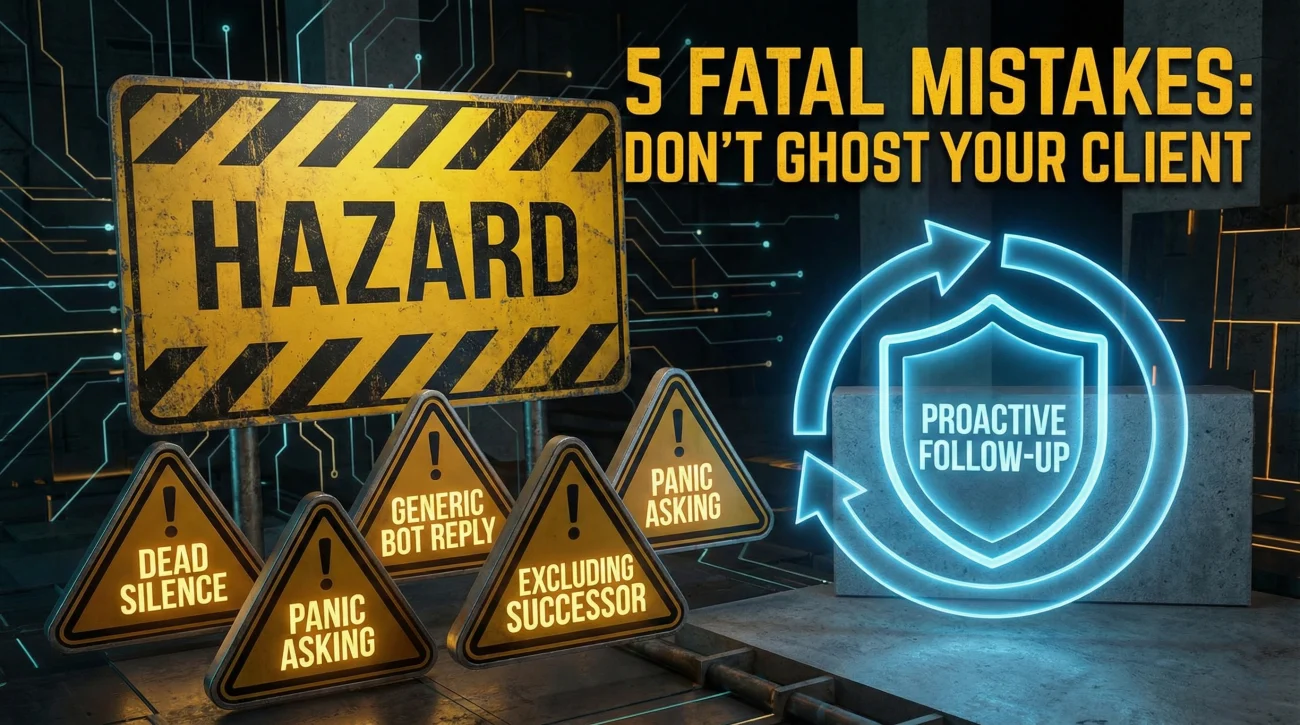
Even seasoned professionals make errors during these transitions. Here are the pitfalls that can damage your reputation.
- 🚫 The “Dead Silence”: Ignoring the email because you are “too busy” is the ultimate insult. It tells the client they were just a transaction to you.
- 🚫 The “Generic Bot” Reply: Sending “Thanks, noted” is worse than sending nothing. It shows a lack of emotional intelligence.
- 🚫 Excluding the New Contact: If they CC’d their replacement, and you Reply Only to the sender, you have just snubbed your new boss. Always “Reply All.”
- 🚫 Panic Asking: “Wait, who is doing my project now? Is everything going to be late?” Do not panic. Be the calm professional. Ask questions about the transition strategically, not frantically.
- 🚫 Forgetting the Follow-up: The farewell email is step one. Step two is setting a calendar reminder to check in with the new person 3 days later.
Not all goodbyes are happy. Sometimes a difficult client leaves, or a contact moves to a direct competitor. Here is how to handle the thorny situations without losing your professionalism.

The “Competitor” Move
If they are moving to a rival, keep it brief. Do not ask about the new role. Do not offer inside information. Stick to the logistics of the exit.
💡 Pro Tip: “Thank you for the update. We wish you the best. Please let us know who we should direct pending invoices to regarding the [Current Project].”
The “Void” (No Successor Named)
If they announce they are leaving but don’t say who is taking over, this is a red flag (Risk of Churn). Your response must trigger a call to action.
👉 Add this line: “Who will be our primary point of contact regarding the upcoming renewal? We want to ensure nothing falls through the cracks during the interim period.”
❓ Frequently Asked Questions
⏰ What is the “Golden Window” for responding?
Speed implies respect. Ideally, you should reply to a client farewell within 4 hours if it is during the business day. The absolute maximum is 24 hours. Responding days later signals that the relationship – and by extension, the account – was not a priority for you. Promptness also allows you to catch them before their email access is cut off.
🔗 Is it appropriate to ask for their personal email?
It depends on the depth of the relationship. If you have lunched together or texted about work, absolutely: “I’d love to stay in the loop – do you have a personal email or LinkedIn?” If the relationship was strictly transactional, asking for a personal email might feel intrusive. Stick to LinkedIn in that case.
👥 Should I Copy (CC) the new person?
Yes, absolutely. If the departing contact introduced the new person in their email (or CC’d them), you must Reply All. Excluding the new contact is a subtle snub. Acknowledge them directly in the body of the email to start building rapport immediately. This is your first interaction with your new stakeholder; make it count.
📞 Should this be an email or a phone call?
For standard relationships, an email is sufficient. However, for high-value VIP accounts, a phone call is superior. Call them to express your well wishes verbally, but always follow up with an email. The email serves as a paper trail for the transition and provides the contact details for the successor.
📝 How detailed should the handover offer be?
Be proactive but not overwhelming. Simply stating, “I can brief the new contact,” is often enough. If the project is complex, offer a “Status Update One-Pager” attached to your reply. This shows incredible professionalism and relieves the anxiety the departing person might feel about leaving loose ends.
Final Thoughts: The Long Game
In business, the circle is smaller than you think. The person you say goodbye to today could be the person interviewing you, buying from you, or partnering with you five years from now. How you handle their exit tells them everything they need to know about your character and your company’s values.
A thoughtful reply to a client farewell is a low-effort, high-impact investment. It costs you five minutes of drafting time, but it buys you insurance for your current account and equity in your professional network. Don’t be the person who responds with “Thanks.” Be the professional they remember fondly as they walk out the door.
If you are currently navigating a complex transition or need to draft your own departure message, we have resources to help you manage every angle. You can explore our guides on professional workplace communication, browse our library of complete farewell resources, or read the ultimate goodbye email guide to ensure you leave as gracefully as you respond.
⚠️ Legal Disclaimer: ResignSmartly provides general informational guidance about resignation, workplace communication, notice periods, handovers, and career transitions. Content does not constitute individualized legal advice. Employment laws, contracts, workplace policies, and individual circumstances vary, so review the requirements that apply to your situation and consult an appropriate qualified professional when needed.