
- Gap framing: Silence is the real red flag, so you control the story as intentional career management.
- Consultant hack: Use an “Independent Consultant” entry to keep the timeline unbroken and show real output or upskilling.
- Rebranding scenarios: Caregiving becomes a planned sabbatical, layoffs become market research and pivot, burnout or travel becomes personal development.
- Interview answer: Follow a simple sandwich structure, explain briefly, then pivot forward to why this role fits.
- Resume mechanics: Use years-only dates to reduce scrutiny, avoid functional resumes, and only mention a long current gap in a cover letter when necessary.
The “Gap” is Not a Black Hole
For decades, the standard career advice for an employment gap was to hide it. Candidates were taught to use years instead of months on their dates, to stretch timelines, or to pray that the recruiter simply wouldn’t notice. But in the volatile job market of 2025 – defined by mass layoffs, burnout, and the rise of the gig economy – a gap on your resume is no longer a scarlet letter. It is a reality of modern work life.
However, while the stigma has lessened, the scrutiny has not. Applicant Tracking Systems (ATS) can still flag gaps, and recruiters still have questions. The problem isn’t the gap itself; it is the silence surrounding it. When you leave a blank space on your CV, you allow the hiring manager to fill it with their worst assumptions: “Did they get fired?” “Are they unhirable?” “Did they spend 6 months doing nothing?”
Your task when explaining resume gaps is to seize control of the narrative. You need to pivot the conversation from “unemployment” to “intentional career management.” Whether you took time off for caregiving, travel, or a mental health reset, the difference between a red flag and a green light is purely in the branding.
The “Consultant Hack”: How to Fill the Void
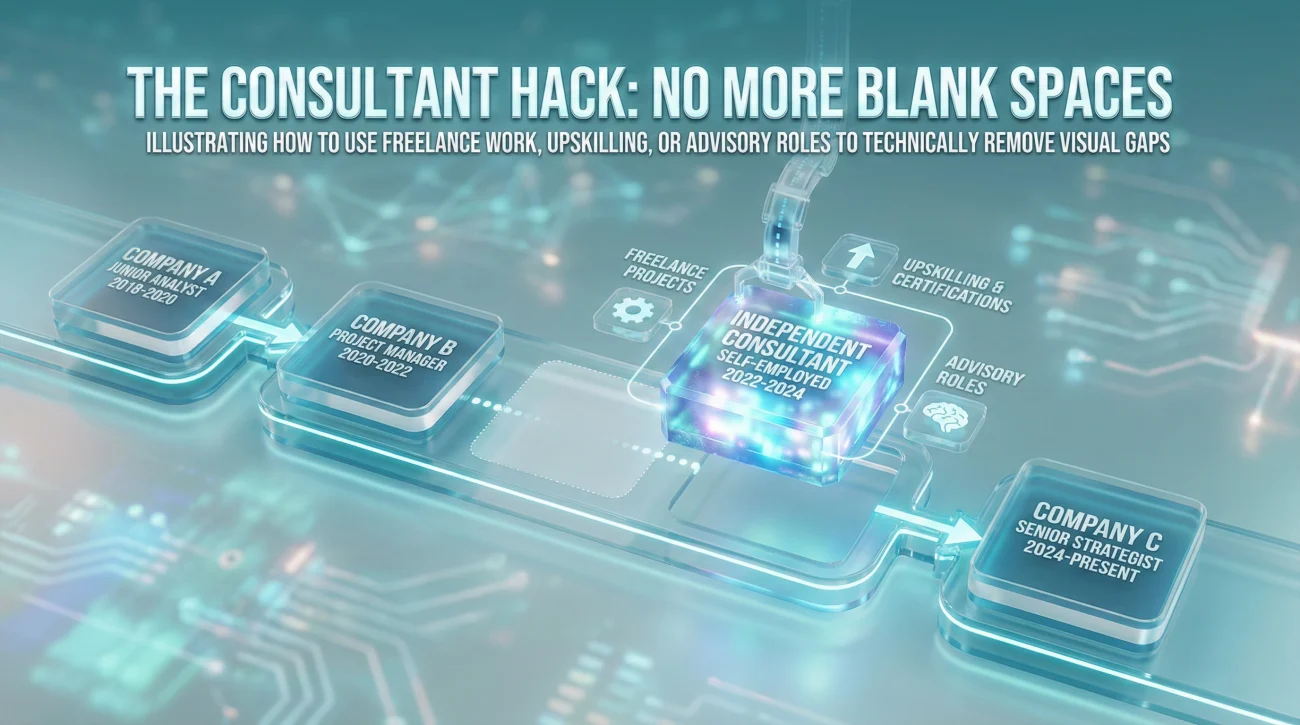
The most effective way to handle a resume gap is to ensure there technically isn’t one. Many job seekers make the mistake of thinking that only W-2 full-time employment counts as “work.” This is false.
During your time off, did you help a friend launch a website? Did you advise a former colleague on a marketing strategy? Did you take a certification course? Did you manage a family estate? In the eyes of a recruiter, this is valid experience. This is the “Consultant Hack.”
How to Structure It on Your Resume
Instead of leaving a blank space from February 2024 to Present, create a legitimate entry:
Independent Consultant | Self-Employed
[City, State] | Feb 2024 – Present
- Providing strategic advisory services to small businesses in the [Your Industry] sector.
- Completed a comprehensive market analysis project for a local startup, resulting in a 15% shift in their Q3 strategy.
- Upskilling: Completed Google Data Analytics Professional Certificate to enhance forecasting capabilities.
By framing this period as “Independent Consulting” or “Freelance Strategy,” you remove the visual gap. You shift the narrative from “I couldn’t find a job” to “I was working independently while looking for the right long-term fit.”
If you want a clean layout fast, start from a free template on FreeResumeHub and drop this “Independent Consultant” entry into your Experience section.
Rebranding Your Time Off: 3 Common Scenarios
Not all gaps can be filled with consulting. Sometimes, life happens. The key is to assign a professional label to your personal time. This is called “Rebranding.”

1. The Caregiving Gap → “Planned Sabbatical”
If you stepped away to care for a child or a sick relative, do not apologize for it. However, you don’t need to go into medical details.
Resume Label: “Career Break (Caregiving)” or “Planned Family Sabbatical.”
The Spin: “I took a planned sabbatical to manage a family matter. That situation has now been successfully resolved/stabilized, and I am fully ready to return to the workforce with renewed focus.”
2. The Layoff Gap → “Market Research & Pivot”
If you were laid off and it took 6 months to find a job, that’s not laziness; that’s the market. Don’t hide it.
The Spin: “After my role was eliminated due to restructuring, I decided to be intentional about my next move. I used this time to research the [Specific] industry and upskill in [Skill], rather than jumping into the first available seat.”
3. The Burnout/Travel Gap → “Personal Development”
If you quit to travel or recover from burnout, frame it as a “recharge” for peak performance.
The Spin: “After 5 years of high-intensity project management, I took a 6-month break to recharge and travel. This time away has restored my energy levels and given me a fresh perspective on cross-cultural communication, which I’m eager to apply here.”
The 30-Second Interview Answer
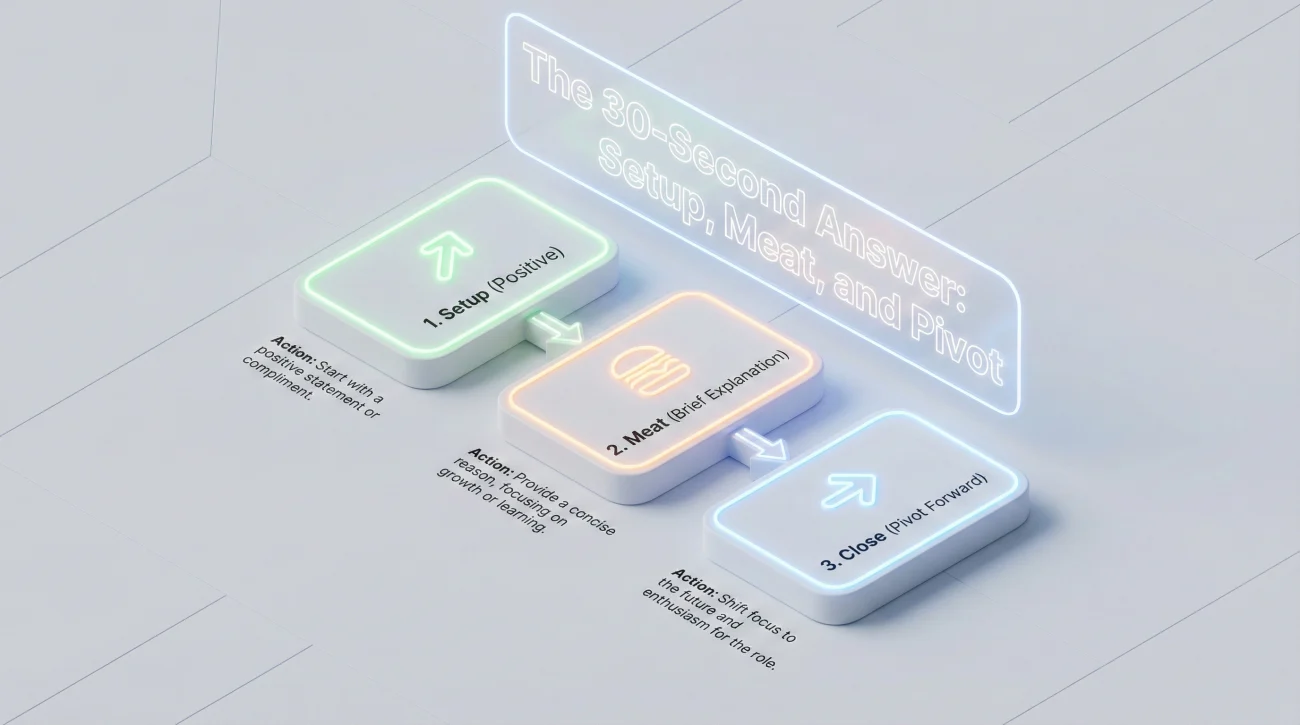
When the interviewer asks, “I see a gap here in 2024, can you tell me about that?”, do not panic. Do not ramble. Use the “Sandwich Method”:
- The Setup (Positive): Acknowledge the gap confidently.
- The Meat (Brief Explanation): State the reason clearly without over-explaining.
- The Close (Pivot Forward): Immediately redirect to why you are excited about this job.
Script for “I Was Laid Off”
“Absolutely. My previous company went through a significant restructuring, and my department was impacted. I saw this as an opportunity to pause and really define what I wanted in my next role. I’ve spent the last few months upskilling in Python and networking with leaders in the fintech space, which is actually what led me to this conversation. I’m excited to bring that refreshed focus to your engineering team.”
Script for “I Quit Without a Job”
“I decided to leave my previous role because I realized my career trajectory there had plateaued, and I wanted to dedicate my full energy to finding a role that aligned with my skills in [Skill X]. I treated my job search as a full-time job, and I’ve also been doing some consulting work on the side to keep my skills sharp. I’m now looking for a long-term home where I can drive real impact.”
Script for “Health Issues” (Vague is Better)
“I needed to take some time off to address a personal health matter. I’m happy to say that is fully behind me now, and I have a clean bill of health. I’m incredibly eager to get back into the swing of things and tackle the challenges this role presents.”
Resume Mechanics: Hiding Gaps Visually
Sometimes, the best way to handle a gap is to change how you display time. If you have multiple short gaps, the standard “Month/Year” format is your enemy.
The “Years Only” Format
If you worked at a company from February 2021 to November 2021, and then started a new job in February 2022, you have a 3-month gap. But if you list it as:
- Company A: 2021
- Company B: 2022 – Present
The gap disappears. This is perfectly honest (you did work there in those years), but it removes the scrutiny of specific months. Note: This works best for older jobs. For your most recent role, recruiters usually expect months.
The Functional Resume (Use with Caution)
Some experts recommend a “Functional Resume” that groups skills instead of chronological history. Warning: Recruiters generally hate this format. It screams “I am hiding something.” Stick to a chronological format, but use the “Consultant Hack” to fill the timeline.
Should You Explain it in the Cover Letter?
Generally, no. Your cover letter should focus on your future value, not your past history. Highlighting the gap draws unnecessary attention to it.
The Exception: If the gap is currently happening and is very long (over 1 year), briefly addressing it can pre-empt rejection. Keep it to one sentence at the end of the letter.
Example Sentence:
❓ FAQ
🤥 Can I just lie about the dates?
Absolutely not. Most companies conduct background checks that verify employment dates to the exact month. If you stretch a job that ended in March to say “Present,” you will fail the background check and have your offer rescinded. Lying is the one thing you cannot recover from.
🤖 Do ATS systems auto-reject resumes with gaps?
Some older systems might, but most modern ATS rank candidates based on keyword matching, not timeline continuity. The bigger risk is the human recruiter scanning your resume for 6 seconds. This is why the “Consultant Hack” entry is vital – it keeps the visual timeline unbroken.
📉 How long of a gap is “too long”?
Generally, a gap of less than 6 months is rarely scrutinized in today’s market. Once it crosses the 6-9 month mark, you need a solid explanation or a “Consultant” entry to bridge it.
🤐 What if I signed an NDA and can’t discuss my time off?
You can list “Confidential Project” or “Independent Consultant (Under NDA)” on your resume. Be prepared to discuss the skills you used or the type of work you did generally, without revealing the client or proprietary details.
🎓 Does going back to school count as a gap?
No. Education is a valid timeline entry. List “Student” or “Candidate for MBA” in your experience section if you weren’t working. It shows you were investing in your career, not idling.
Final Thoughts

An employment gap is only a weakness if you treat it like one. If you walk into an interview apologetic, eyes downcast, mumbling about “hard times,” you will be rejected. But if you walk in with your head high, framing that time as a period of intentional growth or necessary life management, you project confidence.
Remember: Companies hire problem solvers. Show them that even during your downtime, you were managing your life and career with strategy and intent.
⚠️ Legal Disclaimer: ResignSmartly provides general informational guidance about resignation, workplace communication, notice periods, handovers, and career transitions. Content does not constitute individualized legal advice. Employment laws, contracts, workplace policies, and individual circumstances vary, so review the requirements that apply to your situation and consult an appropriate qualified professional when needed.