- Core answer: It depends on workplace culture, In the right context it feels classy and relational, in the wrong one it looks out of touch.
- When it works: Human-centric roles, small family businesses, or tech-free field jobs where paper is normal and respect is personal.
- When to avoid: Corporate, remote, or regulated environments where searchability, legibility, and compliance require a clean typed record.
- Best compromise: Use a typed resignation for the official record, then leave a short handwritten card as the personal “heart” note.
- If you do it: Use clean paper and blue or black ink, print clearly, draft first to avoid corrections, deliver in person, and keep a photo copy for proof.
The Digital Dilemma: Is the Pen Still Mightier?
We live in an era where major life decisions are often communicated via pixels. We fall in love through dating apps, we buy homes through digital signatures, and yes, we quit jobs with a click of a “Send” button. In this high-speed digital landscape, the act of sitting down with a pen and a sheet of paper feels almost revolutionary. It signals a pause in the frantic pace of modern life. It signals care. But the critical question remains: does it signal professionalism?
The debate around the handwritten resignation letter is not merely a question of etiquette; it is a complex calculation of workplace psychology. I have witnessed seasoned managers brought to tears by a heartfelt, handwritten note from a departing protégé – a physical artifact they kept in their desk drawer for years. Conversely, I have seen corporate HR directors roll their eyes in frustration upon receiving a scrawled piece of notebook paper that defied their digital archiving systems, turning a simple resignation into an administrative annoyance.
The answer to “is handwritten resignation ok?” is rarely a binary yes or no. It is a nuanced decision that depends entirely on the ecosystem of your workplace. In the right context, it is a classy, memorable move that cements a lifelong professional relationship. In the wrong one, it is an eccentric gesture that makes you look hopelessly out of touch with modern business norms.
This guide goes beyond the basics. We will explore the hidden signals your handwriting sends, the legal implications of analog documentation, and how to execute this traditional gesture without sacrificing your professional reputation.
The Psychology of Ink: Why We Still Crave the Tangible
To understand when to use a handwritten letter, we must first understand why they still exist. In a world of Times New Roman and Arial, your handwriting is uniquely yours. It carries your “voice” in a way that a typed font never can. When you handwrite a resignation, you are subconsciously telling your employer, “I did not just copy-paste a template. I sat down, I thought about our time together, and I crafted this message specifically for you.”
This psychological impact is powerful. It softens the blow of bad news. A typed letter is transactional; a handwritten letter is relational. However, this intimacy is a double-edged sword. In a strictly transactional environment – like a high-frequency trading floor or a massive call center – introducing intimacy can feel awkward or unprofessional. It breaks the “fourth wall” of corporate detachment.
Reading the Room: When to Write It by Hand
Before you uncap your pen, you need to assess the culture you are leaving. Writing resignation letter by hand is a stylistic choice that carries heavy connotations of tradition, respect, and personal connection. Here is a deep dive into where it fits best.
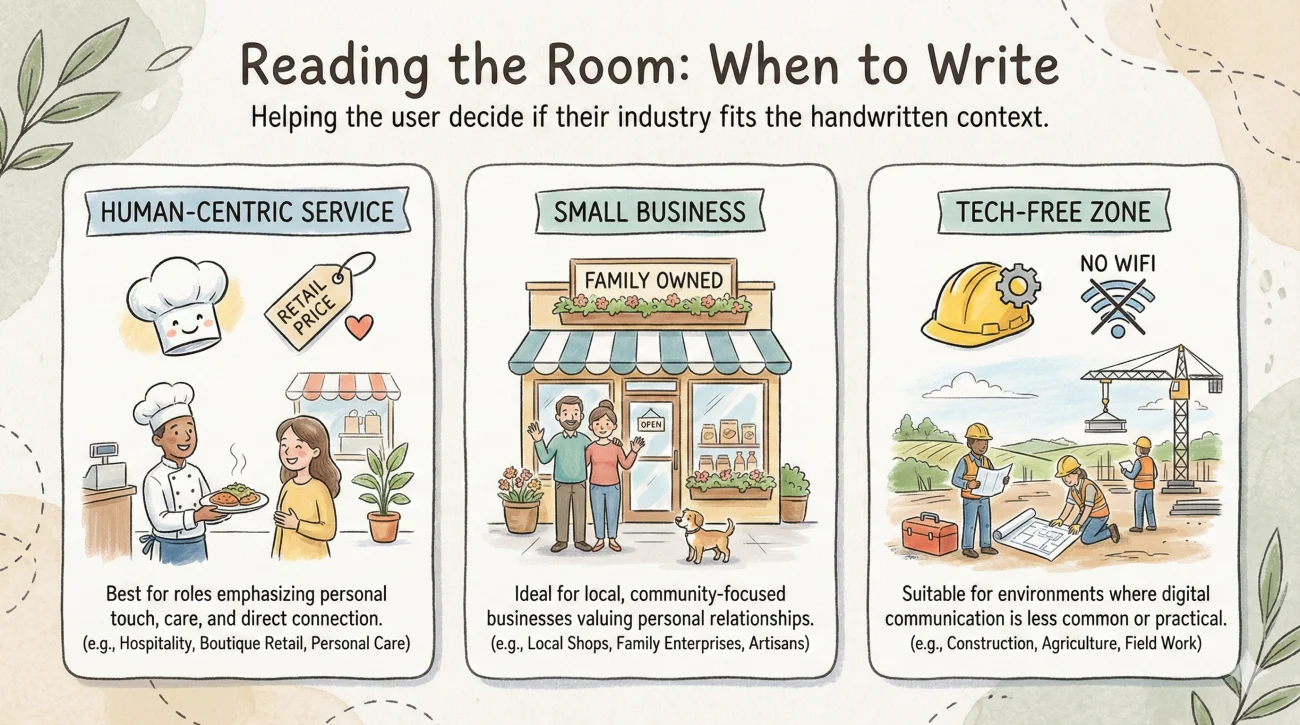
The Human-Centric Industries
If you work in hospitality, retail, skilled trades, or personalized care (such as nannies, personal assistants, or caregivers), your work is inherently physical and human-to-human. In these environments, digital communication often feels sterile and disconnected from the reality of the job.
Consider the case of a sous-chef who has worked side-by-side with a restaurant owner for five years, sharing the heat and stress of the kitchen. Sending a formal email to quit would feel cold, almost dismissive of the bond formed in the trenches. Instead, handing over a clean, handwritten note expresses gratitude for the mentorship and shared struggles. Here, the medium is the message: “I respect you enough to take the time to write this out.”
The Mom-and-Pop Dynamic
In small, family-owned businesses where the owner is also your direct manager, the corporate rules of engagement do not apply. If you have been treated like family – invited to holiday dinners, supported through personal crises – you should resign like family.
In these intimate settings, a cold PDF attachment can feel like a slap in the face to a mentor who gave you your first break. A handwritten letter bridges the gap between employee and friend, acknowledging the personal investment they made in you. It says, “I am leaving the job, but I am not abandoning the relationship.”
The Tech-Free Necessity
Sometimes, logic dictates the format. If you work on a construction site, a factory floor, or in a field role where you do not have a company email address or regular computer access, a pen and paper resignation letter is simply the practical standard.
In these “field” scenarios, waiting until you can access a printer might delay your notice unnecessarily. A handwritten note, delivered immediately to your foreman or site supervisor, is immediate and tangible proof of notice. It is functional, direct, and universally accepted in blue-collar industries.
The Hard “No”: When to Stick to Digital
While sentiment is valuable, we must face the brutal reality of modern corporate infrastructure. Most companies run on digital documentation, and paper is the enemy of efficiency.
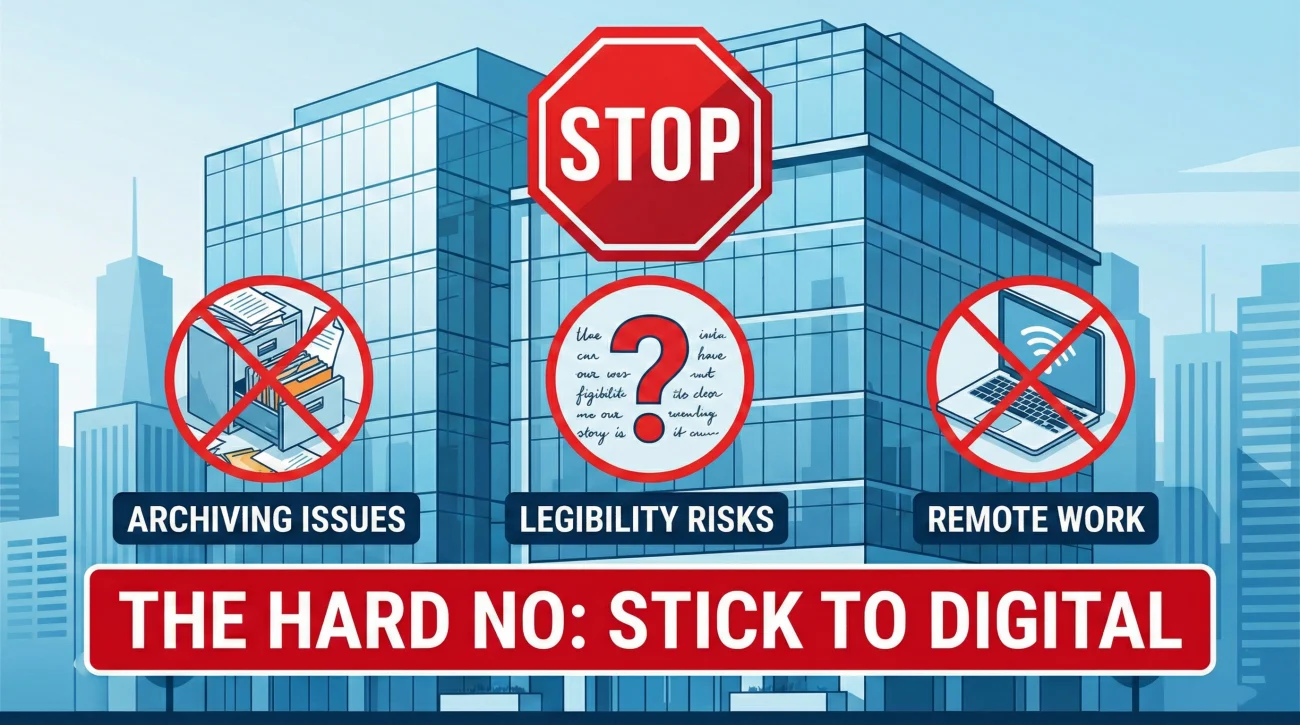
The Corporate Machine
If you work in finance, technology, law, or any corporate office setting, do not handwrite your official resignation. These industries thrive on speed, efficiency, and searchability. Here is why HR departments despise handwritten notes:
- 🚫 Archiving Issues: A physical paper cannot be easily indexed in a database. It must be scanned, named, and uploaded manually.
- 🚫 Legibility Risks: If a payroll administrator misreads your handwritten “January 15th” as “January 13th,” it can cause errors in your final paycheck or benefits termination.
- 🚫 Perception of Competence: Submitting a handwritten note in a Fortune 500 company suggests you do not understand professional norms or lack basic business communication skills. It frames your departure as amateurish rather than seamless.
The Remote Disconnect
It sounds obvious, but it bears repeating: if you work remotely, do not mail a handwritten letter. The logistics alone make this a bad idea. By the time the postal service delivers your letter, your two-week notice period might be halfway over, leaving your manager scrambling to fill your spot. Remote roles demand digital exits. A video call followed immediately by an email is the only professional standard here.
Legal and Compliance Concerns
In highly regulated industries like healthcare or banking, resignation letters are legal documents. They may be pulled up years later during audits or employment disputes. Handwritten documents are harder to authenticate and easier to challenge (“Is that really a 7 or a 1?”). Typed documents remove ambiguity. For your own protection, ensure there is a clear, typed record of exactly when you gave notice.
The Strategic Compromise: The Hybrid Approach
What if you work in a corporate job but have a deep personal bond with your boss? You are torn between the need for a formal record and the desire to be warm and grateful. You don’t have to choose.
The solution is the Hybrid Approach, and it is often the most sophisticated way to leave a job.
- 📧 Step 1: The Official Record (The “Head”). Submit a standard, typed resignation letter or email to your manager and HR. This document handles the business: effective dates, transition of duties, and contact info. It satisfies all legal requirements and stops the clock on your notice period.
- ✉️ Step 2: The Personal Note (The “Heart”). Leave a handwritten card on your manager’s desk. This note doesn’t talk about “resignation” or “notice periods.” It talks about gratitude. “Thank you for taking a chance on me three years ago. I will never forget how you supported me during the merger.”
This approach covers your legal bases while preserving the relationship. For the official part, you can use a standard resignation letter template to ensure you don’t miss any technical details, saving your creative energy for the personal note, which is the one they will actually keep.
The Art of Execution: Doing It Right
If you have decided that a handwritten resignation letter is appropriate for your situation, the execution must be flawless. Because handwritten notes are rare, they attract more scrutiny. Sloppiness here is fatal to your professional image.
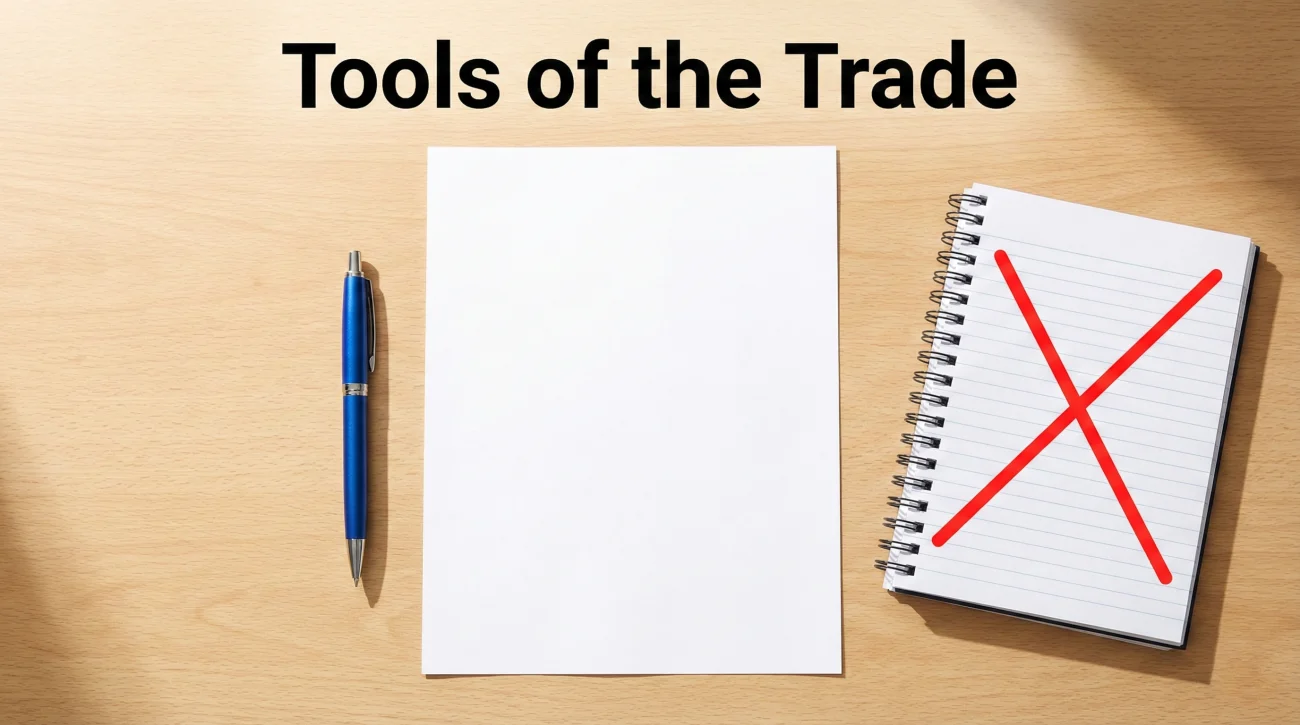
Materials Matter: The Canvas
Do not tear a page out of a spiral notebook. The “fringe” on the side looks messy and juvenile, like homework you forgot to turn in. Do not use the hotel notepad you grabbed from your last vacation.
Use a clean, fresh sheet of white printer paper (8.5″ x 11″) or high-quality stationery. If you use stationery, keep it neutral – white, ivory, or cream. Avoid cute patterns, floral borders, or bright colors; this is a serious business transaction, not a thank-you card for a wedding gift. The paper should feel substantial, not flimsy.
The Instrument: Pen and Ink
Put away the pencil. Pencil fades, smudges, and psychologically suggests that the decision is not permanent. Put away the red marker (too aggressive) and the glitter gel pen (too childish).
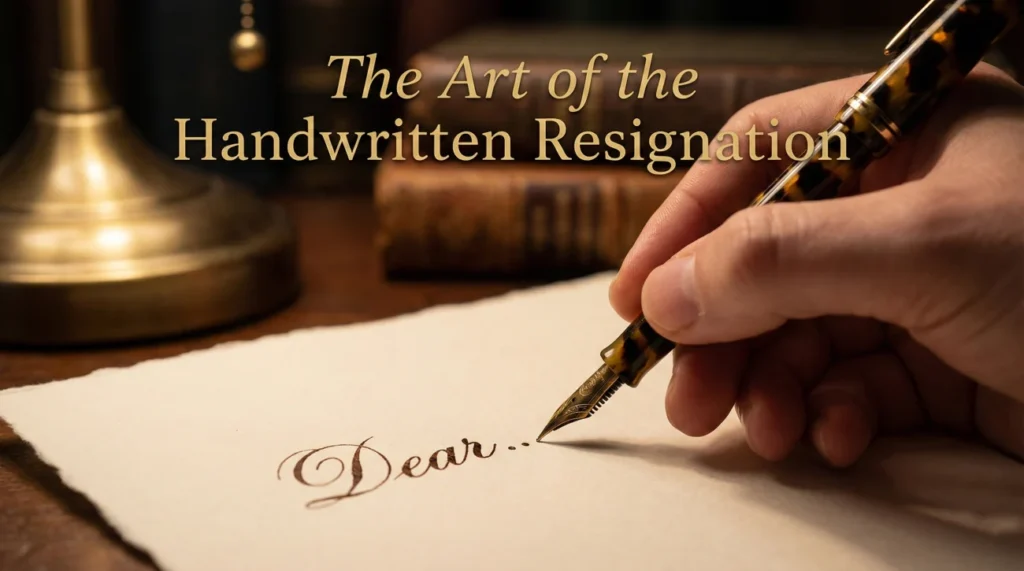
Use a high-quality ballpoint or gel pen with blue or black ink.
💡 Pro Tip: Blue ink is often preferred in legal and business contexts because it distinguishes the original document from a black-and-white photocopy. It proves at a glance that the document in hand is the “wet ink” original.
The Legibility Test
This is the most critical technical factor. If your handwriting looks like a doctor’s prescription, type your letter. Period. If the payroll department cannot read your last day of work, you might not get your final check on time, or your benefits might be cut off prematurely.
If you must write it and your cursive is rusty, print clearly in block letters. Slow down. Treat it like drafting an architectural diagram, not a grocery list. Spacing is key – leave plenty of white space between lines so the text doesn’t look cramped and anxious.
The “Sloppy Copy” Rule
Never write your final version first. Draft your resignation on a scratchpad or type it out on your phone to get the wording right. Edit it ruthlessly to keep it short (writing by hand is tiring, and your hand will cramp if you write a novel). Only when the text is perfect should you transcribe it onto your final sheet of paper. This prevents scratch-outs and the need for correction fluid, which are absolute “no-gos” on a formal document.
Visualizing the Standard
A handwritten letter should be concise. Long walls of handwritten text are exhausting to read. Keep it brief, professional, and to the point. Here is how it should look on the page:
[Your Name]
[Your Address] | [Your Phone]
[Date]
[Manager’s Name]
[Company Name]
Dear [Manager’s Name],
Please accept this letter as my formal resignation from my position as Head Carpenter at [Company Name]. My final day of work will be Friday, June 28, 2024.
I want to thank you for the mentorship you have provided over the last four years. I have learned a great deal about craftsmanship and business management from you, and I will carry those lessons with me as I start my own workshop.
I am committed to finishing the cabinetry for the Miller project before I leave to ensure the team stays on schedule.
Sincerely,
[Your Signature]
[Your Name]
Why This Works
Notice the brevity. It fits comfortably on one page with generous margins. It covers the “Three P’s” of resignation: Position (what you are quitting), Period (when you are leaving), and Positivity (gratitude). It doesn’t ramble, and it doesn’t air grievances. In handwritten form, grievances look even more petty and personal. Keep it clean.
The Hand-Off: Delivery Etiquette
You have written the perfect letter. Now, how do you get it to your boss? The delivery is just as important as the document.

Always In Person
A handwritten letter is an intimate artifact; leaving it on an empty desk while your boss is at lunch feels like a “Dear John” breakup letter. It is cowardly. You must deliver it face-to-face.
Schedule a brief chat. Sit down. Look them in the eye. Say your piece verbally first: “I’ve decided to move on, and my last day will be the 28th.” Then, hand the letter over physically. You can say, “As we discussed, here is my formal written notice for your records.” This closes the loop professionally and ensures there is no ambiguity about the timeline.
To Envelope or Not to Envelope?
If you are handing it directly to them in a private office, you don’t strictly need an envelope, but it adds a nice touch of privacy. If you are handing it to them on a busy shop floor or in a shared workspace, absolutely use a plain white envelope. This prevents prying eyes from reading “RESIGNATION” on the paper as you pass it over, protecting both your privacy and your manager’s dignity.
❓ FAQ
⚖️ Is a handwritten resignation legally valid?
Absolutely. In fact, a handwritten document with a wet ink signature is often considered the “gold standard” of authenticity in legal terms. No law requires a resignation to be typed. As long as the content is legible and clearly states your intent to resign and your final date, it is a binding legal notice. However, “legible” is the keyword here – if it can’t be read, it can be contested.
📸 Should I take a picture of my handwritten letter?
Yes, 100%. This is non-negotiable. Once you hand that paper over, you no longer have a copy. In the digital age, it is crucial to have a backup. Snap a clear, well-lit photo of the letter with your phone before you put it in the envelope. Better yet, use a scanning app to create a PDF copy. Email this copy to your personal email address so you have a timestamped record of exactly what you submitted and when.
📝 Can I mix typed and handwritten elements?
You can, but proceed with caution. Using a “fill-in-the-blanks” form template where you handwrite your name and date into a typed document is acceptable for efficient, low-level administrative processing (like in retail chains with high turnover). However, it lacks the personal charm of a fully handwritten note and the polish of a fully typed letter. It is functional and utilitarian, but rarely impressive.
✍️ What if I start crying or get emotional while writing it?
This is common, especially if you are leaving a job you loved or a boss who mentored you. However, do not send a tear-stained letter. It sounds poetic, but in business, it looks unstable. If you mess up the paper, throw it away and start over. Your resignation should look composed and steady, even if you feel emotional inside.
📉 Does a handwritten letter make me look “old school”?
It depends on the industry. In tech, media, or startups? Yes, it might make you look like a dinosaur who doesn’t know how to use DocuSign. In luxury goods, fine dining, or legal services? It might make you look distinguished and well-mannered. Always calibrate to the specific culture of your organization.
Final Thoughts: The Last Impression
Deciding whether to submit a handwritten resignation letter comes down to emotional intelligence. It is a tool, not a rule. In the hands of a retail employee thanking a supportive manager, it is a beautiful, human gesture that honors the relationship. In the hands of a junior accountant resigning from a multinational firm, it is a confusing error that creates administrative friction.
Your goal is to leave a legacy of competence and class. If your handwriting enhances that legacy by adding a touch of personal warmth, write away. If it distracts from it by causing readability issues or workflow delays, stick to the keyboard. Whatever method you choose, ensure the message is clear, firm, and gracious. For more guidance on navigating your exit strategy, including scripts for that final meeting, explore our library of professional resignation resources.
⚠️ Legal Disclaimer: ResignSmartly provides general informational guidance about resignation, workplace communication, notice periods, handovers, and career transitions. Content does not constitute individualized legal advice. Employment laws, contracts, workplace policies, and individual circumstances vary, so review the requirements that apply to your situation and consult an appropriate qualified professional when needed.