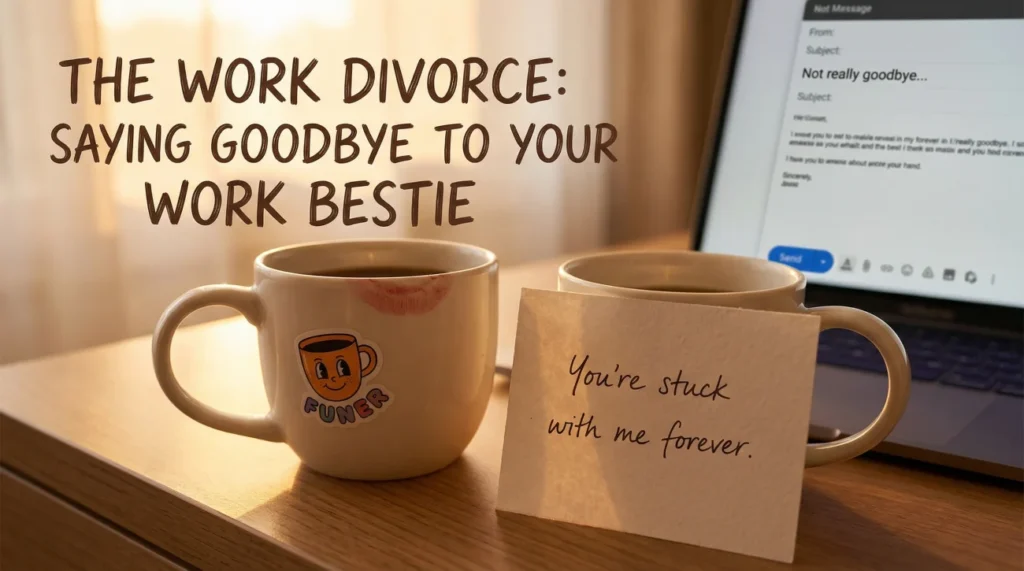
- This goodbye hits differently: Work besties feel like a “work divorce” because you built trust through shared stress and daily proximity.
- Why it hurts so much: Propinquity, emotional regulation, and survivor guilt make the bond feel bigger than the job.
- Do not blindside them: Tell them you are looking before you resign, then tell them right after your boss, then do an “emotional handover.”
- Three rules that save the friendship: Separate email channel, match your real voice, and lock a concrete calendar plan.
- How to keep it alive after you leave: Migrate off Slack fast and build rituals so the friendship does not fade from lost convenience.
The “Work Divorce”: Why Saying Goodbye to Your Work Bestie Is a Different Kind of Heartbreak
I’ll never forget the moment I watched a Senior Marketing Manager – known for her stoic, “ice queen” demeanor – break down in tears at her desk. She hadn’t been fired. She hadn’t lost a key client. She had just opened a goodbye email to work bestie. It wasn’t a formal notification; it was a love letter to a friendship forged in the trenches of corporate chaos.
The email didn’t say, “Best regards.” It said: “You turned a job into an adventure. I’m not losing a coworker; I’m gaining a lifetime friend with an unfortunate new commute.”
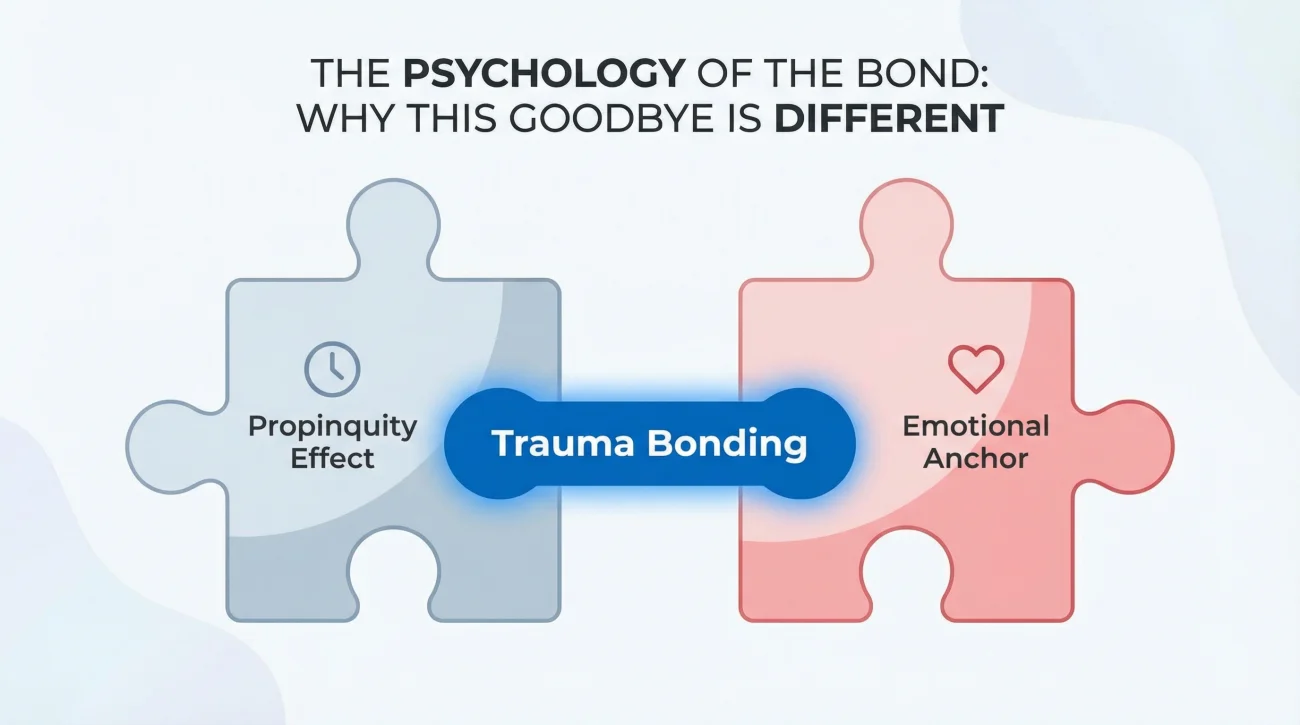
Work friendships hit differently. Psychologists call this “trauma bonding” – the closeness that develops when you survive impossible deadlines, unreasonable clients, and 2 AM crises together. You know their coffee order, their family drama, and their specific “tell” when they are about to snap in a meeting. When you leave, you aren’t just changing jobs; you are initiating a “work divorce.”
This guide goes far beyond the standard farewell. We will explore the complex psychology of leaving your “Work Spouse,” how to handle the guilt of leaving them behind, and how to craft a farewell letter to best friend colleague that honors the depth of this unique bond while securing the friendship for the future.
The Psychology of the “Work Spouse”: Why This Goodbye Hurts So Much
Why does leaving a “work wife” or “work husband” often feel harder than leaving the job itself? To understand the weight of this email, we must understand the science behind the bond.
1. The Propinquity Effect (The Power of Proximity)
Social psychology teaches us about the “Propinquity Effect” – the tendency for people to form friendships with those they encounter often. You have likely spent more waking hours with your work bestie than with your actual spouse or partner. You have shared thousands of micro-interactions – glances across the room, coffee runs, Slack DMs – that built a shared reality only the two of you inhabit. Losing that daily proximity creates a genuine void.
2. External Emotional Regulation
Your work bestie is often your “External Regulator.” When you are stressed, looking at them calms you down. When you are angry, venting to them releases the tension. Writing a goodbye email to work wife or husband is essentially acknowledging that you are losing your primary coping mechanism for workplace stress.
3. The “Survivor’s Guilt”
This is the most unspoken aspect of the departure. If you are leaving a toxic or difficult workplace, you may feel a pang of guilt for “escaping” while leaving your best friend behind in the trenches. Your goodbye email needs to navigate this delicate emotion – celebrating your new chapter without making them feel abandoned.
The Pre-Email Protocol: Managing the Transition
Because this relationship is special, the “Goodbye Email” is actually the final step in a longer goodbye process. Do not let them find out via a mass email.
| Stage | Action Required | Why? |
|---|---|---|
| The “Secret” Phase | Tell them you are looking for a new job before you resign. | Trust is the currency of this friendship. Blindsiding them breaks that trust. |
| The “Resignation” Day | Pull them aside immediately after telling your boss. | They need to hear it from you, face-to-face (or on a private call), not from the office rumor mill. |
| The “Handover” | Not just work tasks, but “Emotional Handover.” | Discuss who they can lean on now. Help them find a new ally if possible. |
The 3 Golden Rules of the Bestie Goodbye Email
When it is finally time to hit send on your personal goodbye message to friend, strict professional etiquette does not apply. In fact, following corporate rules here can damage the friendship.
Rule 1: The “Church and State” Separation
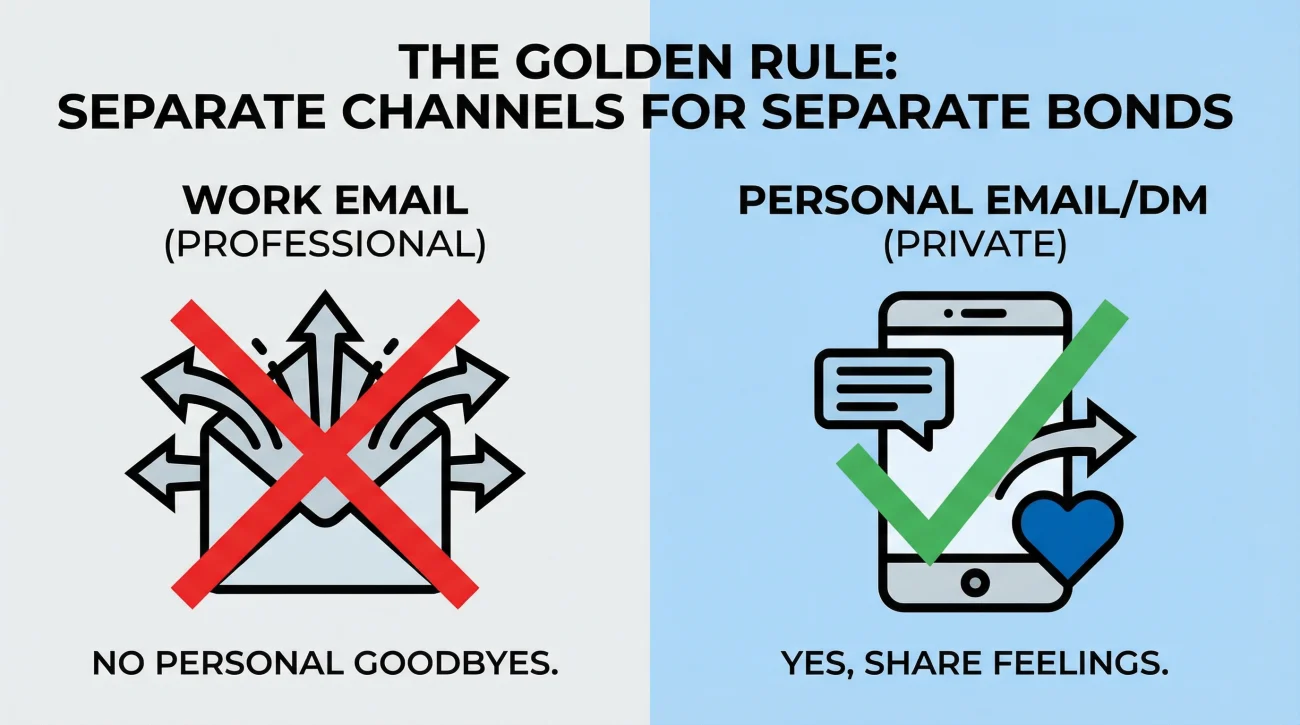
Never, under any circumstances, include your heartfelt message to your bestie in the BCC of your mass farewell email. That is insulting. They deserve a separate, dedicated email sent directly to them. Better yet, send it to their personal email address to symbolize the shift from “colleague” to “friend.”
Rule 2: Authenticity Over Polish
If your friendship is built on roasting each other, a sentimental poem will feel fake. If you communicate via memes, use memes. The tone must match the friendship. If you call them “Partner,” “Work Wife,” or “Chief Venting Officer,” use those titles. Do not code-switch into “Corporate Speak” for this email.
Rule 3: The “Calendar” Commitment
Vague promises (“Let’s grab lunch sometime”) are the death knell of work friendships. To save the friendship, you must make a concrete plan before you leave. “Drinks next Thursday at 7 PM” is a promise. “Let’s hang out” is a lie. Force the calendar invite.
8 Deep-Dive Templates for Every Type of Work Friendship
Work besties come in different flavors. I have categorized these templates by the dynamic of the friendship, with notes on why each works.
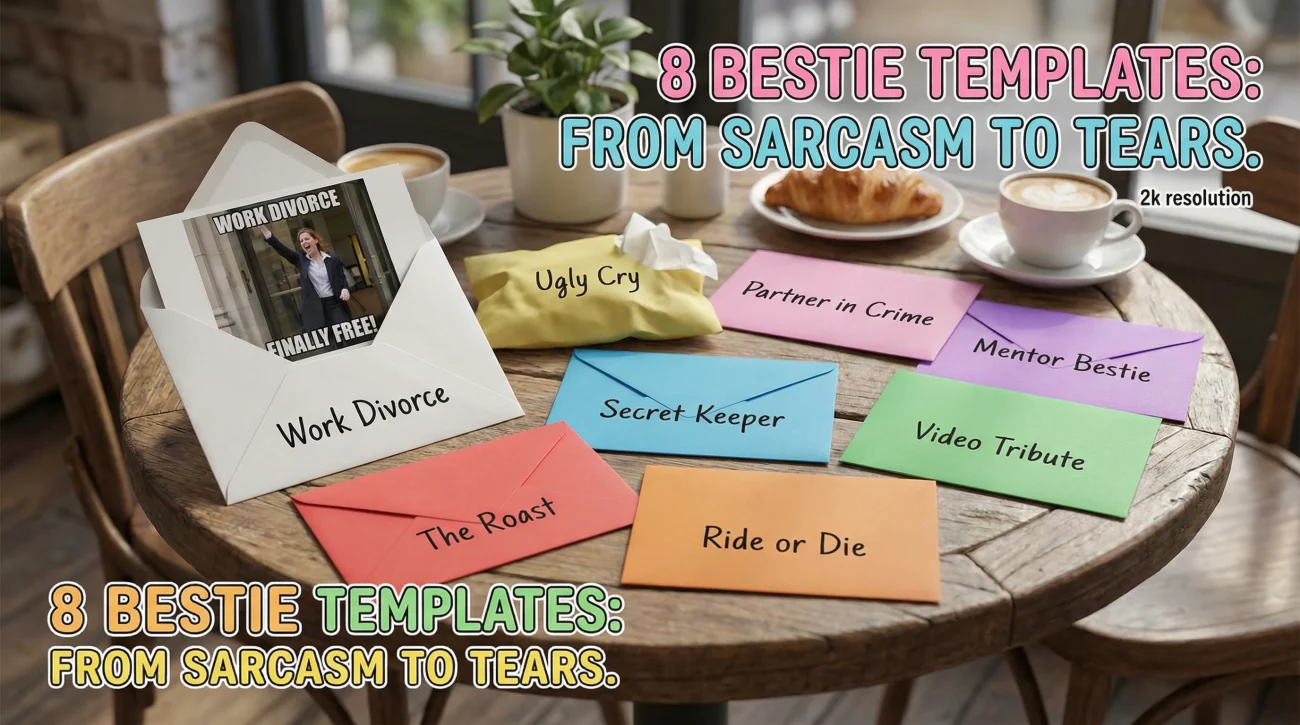
1. The “Work Divorce” (Humor/Sarcasm)
Best for: The “Work Spouse” dynamic where affection is expressed through sarcasm and banter.
Why it works: It uses the “divorce” metaphor to acknowledge the closeness of the bond while using humor to deflect the pain of separation.
Subject: I’m leaving you (and I’m taking the kids/plants)
Hey [Nickname],
I am writing to formally serve you with “divorce papers.”
Leaving this job is easy. Leaving you alone with [Annoying Office Thing/Person] feels like a crime. I am genuinely sorry for abandoning you in the trenches. I have failed as a Work Spouse.
Division of Assets:
- You get custody of the good stapler.
- I am taking all our shared secrets.
- You have to water my desk plant (don’t kill it).
In all seriousness: You are the only reason I survived the last [Number] years. Thank you for the therapy sessions, the coffee runs, and the laughs that saved my sanity. I would have quit on Day 3 without you.
This isn’t a real goodbye. We are getting drinks next Friday at [Place]. Put it in your calendar or I will call HR.
Love,
Your Ex-Work-Spouse
2. The “Ugly Cry” (Deeply Sentimental)
Best for: A profound friendship where you supported each other through significant life events (breakups, grief, weddings).
Why it works: It strips away all professional pretense. It validates that the relationship was the most important part of the job.
Subject: This is the hardest email I’ve ever written
[Name],
I’ve been staring at this draft for an hour because I don’t know how to say goodbye to you.
You weren’t just a coworker. You were my anchor. When I was struggling with [Project/Personal Issue], you were the one who picked me up. You turned a coworker relationship into a genuine sisterhood/brotherhood.
Thank you for:
- Knowing exactly when I needed a coffee (and bringing it without asking).
- Listening to my rants without judgment.
- Being the best part of my workday, every single day.
I am excited about my new job, but I am heartbroken to not see your face every morning. I love you, and you are stuck with me forever. I’m emailing this to your personal account because that’s where I belong now.
Dinner on me next week.
Always,
[Your Name]
3. The “Partner in Crime” (Shared History)
Best for: The colleague you executed big projects or solved disasters with. The “War Buddy.”
Why it works: It highlights shared accomplishments (“The Dream Team”), making the recipient feel valued for their competence as well as their friendship.
Subject: End of an Era 🕵️♀️
Partner,
They are breaking up the dream team. It’s a tragedy for [Company Name].
Looking back at what we pulled off – [Mention 1-2 crazy projects] – I still don’t know how we did it. But I know I couldn’t have done it with anyone else. You made the impossible deadlines feel like an adventure.
I am going to miss our “mind meld” during meetings where we could communicate entirely with one look. Who is going to understand my eye-rolls now?
Keep crushing it. I’ll be cheering you on from the outside.
Text you later,
[Your Name]
4. The “Mentor-Bestie” Hybrid
Best for: A friend who was also a guide/mentor. This navigates the power dynamic shift from “Mentor” to “Peer Friend.”
Why it works: It explicitly states the transition: “Our mentorship ends, our friendship begins.”
Subject: Thank you for everything
[Name],
I am leaving with a career I’m proud of, and I owe so much of that to you.
Thank you for being my sounding board, my editor, and my cheerleader. You taught me [Skill], but more importantly, you taught me how to handle [Situation] with grace. I am a better professional and a better person because I sat next to you.
Our mentorship ends here, but our friendship is just starting. Now I can finally buy you a drink without it feeling like “networking.”
With love,
[Your Name]
5. The “Survivor’s Guilt” (Addressing the awkwardness)
Best for: When you are leaving a toxic environment but your friend is staying. This is crucial for maintaining the bond without being insensitive.
Why it works: It acknowledges the elephant in the room. It validates their struggle while reassuring them you aren’t abandoning them.
Subject: I’m not leaving YOU, I promise
[Name],
I have mixed feelings about today. I am relieved to be moving on, but I feel terrible leaving you behind in the madness.
Please know that just because I’m not in the building doesn’t mean I’m not in your corner. My phone is always on for your vents, your rants, and your sanity checks. I am still your Chief Venting Officer, just remote.
You are too talented for this place, and I’ll be scouting for you on the outside.
Hang in there. I’ve got you.
[Your Name]
6. The “Keeper of Secrets”
Best for: The friend who knows where the bodies are buried. The confidant.
Subject: I’m taking the secrets with me 🤐
[Name],
As I depart, I solemnly swear to protect our vault of secrets. The “Incident of 2022” goes with me to the grave.
Thank you for being the one person I could be 100% unfiltered with. The psychological safety you provided was my lifeline. Knowing I could tell you anything and not be judged was the only thing that kept me sane.
I’ll miss our daily debriefs. Call me tonight?
[Your Name]
7. The Video Tribute
Best for: Remote besties. Text can feel cold; video conveys the warmth of your voice.
Subject: A video for you (don’t cry)
Hey,
Typing didn’t feel like enough, so I recorded a message for you.
[Link to Loom/Video]
Love you,
[Your Name]
8. The “No Drama” (Short & Sweet)
Best for: When you’ve already said everything in person (perhaps over a tearful lunch) and just want a digital record.
Subject: Not a goodbye
Hey,
I’m not writing a long emotional email because I’m going to text you in about 20 minutes anyway.
But I wanted to put it in writing: You are the absolute best, and I’m going to miss working with you more than I can say.
See you Saturday.
[Your Name]
The “Platform Migration” Strategy: Moving from Slack to Life
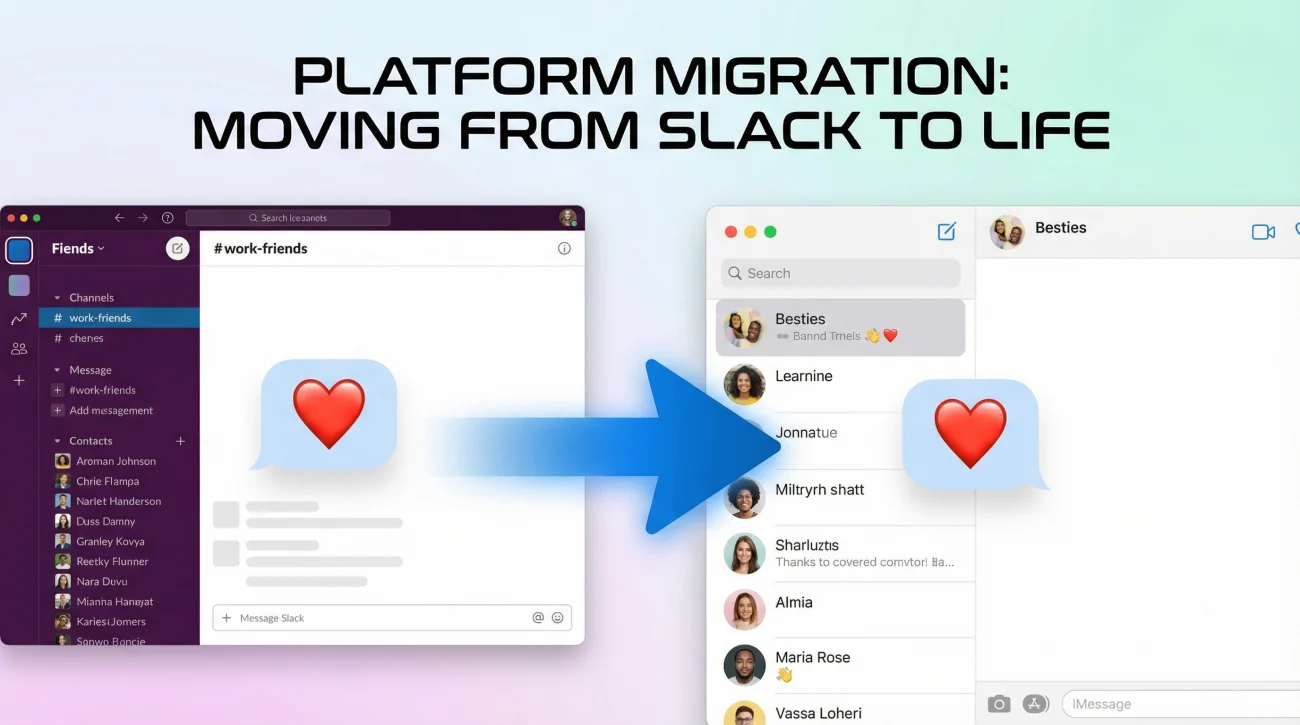
One of the biggest reasons work friendships fail is “Platform Dependency.” You are used to chatting on Slack or Teams. When you lose access to those platforms, the communication friction increases. You must actively migrate the friendship.
- The “Spotify” Move: Create a shared playlist of songs you both listened to at work. It keeps a low-touch connection alive.
- The “Meme” Channel: Move your meme sharing immediately to Instagram DMs or TikTok. This maintains the humor.
- The “Group Chat” Rename: If you have a WhatsApp group, rename it from “Work Chat” to something personal like “The Survivors” to signify the new era.
The Survival Guide: Maintaining the Friendship Post-Exit
The sad truth: 80% of work friendships fade within 6 months of a departure. This isn’t because you don’t care; it’s because you lose the “Context of Convenience.” You no longer have the shared daily struggles to fuel conversation.
Here is how to beat the odds and keep your goodbye email to work husband or wife from being the final chapter:
| The Challenge | The Fix |
|---|---|
| Loss of “Office Gossip” | Pivot conversations to personal life immediately. Stop talking about work within 2 weeks. Build new shared interests. |
| Convenience Gone | Schedule “Rituals.” A monthly dinner. A weekly Friday call. If it’s not on the calendar, it won’t happen. Treat it like a recurring meeting. |
| The “Replacement” Jealousy | Accept that they will make new work friends. It doesn’t replace you. Be happy for them, not possessive. Ask about the “new you” and joke about it. |
❓ Frequently Asked Questions (FAQ)
📧 Should I send this to their work email or personal email?
Personal email (or text) is significantly better. Sending it to their work email is fine, but moving the conversation to a personal channel symbolizes the transition of the relationship. “I’m emailing this to your Gmail because we are real friends now.” It also ensures they keep the message if they ever leave the company.
🤐 What if I have a “Work Spouse” but I’m married?
Be careful with the language. “Work Spouse” is a common industry term, but in writing, it can sometimes look odd if read out of context by others. Stick to “Partner in Crime” or “Bestie” if you want to be safe, especially if IT monitors emails.
🎁 Should I give a gift?
Yes. A small, meaningful gift (a framed photo of the team, an inside joke mug, or a plant) cements the memory. Give it privately, not in front of everyone, to avoid making others feel excluded.
🤝 How do I handle my other “Regular” friends?
You likely have a “Tier 2” of work friends – people you like but aren’t besties with. Send them a warm, personalized email (see our “Warm but Brief” templates), but save the “Love Letter” for your Tier 1 bestie. Authenticity means acknowledging the difference in relationship depth.
Final Thoughts: It’s Not a Goodbye, It’s a Promotion
Sending a goodbye email to work bestie is the final act of your “work marriage.” It is your chance to promote them from “colleague” to “friend.”
Don’t let the awkwardness of leaving silence you. Tell them they mattered. Tell them you love them. In the end, jobs are temporary, salaries change, and companies restructure, but the people who helped you survive them are forever.
If you are wrapping up your time, ensure you’ve checked our resignation guides. But for this specific relationship, throw away the rulebook and write from the heart.
⚠️ Legal Disclaimer: The resignation templates, email samples, and professional guidance provided in this guide are for informational purposes only and do not constitute legal advice. Employment laws and contract requirements vary by jurisdiction and individual circumstances. Please review your employment agreement and consult your HR department and/or a qualified attorney to ensure compliance with applicable laws and policies.