- What it is: A board resignation is a governance event with fiduciary duties and permanent corporate records, not a normal employee exit.
- Notice norms: Nonprofit boards often expect 30 to 60 days, corporate boards 60 to 90 days, committee chairs should allow longer for succession.
- Letter requirements: Send a formal written letter to the board chair and CEO or executive director, copy the corporate secretary, and state an exact effective date.
- Transition duties: Finish key meetings if possible, hand off committee work, document priorities, and return or confirm deletion of confidential materials.
- Special cases: Keep disagreements professional, resign promptly for conflicts of interest, and get counsel if litigation or financial distress is involved.
Understanding Board Member Resignation
Board service carries fiduciary responsibilities that extend beyond employment relationships – your departure affects organizational governance, committee operations, and strategic continuity. A professional Board Resignation Letter addresses these unique obligations, ensures proper governance transition, and maintains the professional relationships that define effective board service.
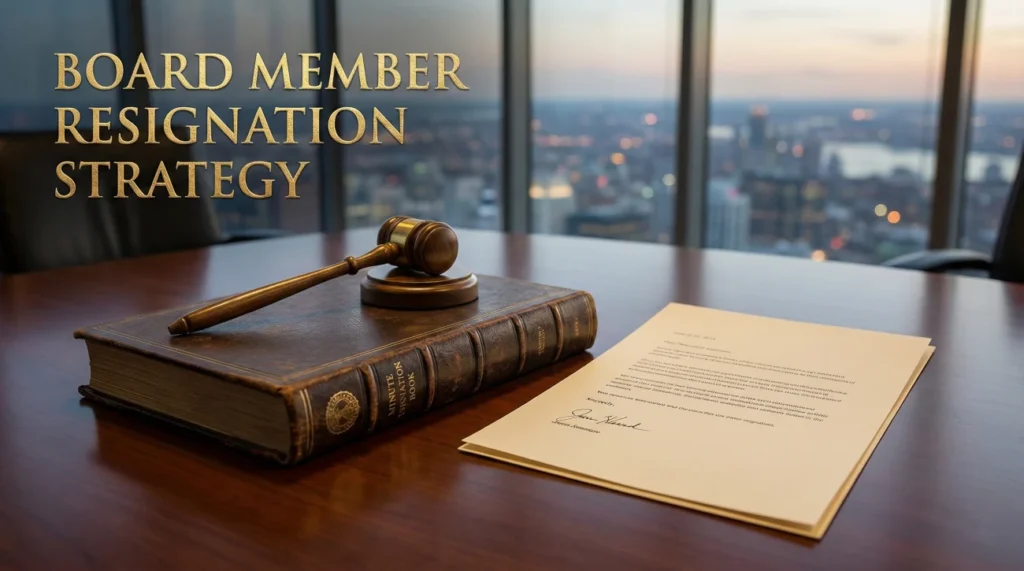
Board resignations differ fundamentally from employee departures. You’re stepping down from a position of trust involving legal duties, confidential information, and organizational oversight. Your resignation becomes part of official corporate records and meeting minutes.
This guide provides templates for nonprofit and corporate boards, covering proper notice periods, essential handover requirements, and how to resign while honoring fiduciary obligations.
Fiduciary Obligations and Notice Requirements
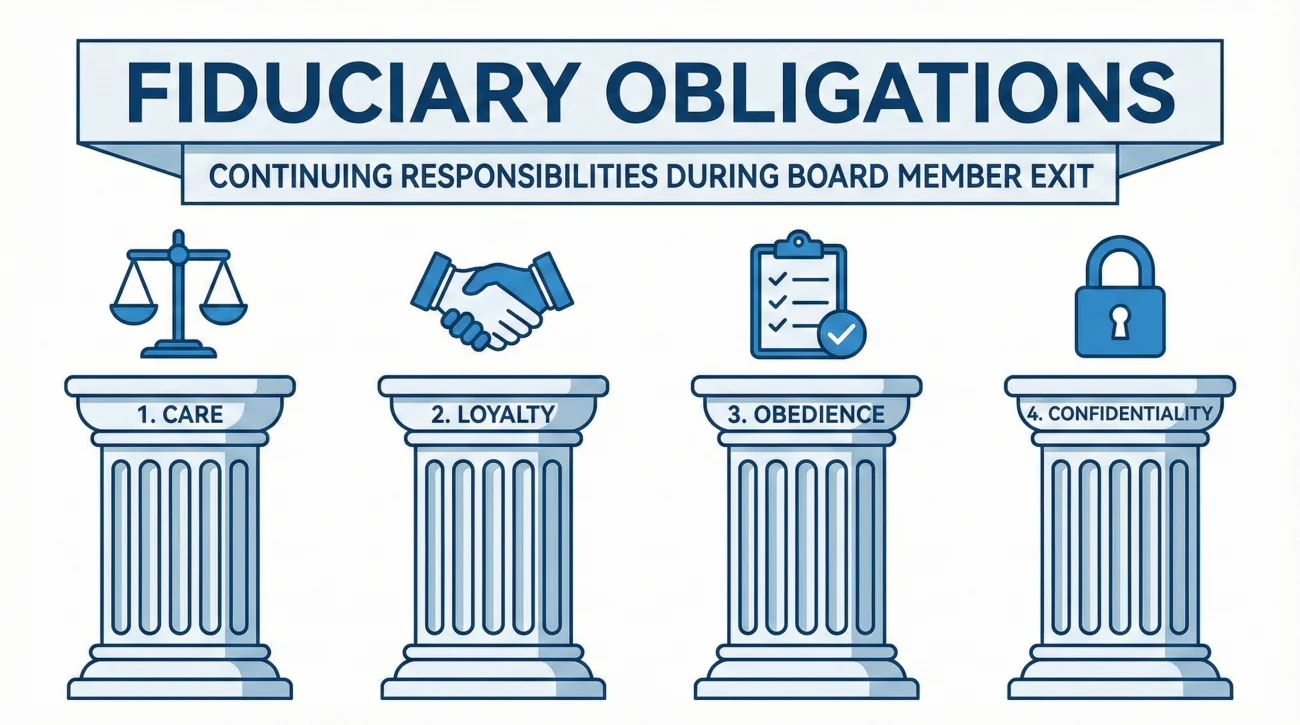
Your board member resignation letter acknowledges continuing responsibilities through departure:
- ⚖️ Duty of care: Attend scheduled meetings through departure date, make informed decisions
- 🤝 Duty of loyalty: Act in organization’s best interests, avoid conflicts during transition
- 📋 Duty of obedience: Uphold organizational mission through final governance actions
- 🔒 Confidentiality: Protect confidential board information permanently – this obligation continues indefinitely
Recommended Notice Periods
| Board Type | Typical Notice | Key Considerations |
|---|---|---|
| Nonprofit board | 30-60 days | Allows recruitment, committee reassignment |
| Corporate board | 60-90 days | SEC considerations, shareholder communication |
| Committee chair | 60 days minimum | Leadership transition, knowledge transfer |
Before submitting resignation, review bylaws for specific procedures, check term commitments, and consult counsel if resigning during litigation or financial distress.
Documentation and Delivery Requirements
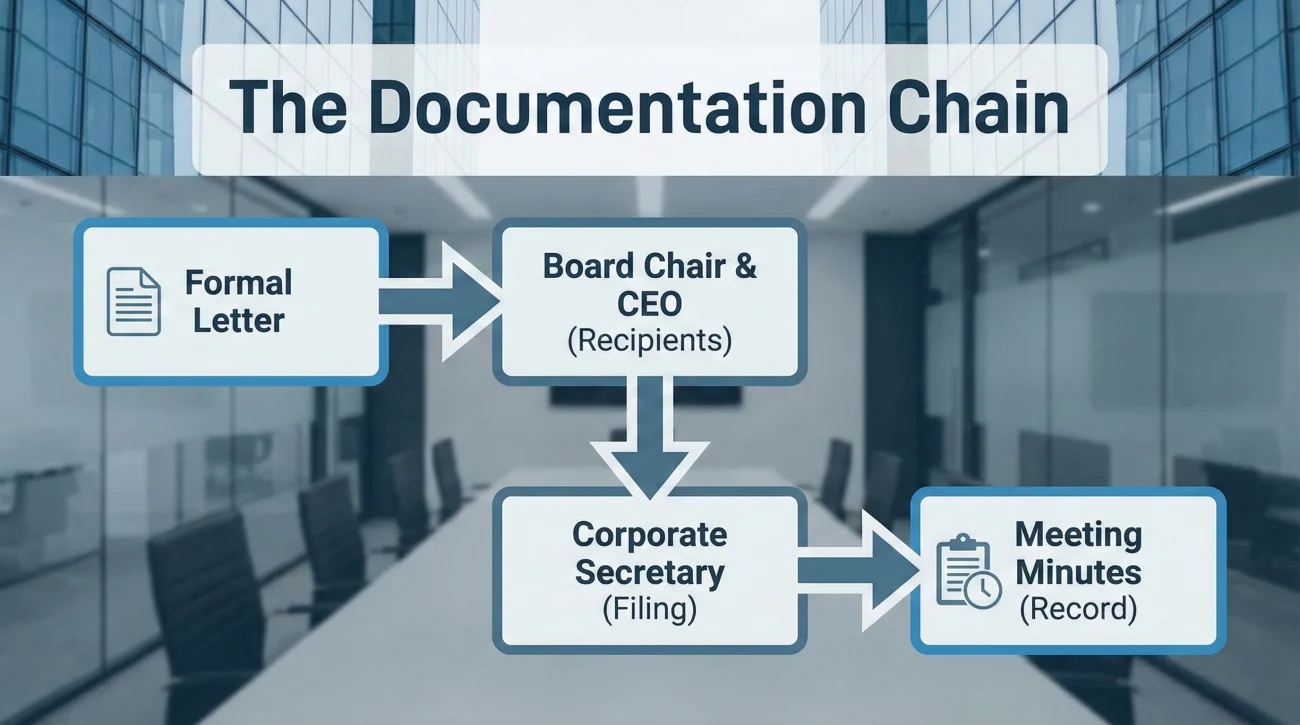
Your resignation letter from board of directors becomes part of official corporate governance records.
Proper Format and Recipients
| Aspect | Requirement | Why It Matters |
|---|---|---|
| Format | Formal written letter (printed) | Official corporate record |
| Recipients | Board chair, executive director/CEO | Proper governance notification |
| Copies | Corporate secretary, sometimes full board | Record-keeping and minutes |
| Effective date | Specific date stated clearly | Governance and legal clarity |
Your resignation will be recorded in meeting minutes, filed with permanent governance documentation, and may require state filings or appear in annual reports.
Nonprofit Board Resignation Letters
General Nonprofit Board Member
[Your Name]
[Your Address]
[City, State ZIP]
[Your Email]
[Your Phone]
[Date]
[Board Chair Name]
Chair, Board of Directors
[Organization Name]
[Address]
Dear [Board Chair Name],
I am writing to formally resign from my position on the Board of Directors of [Organization Name], effective [Date].
This decision follows careful consideration of my current commitments. While I remain deeply supportive of [Organization]’s mission, I can no longer provide the time and attention that effective board service requires.
During my remaining time on the board, I commit to:
- Attending all scheduled board meetings through my departure date
- Completing my responsibilities on the [Committee Name] Committee
- Assisting with the transition of my committee work
- Returning all confidential board materials and documents
Serving on the board has been both an honor and a privilege. I’m grateful to have contributed to advancing the mission.
I understand my obligation to maintain confidentiality of all board information continues beyond my service.
Thank you for the opportunity to serve.
Sincerely,
[Your Signature]
[Your Name]
Committee Chair Resignation
[Your Name]
[Your Address]
[City, State ZIP]
[Your Email]
[Date]
[Board Chair Name]
Chair, Board of Directors
[Organization Name]
[Address]
Dear [Board Chair Name],
I am writing to formally resign as Chair of the [Committee Name] Committee and from the Board of Directors of [Organization Name], effective [Date].
Given my committee leadership role, I am providing [60-90 days] notice to allow adequate time for transition and succession planning.
I will ensure smooth transition including:
- Completion of [current initiative] currently underway
- Documentation of committee procedures and strategic priorities
- Briefing my successor on committee operations
- Secure return of all committee and board materials
Chairing the [Committee Name] Committee has been professionally rewarding. Thank you for the opportunity to serve in this capacity.
Sincerely,
[Your Signature]
[Your Name]
For additional guidance on professional transitions, see our comprehensive resignation letter samples for different positions.
Corporate Board Resignation Letters
Corporate Board Director
[Your Name]
[Your Address]
[City, State ZIP]
[Your Email]
[Date]
[Board Chair Name]
Chairman of the Board
[Company Name]
[Address]
Dear [Chairman Name],
I am writing to resign from my position as Director on the Board of Directors of [Company Name], effective [Date].
[Brief reason if appropriate: “This decision reflects new professional commitments” or “Personal circumstances require my full attention.”]
I will continue to fulfill my director duties through my effective date, including attending scheduled meetings and fulfilling committee obligations.
I understand the company will make appropriate SEC disclosures and shareholder communications regarding this board change.
Serving on [Company Name]’s board has been professionally meaningful. I will return all confidential materials and continue to protect privileged information.
Thank you for the opportunity to serve as a director.
Sincerely,
[Your Signature]
[Your Name]
Public Company Board Member
[Your Name]
[Your Address]
[City, State ZIP]
[Date]
[Board Chair Name]
Chairman of the Board
[Company Name]
[Address]
cc: Corporate Secretary, General Counsel
Dear [Chairman Name],
Please accept this letter as formal notification of my resignation from the Board of Directors of [Company Name], effective [Date].
This resignation is tendered without any disagreement with the company on any matter relating to the company’s operations, policies, or practices.
I will fulfill my director duties through the effective date and work with the board to ensure appropriate transition of my committee responsibilities.
I understand the company’s disclosure obligations under applicable securities regulations and will cooperate with preparation of any required public disclosures.
Serving as a director has been an honor. I wish the company and my fellow board members continued success.
Sincerely,
[Your Signature]
[Your Name]
Transition and Confidential Materials
Committee Responsibilities Handover
- 📋 Ongoing projects: Document status and next steps for successor
- 🤝 External relationships: Introduce key contacts to committee leadership
- 📊 Committee records: Organize minutes, reports, and working documents
- 🎯 Strategic priorities: Brief incoming chair on objectives and timeline
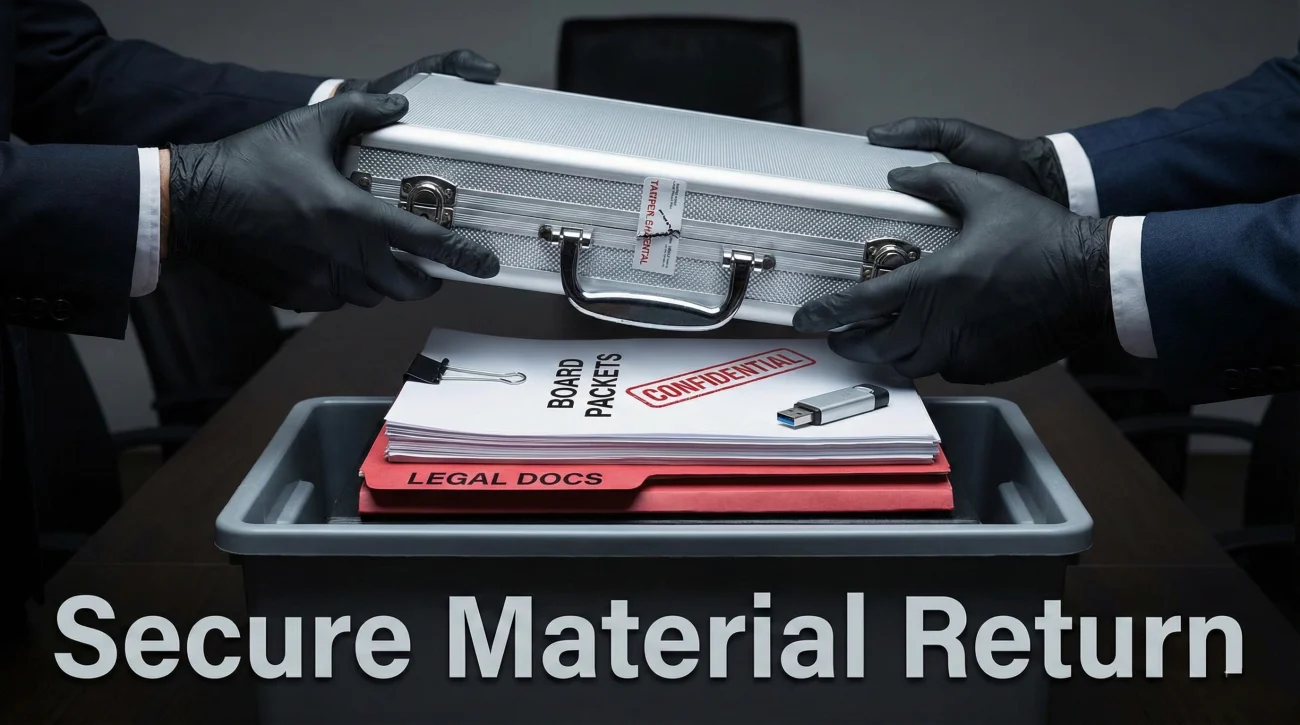
Return of Confidential Materials
| Material Type | Return Procedure | Ongoing Obligation |
|---|---|---|
| Board packets | Return physical copies, delete digital files | Maintain confidentiality indefinitely |
| Financial documents | Shred or secure return to corporate secretary | Never disclose proprietary information |
| Strategic plans | Return all copies, confirm deletion | Protect competitive information |
| Legal materials | Return to general counsel | Maintain attorney-client privilege |
Special Resignation Situations

Resignation Due to Conflict of Interest
When conflicts make continued service inappropriate, resign promptly and briefly explain the nature of conflict in your letter. Offer shorter notice if immediate departure serves the organization’s interests, and don’t participate in decisions related to the conflict.
Resignation Over Board Disagreements
Keep resignation letter professional – avoid detailed grievances. Request private conversation with chair to share concerns verbally. If disagreement involves legal/ethical issues, consult counsel about proper documentation while maintaining fiduciary duties through your final meeting.
Immediate Resignation Circumstances
Health emergencies, family crises, or professional conflicts sometimes require immediate departure. Provide brief explanation with immediate effective date, apologize for short notice, and offer to assist remotely if possible.
❓ FAQ
⏰ How much notice should I give when resigning from a nonprofit board?
Nonprofit boards typically require 30-60 days notice to allow adequate time for recruitment and committee reassignment. Review your bylaws for specific requirements. Committee chairs should provide longer notice (60+ days) for proper knowledge transfer.
📋 Does my board resignation need to be accepted by vote?
Depends on your organization’s bylaws. Some require board acceptance; others make resignations effective upon receipt. Most boards formally acknowledge resignations at the next meeting and record them in minutes. Review bylaws or ask the corporate secretary about proper procedures.
💼 What happens to my fiduciary duty after I resign?
Your duty of care and loyalty end when resignation becomes effective, but confidentiality obligations continue indefinitely. You must protect confidential information learned during board service permanently. Directors and officers insurance typically covers actions during your service period even after resignation.
🏛️ Can I resign immediately if I have a conflict of interest?
Yes, resign promptly when material conflicts arise that can’t be managed through disclosure and recusal. Briefly note the conflict in your resignation letter. Immediate resignation serves the organization’s interests when conflicts are significant. Consult general counsel if conflict involves pending transactions.
📧 Is email resignation acceptable for board positions?
Email is acceptable but follow with formal printed letter for corporate records. Best practice: email the board chair for immediate awareness, then provide formal signed letter to corporate secretary for official filing. Your resignation becomes part of permanent records – formal documentation protects both parties.
Final Thoughts
Board resignations carry governance weight extending beyond employment separations. Your departure affects organizational oversight, fiduciary continuity, and strategic direction impacting stakeholders and shareholders. A thoughtfully crafted non-profit board resignation letter acknowledges these responsibilities while transitioning appropriately.
The formality of board resignation reflects the seriousness of board service – these are positions of trust involving legal duties, confidential information, and organizational accountability. Proper notice periods, thorough transitions, secure return of materials, and continued protection of privileged information demonstrate the same fiduciary responsibility that characterized your service.
Your resignation becomes part of permanent corporate records. Approach it with appropriate gravity, maintain confidentiality and professionalism expected of board members, and complete service with commitment. The governance community is interconnected – how you exit one board often influences future board service opportunities.
⚠️ Legal Disclaimer: ResignSmartly provides general informational guidance about resignation, workplace communication, notice periods, handovers, and career transitions. Content does not constitute individualized legal advice. Employment laws, contracts, workplace policies, and individual circumstances vary, so review the requirements that apply to your situation and consult an appropriate qualified professional when needed.