- High Stakes: Withdrawing a resignation is a trust reset, a sloppy ask can brand you as a flight risk.
- Timing Window: The sooner you act the better, 0–48 hours is easiest, after announcements it becomes damage control.
- Right Protocol: Talk to your manager first, the email is only the written confirmation after you read the room.
- Strong Reasoning: Use a professional, defensible reason and directly signal renewed commitment, not panic or desperation.
- After Yes: Expect a reputational probation period, show high engagement, zero complaining, and consistent follow-through for 90 days.
For the full structure, wording, and examples, see our guide on how to write a resignation email.
The Strategic Art of the Professional “U-Turn”
Sending a withdraw resignation email is arguably the most vulnerable professional communication you will ever draft. It requires swallowing your pride, admitting a potential error in judgment, and asking for a second chance. It is the career equivalent of defusing a bomb you planted yourself.
Whether you resigned in a heat-of-the-moment fit of frustration, realized the “dream job” you accepted was a mirage, or simply had a sudden change in personal circumstances, wanting to stay is more common than you think. However, execution is everything. A clumsy retraction can label you as fickle or unreliable, while a strategic rescinding resignation email can actually demonstrate maturity and renewed commitment.
This comprehensive guide serves as your crisis management strategy. We will explore the delicate psychology of taking back resignation email requests, the legal realities of at-will employment, and provide precise templates to help you navigate this high-stakes conversation with your dignity intact.
The Psychology of “Un-Quitting”: Why It Happens and How It’s Perceived
To successfully withdraw a resignation, you must first understand the psychological landscape you are navigating. It is not just about logistics; it is about trust dynamics.
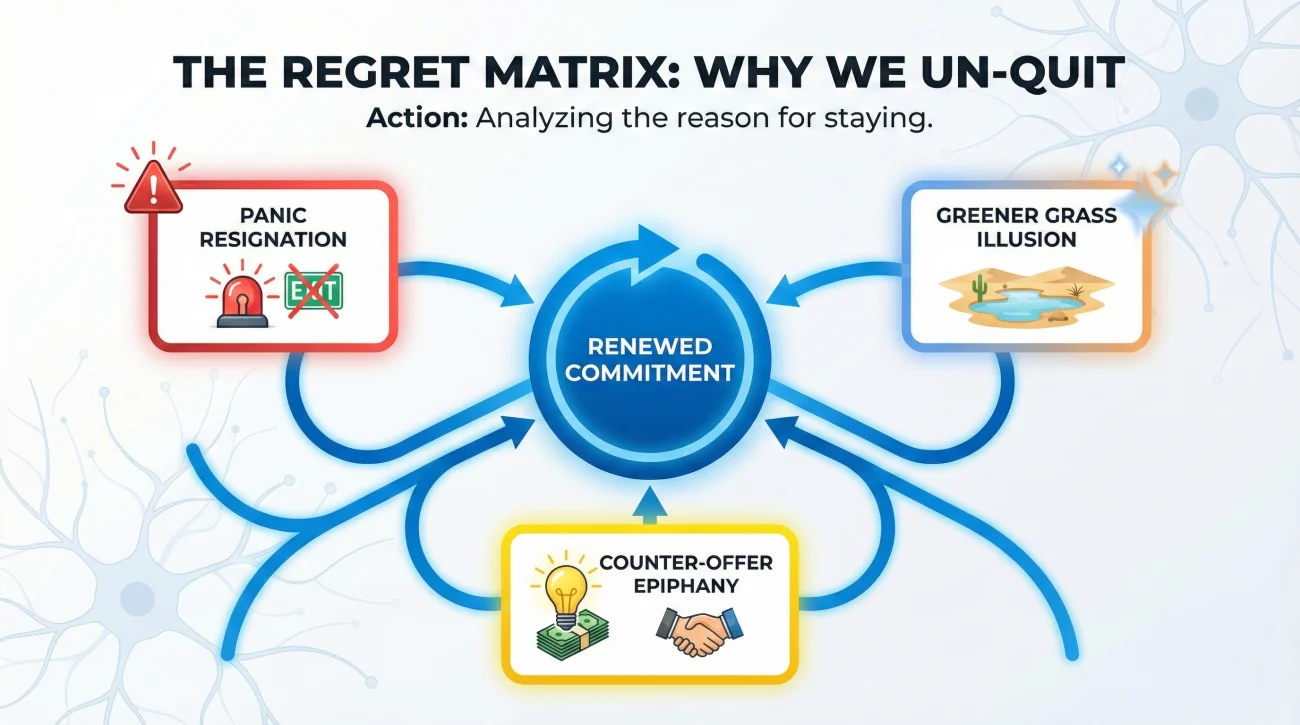
1. The Regret Matrix
Most resignation withdrawals stem from three specific psychological triggers. Identifying yours is crucial for framing your request.
- The Panic Resignation: You quit because of a bad day, a bad boss, or burnout, but without a plan. Once the adrenaline faded, reality hit.
- The “Greener Grass” Illusion: You accepted another offer, but during the background check or pre-boarding, you spotted red flags (e.g., the company announced layoffs, or the job description changed).
- The Counter-Offer Epiphany: Your current employer offered you something (money, title, flexibility) that made you realize you didn’t want to leave, you just wanted to be valued.
2. The Manager’s Dilemma
When you ask to stay, your manager isn’t just thinking about your skills. They are thinking about risk.
“If I let them stay, will they quit again in 3 months?”
“Will the team think I’m weak for taking them back?”
“Have they already mentally checked out?”
Your cancel resignation email must proactively address these silent fears by emphasizing renewed commitment rather than just “changing your mind.”
The Hard Truth: Can You Actually Stay?
Before you draft your email, you must assess the damage. Retracting a resignation is not a right; it is a request. Your employer is under no legal obligation to accept it.
1. The Trust Deficit
When you resign, you break the psychological contract of loyalty. Even if your boss likes you, they now know you have one foot out the door. Your request to retract resignation letter must address this elephant in the room. You aren’t just asking for your job back; you are asking for their trust back.
2. The “Point of No Return”
Your leverage decays by the hour:
- 🟢 0–48 Hours (The “Cooling Off” Zone): If you haven’t been announced as leaving, you have a high chance of success. You can frame it as a “momentary lapse” or “immediate reconsideration.”
- 🟡 2–7 Days (The “Recruitment” Zone): If they have posted your job or contacted recruiters, reversing course is harder and costlier. You need a compelling reason to justify the wasted administrative effort.
- 🔴 Post-Announcement (The “Damage Control” Zone): If the team has been told and farewells have begun, staying is awkward and unlikely. It requires a massive PR spin to explain why you are suddenly back.
3. Good vs. Bad Reasons to Stay
Managers can smell desperation. Ensure your reason for staying is solid.
| Valid Reason (Professional) | Weak Reason (Desperate) |
|---|---|
| “The external offer was withdrawn due to restructuring.” (Honest/Unlucky) | “I’m scared of change.” (Emotional) |
| “My family circumstances have unexpectedly changed.” (Life Event) | “My new commute looks too long.” (Poor Planning) |
| “I realized I undervalued the culture here.” (Cultural) | “I didn’t find another job yet.” (Failure) |
The Protocol: Don’t Just Hit Send
A withdraw resignation email should never be the first step. It is the confirmation of a conversation, not the conversation itself. Sending a cold email to say “I’m staying” will likely result in a cold reply saying “No, you’re not.”
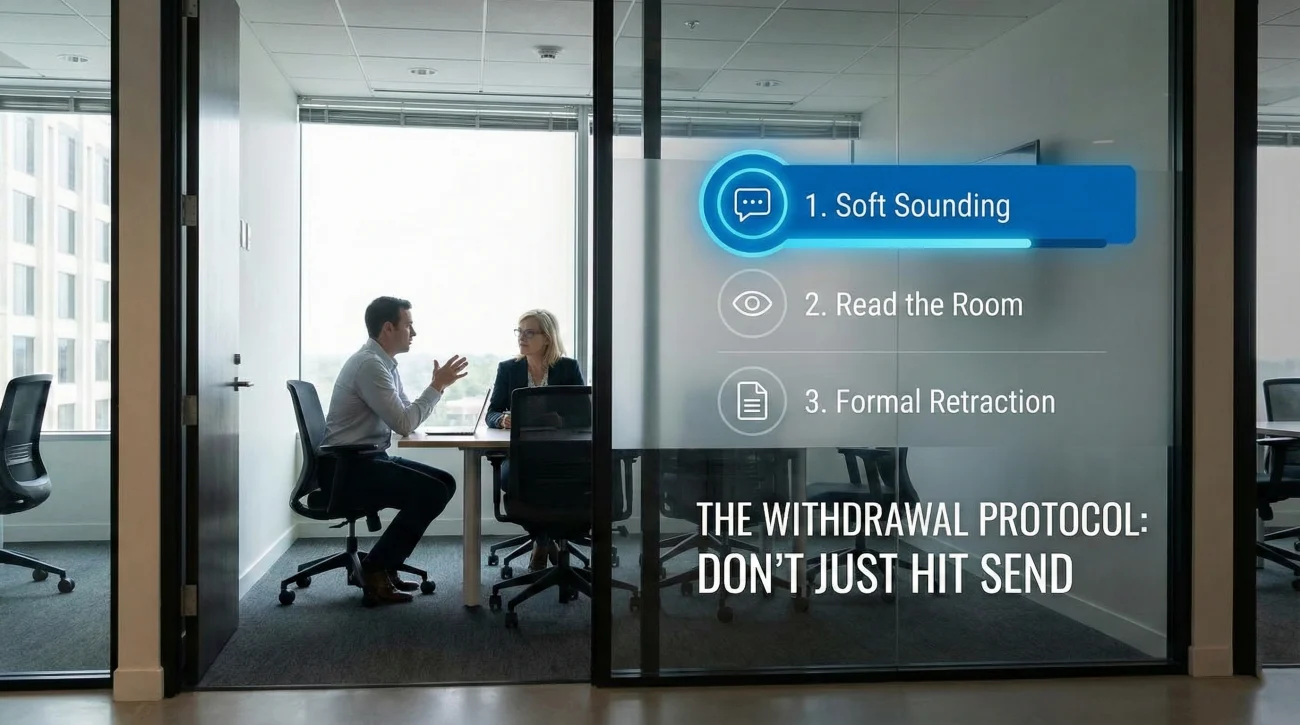
Step 1: The “Soft Sounding”
Request a brief, private meeting (in-person or video) with your direct manager. Do not put your request in writing yet.
The Script:
“I’ve been doing a lot of thinking since I submitted my notice. If the door hasn’t completely closed, I would like to discuss the possibility of staying. Is that something you’d be open to considering?”
Step 2: Read the Room
If they hesitate, say “I have to check with HR,” or look relieved that you are leaving – stop. Do not send the email. Accept the exit gracefully. They may have wanted you gone and your resignation was a gift.
If they smile or say “I was hoping you’d say that” – proceed to Step 3.
Step 3: The Formal Retraction
Send the email immediately after the meeting to create a paper trail for HR. This is where our templates come in.
Master Templates: How to Retract a Resignation
Choose the scenario that best matches your situation. Remember: Humility is key. You are asking for a reversal of a legal notification.

Scenario 1: The “Emotional Reset” (Impulsive Resignation)
Use this retract resignation email if you quit in anger or frustration and immediately regretted it. Owning the mistake shows emotional intelligence.
Subject: Follow up to our conversation – Resignation Withdrawal
Dear [Manager Name],
Thank you for meeting with me earlier today. As we discussed, I am writing to formally request to withdraw my resignation submitted on [Date].
Upon reflection, I realize my decision to resign was made hastily and was a reaction to [specific stressor, e.g., the pressure of Project X] rather than a genuine desire to leave the company. I sincerely apologize for the confusion and potential disruption this caused you and the team.
I have taken the last [Number] hours to reassess my career goals, and it is clear to me that my place is here. I remain deeply committed to our team’s mission and have a renewed perspective on how to manage my workflow effectively moving forward. If given the opportunity to stay, I am ready to fully re-engage and ensure this uncertainty does not happen again.
Thank you for your understanding and grace.
Sincerely,
[Your Name]
Scenario 2: The “Counter-Offer” Win
Use this when the company has offered you more money or a better role to stay. This isn’t a request; it’s an acceptance. It formalizes the new terms of your employment.
Subject: Rescinding Resignation – [Your Name]
Dear [Manager Name],
Following our productive discussion regarding my future at [Company Name], I am delighted to accept your counter-proposal to stay on as [Job Title].
Please accept this email as a formal withdrawal of my resignation notice dated [Date].
The changes we discussed – specifically [mention 1-2 wins, e.g., the salary adjustment and the revised reporting structure] – directly address the concerns that led to my initial decision. I am excited to continue building on our success and appreciate the value you have placed on my contributions.
I look forward to getting back to work and driving [Project Name] forward.
Best regards,
[Your Name]
Scenario 3: The “Life Happened” (External Circumstances)
Use this change mind about quitting email when factors outside of work (e.g., spouse’s job, health, relocation plans) have shifted. This is a “blameless” retraction.
Subject: Update Regarding My Resignation – [Your Name]
Dear [Manager Name],
I am writing to discuss a significant change in my personal circumstances since I submitted my resignation on [Date].
As you know, my resignation was prompted by [reason, e.g., a planned relocation to Texas]. Due to unforeseen developments, [reason changed, e.g., that move has been cancelled due to family matters]. Consequently, the primary reason for my departure no longer exists.
If the team has not yet moved forward with a replacement, I would be very eager to withdraw my resignation and continue in my role. I still love my work here and would prefer to stay now that it is feasible.
I understand this is an unusual request and appreciate your consideration.
Respectfully,
[Your Name]
Scenario 4: The “Safety Net” (New Job Disappeared)
This is the hardest one. Your new offer collapsed. Be honest but brief. You don’t need to overshare the tragedy, but you do need to explain why you are back. Frame it as “New information came to light.”
Subject: Request to Rescind Resignation – [Your Name]
Dear [Manager Name],
I am writing to respectfully ask if it is possible to rescind my resignation notice submitted on [Date].
While I had accepted an external opportunity that seemed like a strong career step, new information has come to light regarding that organization’s strategic direction. After careful reconsideration, I realized that my long-term career goals and values are actually better aligned here at [Current Company].
I know this timing is awkward, but my dedication to this team remains strong. If my position is still open, I would be honored to remain and continue driving our Q4 objectives.
Thank you for considering this request.
Best,
[Your Name]
Scenario 5: The Humble Ask (Post-Announcement)
If your departure has already been announced, you need to acknowledge the confusion. This template focuses on minimizing disruption.
Subject: Urgent: Reconsidering my Resignation
Dear [Manager Name],
I am writing to discuss a potential reversal of my resignation. Since our announcement on [Date], I have had deep reservations about leaving. The outpouring of support from the team and my reflection on our unfinished projects have made me realize that my work here is not done.
If you are open to it, I would like to formally withdraw my resignation. I am prepared to help manage the communication to the team to explain my decision to stay, ensuring there is no disruption to morale.
I am fully committed to re-earning the team’s trust and driving our goals forward.
Sincerely,
[Your Name]
The Aftermath: Surviving the “Probation” Period
If they say “Yes,” celebrate for five minutes. Then, get to work. You are now in a “Reputational Probation” period. You have saved your job, but you haven’t saved your reputation – yet. Here is how to survive the next 90 days.
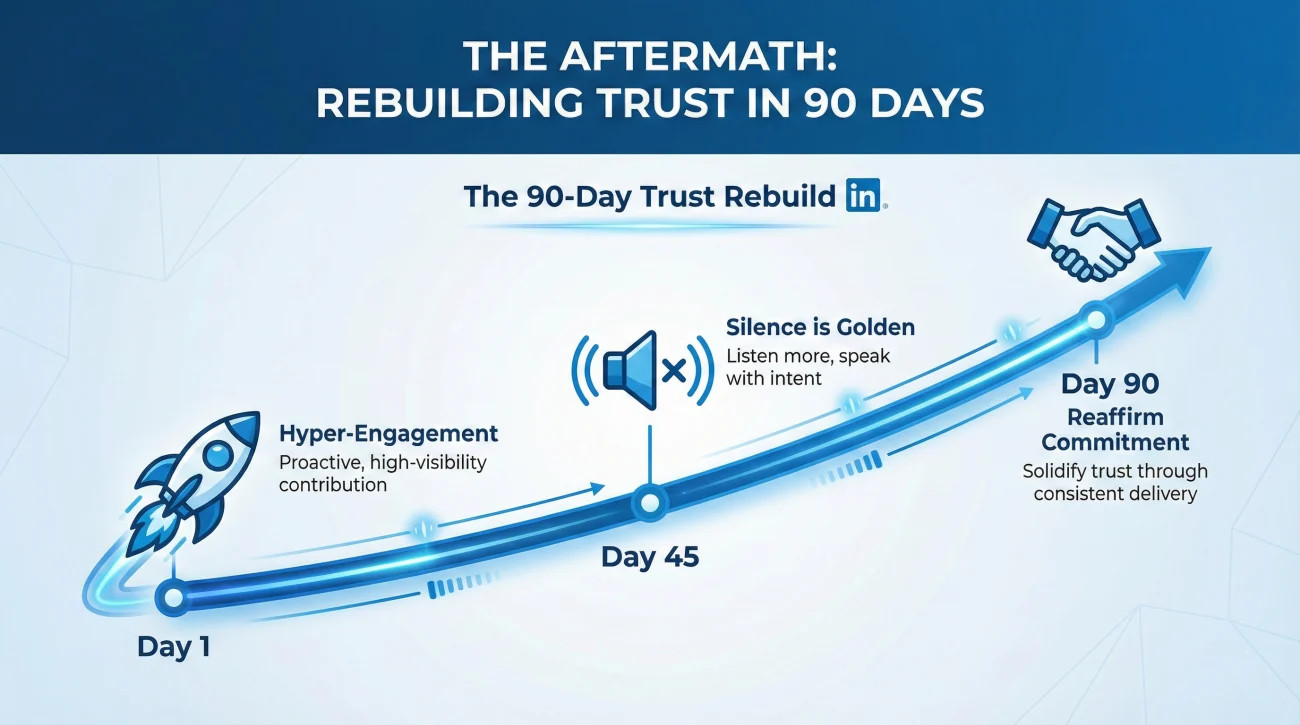
1. Hyper-Engagement
For the next 90 days, you need to be the most engaged employee in the room. Volunteer for projects. Be visible. Be early. You need to erase the memory of you quitting. Every time you check your phone, people will think you are talking to a recruiter. Do not give them a reason to doubt.
2. Silence is Golden
Do not complain. About anything. You just forfeited your right to gripe about the coffee, the commute, or the budget for at least six months. Any negativity will be interpreted as “I knew we shouldn’t have kept them.” Be the most positive person in the room.
3. Reaffirm Commitment
In your next 1:1 meetings, explicitly state your commitment. “I’m really glad I stayed. I’m excited about this project.” Reinforce their decision to keep you. Make them feel smart for hitting “Undo” on your resignation.
Legal & HR Reality Check
Understanding the administrative side of withdrawing a resignation can save you from legal pitfalls.
1. At-Will Employment
In at-will employment, a resignation is a voluntary termination. Once you submit it, your employer is generally under no obligation to let you retract it. If they say no, you usually have very limited legal options. This article is not legal advice, so if you have concerns, it’s wise to speak with an employment lawyer in your jurisdiction.
2. The HR Machinery
Sometimes, the “No” isn’t personal; it’s bureaucratic. If HR has already processed your termination date in the payroll system, initiated a requisition for your replacement, or paid out your accrued vacation, reversing the process is expensive and complex. The sooner you ask, the better.
3. Contractual Implications
If you are re-hired after a resignation (even a short gap), check if your tenure resets. This affects benefits, 401k vesting, and seniority. Ideally, ask for the resignation to be “rescinded” so there is no break in service.
❓ FAQ: The Tough Questions
⚖️ Is my employer legally required to accept my withdrawal?
😰 What if they have already announced I’m leaving?
📉 Will this hurt my future promotion chances?
🙊 Should I tell my coworkers I tried to quit?
💸 Do I have to return my new signing bonus?
Final Thoughts
Sending a withdraw resignation email is a humbling experience, but it is not a career death sentence. Smart managers understand that people make mistakes or that circumstances change. If you have been a high performer, they will likely be relieved to keep you, avoiding the cost and risk of hiring a replacement.
The key is to act fast, be humble, and once you are back – be all in. Do not look back. Your second act at the company starts now.
For more guidance on navigating complex career transitions, visit the homepage or check our full library of resignation email examples.
⚠️ Legal Disclaimer: ResignSmartly provides general informational guidance about resignation, workplace communication, notice periods, handovers, and career transitions. Content does not constitute individualized legal advice. Employment laws, contracts, workplace policies, and individual circumstances vary, so review the requirements that apply to your situation and consult an appropriate qualified professional when needed.