- Chef exits are operational, not just personal: Recipe continuity, inventory accountability, and service flow must stay intact.
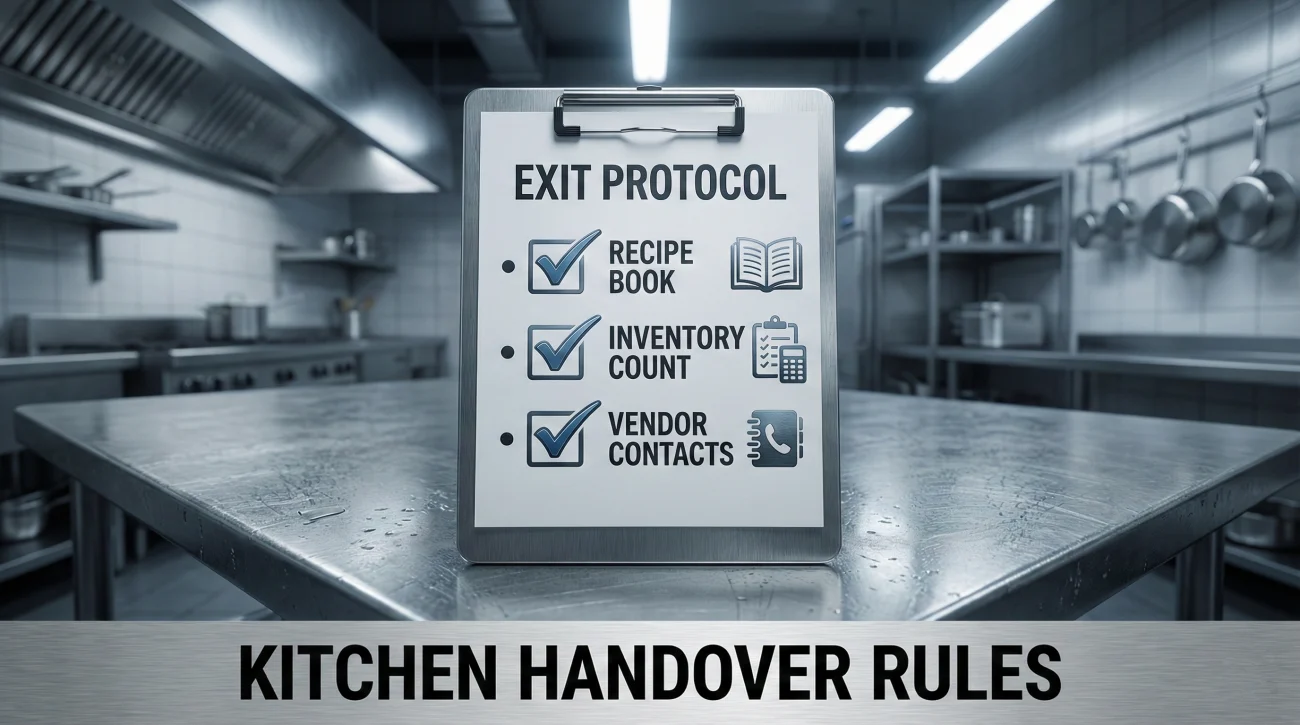
- Document what you own in the kitchen: Recipes, plating specs, prep protocols, and station workflows your team relies on.
- Close out food cost cleanly: Final physical counts, signed inventory sheets, and zero unresolved discrepancies.
- Time and notice shape your reputation: Avoid holiday rushes and openings, give longer notice for leadership roles.
- Protect ethics and agreements: No taking proprietary recipes, no recruiting staff, keep the letter brief in toxic or legal situations.
The Brigade System Demands Professional Exit
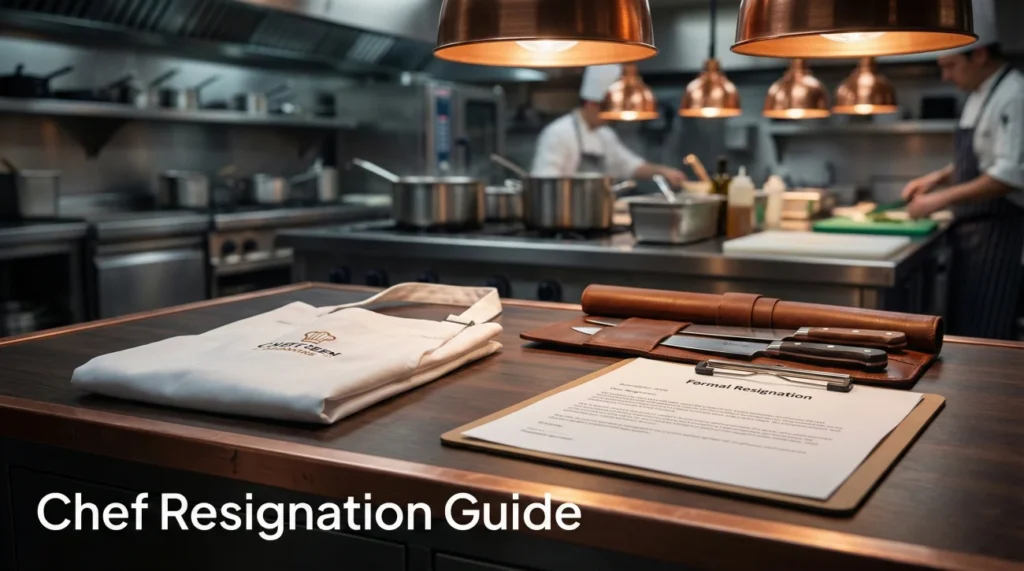
Leaving a culinary position involves more than ending employment – you’re transferring recipes you’ve developed, handing over food inventory requiring accountability, and stepping away from kitchen operations that depend on your expertise for daily service. A professional chef resignation letter addresses recipe documentation, food stock verification, and the kitchen workflow knowledge that defines culinary professionalism and protects both restaurant operations and your industry reputation.
Chef resignations carry unique complexities because kitchens operate with military-like precision, menu consistency depends on recipe knowledge, and food cost control requires inventory accuracy. Your departure affects service quality, team morale, and operational continuity in ways that ripple through front-of-house operations and customer experience. The timing of your exit – particularly around holidays or busy seasons – determines whether you’re remembered professionally or as someone who abandoned the brigade.
This guide provides templates for various culinary scenarios – from head chefs to sous chefs, covering essential recipe and menu documentation requirements, critical food inventory handover procedures, and how to resign while maintaining professional standards and industry relationships.
Protecting Menu Knowledge and Kitchen Systems
What Every Departing Chef Must Document
Your head chef resignation letter should address culinary intellectual property and menu continuity:
- 📖 Recipe documentation: Written recipes for all menu items you created or modified
- 🍽️ Menu specifications: Plating instructions, portion sizes, presentation standards
- ⚖️ Cooking procedures: Temperatures, timing, special techniques for signature dishes
- 🥘 Prep protocols: Daily prep lists, mise en place requirements, batch cooking schedules
- 👨🍳 Kitchen systems: Station assignments, workflow patterns, service timing procedures
Food Cost Accountability Through Final Service
| Inventory Type | Handover Procedure | Documentation Required |
|---|---|---|
| Dry goods/staples | Physical count with sous chef/manager | Inventory sheet, signed verification |
| Perishables (produce, dairy) | Count and date verification | FIFO rotation documented |
| Proteins (meat, seafood) | Weight verification, cost tracking | Usage logs, waste documentation |
| Special ingredients/imports | Source documentation transfer | Vendor contacts, ordering specs |
Head chefs bear responsibility for food cost percentages and inventory accuracy. Your departure requires full physical count verification signed by both parties. Document any discrepancies immediately. Never leave with inventory questions unresolved – these affect final paycheck and industry references.
Executive Chef and Head Chef Departures
Executive Chef Professional Exit
[Your Name]
Executive Chef
[Your Email]
[Your Phone]
[Date]
[Owner/General Manager Name]
[Title]
[Restaurant Name]
[Address]
Dear [Name],
I am writing to formally resign from my position as Executive Chef at [Restaurant Name], effective [Date].
This decision follows careful consideration of my culinary career goals. I have accepted an executive chef position at another establishment that offers opportunities to develop [specific culinary focus].
During my notice period, I will ensure comprehensive kitchen transition including:
- Complete recipe documentation for all menu items including signature dishes and seasonal specials
- Transfer of vendor relationships, ordering procedures, and cost negotiation strategies
- Documentation of kitchen systems, station workflows, and service timing protocols
- Physical inventory count verification with signed documentation
- Training successor on menu development, cost control, and kitchen management
- Team briefing on leadership transition and operational continuity
Leading the culinary program at [Restaurant Name] has been professionally rewarding. Thank you for the creative freedom and trust placed in my kitchen leadership.
Respectfully,
[Your Signature]
[Your Name]
Executive Chef
Head Chef Career Advancement
[Your Name]
Head Chef
[Your Email]
[Your Phone]
[Date]
[Restaurant Owner Name]
[Restaurant Name]
Dear [Owner Name],
I am writing to resign from my position as Head Chef at [Restaurant Name], with my last service on [Date].
I have accepted a head chef position at [New Restaurant] that represents career advancement in [cuisine type/concept].
Through my remaining time, I will ensure kitchen continuity:
- Written recipes for all menu items with plating specifications
- Prep lists and par level documentation for each station
- Vendor contact transfer and ordering system training
- Full inventory count with cost verification
- Kitchen equipment maintenance schedules and vendor contacts
Thank you for the culinary leadership opportunity and creative development in this role.
Sincerely,
[Your Signature]
[Your Name]
For additional guidance on professional transitions, see our comprehensive resignation letter samples for different positions.
Sous Chef and Kitchen Management Letters
Sous Chef Professional Resignation
[Your Name]
Sous Chef
[Your Email]
[Your Phone]
[Date]
[Executive/Head Chef Name]
[Title]
[Restaurant Name]
Dear Chef [Name],
I am writing to formally resign from my position as Sous Chef at [Restaurant Name], effective [Date].
I have accepted a head chef position at another restaurant that offers the leadership opportunity I’ve been working toward.
During my notice period, I will focus on comprehensive transition:
- Documentation of station systems and line cook training procedures
- Transfer of prep supervision, quality control, and food safety protocols
- Inventory management procedures and ordering responsibility handoff
- Service coordination and timing systems I’ve implemented
- Training replacement sous chef on kitchen operations and team management
Working under your leadership has been invaluable culinary development. Thank you for the mentorship and advancement opportunity.
Respectfully,
[Your Signature]
[Your Name]
Sous Chef
Pastry Chef Departure
[Your Name]
Pastry Chef
[Your Email]
[Date]
[Executive Chef/Owner Name]
[Restaurant Name]
Dear [Name],
I am resigning from my position as Pastry Chef, effective [Date].
I will ensure complete pastry program transition:
- Written recipes for all desserts, pastries, and baked goods
- Documentation of specialty ingredient sourcing and vendors
- Training on pastry equipment operation and maintenance
- Handoff of preparation schedules and batch production timing
- Inventory of specialty tools, molds, and pastry equipment
Thank you for the creative freedom in developing the dessert program.
Best regards,
[Your Signature]
[Your Name]
Line Cook and Kitchen Staff Exits
Line Cook Standard Resignation
[Your Name]
[Your Email]
[Your Phone]
[Date]
[Chef Name]
[Title]
[Restaurant Name]
Dear Chef [Name],
I am writing to resign from my position as [Station] Line Cook at [Restaurant Name], with my last service on [Date].
This decision is necessary to [brief reason: “pursue culinary education” or “accept a position with career advancement opportunities”].
I will work all scheduled shifts through my final day and assist with training my replacement on [station] procedures and menu items.
Thank you for the line cooking experience and kitchen training.
Sincerely,
[Your Name]
Prep Cook Departure
[Your Name]
[Your Email]
[Date]
[Sous Chef/Kitchen Manager Name]
[Restaurant Name]
Dear [Name],
I am resigning from my position as Prep Cook, effective [Date].
I will complete all scheduled shifts and document prep procedures for common tasks to assist my replacement.
Thank you for the kitchen experience and culinary skills development.
Best regards,
[Your Name]
Dishwasher/Steward Position
[Your Name]
[Your Email]
[Date]
[Kitchen Manager Name]
[Restaurant Name]
Dear [Name],
I am writing to resign from my position as Dishwasher, with my last shift on [Date].
I will work my remaining scheduled shifts as posted.
Thank you for the employment opportunity.
Sincerely,
[Your Name]
When Chefs Should (and Shouldn’t) Resign
Holiday Season Departures Destroy Reputations
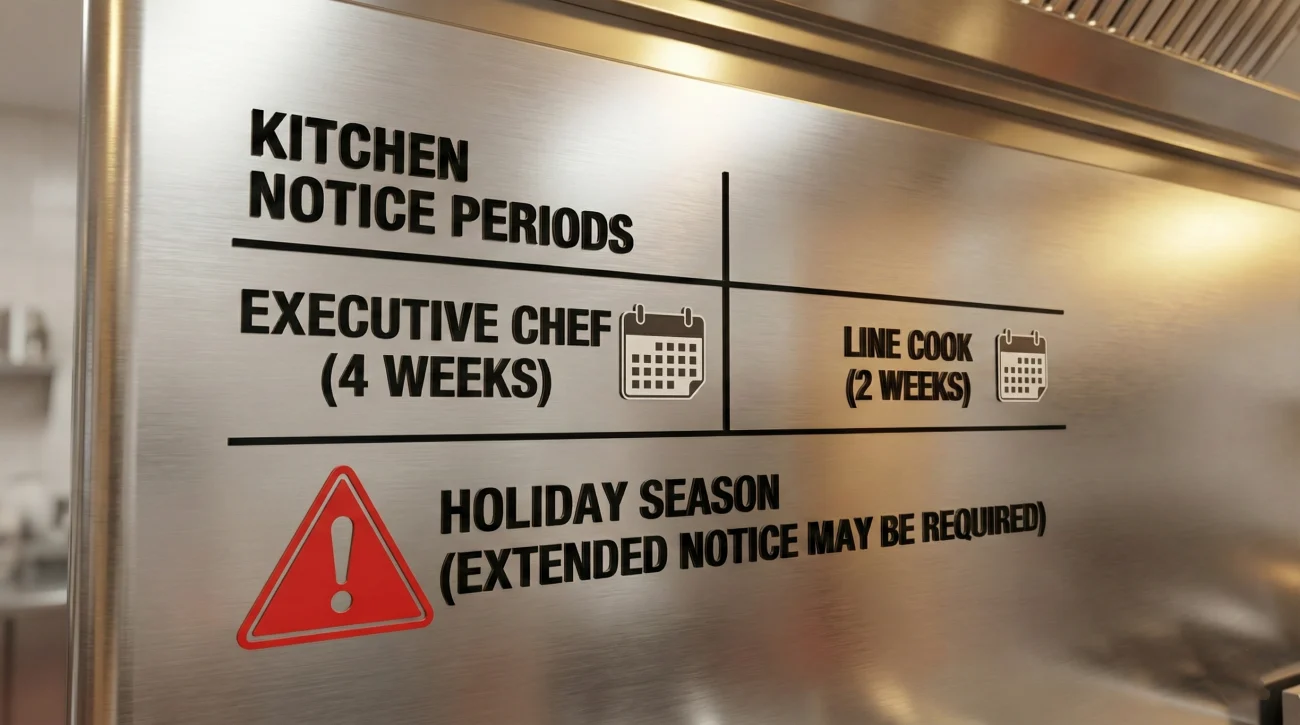
Never resign during peak holiday periods (Thanksgiving-New Year’s, Valentine’s Day, Mother’s Day) unless genuine emergency requires departure. Your kitchen staff resignation letter submitted mid-holiday season permanently damages culinary reputation. Restaurant industry is surprisingly small – chefs share information about cooks who abandoned kitchens during busy seasons. Time resignation for slow periods (January-February, late summer) when replacement hiring and training possible.
Notice Periods for Kitchen Positions
Executive and head chefs should provide 4 weeks notice minimum, sous chefs 2-3 weeks, line cooks 2 weeks. More notice for leadership positions allows menu consistency planning and prevents service quality deterioration. Less notice acceptable for prep and dishwashing roles with minimal continuity impact. Check employment contract – some restaurants mandate specific notice for key positions.
New Restaurant Openings and Timing
If involved in new restaurant opening or major menu launch, professional obligation requires seeing project through initial service period. Your sous chef resignation letter submitted weeks before opening abandons team during critical development phase. Culinary reputation depends on completing commitments – industry remembers chefs who quit during openings.
Challenging Kitchen Exit Scenarios

Recipe Ownership and Intellectual Property
Recipes developed during employment typically belong to restaurant, not individual chef. Document all recipes before departure, but don’t take proprietary techniques or signature dishes to competitor. Some chef contracts include non-compete clauses preventing similar menu offerings at new employer. Review contract carefully. Taking restaurant’s recipes to competitor violates professional ethics and potentially contractual obligations.
Leaving Toxic or Unsafe Kitchen
If resigning due to health code violations, unsafe working conditions, or abusive kitchen culture, brief resignation letter appropriate without detailing concerns. Document specific issues separately for your records. Report serious health violations to appropriate authorities (health department, OSHA). Consult attorney if issues involve harassment or illegal practices. Your departure doesn’t eliminate obligation to report food safety violations.
Moving to Competing Restaurant
When joining competitor restaurant, review non-compete and confidentiality agreements carefully. Don’t recruit current kitchen staff to new employer – this violates professional ethics. Protect former employer’s recipes, vendor relationships, and cost structures. Never share proprietary menu development or operational systems. Culinary community networks extensively – word travels about chefs who violated kitchen confidentiality.
Resigning Before Getting Fired
If facing termination for performance issues, resignation typically better serves culinary career than termination record. Brief letter without defensive explanations appropriate. Restaurant industry conducts reference checks – termination appears worse than resignation. However, if termination involves food safety violations or misconduct, resignation doesn’t erase issues from industry background checks.
❓ Chef Resignation Questions
⏰ How much notice should chefs give?
Executive/head chefs should provide 4 weeks minimum, sous chefs 2-3 weeks, line cooks 2 weeks, prep/dish staff 1-2 weeks. Extended notice allows menu continuity planning, replacement hiring, and training completion. During slow seasons, shorter notice may suffice. During peak periods, consider extending notice to minimize disruption. Check employment contract for mandated notice requirements – some restaurants require specific periods for key positions.
📖 Do I have to write down all my recipes?
Yes, document all recipes for menu items you created or modified. Recipes developed during employment belong to restaurant, not individual chef. Professional resignation requires written documentation ensuring menu consistency after departure. Include: ingredients with measurements, cooking procedures, plating specifications, and special techniques. This protects restaurant operations and your culinary reputation. Refusing to document recipes damages industry references and appears unprofessional.
🥩 What about food inventory on my last day?
Physical inventory count required on final day, especially for head chefs and sous chefs responsible for ordering. Count all proteins, produce, dry goods, and specialty ingredients. Document with signed verification sheet. Any discrepancies should be explained and documented. Unresolved inventory issues can affect final paycheck and future restaurant employment. Kitchen managers verify inventory accuracy before departure permitted. Never leave with inventory questions unresolved.
🍽️ Can I use restaurant’s recipes at my new job?
No. Recipes developed during employment belong to restaurant. Taking proprietary recipes to competitor violates professional ethics and potentially contractual obligations. Many chef contracts include clauses preventing similar menu offerings at new employer. You can use general culinary techniques learned, but not specific recipes, plating presentations, or signature dishes. Culinary community networks extensively – word spreads about chefs who took recipes to competitors, permanently damaging industry reputation.
📅 Is it ever okay to quit during holidays?
Only for genuine emergencies (health crisis, family emergency, unsafe conditions). Holiday resignation without emergency justification permanently damages culinary reputation. Restaurant industry is small – chefs share information about cooks who abandoned kitchens during Thanksgiving, Christmas, Valentine’s Day, or Mother’s Day. These departures force remaining staff into excessive hours and compromise service quality during highest revenue periods. If circumstances require holiday resignation, provide maximum possible notice and offer remote consultation through peak period.
The Brigade Remembers How You Leave

Chef resignations affect kitchen operations with immediacy and permanence that few other positions experience. Your departure disrupts daily service, forces remaining brigade members into extended hours, and risks menu consistency that defines restaurant reputation. How you transition recipes, inventory, and kitchen knowledge determines whether you’re remembered as professional culinary leader or someone who abandoned the brigade when operations depended on your expertise.
The culinary world operates on reputation, references, and surprisingly interconnected networks of chefs who move between restaurants, cities, and concepts throughout careers. Executive chefs share information about sous chefs who left professionally versus those who quit during holiday rushes. Restaurant groups maintain informal databases tracking chefs who mishandled inventory, refused to document recipes, or violated kitchen confidentiality. Your approach to culinary resignation becomes permanent part of your industry reputation.
Document recipes thoroughly, verify inventory accurately, time departure outside peak seasons, and complete your kitchen responsibilities with the same professionalism and dedication that characterized your cooking. The brigade you trained and the menu consistency you protected define your culinary legacy long after your final service.
⚠️ Legal Disclaimer: ResignSmartly provides general informational guidance about resignation, workplace communication, notice periods, handovers, and career transitions. Content does not constitute individualized legal advice. Employment laws, contracts, workplace policies, and individual circumstances vary, so review the requirements that apply to your situation and consult an appropriate qualified professional when needed.