- Why It’s Different: An internship is a learning contract plus your first real reference, so a sloppy exit costs more than a normal job.
- Leaving Early Logic: Do it when the reason is defensible, Full-time offer, Health or family emergency, Financial need, Academic conflict, otherwise frame it as realigning goals.
- Notice Guidance: Two weeks for long or paid programs, One week for short internships, Immediate only for unsafe or true emergencies.
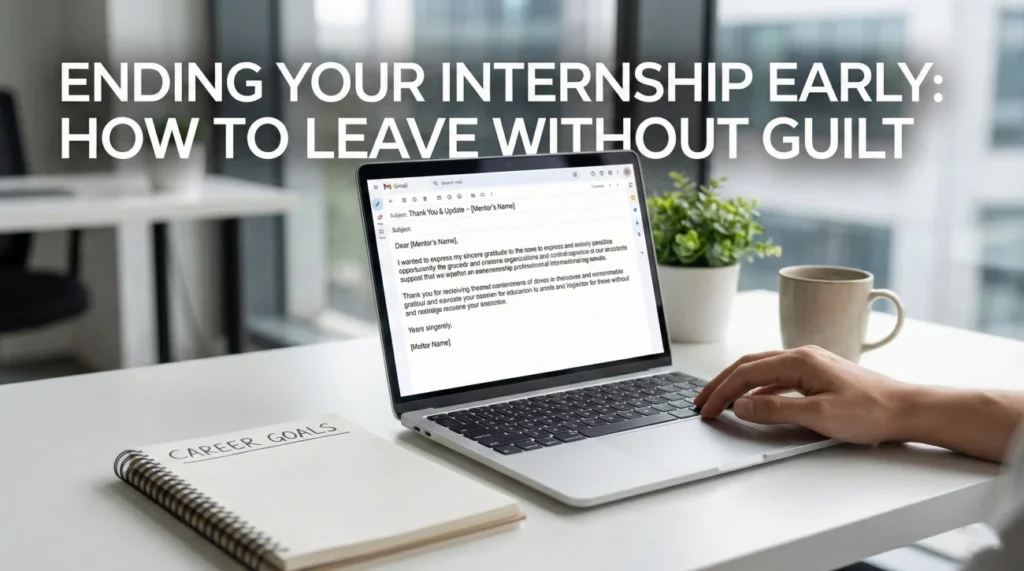
- Email Strategy: Tell them verbally first, Keep the email as a clean record, Give a clear last day, Gratitude, And a simple transition plan.
- After You Leave: Ask for a reference while the relationship is warm, Organize files for handover, Update LinkedIn accurately, And keep the bridge intact.
Why Internship Resignations Are Uniquely Complex
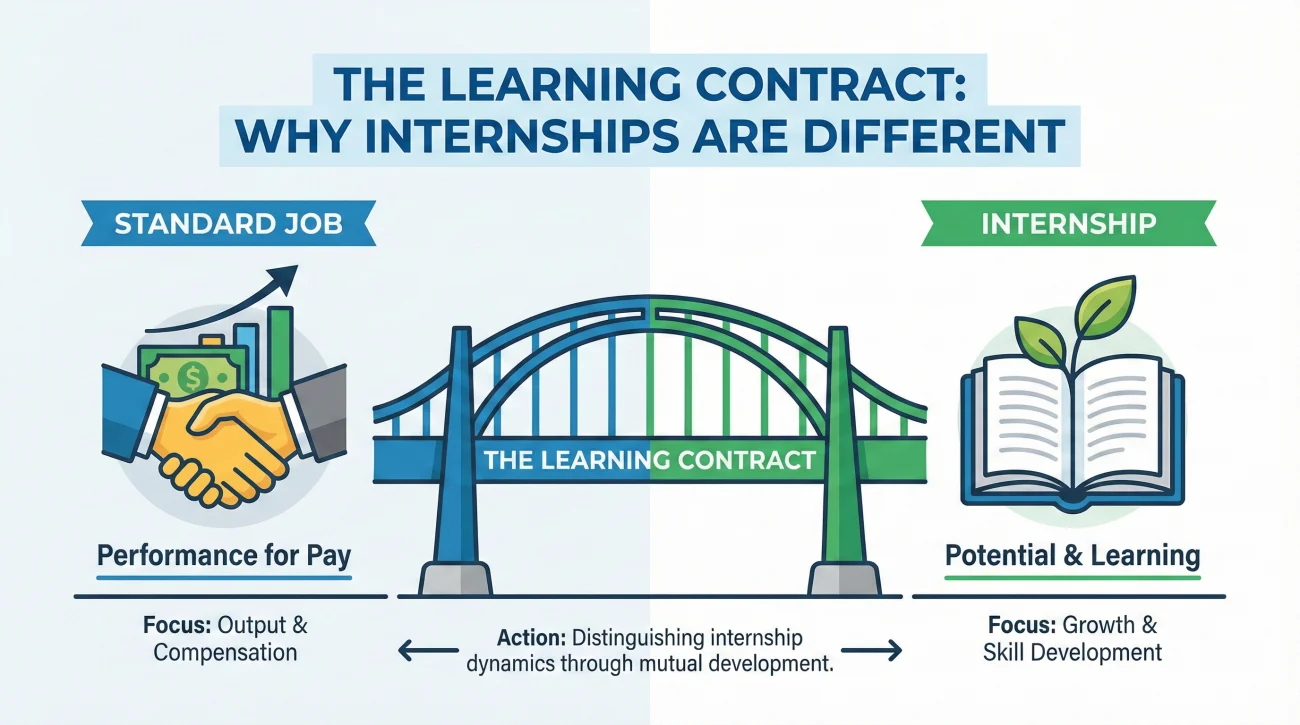
Before drafting your email, it is critical to understand the unique dynamics at play. An internship is not just a “junior job”; it is a symbiotic relationship based on potential rather than just output. This distinction changes how you should approach your departure.
The Implicit “Learning Contract”
In a standard job, you are paid for performance. In an internship, you are often paid (or unpaid) for potential and learning. Supervisors invest time teaching you, expecting a return on that investment over the duration of the program. When you send a quit internship email, you aren’t just stopping work; you are effectively ending that educational curriculum. This is why guilt is a common emotion for departing interns, even though it shouldn’t dictate your career decisions.
The “First Reference” Stakes
For many, an internship supervisor is their first legitimate industry reference. A bad exit from a standard job might be buried by five other good roles on a resume. A bad exit from your only internship can leave a gap that is hard to explain. Therefore, your resignation email for intern roles must be hyper-focused on gratitude and transition, far more than a standard two-week notice letter.
Leaving Early: The Strategic Calculation
Is it professionally suicidal to leave an internship before the end date? Generally, no. But it requires a calculated approach. Below is a breakdown of the implications when you are considering sending a leaving internship email ahead of schedule.
| Pros of Leaving Early | Cons of Leaving Early |
|---|---|
| ✅ Career Acceleration: Leaving for a full-time offer is the “Golden Ticket.” It signals market value. | ❌ Bridge Burning Risk: Leaving without valid reason or notice can destroy your reference. |
| ✅ Resource Reallocation: Frees you from a “dead-end” role to focus on high-value opportunities or academics. | ❌ Resumé Gaps: A 3-week internship looks worse on a CV than no internship at all. |
| ✅ Mental Health: Immediate relief from toxic environments or exploitative unpaid labor. | ❌ Loss of Completion Certificate: Some programs require full attendance for academic credit. |
| ✅ Financial Stability: Pivoting to paid work is a universally understood necessity. | ❌ Awkward Handover: Project cycles are often designed for the full term, leaving teams in a lurch. |
When Is It Acceptable to Send an Ending Internship Early Email?
Not all reasons for departure are created equal. In the world of HR and management, there is a hierarchy of validity when it comes to early resignation.
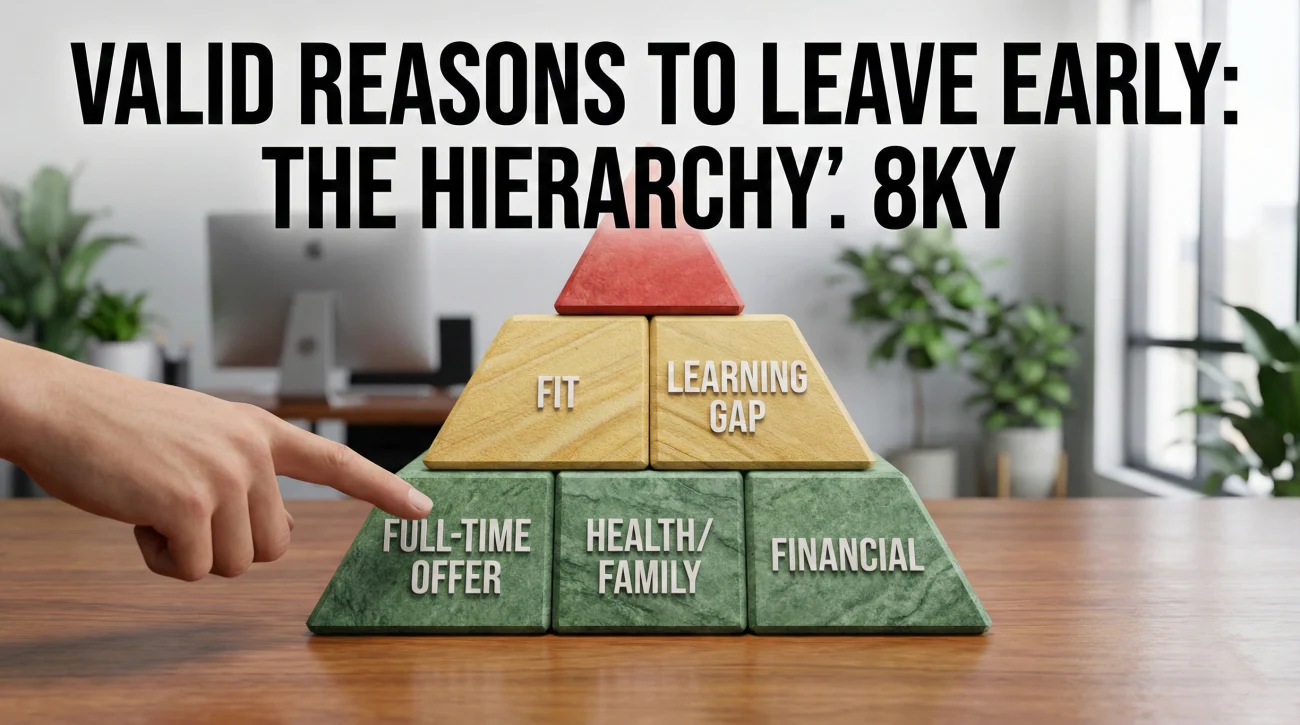
Tier 1: The “Unassailable” Reasons
These are reasons that any reasonable professional will accept immediately without judgment. If your reason falls here, you should feel zero guilt.
- 🚀 Full-Time Job Offer: The ultimate goal of an intern is to get hired. If you get a full-time offer, even at another company, you have “graduated.”
- 🏥 Health & Family Emergencies: Personal well-being always trumps professional obligations.
- 💰 Financial Hardship: “I cannot afford to continue working unpaid” is a valid, hard stop.
- 🎓 Academic Conflict: If a thesis defense moves up or a required class schedule changes, school comes first.
Tier 2: The “Diplomatic” Reasons
These require careful framing in your internship resignation email to avoid sounding entitled or flaky.
- “It’s not a good fit”: This is code for “I hate it here.” It is valid, but must be phrased as “realigning career goals.”
- “I’m not learning enough”: Valid, but dangerous to say directly. Better to frame it as “seeking different challenges.”
- Burnout: If the workload is exploitative, leaving is right, but the explanation should be professional.
The Intern Notice Period: How Long is Enough?
The standard “two weeks” rule is a guideline, not a law, especially for interns. However, courtesy is the currency of your future recommendations.
The Gold Standard: 2 Weeks
If you are in a paid internship or a long-term co-op (6+ months), treat it like a real job. Giving two weeks allows for a proper handover and shows maturity.
The “Intern” Standard: 1 Week
For short summer internships (8-10 weeks), a two-week notice implies you are checking out for 20% of the remaining time. Often, one week is sufficient to document tasks and say goodbyes. Supervisors usually prefer a quick, clean break over a lingering, unmotivated intern.
The “Immediate” Exit
If the environment is unsafe, harassment is occurring, or the emergency is severe, “effective immediately” is acceptable. In these cases, your safety and mental health prioritize over the internship resignation letter email etiquette.
Master Templates: Internship Resignation Email Scenarios
Below are tailored templates. Do not simply copy-paste; adapt the bracketed information to fit your specific context. The goal is to sound like you – a professional version of you.

Scenario 1: The “Golden Ticket” (Leaving for a Full-Time Job)
This is the best-case scenario. You are ending internship early because you succeeded in the job market. Be proud, but humble.
Subject: Resignation – [Your Name] – Transition to Full-Time Role
Dear [Supervisor Name],
Please accept this letter as formal notification that I will be resigning from my position as [Internship Title], effective [Last Working Day, e.g., Friday, August 12th].
I have recently received an offer for a full-time position with [Company Name/another organization], and they require a start date that overlaps with the remainder of my internship here. While I am eager to begin this new chapter, I am genuinely sad to leave this team earlier than we planned.
My time at [Current Company] has been instrumental in preparing me for this step. Specifically, the mentorship I received on the [Specific Project Name] gave me the confidence to pursue this opportunity. I am deeply grateful for the investment you have made in my development.
My priority for my final [Number] days is to ensure a seamless handoff. I have already drafted a transition document for [Project Name] and am happy to train [Name of peer/replacement] on my current workflow.
I hope to stay in touch as I progress in my career. Thank you again for being such a supportive mentor.
Sincerely,
[Your Name]
[LinkedIn Profile Link]
[Personal Email]
Scenario 2: The “Academic Pivot” (School Conflicts)
Universities are bureaucratic, and schedules change. Employers generally respect academic authority. Use this leaving internship email when school calls.
Subject: Update regarding my internship timeline – [Your Name]
Hi [Supervisor Name],
I am writing to discuss a necessary adjustment to my internship schedule. Due to unforeseen changes in my academic calendar for the upcoming semester, I will need to conclude my internship on [Date], rather than our originally scheduled end date of [Original Date].
This was a difficult decision, but my university program requires me to be on campus for [orientation/lab work/thesis prep] starting that week. I want to ensure I honor my academic commitments while closing out my work here responsibly.
I have truly valued the exposure to [Industry/Skill] I’ve gained here. In my remaining time, I will focus on wrapping up the [Specific Task] so the team isn’t left with loose ends.
Thank you for your understanding and for the opportunity to learn from you.
Best regards,
[Your Name]
Scenario 3: The “Standard Conclusion” (Ending on Schedule)
Even if you are leaving on the agreed date, send an email. This is not a resignation; it is a “legacy builder.” It solidifies your relationship.
Subject: Internship Conclusion and Handover – [Your Name]
Dear [Supervisor Name],
As we approach [Date], which marks the final day of my internship program, I wanted to formally express my gratitude for the past [Number] months.
This experience has bridged the gap between my coursework and the real world in ways I didn’t expect. I particularly enjoyed working on the [Project X] and learning how to navigate [Specific Tool or Process]. Your guidance on [Specific Topic] has been a highlight of my summer.
I have organized all my files in the shared drive under [Folder Name] and completed the final report we discussed. If there is anything else you need from me before I depart, please let me know.
I would love to keep in touch. Would you be open to me listing you as a reference for future job applications? Your perspective on my work would mean a lot to me.
Thank you for everything.
Best,
[Your Name]
Scenario 4: The “Financial Necessity” (Unpaid to Paid)
Honesty is powerful here. If you need money, say so professionally. It cuts through any counter-arguments.
Subject: Resignation – [Your Name]
Dear [Supervisor Name],
I am writing to respectfully resign from my internship position, with my final day being [Date].
This has been a difficult decision, as I have genuinely enjoyed the learning curve here at [Company]. However, due to a change in my financial circumstances, I have had to secure immediate paid employment to support my studies and living expenses. Unfortunately, this new schedule conflicts with my ability to continue this internship.
I want to thank you for the opportunity you gave me. I have learned a great deal about [Industry Skill], and I regret that I cannot complete the full term.
I will do everything I can this week to hand over my current tasks efficiently.
Sincerely,
[Your Name]
Scenario 5: The “Diplomatic Exit” (Bad Fit/Not Learning)
When the internship is wasting your time, or you are miserable, you need a quit internship email that is firm but polite. Never complain in writing.
Subject: Resignation – [Your Name]
Dear [Supervisor Name],
Please accept this note as my resignation from the intern position at [Company], effective [Date].
After careful reflection on my career path and current goals, I have decided to step away from this role to focus on different professional development opportunities that align more closely with my long-term objectives in [Your Field].
I appreciate the opportunity to have been part of the team and to learn more about the [Industry] sector. I will ensure my current tasks are organized and accessible before my departure.
Thank you for the opportunity.
Regards,
[Your Name]
The Pre-Send Strategy: Don’t Just Click “Send”
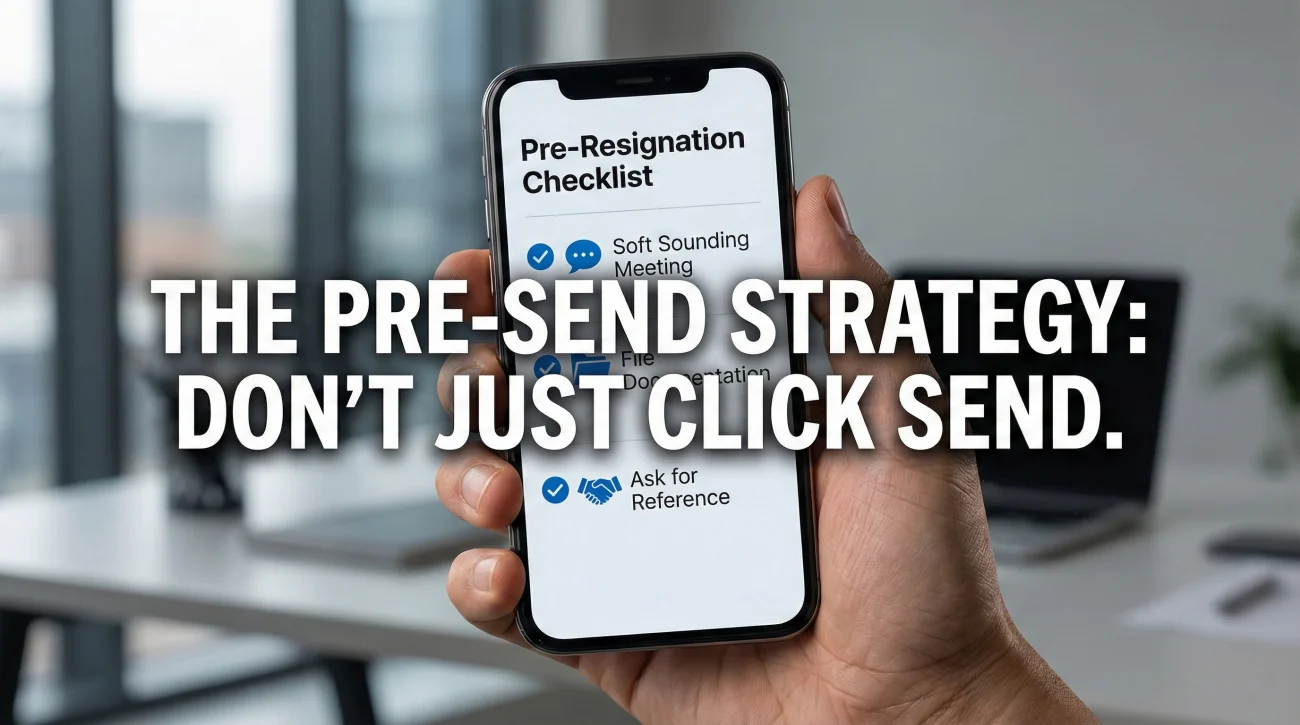
The email is the official record, but it should rarely be the first communication. Sending a cold email to a supervisor you sit ten feet away from (or have daily Zoom calls with) is unprofessional.
- 🗣️ The “Soft Sounding” Meeting: Request a quick 5-minute chat. “Hi [Name], do you have a moment to catch up?” Breaking the news verbally allows you to control the tone. You can convey regret and gratitude much better with your voice than text.
- 📝 The Documentation: Before you resign, organize your files. Nothing annoys a supervisor more than a departing intern leaving a mess of unlabelled Google Docs.
- 🤝 The Reference Ask: Ask for the reference verbally first. “I’ve loved working here. As I move on, would you be comfortable if I listed you as a reference?” If they say yes, follow up in your email to document it.
Post-Resignation: The LinkedIn Strategy
Your resignation email for intern role is sent. You have left. Now, how do you handle the public record?
Updating Your Profile
Update your experience to “Past”. Focus your bullet points on achievements, not just duties. Even if you left early, you can still list the internship – just be accurate with the dates. A 2-month internship is still valid experience.
While you’re there, don’t leave your headline as just “Intern at [Company]”. Your headline is mini real estate for your future direction. If you want plug-and-play headline ideas tailored by role and career stage, you can browse curated examples at ProfileHeadline.com and adapt a headline that tells recruiters who you are becoming, not just where you were interning.
The Public “Thank You”
A smart strategic move is a LinkedIn post tagging your supervisor and company.
“I’m wrapping up my time at @[Company]. A huge thank you to @[Supervisor Name] for mentoring me on [Skill]. I’m excited to apply these lessons as I move forward to my next chapter! #Internship #CareerGrowth”
This locks in the relationship. It is very hard for a supervisor to give a bad reference to someone who just publicly praised them.
Final Thoughts
Your internship is a chapter, not the whole book. Whether you are sending a standard farewell or a difficult internship resignation email to leave early, remember that your career is a marathon. A graceful exit, marked by a professional quit internship email, demonstrates a level of maturity that often impresses supervisors more than the actual work you did.
Prioritize your long-term reputation. Be honest, be helpful during the transition, and never burn a bridge you might need to cross later. If you handle this right, your former boss won’t just be someone you used to work for – they will be a lifelong advocate for your success.
For more guidance on navigating career transitions, check our specific resignation email examples or read our pillar guide on how to write a resignation email. If you are looking for more general advice, visit the homepage.
⚠️ Legal Disclaimer: ResignSmartly provides general informational guidance about resignation, workplace communication, notice periods, handovers, and career transitions. Content does not constitute individualized legal advice. Employment laws, contracts, workplace policies, and individual circumstances vary, so review the requirements that apply to your situation and consult an appropriate qualified professional when needed.