- Core Situation: A new-hire resignation is a “failed start”, handle it fast and clean to reduce reputation damage.
- Decision Filter: Leave immediately for bait-and-switch or toxic/unsafe reality, pause for buyer’s remorse and normal onboarding panic.
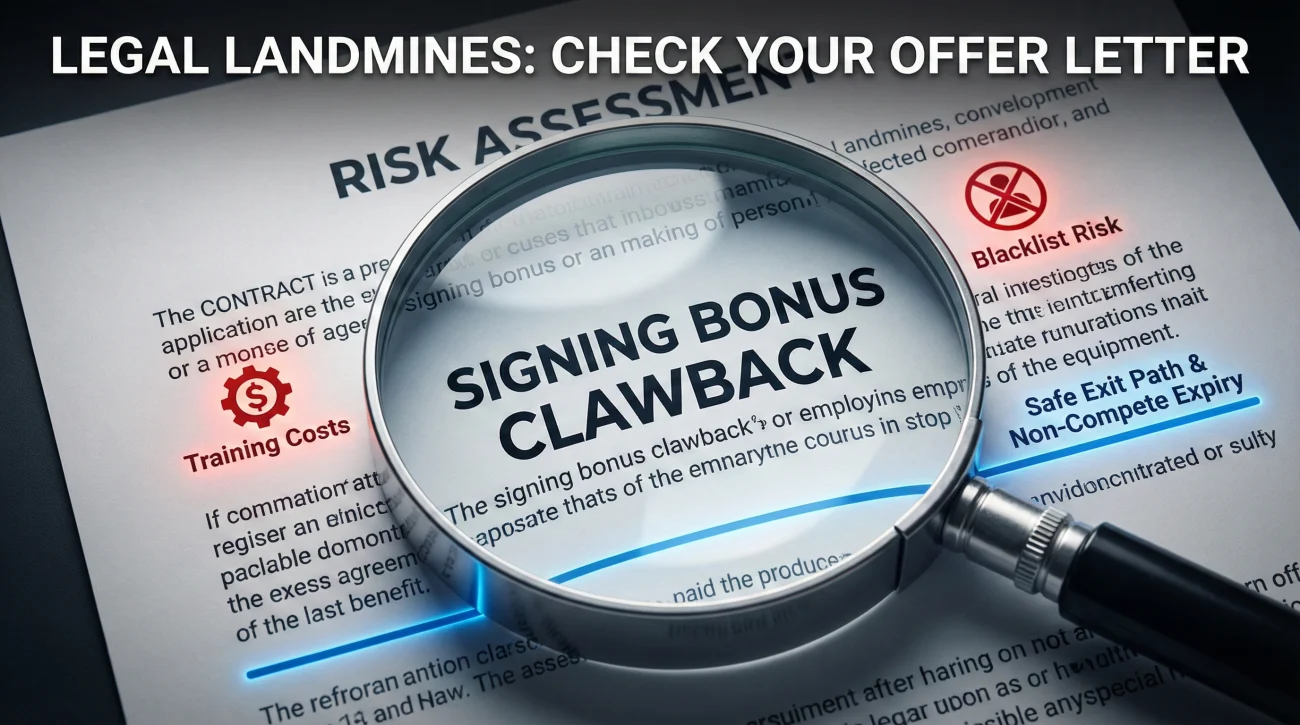
- Money And Risk: Check offer terms for signing bonus clawback, training repayment clauses, and the reality of being marked ineligible for rehire.
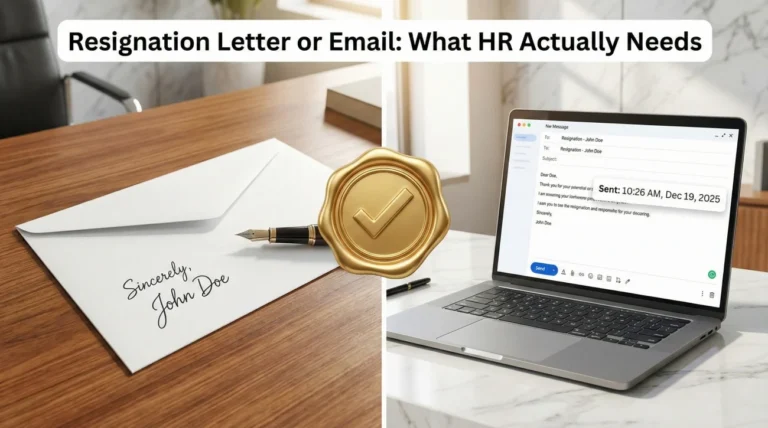
- Exit Protocol: Tell them on a call or in person first, then send a brief email with resignation, last day, and basic logistics.
- Aftermath Control: If under ~3 months, keep it off your resume, remove the LinkedIn entry, and use a simple “misalignment” explanation if asked.
The Psychology of the Early Exit: “Bait and Switch” vs. “Buyer’s Remorse”
Before you draft your resignation, it is crucial to diagnose why you are leaving. Understanding the root cause will help you frame your quit after one week email professionally rather than emotionally.
1. The “Bait and Switch”
This occurs when the job description does not match the daily reality. Perhaps you were hired as a “Senior Strategist” but find yourself doing data entry, or the “hybrid” role turns out to be 100% in-office.
Verdict: You are justified in leaving immediately. This is a breach of trust.
2. The “Toxic Reveal”
Interviews are like first dates; everyone is on their best behavior. Day One is when you see the cracks: screaming managers, chaotic onboarding, or unsafe practices.
Verdict: Leave now. Toxicity does not improve with time.
3. “Buyer’s Remorse” (Panic)
This is the “Oh no, I made a mistake” feeling. Maybe the commute is harder than expected, or you miss your old team.
Verdict: Pause. Give it two weeks. New job anxiety is normal. Only resign if you are 100% certain the role is unsustainable.
| Scenario | Stay or Go? | Recommended Strategy |
|---|---|---|
| Role is completely different than described | GO | Resign immediately to save them training costs. |
| Feeling overwhelmed by new systems | STAY | This is normal onboarding friction. Give it 30 days. |
| Received a better offer (Counter-offer) | GO | Awkward, but business is business. Be honest but brief. |
| Hostile/Unsafe Environment | GO | Immediate exit. Protect your mental health. |
The Legal & Financial Landmines
Quitting a job after a few days is not just awkward; it can be expensive. Before you send that resignation email recent hire, check your offer letter for these three clauses.
1. The Signing Bonus Clawback
If you received a sign-on bonus or relocation package, you almost certainly signed a “Clawback Agreement.” This typically states that if you leave within 12–24 months, you must repay the gross amount (pre-tax) immediately.
Strategy: Do not spend the bonus until the clawback period is over. Be prepared to write a check on your last day.
2. Training Repayment Agreement Provisions (TRAPs)
Some industries (nursing, trucking, specialized tech) have clauses requiring you to pay for your training if you leave early. Ensure you aren’t on the hook for thousands in “onboarding costs.”
3. The “Blacklist” Reality
Let’s be honest: quitting after one week will likely burn a bridge with this specific company and recruiter. They will likely mark you as “Ineligible for Rehire.”
The Fix: You cannot save the job, but you can save your reputation by being professional, apologetic, and decisive. Do not drag it out.
The “Face-to-Face” Rule: Don’t Just Email
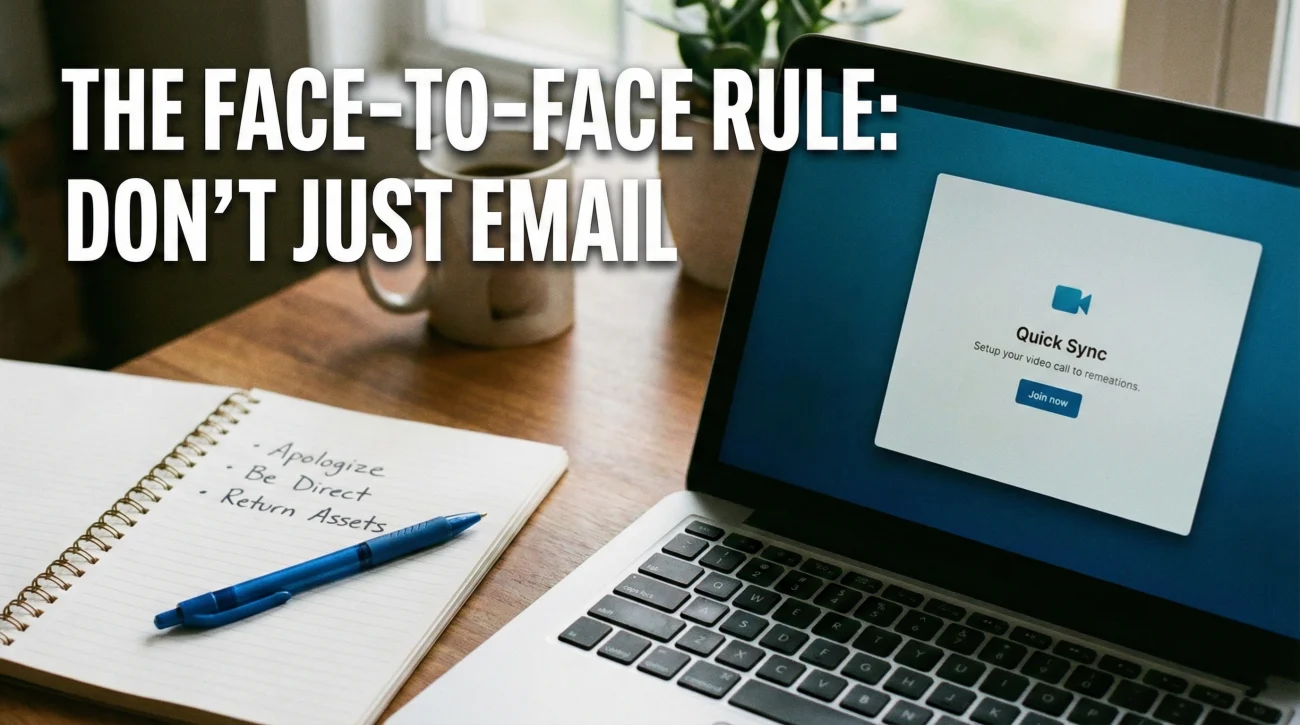
For a standard resignation, an email is often enough. For a new hire, an email-only exit is viewed as cowardly. You must have a conversation first (Zoom or in-person).
The Script:
“I have some difficult news. After [Day/Week] of being here, I’ve realized that this role is not the right fit for me. I wanted to tell you immediately so you can stop investing resources in my training and perhaps reach out to other final candidates from the interview process. I am resigning effective [Today/Tomorrow].”
Once you have said the words, then send the email to formalize it.
Master Templates: Graceful Early Exits
These templates are designed to be humble, brief, and final. Do not over-explain. You don’t need to justify your feelings; you just need to execute the resignation.

Scenario 1: The “Day One” Mismatch (Quit After One Day Email)
Use this if you walk in and realize immediately that the environment is wrong (e.g., safety issues, extreme chaos, or total role misrepresentation).
Subject: Resignation – [Your Name]
Dear [Manager Name],
Please accept this email as my formal resignation from the position of [Job Title], effective immediately.
I apologize for the abrupt nature of this decision. However, after my first day, it has become clear that this role and company environment are significantly different from what I anticipated and are not a good fit for my professional skills. I believe it is better to step away now, before you invest further time and resources in my training.
I have returned my [badge/laptop] to the front desk.
I appreciate the opportunity and wish you the best in finding the right candidate.
Sincerely,
[Your Name]
[Phone Number]
Scenario 2: The “First Week” Realization (Quit After One Week Email)
You gave it a few days, but the gap between expectation and reality is too wide. This template is respectful but firm.
Subject: Resignation Notice – [Your Name]
Dear [Manager Name],
I am writing to formally resign from my position as [Job Title], effective [Date/Today].
This was a difficult decision, but over the past week, I have realized that the scope of this role is not aligned with the career direction discussed during the interview process. Rather than continue in a position where I cannot be fully effective, I feel it is professional to step aside now so you can reopen the search for a candidate who is a better match.
I sincerely apologize for the inconvenience this causes the team. I am happy to wrap up my notes on [Current Task] before I leave today.
Thank you for the kindness you showed me during my brief time here.
Best regards,
[Your Name]
Scenario 3: The “boomerang” (Accepted Old Job/Better Offer)
This is the most common reason for early exits. You accepted Job A, but then Job B (your dream job) came through. Be honest – they will find out via LinkedIn anyway.
Subject: Resignation – [Your Name]
Dear [Manager Name],
Please accept my resignation from the [Job Title] position, effective [Date].
I want to be transparent with you: I have received an unexpected offer from [my previous employer/another company] that aligns perfectly with my long-term career goals. After much consideration, I have decided I must accept it.
I deeply regret the timing of this decision and the disruption it causes your hiring process. My intention was never to inconvenience you or the team. I hope that by letting you know immediately, you might still be able to engage with other candidates from the final interview round.
Thank you for the opportunity.
Sincerely,
[Your Name]
Scenario 4: The “Emergency/Toxic” Exit
If the environment is hostile or unsafe, you owe zero explanations. Keep it legally neutral to protect yourself.
Subject: Resignation – [Your Name]
Dear [Manager Name],
I am writing to inform you that I am resigning from my position at [Company Name], effective immediately.
Based on my experience during the onboarding period, I have determined that this environment is not a sustainable fit for me. I will not be returning to the office.
Please let me know the process for returning my equipment and when I can expect my final paycheck for hours worked.
Regards,
[Your Name]
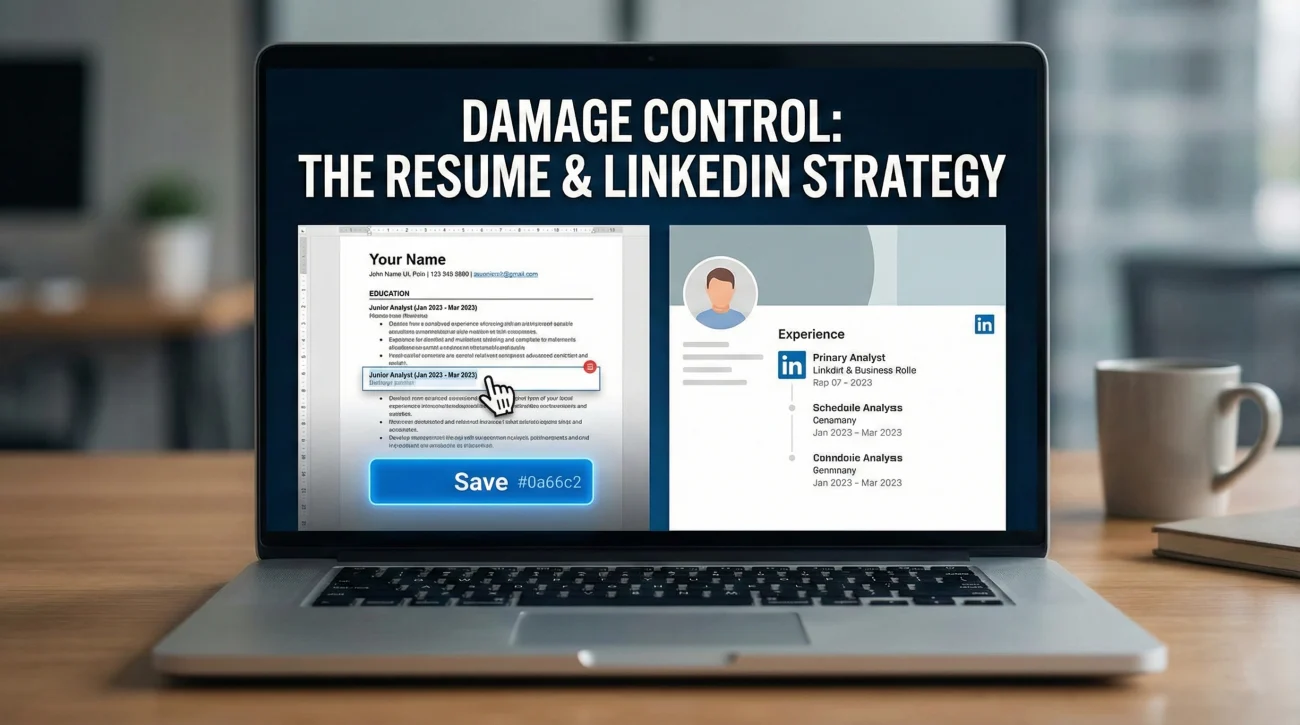
Damage Control: Resume, LinkedIn, and Reputation
The biggest fear with early resignation is the “Resume Stain.” Here is how to handle the optics.
The Resume: To List or Not to List?
Rule of Thumb: If you were there for less than 3 months, leave it off your resume.
Listing a 1-week job raises more red flags than a small employment gap. It looks like a firing or a failure. Pretend it never happened. If you have a background check, you may need to disclose it, but it does not need to be on your marketing document (resume).
The LinkedIn Problem
If you already updated your LinkedIn to “Started a New Job,” you have an awkward situation.
The Fix: Delete the position entirely. Do not mark it as “ended”; just remove it. It is better to have a gap than a 5-day entry. If anyone asks, say: “It was a short-term consulting engagement that didn’t evolve into a permanent role.”
The “Why Did You Leave?” Answer
In future interviews, if this job comes up, use the “Misalignment” narrative:
“I accepted the role based on a specific description, but upon joining, I realized the core responsibilities were fundamentally different. I decided to handle it professionally and leave immediately to save the company resources, rather than stay in a role where I couldn’t deliver value.”
❓ FAQ: New Hire Resignations
💼 Can I quit without notice if I just started?
💰 Do I get paid for the 3 days I worked?
📉 Will this blacklist me?
😰 Should I offer to work for free to make up for it?
🤝 Can I ask for my old job back?
Final Thoughts
Resigning as a new hire is a painful, humbling experience – but it is not a career-ending one. The most successful careers are rarely straight lines; they are jagged paths with occasional false starts. The measure of your professionalism is not that you never make a mistake, but how you fix it.
Be honest. Be brief. Be gone. And then, forgive yourself and focus on finding the role that actually deserves your talent.
For more specific templates on leaving jobs, check our guide on resignation email examples or read our detailed breakdown on how to write a resignation email. For other career transition advice, visit the homepage.
⚠️ Legal Disclaimer: ResignSmartly provides general informational guidance about resignation, workplace communication, notice periods, handovers, and career transitions. Content does not constitute individualized legal advice. Employment laws, contracts, workplace policies, and individual circumstances vary, so review the requirements that apply to your situation and consult an appropriate qualified professional when needed.