
- Reframe: Probation is a two-way fit check, so leaving early can be professional when the match is wrong.
- Sanity test: Separate new-job discomfort from real structural problems like mis-sold scope, bullying, ethical pressure, or unsafe conditions.
- Notice rules: Treat notice as law, contract, and policy, then confirm required probation notice in writing if unclear.
- Exit method: Talk first, write second, keep the reason high-level, and avoid details that invite debate or negotiation.
- Protection: Leave a tight handover note, confirm your last day, and return equipment with proof to prevent offboarding disputes.
Probation Is a Test for Them, Too. You’re Allowed to Fail It on Purpose.
Quitting during probation feels like a confession. Like you’re admitting you made a mistake, or you “couldn’t handle it,” or you’re about to collect a permanent stain on your resume. That fear is understandable, but it’s not always accurate.
A probation period exists because the company wants a low-risk way to evaluate you. That same logic works both directions: it’s also your low-risk window to evaluate the role, the manager, and the reality behind the job description.
The real question isn’t “Is it professional?” The question is: can you leave without drama, protect your reputation, and walk away with a story that doesn’t sound chaotic later? You can – if you resign like an adult.
What a Probation Period Really Means (And Why It’s Not a Moral Contract)
Probation is often treated like a loyalty test, but in practice it’s a structured “fit check.” The company is testing performance, reliability, communication, and how quickly you adapt. You’re testing the same things from the other side: whether expectations are clear, whether the team is functional, whether the role matches what you were promised, and whether the manager is someone you can succeed under.
That’s why leaving early is not automatically disrespectful. Sometimes it’s the most respectful thing you can do – for the team and for yourself – because dragging out a mismatch creates more wasted time than a clean early exit.
Should You Quit, or Are You Just in the “New Job Shock” Phase?
The first few weeks of a new job can feel rough even when it’s a good job. New systems, new people, new pressure. If you resign too fast, you may be quitting discomfort instead of quitting a real problem.
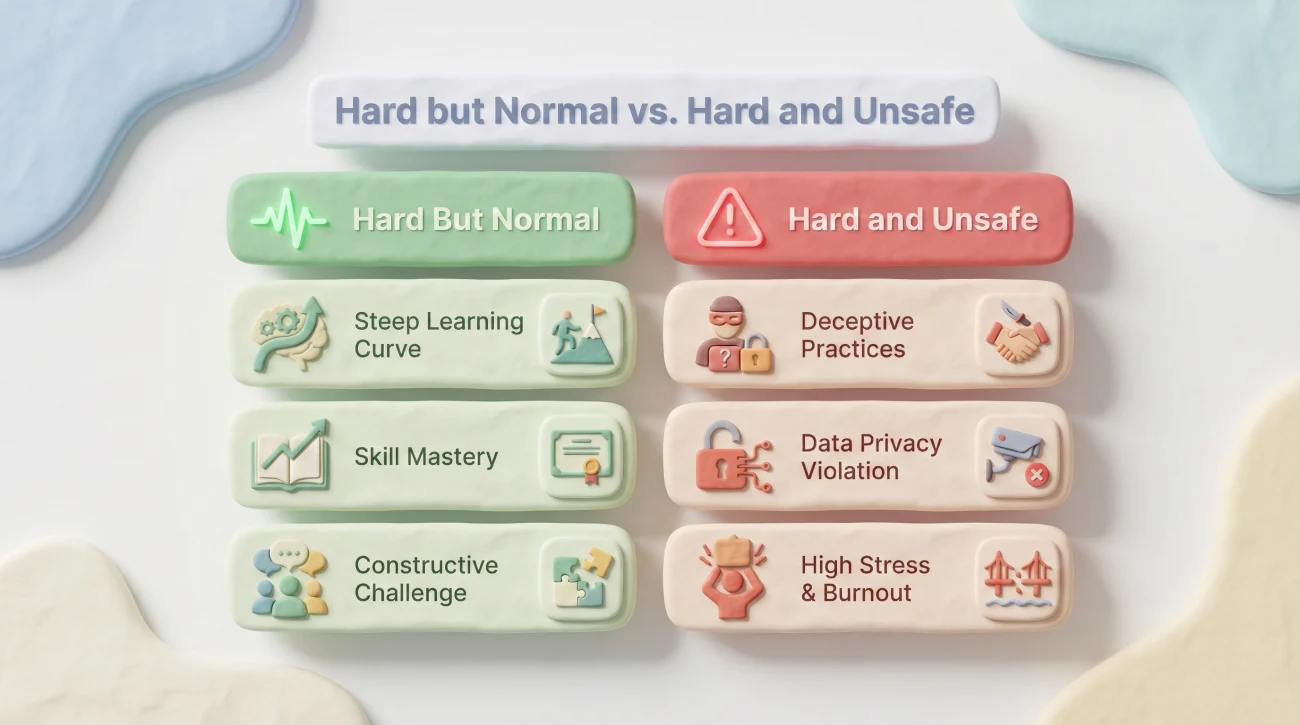
A simple way to tell the difference is to separate “hard but normal” from “hard and unsafe.”
| Hard but normal | Hard and unsafe (or structurally broken) |
|---|---|
| Learning curve and feedback feels intense | Humiliation, bullying, threats, or targeted harassment |
| Unclear processes while you ramp up | Role is fundamentally different than what was offered |
| You feel slower than you want to be | Impossible workload with no support or realistic onboarding |
| You don’t “click” with everyone yet | Ethical red flags: pressure to lie, manipulate, or break rules |
| Normal stress from being new | Safety issues or serious mental health decline |
If it’s “hard but normal,” give yourself a short, structured runway: two weeks of focused learning, one honest check-in with your manager, and a clear list of what would need to change for you to stay. If it’s “hard and unsafe,” you don’t need to wait for permission to protect yourself.
Notice Period During Probation: What You Owe vs What You Choose to Offer
People often assume probation means “you can leave instantly.” Sometimes that’s true. Sometimes it isn’t. The clean approach is to treat notice like a three-layer issue: law, contract, and company policy. Your goal is not to argue. Your goal is to avoid surprises.
Check your offer letter or employment agreement for anything about a notice period during probation. Some companies want one week. Some want two weeks. Some allow immediate resignation. If you can’t find clarity, ask HR directly in writing: “What is the required notice period during probation for my role?”
Even if you are allowed to leave immediately, offering a short notice window can sometimes protect your reputation – if the workplace is professional and you feel safe. If you don’t feel safe, your priority is a clean, documented exit and returning company property properly.
How to Resign During Probation Without Burning the Bridge

The professional version of resigning early is boring. It’s not a long explanation, not a debate, and not a therapy session with your manager. It’s a clear decision delivered calmly, paired with a simple transition plan.
Keep your reason high-level. “Not the right fit” is often enough. If you provide too many details, you create room for negotiation, arguments, or someone deciding to “fix you” instead of accepting your decision.
Also: talk first, write second. A short conversation reduces shock and lets you frame the resignation as intentional, not emotional.
Copy-Paste Scripts: Manager Conversation + Resignation Email
Use these as-is, or adjust small details. The tone is calm, respectful, and final.
Script 1: What to say to your manager (in a meeting)
“Thanks for meeting with me. I want to be direct and professional: I’ve decided to resign during my probation period. After getting a real view of the role, I don’t think it’s the right fit long-term. I appreciate the opportunity and I want to make the transition as smooth as possible. My proposed last working day is [date]. I can document what I’ve done so far and hand over any active items.”
“I understand this is early. I’m making the decision now because it’s better for the team to have clarity than to stretch out a mismatch.”
Script 2: Resignation email (short, clean, probation-safe)
Subject: ResignationHi [Manager Name],
Please accept this email as formal notice of my resignation during my probation period. My last working day will be [date].
After starting the role, I’ve realized it isn’t the right fit long-term. I appreciate the opportunity and your time.
I will support a smooth transition by documenting my current work, summarizing any active items, and coordinating handover steps with you and the team.
Thank you,
[Your Name]
The “Clean Exit” Moves That Protect You After a Short Stay
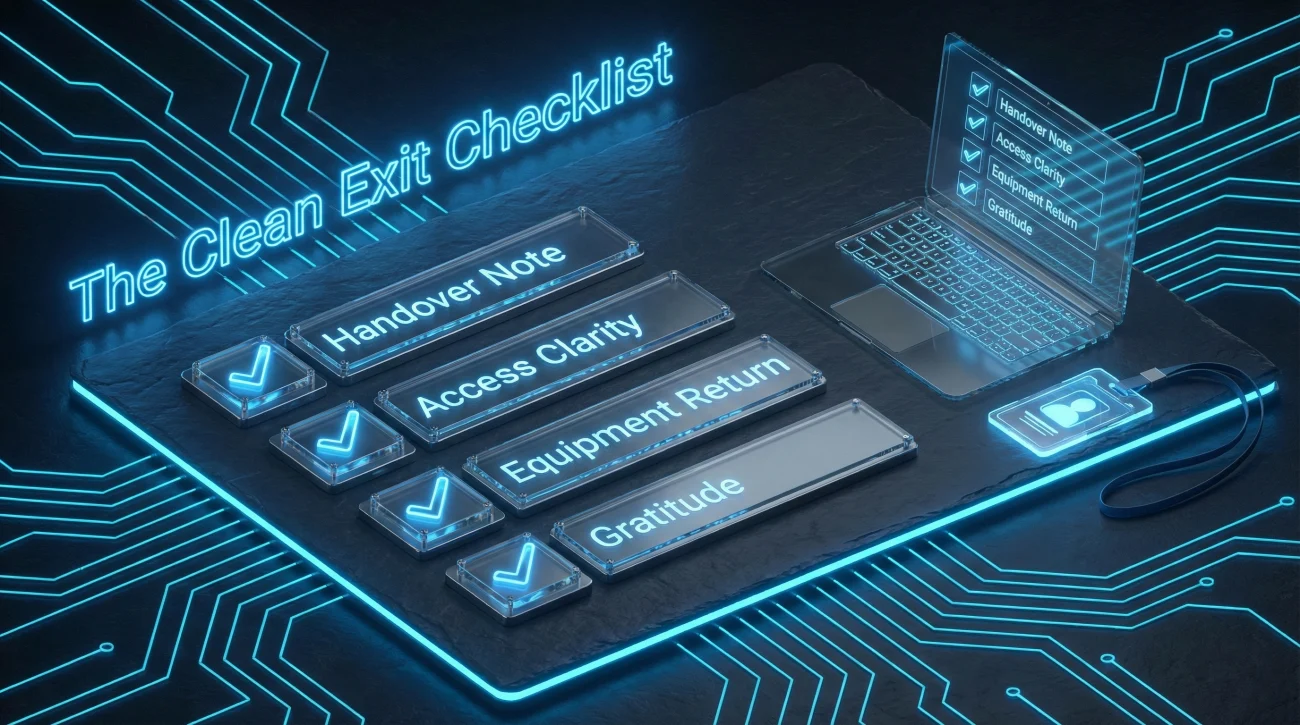
When you leave early, you don’t have years of goodwill to rely on. That means the small professional behaviors matter more: handover notes, equipment return, and written confirmations. These are the things that keep an early resignation from turning into an HR mess.
Your goal is to leave a small footprint: no loose ends, no confusion about access, no missing equipment, no vague last day date. If you do that, even a disappointed manager usually has nothing credible to criticize.
| Clean-exit item | What you deliver | Why it matters |
|---|---|---|
| Handover note | Status + next steps + owners | Shows professionalism, reduces resentment |
| Access clarity | Confirm your last day and offboarding steps | Prevents surprise lockouts and confusion |
| Equipment return proof | Inventory list + receipt or tracking | Protects you from “missing laptop” claims |
| Short gratitude line | One sentence, not a speech | Keeps bridge intact without oversharing |
How to Explain Leaving During Probation (Without Sounding Like a Flight Risk)

The future interview question is predictable: “Why did you leave so quickly?” Your answer should do three things: stay neutral, show good judgment, and connect to what you want now.
Avoid blaming the company. Avoid drama. Avoid the detailed story. Instead, use a tight explanation that sounds like an adult decision.
Two-sentence interview answer
“I realized early that the role wasn’t the right fit long-term, so I made a quick, professional decision rather than dragging out a mismatch. I’m now focused on roles like this one where the scope and expectations align with how I do my best work.”
If they press for more detail, keep it factual: “scope changed,” “expectations were different,” “the environment wasn’t the right match.” Then pivot back to what you’re looking for and why their role fits.
On your resume, you don’t need to advertise the situation with emotional framing. If the stint was extremely short and irrelevant, some people choose to omit it. If you keep it, keep the description clean and skill-focused. The point is to avoid making it look like you collect jobs the way people collect coffee stamps.
Checklist: Quitting During Probation the Professional Way
If you follow this checklist, your resignation will read as intentional and controlled, not impulsive.
| Step | What you do | What it protects |
|---|---|---|
| Confirm rules | Check your offer letter + ask HR about notice during probation | Prevents policy surprises |
| Decide your last day | Pick a date you can commit to | Creates clarity and reduces conflict |
| Talk first | Tell your manager calmly before sending the email | Reduces shock and drama |
| Write short | Resignation email with one high-level reason | Avoids debate and oversharing |
| Leave a handover note | Status, next steps, logins/process notes if appropriate | Protects reputation |
| Return equipment with proof | Inventory list + receipt/tracking | Protects you administratively |
| Prepare your future answer | Two sentences, neutral, forward-looking | Protects future interviews |
Leaving Early Isn’t the Problem. Leaving Messily Is.
Quitting during probation can be a smart decision when the fit is wrong, the environment is unhealthy, or the role is not what you accepted. The mistake isn’t leaving early. The mistake is leaving emotionally, vaguely, or without a clean handover.
If you communicate clearly, keep your tone neutral, and leave the team with order instead of chaos, you can exit a new job early and still look like a professional. In many cases, that’s exactly what you are.
❓ FAQ
✅ Is quitting during probation unprofessional?
Not automatically. Probation is a fit check for both sides. It becomes “unprofessional” when the exit is messy, dramatic, or leaves avoidable chaos. A calm resignation + clean handover usually protects your reputation.
📅 What is the notice period during probation?
It depends on your contract and company policy. Some roles allow immediate resignation, while others require a short notice period. The safest move is to check your offer letter and confirm with HR in writing.
🧠 Should I wait longer to see if it gets better?
If the problem is “new job shock,” giving it a short structured runway can help. If the problem is unsafe, unethical, or a fundamentally mis-sold role, waiting often just prolongs stress without improving outcomes.
🗣️ How do I explain leaving a job after a few weeks?
Keep it neutral and forward-looking: it wasn’t the right long-term fit, you made a quick professional decision, and you’re now focused on roles with clearer alignment. Avoid badmouthing or oversharing details.
💻 What should I do before my last day to protect myself?
Confirm your last day in writing, create a short handover note, and return all company equipment with proof (inventory list plus receipt or tracking). Those steps prevent most offboarding disputes.
⚠️ Legal Disclaimer: The resignation templates, email samples, and professional guidance provided in this guide are for informational purposes only and do not constitute legal advice. Employment laws and contract requirements vary by jurisdiction and individual circumstances. Please review your employment agreement and consult your HR department and/or a qualified attorney to ensure compliance with applicable laws and policies.