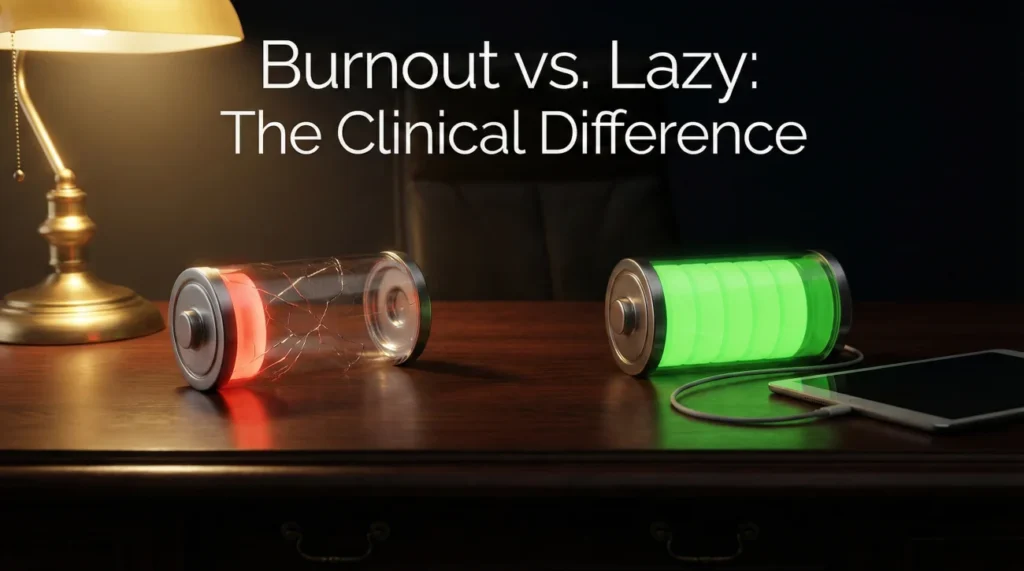
- Core distinction: Burnout is loss of capacity, laziness is a choice about effort.
- Key pattern: Watch the burnout triangle that persists, exhaustion, emotional distance, reduced effectiveness.
- Quick self-check: Ask if rest truly restores you, if avoidance is depletion or misalignment, and if a 30% workload drop would help fast.
- Stress vs burnout: Stress is high activation that can spike output, burnout is low energy and numbness where pushing harder backfires.
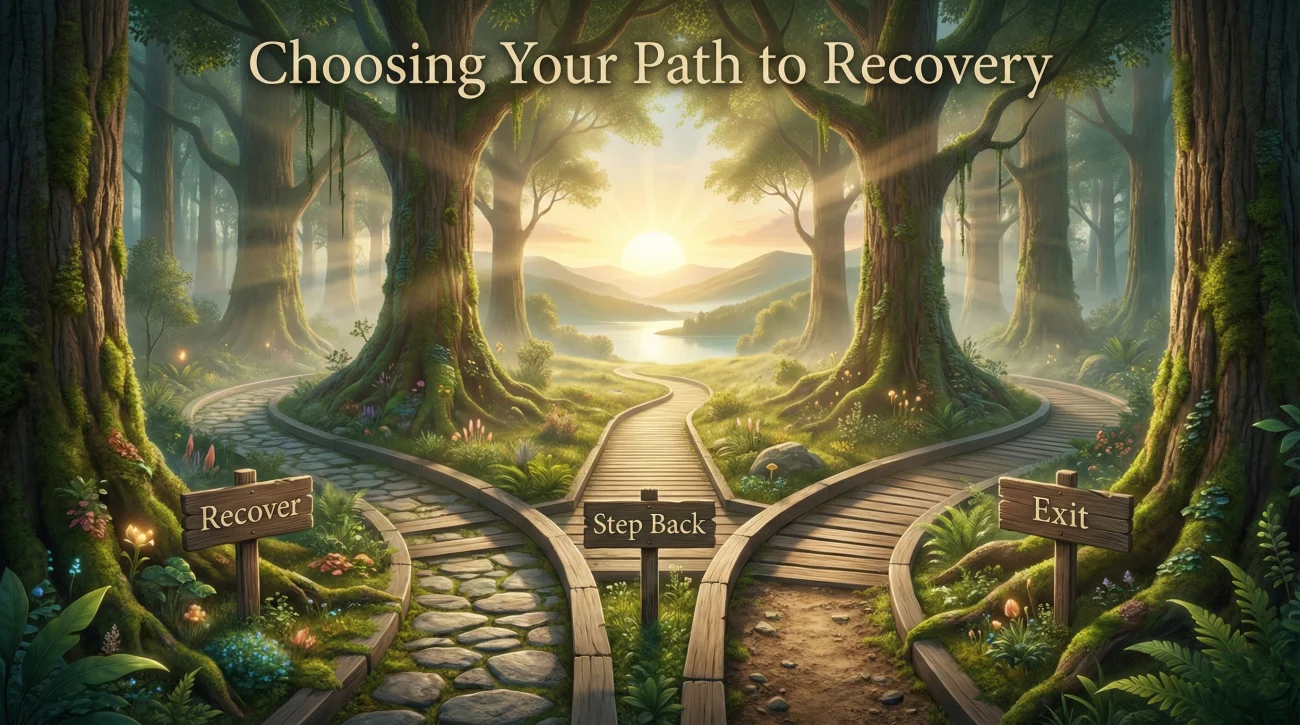
- Next moves: Recover in place, step back temporarily, or exit strategically with neutral wording and a clean handover.
Burnout Isn’t a Character Flaw, and “Lazy” Isn’t a Diagnosis
If you’ve been quietly searching workplace burnout signs at 1 a.m., you’re probably not looking for motivation hacks. You’re looking for an answer you can trust. Because when your output drops, your brain does something cruel: it labels the whole thing as laziness. That label is simple. It’s also often wrong.
Laziness is a choice you can reverse with incentives. Burnout is a depletion state your body and mind slide into after too much demand and too little recovery. The difference matters, because the “fix” is completely different. Push harder at burnout and you often break. Treat burnout like a medical-grade warning light, and you can recover without destroying your career.
This guide is built to help you separate guilt from reality, recognize the patterns that actually matter, and pick a next step that protects both your health and your professional reputation.
The Clinical Difference: Burnout Is Loss of Capacity, Not Loss of Morals
People call themselves lazy when they notice one thing: “I’m not doing what I used to do.” But that observation doesn’t explain why. Burnout does.
Capacity vs. attitude: The fastest way to tell what’s happening
When someone is “lazy,” they usually still have usable energy; they’re avoiding effort because the payoff doesn’t feel worth it. When someone is burned out, they often want to care, but the fuel tank is empty. They’re not dodging work. They’re struggling to function.
The burnout triangle: exhaustion, distance, and reduced effectiveness
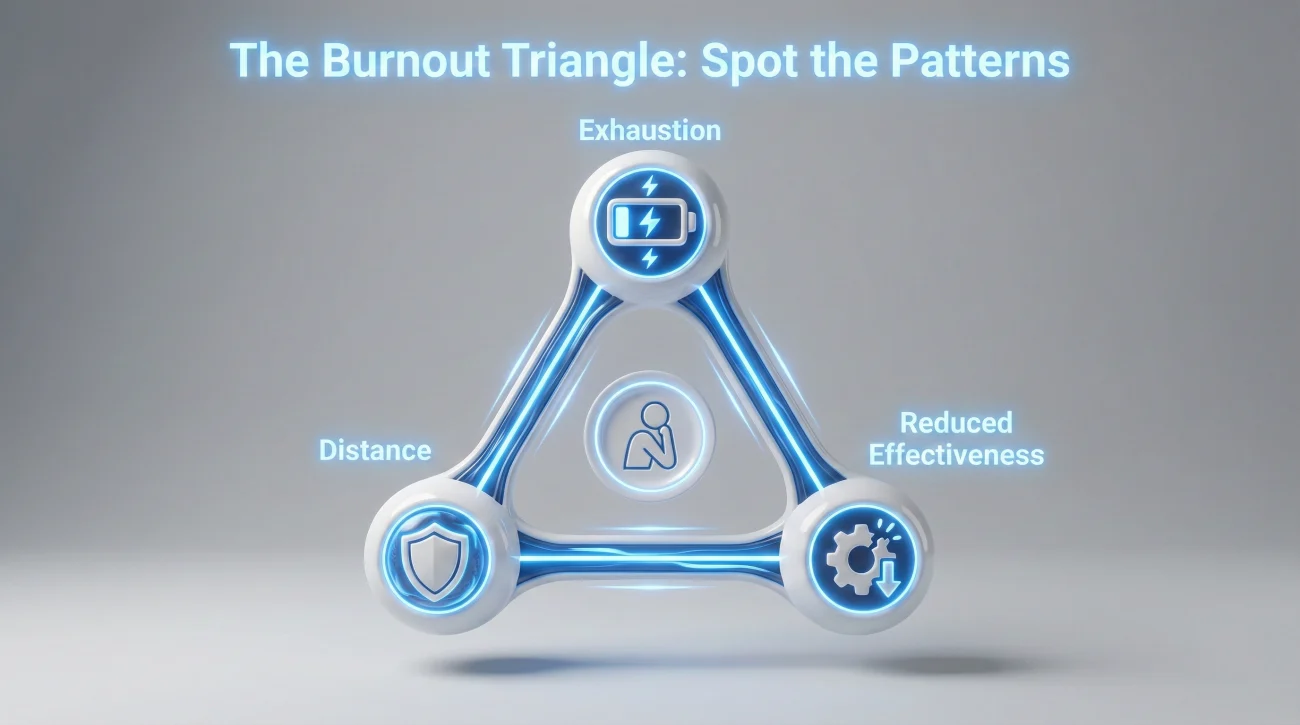
Burnout tends to show up as a trio:
- Persistent exhaustion that doesn’t reset with a normal weekend.
- A growing emotional distance from work (cynicism, numbness, irritability).
- A sense that even “simple” tasks are harder than they should be.
You might still be showing up. You might still be performing. But you’re paying for it with your nervous system.
The Signs That Matter: Patterns, Not One Bad Week
Everyone has rough seasons. Burnout is different because it has momentum. It spreads from work into your sleep, your patience, and your ability to feel normal during “off” hours. The red flags below are meaningful when they persist and cluster together.
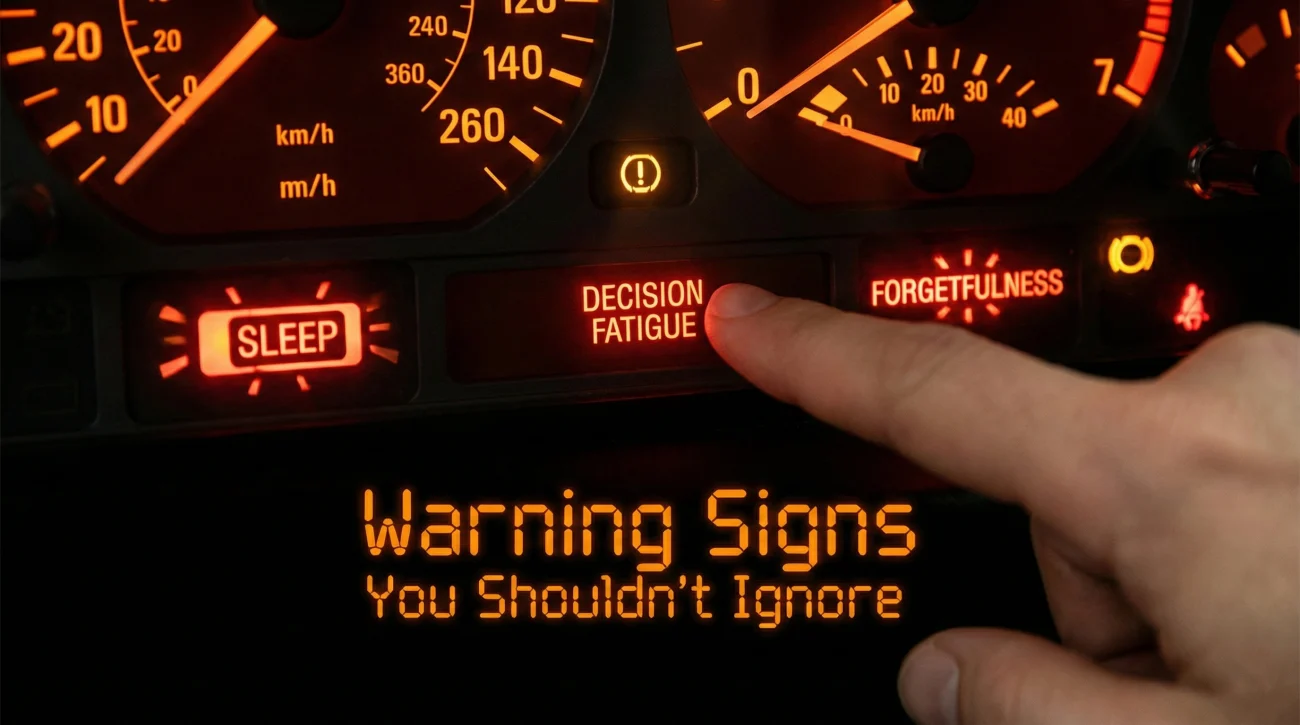
Body-level warnings you shouldn’t normalize
- Sleep becomes shallow, restless, or delayed even when you’re exhausted.
- Frequent headaches, stomach issues, or tight chest that feels “stress-related.”
- Getting sick more often or taking longer to recover.
- Energy crashes that make afternoons feel like survival mode.
Mind-level warnings that look like “I’m failing”
- Decision fatigue: small choices feel strangely heavy.
- Lower concentration: you reread the same paragraph three times.
- Forgetfulness that scares you because it’s not “you.”
- Reactivity: you snap faster, or you shut down faster.
Emotions that flip from loud to absent
One of the most overlooked markers is a shift in how you feel. You may swing between anxiety and numbness, or feel oddly detached from things that used to matter. That’s often where emotional exhaustion symptoms show up: not as dramatic collapse, but as a slow thinning of your emotional bandwidth.
Work patterns that quietly confirm it
- You procrastinate because starting feels painful, not because you “don’t care.”
- Work expands to fill your evenings because you’re slower than before.
- You dread messages, meetings, or your inbox like a physical threat.
- You fantasize about quitting not for freedom, but to stop the pressure.
A Practical Self-Check You Can Do Tonight
You don’t need a personality verdict. You need a reality check. Use this as a quick am i burnt out quiz to spot direction, not perfection.
Ask yourself these questions (answer honestly, not heroically)
- When you rest, do you actually recover, or do you just become less panicked?
- Do you avoid tasks because they feel pointless, or because you feel depleted?
- Are you “behind” because you’re distracted, or because your brain feels slower?
- Do you feel relief when you imagine a new job, or only when you imagine no job?
- If your workload dropped by 30% tomorrow, would you improve within two weeks?
How to interpret your answers
If the theme is depletion, brain fog, and poor recovery, you’re likely dealing with burnout dynamics. If the theme is boredom, lack of meaning, or misalignment – but your energy returns quickly when life gets interesting – then motivation and role-fit may be the bigger issue.
Either way, you don’t fix this with shame. Shame doesn’t restore capacity. It only adds weight.
Stress vs Burnout: The Comparison That Changes Your Next Move
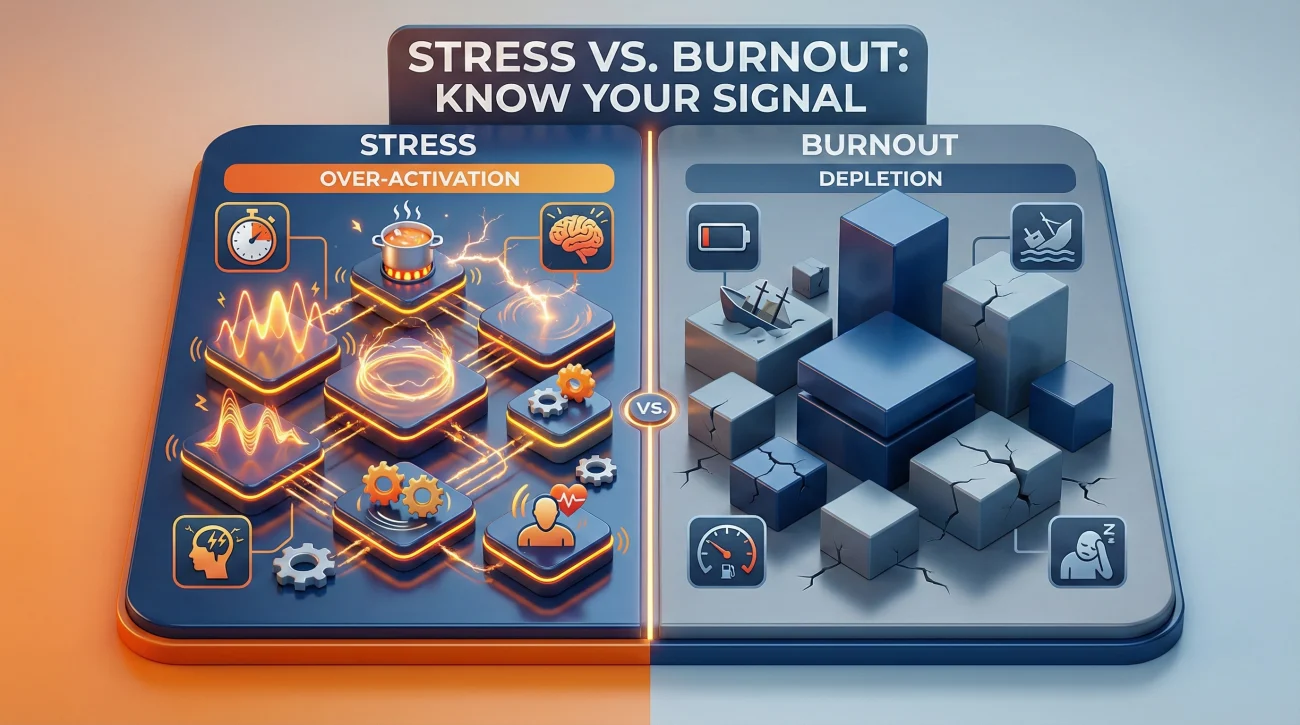
People often confuse “too much stress” with burnout. The distinction matters because stress can sometimes be solved with short-term tactics, while burnout usually requires structural change. Here’s a clean burnout vs stress comparison.
| Signal | Stress | Burnout |
|---|---|---|
| Energy | High intensity, anxious activation | Low energy, depletion, heavy fatigue |
| Recovery | A weekend helps somewhat | Rest helps briefly, then symptoms return fast |
| Emotions | Worry, urgency, irritability | Numbness, cynicism, detachment, emptiness |
| Work output | Can spike under pressure | Declines even when you try harder |
| Core thought | “I have too much to do.” | “I can’t do this anymore.” |
What to Do Next: Three Options That Don’t Ruin Your Future
The biggest trap is believing there’s only one answer: quit. Sometimes quitting is right. But often, quitting is just the first idea that feels like relief. A smarter approach is to choose among three options: recover in place, step back temporarily, or exit strategically.
Option 1: Recover in place (if the job is salvageable)
This works when the environment isn’t toxic and the workload can be adjusted. Your goal is not comfort. Your goal is capacity.
- Cut non-essential commitments for two weeks. Protect sleep like a deadline.
- Reduce context switching: fewer meetings, fewer “always-on” channels.
- Put one boundary in writing (hours, response times, focus blocks).
- Pick one measurable output each day. Stop measuring yourself by hours.
Option 2: Step back temporarily (leave, accommodation, or a reset)
If your body is sounding the alarm, a temporary step-back can be the difference between a clean career story and a messy collapse. Think of it as building conditions for recovery from burnout, not as weakness.
- Use vacation days strategically: a real break, not “catch-up days.”
- Request a temporary workload adjustment or deadline shift.
- If relevant in your jurisdiction, explore medical leave options.
Option 3: Exit strategically (when staying is the bigger risk)
If the environment is harming you, if boundaries are impossible, or if leadership won’t change expectations, exiting can be the healthiest choice. The key is to resign in a way that protects your privacy and your references.
- Keep the reason neutral: “health reasons” or “personal reasons” is enough.
- Line up finances, a timeline, and a job-search plan before the last day.
- Leave with clean handover notes so you don’t burn bridges.
Two Scripts You Can Use: One to Stabilize, One to Exit Cleanly
If you’re trying to preserve your career options, your words matter as much as your decision. Use these templates to communicate clearly without oversharing.
Template 1: Email to request temporary workload adjustment
Subject: Request for a Short-Term Workload Adjustment
Hi [Manager Name],
I wanted to flag that I’ve been dealing with a sustained capacity issue over the past few weeks and I’d like to prevent it from impacting quality or timelines. Could we discuss a short-term adjustment to priorities for the next [2–4 weeks]?
I propose we focus on [Project A / critical deliverable] and pause or reassign [Project B / lower-priority items], or adjust deadlines where possible. I’m confident this will help me stabilize and continue delivering reliably.
If you’re open to it, I can send a brief priority list before we meet.
Thanks,
[Your Name]
If you need a more structured format for the actual resignation message later, use this as a reference: this resignation email guide.
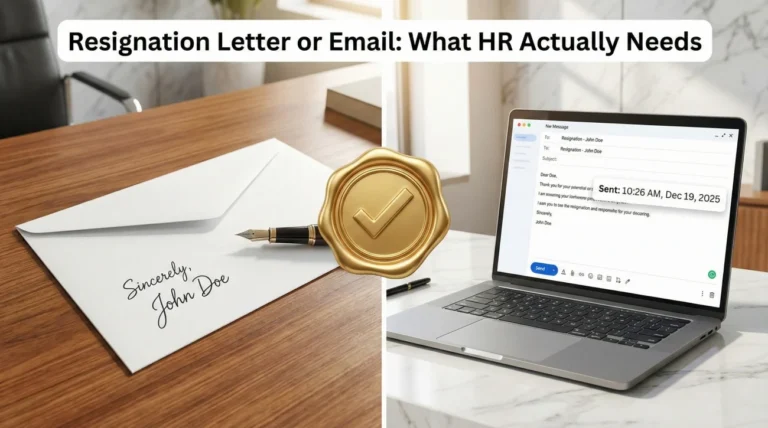
Template 2: Resignation letter (neutral health wording, no oversharing)
[Your Name]
[Your Address]
[City, State ZIP]
[Date]
[Recipient Name]
[Title]
[Company]
Dear [Recipient Name],
Please accept this letter as formal notice of my resignation from my position as [Job Title]. My last working day will be [Last Day], in accordance with the notice period in my agreement.
This decision is due to health-related reasons, and I believe it is the best step to take at this time. I appreciate your understanding and will do everything I can to ensure a smooth transition.
Over the next [X] weeks, I will document current responsibilities, hand over key materials, and coordinate with [Name/Team] so projects remain stable after my departure.
Thank you for the opportunities and support during my time here.
Sincerely,
[Your Signature]
[Your Name]
Before you send anything, it helps to sanity-check tone and timing against: this resignation etiquette page.
❓ FAQ
🧠 Can burnout make me feel “lazy” even if I care about my job?
Yes. Burnout can reduce attention, energy, and emotional bandwidth. When capacity drops, tasks feel heavier and avoidance increases. That can look like laziness from the outside, but the driver is depletion, not a lack of values.
⏳ How long should I wait before deciding to resign?
If you can safely do so, give yourself a short, defined window to stabilize – often 2–4 weeks – using reduced load, real rest, and clearer boundaries. If symptoms persist or the environment is harming you, it may be time to plan a strategic exit.
💬 Do I have to explain burnout to my manager or HR?
No. You can keep it high-level. Focus on capacity and performance protection: what you need, for how long, and how you’ll maintain deliverables. Detailed personal disclosures are optional, not required.
📉 Will quitting hurt my resume if I leave without another job?
A gap is usually manageable if you can explain it calmly and briefly. The bigger risk is leaving in a dramatic way, burning bridges, or exiting without a plan. A clean resignation and a structured search plan protect your story.
✅ What’s the safest wording if I resign for health reasons?
Keep it neutral and short: “health-related reasons” or “personal reasons” is enough. Avoid long narratives or blame. Your goal is privacy, professionalism, and a smooth transition.
Final Thoughts
If your mind keeps calling you lazy, pause and ask a better question: “Do I actually have capacity right now?” Burnout is not a moral failure. It’s a signal that your system has been running beyond sustainable limits.
Whether you recover in place, step back temporarily, or exit, your next move should reduce harm – not add shame. Use the patterns in this guide as your reality check, and treat workplace burnout signs as the warning light they are.
You don’t need to destroy your career to save your health. You just need to choose a plan that makes sense for both.
⚠️ Legal Disclaimer: The resignation templates, email samples, and professional guidance provided in this guide are for informational purposes only and do not constitute legal advice. Employment laws and contract requirements vary by jurisdiction and individual circumstances. Please review your employment agreement and consult your HR department and/or a qualified attorney to ensure compliance with applicable laws and policies.