
- What garden leave is: Paid employment time after resignation where you are told not to work and usually lose system, client access.
- Why companies use it: Risk control for client relationships, sensitive strategy, code, pricing, sales pipelines, internal plans.
- Garden leave vs notice period: Notice is active work and handover, garden leave is separation while still employed and paid.
- Strings attached: Restrictions still apply, no client contact, no recruiting colleagues, no accessing internal docs, often limits on starting a new job.
- How to handle it: Frame it as a controlled transition, confirm dates, pay, benefits, access, availability, restrictions in writing, then use the time to reset and prepare.
The Dream Resignation Nobody Talks About
Imagine quitting… and then getting paid to not show up. No awkward small talk, no “one last fire drill,” no slow emotional bleed-out to your final day. That’s the fantasy version of leaving a job – and for some people, it’s real. This garden leave guide is the practical version of that story: what it actually is, why companies use it, and how to handle it like a professional.
Garden leave isn’t a vacation and it isn’t a loophole. It’s a company-controlled transition period where you remain employed, remain paid, and are usually asked to stay away from work systems, clients, and internal information. If you’ve ever wondered what is garden leave, think of it as a paid “cooling-off” runway that protects the company while giving you a cleaner exit.
What Garden Leave Actually Means in Plain English
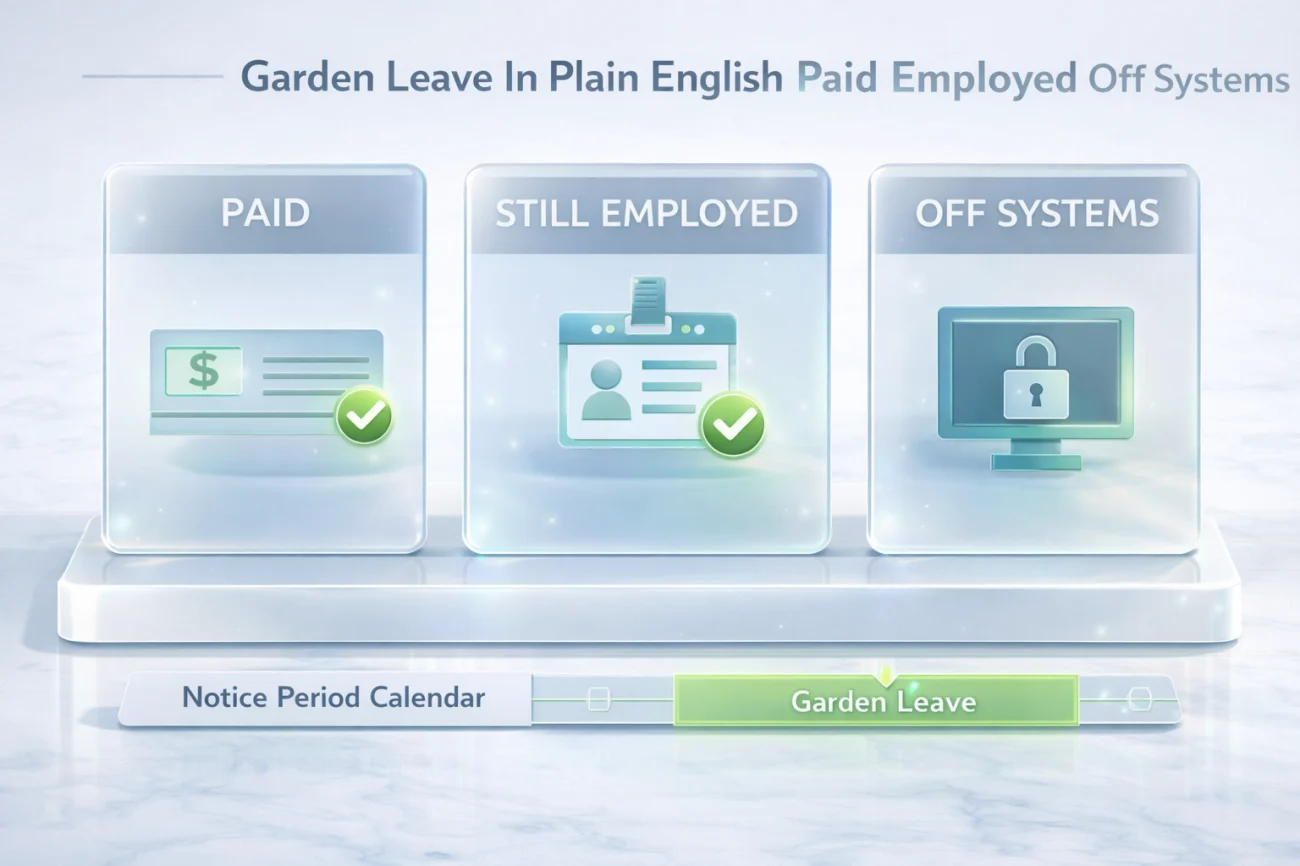
Garden leave is a period after you resign (or are asked to leave) where your employer tells you not to work, but continues to pay you until your employment ends. You’re still an employee, which usually means your salary and benefits continue, and you’re still bound by company policies like confidentiality and loyalty.
Employers use garden leave for one big reason: risk control. If your role touches clients, pricing, strategy, code, sales pipelines, or sensitive internal plans, the company may prefer “paid distance” over “active access.” It reduces the chances of data walking out the door, clients being poached, or internal decisions being influenced by someone who’s already leaving.
Why Companies Offer It (Even When They’re Not Happy You’re Leaving)

The counterintuitive part is this: garden leave can happen even if your resignation annoys them. It’s not a reward. It’s a boundary. Many companies would rather pay you to be quiet and unavailable than keep you fully plugged in while you’re already mentally gone.
This is especially common in roles where relationships are the asset (sales, account management, leadership), or where knowledge is the asset (engineering, product, finance). The company isn’t trying to be generous. They’re buying time and reducing the odds of a messy transition.
Garden Leave vs Notice Period: Same Calendar, Totally Different Life
People mix these up because both can happen after you resign. But garden leave vs notice period is basically “inactive employment” versus “active employment.” During a normal notice period, you’re still working: handover, meetings, documentation, and sometimes getting squeezed for “one last push.”
During garden leave, you’re typically told to step away from systems, clients, and daily work. You may still be available for limited questions, but you’re not driving projects. The notice period is about continuity. Garden leave is about separation while still paying you.
| Topic | Notice Period | Garden Leave |
|---|---|---|
| Status | Employed and actively working | Employed, usually not working |
| Access | Normal access to systems/tools | Often reduced or removed |
| Client contact | May continue until handover completes | Often restricted or prohibited |
| Goal | Keep operations moving | Reduce risk during transition |
The Part People Miss: Garden Leave Comes With Strings
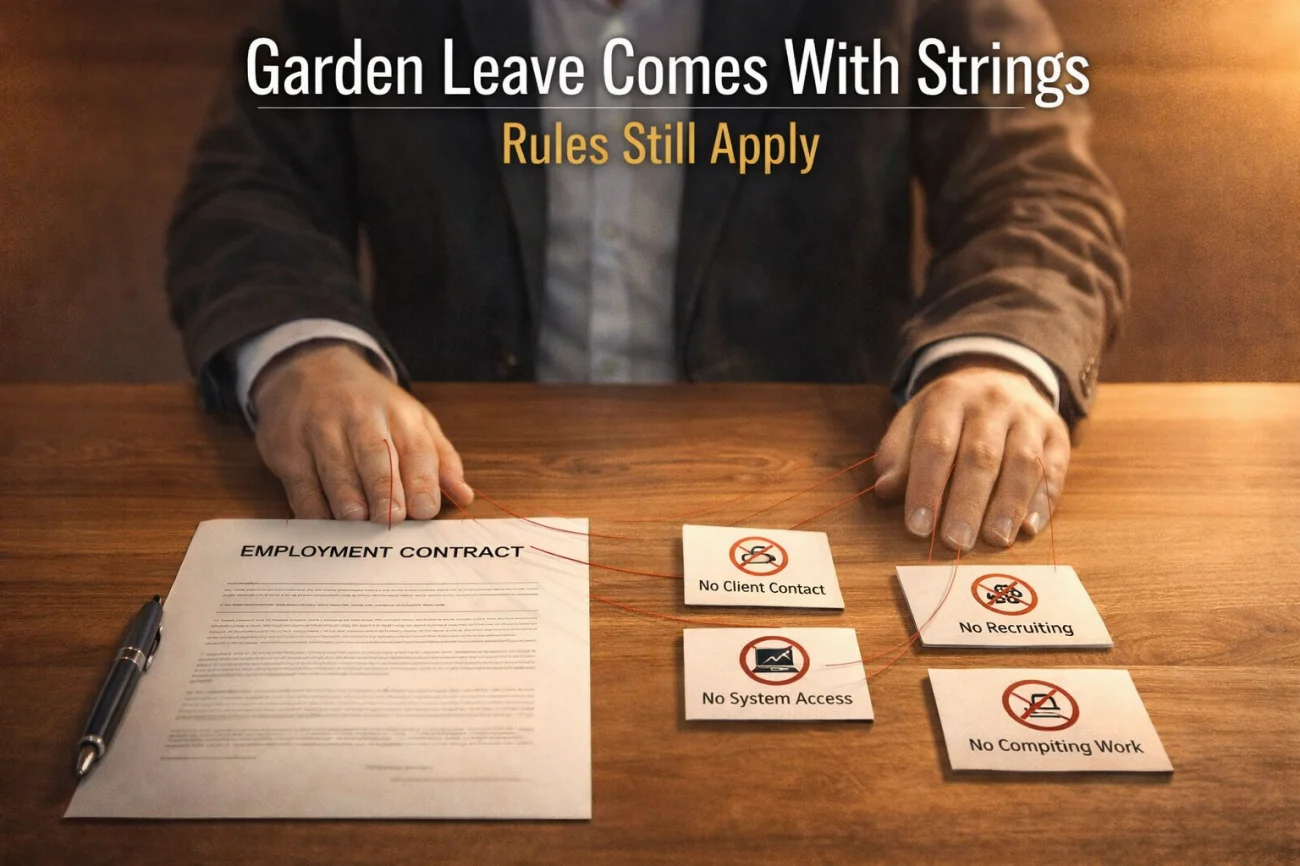
Garden leave sounds like a win until you realize you’re still bound by rules. The exact terms depend on your contract and local law, but most setups include some version of garden leave restrictions: you remain employed, you can’t represent yourself as free to work for someone else, and you must avoid anything that looks like competing activity.
In practical terms, that often means: no contacting clients for business reasons, no recruiting colleagues, no accessing internal documents, and sometimes limitations on starting a new role until the garden leave ends. It’s “paid leave,” but it’s not “free time” in the way vacation is.
Can You Ask for Garden Leave, or Is It Only the Company’s Call?
Usually, the company decides. But you can absolutely influence the outcome by how you frame your resignation and handover. If your exit creates risk for them (client relationships, sensitive projects, pricing strategy), garden leave may already be on the table as a risk-control option.
The smartest angle is not “I want a paid break.” The smartest angle is “I want a clean, controlled transition.” If you position it as a stability move and offer a high-quality handover, you’re making it easier for them to choose a low-drama off-ramp.
How to Frame It as a Paid Leave Resignation Without Sounding Like You’re Gaming the System
The phrase paid leave resignation can sound like you’re trying to cash out. Don’t use it with leadership. Keep the language boring and professional: “transition,” “handover,” “risk,” “client continuity,” “system access,” and “availability for questions.”
You’re essentially offering a trade: you’ll deliver clean documentation and a fast handover, and in return, you’ll step away from daily operations to reduce disruption. If they were worried about motivation, access, or client messaging during your notice, this gives them a tidy solution.
How to Request Garden Leave Without Triggering Suspicion
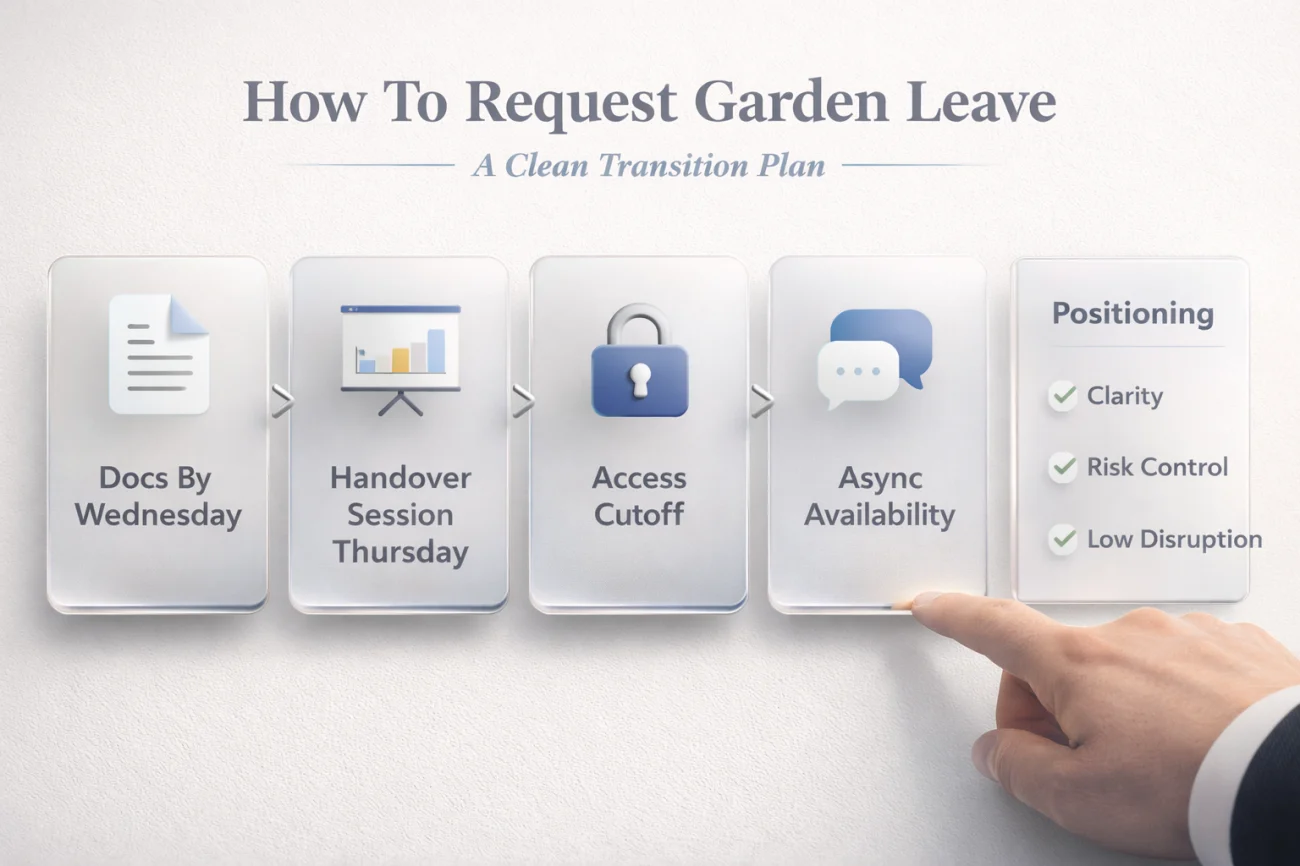
The easiest way to blow this is to make it about you. The right way is to make it about clarity. Offer a short list of handover deliverables, propose a tight timeline, and suggest that you step away from live work once those deliverables are complete.
Keep it specific. “I can complete documentation by Wednesday, run a handover session Thursday, and be available for questions asynchronously after that.” Then you can suggest garden leave as an option if they’d prefer to restrict access after handover. This reads like maturity, not manipulation.
Copy-Paste Emails You Can Use
Use these if you want to keep the tone neutral. They don’t assume you’re getting garden leave. They simply offer it as a clean transition option.
Email 1: Resignation Note That Leaves Room for Garden Leave
Subject: Resignation and transition plan
Hi [Manager Name],
I’m writing to formally resign from my role. My intended last day of employment would be [Date], based on the notice period. To make the transition smooth, I’ve outlined a handover plan with documentation, stakeholder notes, and a walkthrough session.
If you prefer a more controlled transition after handover (for example, limiting system/client access), I’m open to garden leave as an option during the remainder of the notice period. Either way, I want the exit to be clean and low-disruption.
Thank you,
[Your Name]
Email 2: Confirmation Email If HR Approves Garden Leave
Subject: Confirmation of garden leave details
Hi [HR/Manager Name],
Thank you for confirming the garden leave arrangement. For clarity, could you please confirm the start date of garden leave, the final date of employment, and any specific expectations during the period (availability for questions, system access, and any restrictions I should be aware of)?
I want to make sure I follow the correct process and support a smooth transition.
Best,
[Your Name]
How to Use Garden Leave Without Wasting It
The trap is treating garden leave like a vacation you’ll “figure out later.” You’ll blink and it’s gone, and you’ll return to life with the same exhaustion, except now you’ve also lost momentum. The best use of garden leave is light structure: recovery first, then quiet progress.
A simple approach is the “detox, then build” plan. First week: sleep, reset routines, and reduce stress. Second week: update your resume, clean your LinkedIn, and organize work samples. Third and fourth weeks: skill refresh, networking, and planning your first 30 days in the next role. It’s not hustle. It’s rebuilding capacity.
The Practical Checklist Before You Assume You’re “Free”
Before you celebrate, confirm the terms. Garden leave is only a dream if it’s clear. If it’s vague, it becomes stressful because you don’t know what you’re allowed to do. This checklist keeps it simple.
| Item to Confirm | Why It Matters | What You Want in Writing |
|---|---|---|
| Start and end dates | Defines your actual exit timeline | Garden leave start date + final employment date |
| Pay and benefits status | Ensures it’s truly paid and continuous | Salary/benefits continue as normal through end date |
| Availability expectations | Prevents surprise “urgent” demands | Response windows and what counts as “reasonable” requests |
| Access restrictions | Explains system shutdown and boundaries | Which tools/accounts are removed and when |
| Work/competition restrictions | Protects you from accidental breach | Clear statement of what you can/can’t do until end date |
The Real Win Is a Clean Exit You Can Live With
Garden leave is the dream way to quit because it reduces drama, protects relationships, and gives you paid breathing room. But it only works when you treat it like a formal transition, not a secret vacation. Confirm the dates, confirm the restrictions, and keep your communications calm and documented.
If you want one takeaway, make it this: a garden leave guide isn’t about “getting lucky.” It’s about managing risk – yours and theirs – so the resignation doesn’t turn into a scramble. Done right, you don’t just leave. You exit with control.
❓ FAQ
✅ Is garden leave basically a paid vacation?
It feels like one, but it isn’t the same thing. You’re usually still employed, still paid, and still bound by company policies and restrictions. Treat it as a formal transition period, not free time with no rules.
📅 Can I start a new job while on garden leave?
Often, no – or not without written approval – because you’re still an employee during that time. The safest approach is to confirm the terms in writing, including any restrictions on working elsewhere, before you make commitments.
💼 Why would a company pay me to do nothing?
They’re usually paying for distance, not generosity. If your role involves clients, strategy, or sensitive information, garden leave reduces risk during the transition and helps them control messaging and access.
🧾 What should I ask HR to confirm in writing?
Ask for the start date and end date, pay/benefits continuity, availability expectations, access restrictions, and the exact rules you must follow during the period. Clarity prevents misunderstandings and protects you.
🔒 What if my contract doesn’t mention garden leave?
Some companies still use it as a policy option, especially for higher-risk roles. You can frame it as a controlled transition after handover, but the final decision usually depends on company policy and your role’s risk profile.
⚠️ Legal Disclaimer: ResignSmartly provides general informational guidance about resignation, workplace communication, notice periods, handovers, and career transitions. Content does not constitute individualized legal advice. Employment laws, contracts, workplace policies, and individual circumstances vary, so review the requirements that apply to your situation and consult an appropriate qualified professional when needed.