
- What an adult gap year really is: A planned project with purpose, timeline, budget, and re-entry plan, not an impulsive escape.
- Define the break in one sentence: Pick a primary goal (Rest, reset, reposition) and set a minimum success outcome.
- Put boundaries on time: Choose a start date and an end date so the break does not drift into anxiety.
- Choose the structure early: Ask for a sabbatical if possible, otherwise resign with a calm script and a clean handover plan.
- Make the boring parts your safety net: Build financial runway that includes re-entry time, protect benefits, and keep one light professional thread alive.
An Adult Gap Year Isn’t Running Away, It’s Building a Better Next Chapter
The biggest misconception about an adult gap year is that it’s a dramatic escape. Like you hate your job, you quit impulsively, and you “figure it out” later. In real life, the people who take a career break and come back stronger treat it like a project: a purpose, a timeline, a budget, and a re-entry plan.
If you do it well, a sabbatical can give you recovery, perspective, and momentum. If you do it poorly, it can become a financial panic and an awkward resume story you spend years over-explaining.
This guide is the practical middle path. You’ll learn how to plan the time off, protect your future options, and leave your current job without creating unnecessary damage.
Define What This Break Is For (So It Doesn’t Become a Blur)
Before you book flights or draft a resignation email, define the “why” in plain language. You don’t need a poetic mission statement. You need a simple sentence that helps you choose what to do, what to skip, and when to come back.
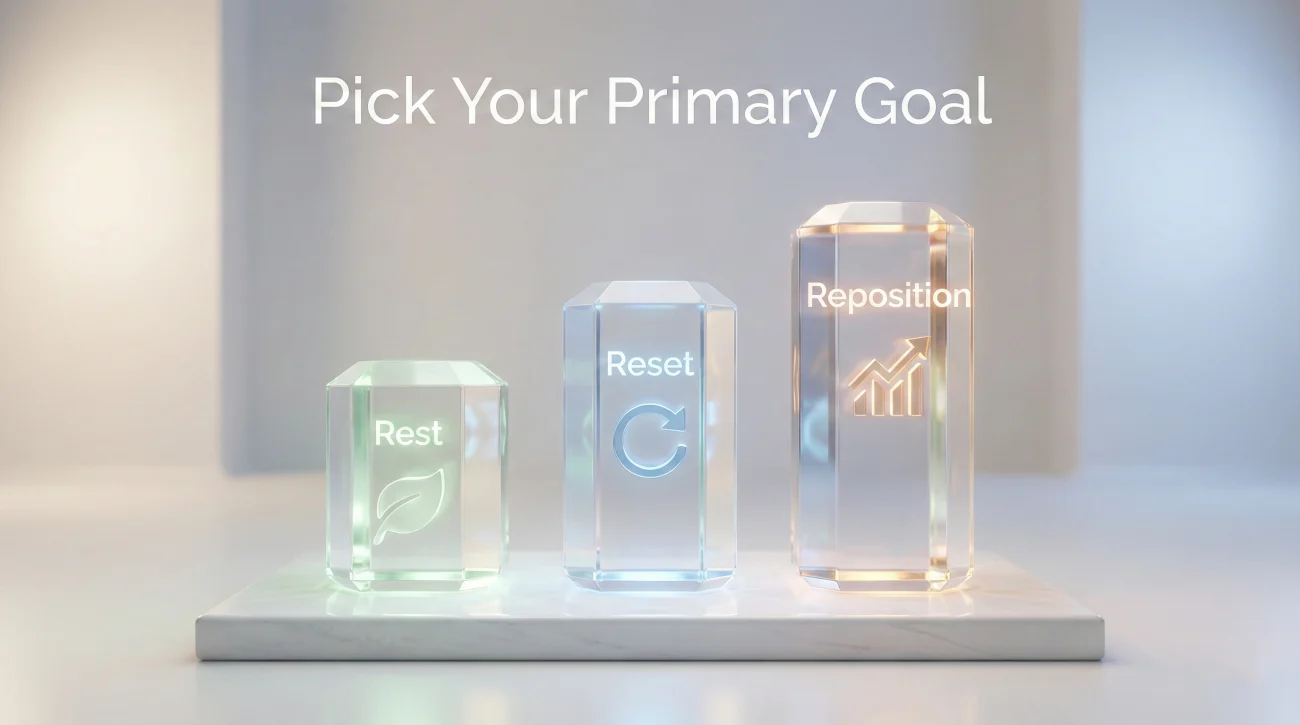
Pick one primary goal
Most successful breaks have one dominant theme: rest, reset, or reposition. Rest is burnout recovery and health. Reset is life re-organization and rebuilding routines. Reposition is skill-building, portfolio work, or rethinking your direction. You can do all three, but one should lead.
Set a start date and an end date
Time off without a boundary often turns into anxiety. Give your break an ending on purpose. Even if you extend it later, having an initial end date keeps you from drifting and helps you plan money, housing, and the “return to work” ramp.
Decide your “minimum success” outcome
A good career break guide is honest about tradeoffs. Your minimum success outcome might be as simple as: “I return with my health back,” or “I return with a clearer target role,” or “I return with a portfolio and references.” If you can name it, you can plan for it.
Choose the structure: ask for a sabbatical or resign
Some companies offer unpaid leave or sabbaticals. Others don’t. If you can keep your employment relationship while taking time off, it can reduce risk. If you can’t, resigning may still be the right move, but you’ll want your exit to be clean and documented.
Two Scripts That Keep the Conversation Professional
You don’t need to “sell a dream.” You need to communicate clearly and calmly, in a way that protects your reputation. Whether you’re requesting leave or resigning, your tone should be steady: timeline, transition plan, and appreciation without oversharing.

Template 1: Requesting an unpaid leave / sabbatical
Subject: Request for unpaid leave / sabbatical consideration
Hi [Manager Name],
I’d like to discuss the possibility of taking an unpaid leave/sabbatical for a defined period. My goal is to take time for personal reset and then return focused and fully committed.
If the company is open to it, I’m proposing a leave from [start date] to [end date]. I’ll create a handover plan, document my current work, and coordinate a smooth transition before the leave begins.
Could we schedule 20 minutes to discuss whether this is possible and what the process would be with HR?
Thank you,
[Your Name]
Template 2: Resigning to take a planned career break
Subject: Resignation
Hi [Manager Name],
Please accept this email as formal notice of my resignation. My last working day will be [date].
I’m planning a structured career break for personal reset, and I want to ensure a smooth handover before I leave.
I will document my current responsibilities, provide status notes on active work, and coordinate transition details with you over the next [notice period] so the team is supported.
Thank you for the opportunities and support here.
[Your Name]
Notice what the scripts do not do: they don’t over-explain, they don’t apologize for existing, and they don’t invite debate. They keep the exit clean.
These scripts are built for your manager — calm, clean, and professional. But the people who matter most (your partner, your parents, the friend group chat) deserve a different tone entirely. If you want help putting the excitement and nerves of this decision into words, these messages for starting a new chapter are a good place to start.
Budget, Benefits, and the Plan to Come Back Without Panic
This is where most gap years succeed or fail. Not because people lack courage, but because they underestimate the boring parts: cash flow, healthcare/insurance, and the time it takes to re-enter the market. A strong sabbatical budget plan turns your break from “hope” into “control.”

Build a runway that includes “re-entry time”
A common mistake is budgeting only for the months you’re off. In reality, you also need time to come back: updating your resume, interviewing, waiting for start dates, and ramping into a new routine. Plan for the return phase, not just the escape phase.
Use a simple budget model you can stick to
You don’t need a perfect spreadsheet. You need categories that stop surprises. Here’s a clean model you can adapt, especially if you’re doing adult gap year planning with a fixed end date.
| Category | What to include | Why it matters |
|---|---|---|
| Core living | Rent/mortgage, food, utilities, transport | These don’t stop just because you quit |
| Healthcare / insurance | Premiums, copays, medications, emergency buffer | This is where “cheap gap year” plans break |
| Debt obligations | Loans, credit cards, subscriptions you can’t pause | Debt creates pressure that ruins recovery |
| Gap-year spend | Travel, courses, gear, coworking, tools | Keeps the break intentional, not impulsive |
| Re-entry buffer | 1–3 months of expenses after your end date | Prevents “I need any job tomorrow” decisions |
Decide how you’ll explain the gap later
You don’t need a dramatic story. You need a tight narrative: what you stepped away for, what you did (even if it was recovery), and what you’re returning to do now. If you can say it in two sentences, you’re ready.
A simple formula works: “I took time for X, I did Y to stay sharp, and now I’m focused on Z.” That is how to plan a sabbatical with your future self in mind.
Keep one professional thread alive
If you want your return to be smoother, keep one light thread going: a monthly check-in with a mentor, a small portfolio project, occasional networking messages, or a short course. Not hustle. Not pressure. Just a signal that you didn’t disappear from adulthood.
❓ FAQ
🧭 Is taking a sabbatical the same as quitting?
Not always. taking a sabbatical usually means approved time away with the possibility of returning to the same employer. Quitting ends the employment relationship. The planning steps overlap, but the risk and paperwork are different.
💰 How much money should I save before an adult gap year?
Enough to cover your core expenses for the break plus a re-entry buffer. The buffer matters because job searches and start dates often take longer than people expect.
🧾 Will a career break hurt my resume?
It can, if the story is unclear. It usually hurts less when you can explain it in two calm sentences and connect it to what you’re doing next.
📅 What’s a reasonable length for a sabbatical?
Long enough to achieve your primary goal, short enough that you can re-enter without financial panic. Many people choose a defined window with the option to extend only if the runway supports it.
🗣️ What should I tell my manager about why I’m leaving?
Keep it simple and professional. Share the timeline and your transition plan. Avoid oversharing personal details unless you truly want them in your work history.
Final Thoughts: Make the Break Intentional, and the Return Even More Intentional

A gap year done well is not a disappearance. It’s a reset with boundaries, a plan, and a calm narrative you can stand behind later. If you define the purpose, build a runway, and exit professionally, you give yourself something rare: time without chaos.
The goal isn’t to escape work forever. The goal is to come back with clarity, energy, and a direction you actually believe in.
⚠️ Legal Disclaimer: The resignation templates, email samples, and professional guidance provided in this guide are for informational purposes only and do not constitute legal advice. Employment laws and contract requirements vary by jurisdiction and individual circumstances. Please review your employment agreement and consult your HR department and/or a qualified attorney to ensure compliance with applicable laws and policies.