
- Positioning: Quitting to start a business is a reputation move, so your exit should look calm, clean, and intentional.
- Messaging: Separate leaving from pitching by keeping details offstage and using stable growth language, not escape language.
- Legal: Recheck non-compete, confidentiality, and IP terms before you say anything, and avoid “competitor” framing unless forced.
- Runway: Plan decision runway, not just survival runway, then build a backward calendar from your first real operating day.
- Execution: Use a minimal resignation email or letter plus a structured handover, and handle “Why?” conversations by offering certainty, not details.
A Founder’s Exit Needs a Different Kind of Professionalism
There’s a version of leaving a job that looks impulsive – dramatic goodbye, half-finished projects, vague promises, and a “good luck to me” vibe. And then there’s the version that looks intentional: calm, clean, and strategically quiet. If you’re quitting to start a business, your exit isn’t just a resignation. It’s the first public chapter of your founder reputation.
Investors, future hires, former colleagues, and even clients you haven’t met yet will judge you on how you left, not just what you built. The goal isn’t to overshare your plans. The goal is to leave behind zero chaos, zero resentment, and zero “we can’t trust them” stories.
This guide focuses on the tricky parts people underestimate: non-compete landmines, the “why” conversations, protecting relationships, and walking out with a timeline that doesn’t burn your runway – or your references.
Separate “Leaving” From “Pitching”
You’re not selling your dream. You’re managing an exit.
The biggest mistake future founders make is turning their resignation into a mini product launch. They hint. They tease. They over-explain. They try to win validation in the room that never gave it to them.
In most workplaces, the more you reveal, the more you invite complications – jealousy, fear, assumptions about competition, and questions that force you to either lie or overshare. Your resignation should be about timing and transition. Your business can stay offstage until it’s ready.
Use “growth” language, not “escape” language.
Even if you’re leaving because you’re burned out, frustrated, or stuck, avoid framing your departure as a reaction. Founders who sound like they’re running away create doubt. Founders who sound like they’re stepping toward something create confidence.
A simple, stable framing works almost everywhere: “I’m making a planned career transition, and I want to leave things in great shape.” That’s it. No plot twists.
Non-Compete Reality Check Before You Say Anything
Don’t announce a future problem you haven’t scoped yet.
Before you hint at entrepreneurship, re-read your employment agreement, offer letter, and any policy documents you signed. The risk isn’t just a formal lawsuit. The risk is a messy, expensive distraction at the exact moment you need focus and momentum.
If your situation includes a non compete startup concern, treat it like an engineering constraint: understand it, design around it, and don’t improvise in public. Sometimes the safest move is simply not naming what you’re building – or not naming it to certain people.
Avoid “competitor” language unless you’re forced to.
Many managers hear “I’m starting my own thing” and immediately translate it into “They’re taking our clients.” Even if that’s not true, you can’t control their interpretation – only your wording.
If asked directly what you’re building, you can stay truthful without giving details: “I’m exploring an independent path that’s not connected to our client work. I’m committed to a clean transition and to honoring my agreements.”
Your Runway Is Not Just Savings. It’s Optionality.

Calculate “decision runway,” not “survival runway.”
Most people do the math like this: “How long can I pay rent?” Founders need a better question: “How long can I make smart decisions without panic?” Panic creates bad pivots, desperate pricing, and premature launches.
When you map your finances, include the stuff people forget: health insurance changes, tax estimates, software subscriptions, equipment, coworking, and the “quiet months” where revenue is still theory.
Build your transition calendar backward.
Pick a target “first serious operating day” for your business. Then work backward: final day at work, handover window, rest week, setup week, and the first two weeks where you’ll be mentally foggy from the shift.
That planning is the difference between a clean launch and a chaotic blur where you burn your best energy on logistics.
The Founder’s Pre-Resignation Checklist
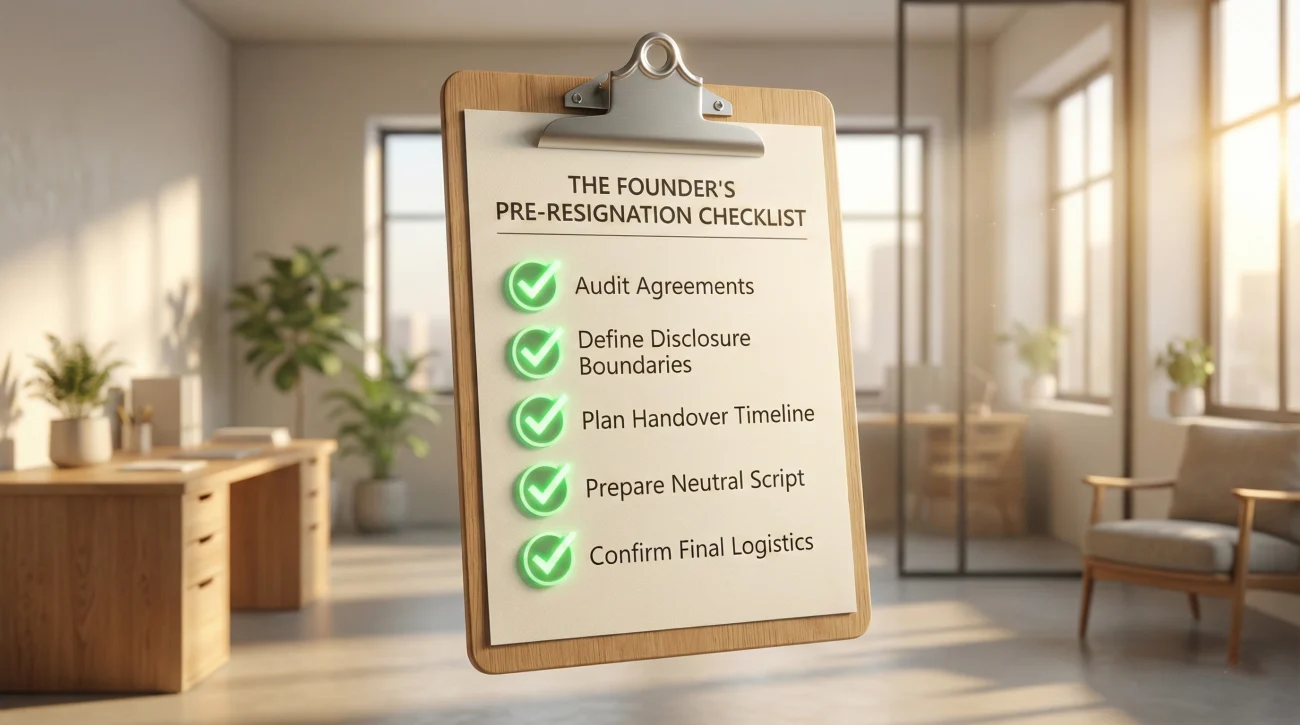
If you’re resigning to become entrepreneur, your preparation should look boring on the outside and disciplined on the inside. Here’s a practical starting business checklist to run through before you schedule the resignation conversation.
- ✅ Audit agreements: employment contract, confidentiality terms, IP clauses, and any non-compete language.
- ✅ Define your boundary: what you will and won’t disclose about the business during notice period.
- ✅ Decide your “clean exit” promise: documentation, handover timeline, and who owns what next.
- ✅ Prepare a short script for the “why” question that doesn’t invite debate.
- ✅ Confirm logistics: last day, accrued PTO, access removal, equipment return, and final paycheck expectations.
- ✅ Protect relationships: choose one or two people you want to keep close after you leave, and plan how you’ll stay in touch.
This isn’t about being paranoid. It’s about reducing friction so you can spend your energy building, not defending.
Two Templates You Can Use Without Over-Explaining
When you resign, keep your message clean. If you want help structuring the actual send, you can borrow ideas from this resignation email walkthrough – then tailor it to your tone and situation.
Template 1: Resignation Email to Your Manager (Founder Transition)
Subject: Resignation Notice
Hi [Manager Name],
I’m writing to formally resign from my position as [Your Role]. My last working day will be [Date], in line with my notice period.
This decision reflects a planned career transition I’ve been preparing for. I want to make this as smooth as possible for the team, and I’m committed to a clean handover.
Over the next [X] weeks, I can document current priorities, transfer ownership of active work, and align with you on what needs to be completed versus transitioned. If you’d like, I can also propose a handover plan with timelines and recommended next steps.
Thank you for the opportunities and support during my time here. I appreciate it, and I want to leave on the strongest terms possible.
Best regards,
[Your Name]
Template 2: Short Resignation Letter (Clean, Professional, Minimal Details)
[Your Name]
[Your Address]
[City, State ZIP]
[Date]
[Recipient Name]
[Title]
[Company]
Dear [Recipient Name],
Please accept this letter as formal notice of my resignation from my position as [Your Role]. My final working day will be [Date], in accordance with my notice period.
I am committed to supporting a smooth transition and will complete a thorough handover of responsibilities before my departure.
Thank you for the opportunities and experience I have gained at [Company].
Sincerely,
[Your Signature]
[Your Name]
If you need a framework for the offboarding itself (handover docs, last-week priorities, what to leave behind), this guide can help you organize it: a practical handover plan.
How to Handle the “Why?” Conversations Without Burning Trust

The question is rarely about curiosity. It’s about risk.
When your manager asks “Why are you leaving?”, they’re usually scanning for one of three concerns: “Are we losing others next?”, “Is this a competitor threat?”, or “Did we do something wrong?” Your job is to reduce anxiety, not provide a documentary.
Keep your answer short and calm. Then redirect to transition: “I’ve made a planned change, and I want to make the next few weeks smooth for the team.”
If they push, offer certainty – not details.
Some leaders push because they think persistence equals leadership. Don’t get pulled into a debate about your future. Offer certainty about what you can control: your notice period, your handover quality, and your professionalism.
If you want extra polish, you can also align on expectations using principles from a straightforward etiquette guide – not because etiquette is “nice,” but because it’s a form of reputational risk management.
❓ FAQ
🧩 Should I tell my employer I’m starting a business?
Only if it’s necessary – and even then, keep it minimal. Your resignation is about timing and transition. You can be truthful without sharing specifics: planned career change, clean handover, and appreciation for the role.
⚖️ What if I signed a non-compete or strict confidentiality agreement?
Read what you actually signed before you speak about your next step. If there’s a real risk, avoid competitor framing and don’t share product details during your notice period. When in doubt, get professional advice outside the workplace.
💰 How much money should I save before I quit?
Aim for enough runway to make decisions without panic – not just enough to survive. Include insurance changes, taxes, tools, and the “quiet months” where your revenue is still building. More runway equals more optionality.
🤝 How do I keep relationships if my boss feels betrayed?
Don’t argue. Deliver stability. A respectful notice period, a strong handover, and a calm tone do more than any speech. Your behavior in the last two weeks often matters more than your explanation.
🚀 Can I start building my business while I’m still employed?
Be careful. Policies vary, and conflicts of interest can get messy fast. Keep boundaries clear: no company equipment, no company time, no client overlap, and no use of confidential information. When it’s time to go, leave clean.
Final Thoughts
Most people treat resignation as an ending. Founders should treat it as positioning. The cleaner your exit, the easier it is to recruit, partner, and build credibility later – especially when your network overlaps with your old world.
If you’re quitting to start a business, focus on what will still matter six months from now: your reputation, your relationships, and your ability to build without distractions. A calm exit is not a small detail. It’s part of your business strategy.
⚠️ Legal Disclaimer: ResignSmartly provides general informational guidance about resignation, workplace communication, notice periods, handovers, and career transitions. Content does not constitute individualized legal advice. Employment laws, contracts, workplace policies, and individual circumstances vary, so review the requirements that apply to your situation and consult an appropriate qualified professional when needed.