
- What it is: “Resignation depression” is the crash after quitting, when relief flips into anxiety, emptiness, and grief.
- Why it happens: Your body drops from chronic stress chemistry, and your mind loses routine, identity, and familiar chaos.
- The common cycle: Honeymoon, plunge, void, reconstruction, each stage has traps that make you want to run back.
- The recovery plan: Replace lost structure with a 30-day protocol, detox contact, reset physically, then rebuild your narrative.
- The key distinction: Grief feels like regret, so test it by imagining nothing changes at the old job, if you still would not return, it is grief.
The Crash After the High
You spent months dreaming of this moment. You wrote the resignation letter in your head a thousand times. You fantasized about the look on your boss’s face. You finally hit “Send,” expecting a tidal wave of euphoria and freedom. And for the first 24 hours, you felt it.
But then, the silence set in. Instead of relief, you feel a heavy, crushing weight in your chest. You wake up at 3 AM with a panic attack. You find yourself crying over a commercial. You feel anxious, lost, or strangely empty. You ask yourself the terrifying question: “What have I done?”
This phenomenon is known as resignation depression (or the post-resignation blues). It is the dirty little secret of the career world. Society tells us that quitting a bad job should feel like a victory party. So when we feel grief instead of joy, we assume we made a terrible mistake. The reality is that mourning a job – even a toxic one – is a complex psychological and biological process. You haven’t just lost a paycheck; you have lost a community, a routine, a battlefield, and a piece of your identity.
The Biology of the Crash: It’s Not Just In Your Head
Before we talk about emotions, let’s talk about chemistry. If you are feeling depression after quitting job environments that were high-stress, your body is physically going through withdrawal.

The Cortisol Addiction
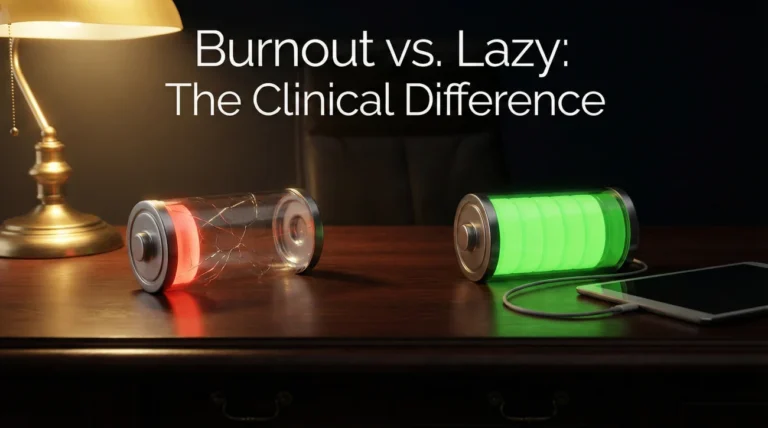
In a stressful job, your body runs on a constant drip of cortisol and adrenaline. You are in a perpetual state of “fight or flight.” When you quit, that stimulus disappears overnight. Your nervous system, which had adapted to operating at 100mph, suddenly slams into a wall of silence.
This biological crash mimics the symptoms of clinical depression: lethargy, brain fog, and irritability. You aren’t necessarily sad; you are chemically under-stimulated. Your brain is screaming, “Where is the crisis? Why aren’t we fighting something?”
The Psychology of “Resignation Grief”
Beyond the biology, there are deep psychological traps that trigger post resignation anxiety. It is illogical to miss a place that made you miserable, yet millions do. Why?
1. Workplace Stockholm Syndrome
When you survive a toxic environment, you form a “Trauma Bond” with your colleagues. You survived the trenches together. Leaving them behind feels like a betrayal. You miss the chaos because the chaos was familiar. The unknown (unemployment or a new job) feels dangerous compared to the known evil.
2. The “Business Card” Identity Crisis
In modern society, “What do you do?” is often synonymous with “Who are you?” We attach our self-worth to our productivity and our titles.
When you hand in your badge, you strip away that label. Without the title of “Senior Manager” or “Lead Developer,” you may face a profound identity crisis after resignation. You are no longer “The Fixer” or “The Go-To Guy.” You are just… you. And for many high-achievers, sitting alone with themselves without a corporate mask is terrifying.
3. Phantom Limb Pain
Even if the routine was painful, it was your routine. You knew where the coffee was. You knew which emails to ignore. Losing that structure creates a void. You might experience “phantom work pains” – waking up on Sunday fearing Monday, only to realize you have nowhere to go.
The 4 Stages of the Resignation Cycle
Navigating this emotional minefield is easier when you have a map. Most people move through the “Change Curve” in four distinct phases.
| Stage | The Feeling | The Trap | The Strategy |
|---|---|---|---|
| 1. The Honeymoon | Euphoria, “I’m free!”, Manic energy. | Over-committing to plans (travel, projects) immediately. | Do nothing. Let the adrenaline fade naturally. |
| 2. The Plunge | Panic, regret leaving job, “I’m unhirable.” | Calling your old boss to beg for the job back. | Stop. Wait 72 hours before making any decision. |
| 3. The Void | Boredom, loneliness, loss of purpose. | Spending 12 hours a day doom-scrolling LinkedIn. | Establish a strict “Non-Work” routine (Gym, Reading). |
| 4. The Reconstruction | Acceptance, curiosity, looking forward. | Comparing the new job to the old one instantly. | Focus on the new skills you want to build. |
The 30-Day Recovery Protocol
You cannot think your way out of resignation depression; you have to act your way out. You need a structured recovery plan to replace the structure you lost.

Week 1: The Detox (Zero Contact)
- 🛑 Digital Block: Mute or unfollow your former company on LinkedIn. Do not check if they posted your backfill role. It is pain shopping.
- 🛑 No “Work” Chats: Tell your work friends you are taking a “digital detox” and will reach out in a week. Distance is critical to break the trauma bond.
- 🛑 Sleep Hygiene: Your cortisol is crashing. Allow yourself to sleep, but set an alarm for 9:00 AM to prevent depression napping.
Week 2: The Physical Reset
- 🏃 Sweat Therapy: You need to metabolize the stress hormones. High-intensity exercise is the fastest way to reset your nervous system.
- 🌳 Touch Grass: Leave the house once a day before noon. Sunlight regulates your circadian rhythm, which fights depression.
Week 3: The Narrative Shift
- 📝 Journaling: Write down the “Why.” List every specific reason you left. When the rose-colored glasses of nostalgia hit, read this list. It is your reality check.
- ☕ New Network: Have coffee with someone who has nothing to do with your old job. Remind yourself that a world exists outside that office.
Distinguishing “Regret” from “Grief”
The most dangerous part of this phase is Buyer’s Remorse. You start thinking, “Maybe it wasn’t that bad. Maybe I was the problem.”
You must distinguish between regret (I made a logic error) and grief (I miss the familiarity).
The Reality Test: Imagine your old boss called you today and said, “Come back, nothing has changed.” Would you go? If the thought makes your stomach churn, you don’t have regret. You are just lonely. Do not confuse loneliness with a desire to return to a burning building.
❓ FAQ
😢 Is it normal to cry after quitting?
Yes. Resignation is a death – the death of a chapter of your life. Crying is a physiological release of stress. It does not mean you are weak; it means you are processing. Let it out.
😨 I feel panicked about money now. Should I undo it?
Panic is a biological reaction, not a financial advisor. Unless you have literally $0, this fear is likely about security, not survival. Review your spreadsheet logic. You likely calculated this before you quit. Trust your “past self” – they were thinking clearly; “current self” is emotional.
📉 How long does this depression last?
For most people, the acute “crash” lasts 10-14 days. If it persists longer than a month or prevents you from getting out of bed, seeking professional therapy is a sign of strength, not failure.
🤝 Should I talk to my former colleagues?
Not during Week 1. They are still in the “matrix.” They will vent to you about the work, pulling you back into the stress you just escaped. Protect your peace first.
🧠 What if I feel like I lost my purpose?
You didn’t lose your purpose; you lost a task list. Purpose is internal. Use this time to rediscover who you are when you aren’t being paid to be someone else.
Final Thoughts

Feeling sad after quitting doesn’t mean you made the wrong choice. It just means you are human. You are shedding an old skin, and that process is raw, uncomfortable, and messy.
Give yourself permission to grieve, but do not let the grief trick you into looking backward. The emptiness you feel isn’t a sign of failure; it is the space you have finally cleared for whatever comes next. Fill it wisely.
⚠️ Legal Disclaimer: ResignSmartly provides general informational guidance about resignation, workplace communication, notice periods, handovers, and career transitions. Content does not constitute individualized legal advice. Employment laws, contracts, workplace policies, and individual circumstances vary, so review the requirements that apply to your situation and consult an appropriate qualified professional when needed.