
- Reality: Resigning can trigger emotional, controlling reactions, and how you handle the notice period decides references and reputation.
- Psychology: Many toxic reactions come from a loss-of-control response, so you treat it as their issue, not your fault.
- Archetypes: Identify the pattern (Explosive, Guilting, Silent, Sabotaging, Immediate eject) and respond with calm scripts, repetition, visibility, and documentation.
- Protection: Build a paper trail, keep a clean handover master doc, and preserve non-proprietary proof so you are covered if things turn messy.
- Timeline: Follow a day-by-day plan that prioritizes short interactions, orderly files, final handoff, and a quiet exit without drama.
The “Bad Breakup” of Corporate Life
You prepared the letter. You practiced the speech. You walked in expecting a professional, logic-driven conversation about transition plans. Instead, you walked into an emotional minefield that felt more like a messy divorce than a business transaction.
Resigning is essentially breaking up, and just like in romance, not everyone handles rejection with grace. In a perfect world, your manager would shake your hand, thank you for your service, and wish you luck. In reality, you might face screaming matches, manipulative tears, icy silence, or subtle sabotage.
Effective boss reaction management is the final, and perhaps hardest, test of your professionalism. How you handle these last two weeks – when the power dynamic has shifted and the masks have dropped – will determine whether you leave with a reference or a scorched-earth reputation. This guide goes beyond basic advice to dissect the psychology of toxic bosses and how to neutralize them.
The Psychology: Why Are They Taking It Personally?
To survive the next two weeks, you must understand what is happening in your boss’s brain. It usually boils down to one concept: Narcissistic Injury.
For a controlling or insecure manager, your employment isn’t just a contract; it’s a source of “Narcissistic Supply.” You provide labor, validation, and status. When you quit, you are forcefully cutting off that supply. They don’t see it as “you finding a better job”; they see it as “you rejecting them.”
This triggers a predictable cycle of grief: Denial (“You can’t leave!”), Anger (“You are ungrateful!”), Bargaining (“We’ll match the offer!”), and Depression (The Silent Treatment). Recognizing this pattern helps you realize: This is not about you. It is about their loss of control.
The 5 Toxic Archetypes (And How to Disarm Them)
Your boss will likely morph into one of these monsters. Identify the type to choose the right weapon.

1. The Volcano (Explosive Anger)
They yell, slam doors, and make threats like “You’ll never work in this town again.”
- 🛡️ The Tactic: The “Gray Rock” Method. Be as boring and unreactive as a rock. Do not defend yourself. Do not argue back.
- 🗣️ The Script: “I can see you are upset. I want to be helpful during this transition. Shall we pause this conversation until we can discuss the handover plan calmly? I’ll be at my desk working on the transition document.”
This is the corporate version of not taking the bait — the angrier they get, the more your job is to stay boring. This breakdown of staying calm when someone is rude to you explains the psychology behind why Gray Rock works: the moment you react, you hand them back the control you’re trying to take.
2. The Manipulator (Guilt & Gaslighting)
They use emotional blackmail: “We treated you like family,” or “I stuck my neck out for you, and this is how you repay me?” They try to make you feel like a villain.
- 🛡️ The Tactic: The “Broken Record.” Repeat your standard exit phrase regardless of what emotional hook they throw.
- 🗣️ The Script: “I appreciate everything I learned here, but this decision is final and based on my career goals.” (Repeat x5 if necessary).
3. The Iceman (The Silent Treatment)
They accept your resignation, then pretend you are invisible. They remove you from meetings, look through you in the hallway, and ignore your emails.
- 🛡️ The Tactic: “Kill Them With Visibility.” Do not hide. Send daily email summaries of your work. Make it impossible for them to claim you “checked out” or “didn’t do a handover.”
- 🗣️ The Script: (Email) “Hi [Name], since we haven’t connected today, I wanted to update you that the client files are now organized in the shared drive. Proceeding to step 2 tomorrow.”
4. The Saboteur (Active Damage)
They start spreading rumors, dumping impossible workloads on you, or “forgetting” to approve your final expenses.
- 🛡️ The Tactic: “The Paper Trail.” Document everything. CC HR on critical communications regarding pay or final deliverables.
- 🗣️ The Script: “To ensure there is no confusion regarding the final deliverable date, I have CC’d HR on this timeline. I want to make sure everyone is aligned.”
5. The Ejector (Immediate Termination)
They say: “Pack your stuff. Get out now.”
- 🛡️ The Tactic: Compliance. Do not argue. Do not make a scene. This is actually a win – you get to leave the toxicity early. Just ensure you ask about your payout.
- 🗣️ The Script: “I understand. I will pack my personal items immediately. Will the company be paying out the two-week notice period as per my contract?”
The “CYA” Protocol (Cover Your Ass)
When dealing with a boss angry resignation, you must operate as if you are preparing for a lawsuit (even if you aren’t). Protect yourself.
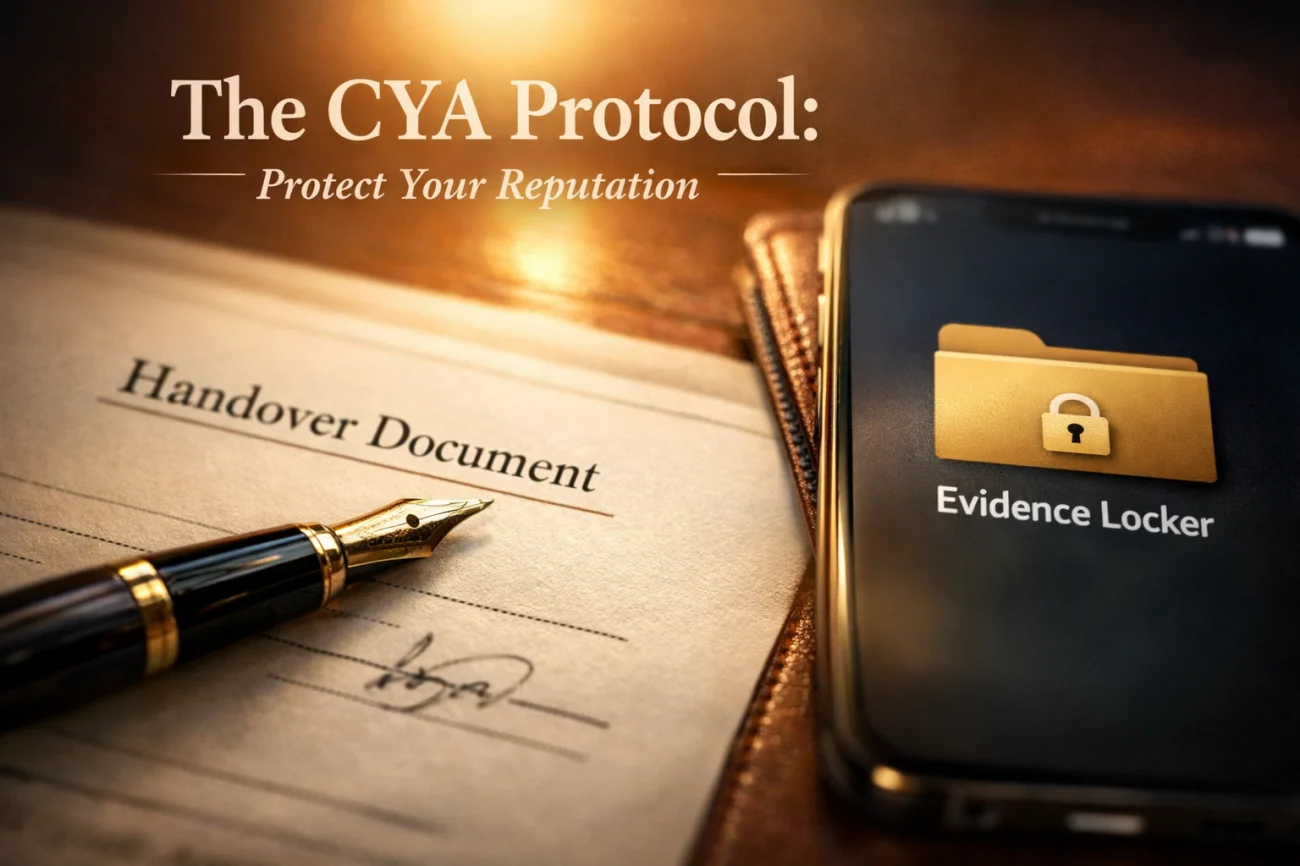
1. Forward Non-Proprietary Proof
Do not steal company data. However, you should save copies of your performance reviews, commendation emails, and the resignation acceptance chain. Send these to your personal email if your company policy allows personal use. If not, print them out physically.
2. Log the Abuse
If the boss is harassing you, open a Google Doc on your personal phone. Log every incident: Date, Time, What was said, Who witnessed it. This is your insurance policy if they try to withhold your final check or slander you.
3. The Final Handover Document
Create a master document listing every open task, where the files are, and who is taking over. Email this to your boss and their boss (or HR) on your last day. This prevents them from calling you in 3 weeks claiming “You left us in a mess.”
The 10-Day Survival Timeline
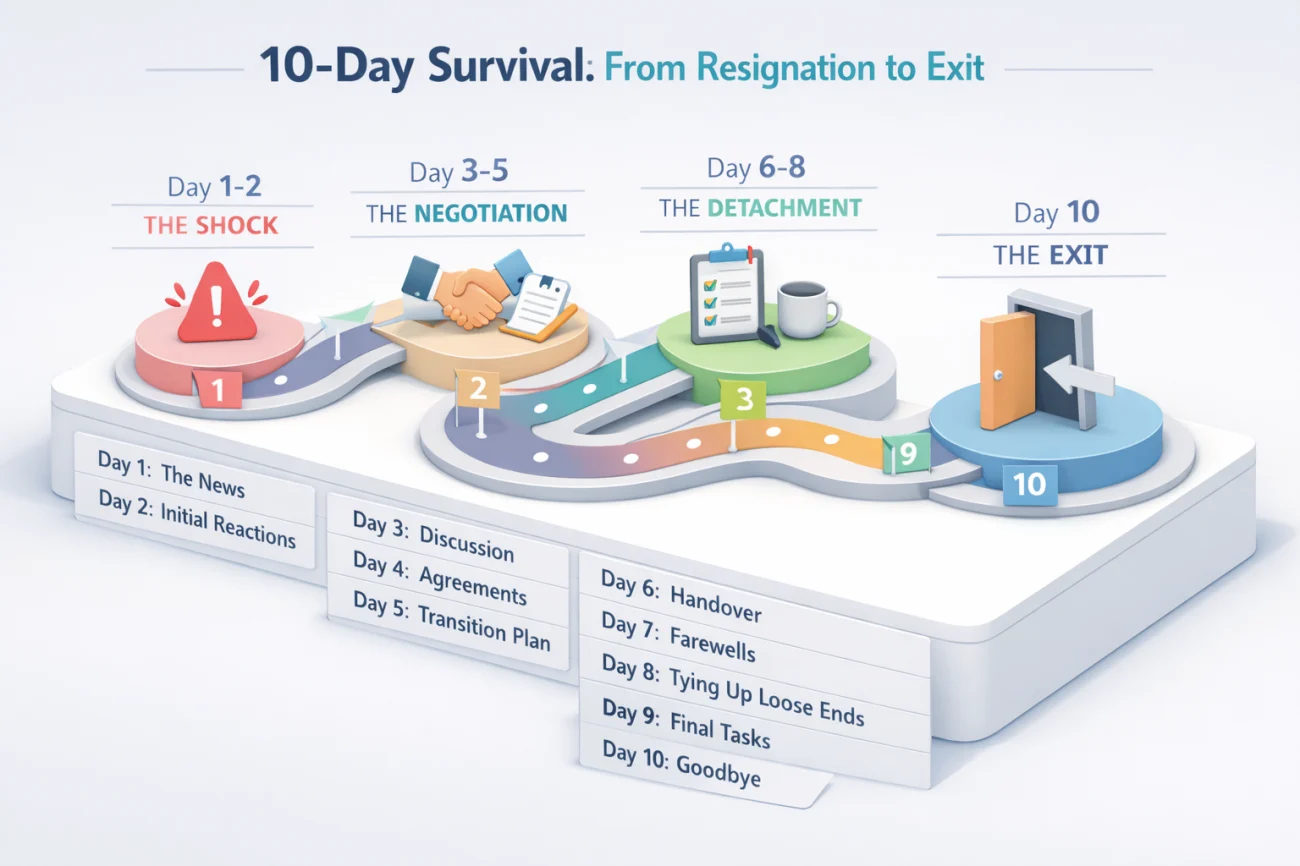
How to navigate the notice period awkwardness day by day.
| Days | Focus | Action Item |
|---|---|---|
| Day 1-2 | The Shock | Expect the worst reactions. Keep interactions short. Do not apologize more than once. |
| Day 3-5 | The Negotiation | They might offer a counter-offer. politely decline (read our Counter-Offer guide). Start organizing your files. |
| Day 6-8 | The Detachment | Start clearing your desk. Remove personal items slowly so you don’t leave with a box of shame on the last day. |
| Day 9 | The Handover | Send the Master Handover Document. Ensure all stakeholders have access. |
| Day 10 | The Exit | Say goodbye to friends. Send a polite, generic goodbye email to the team. Walk out and never look back. |
❓ FAQ
🚪 Can they block me from leaving?
No. Slavery is illegal. Employment is at-will (in most Western countries). You can leave. The worst they can do is hold you to the notice period in your contract, but they cannot chain you to the desk.
😡 My boss is screaming at me. Can I walk out early?
Yes. You have a right to a safe workplace. If you feel unsafe or abused, send an email to HR: “Due to the hostile behavior demonstrated by [Manager] today, I am unable to complete my notice period in the office. Today is my last day.”
🤐 Should I be honest in the Exit Interview?
No. If the boss is this toxic, HR likely already knows and hasn’t fixed it. Venting now won’t change anything and might get back to the boss, ruining your reference. Be vague: “I found a better opportunity.” Save your feedback for Glassdoor (anonymously) later.
🎁 Should I buy a goodbye gift?
Absolutely not. Do not reward toxicity. A simple “Thank you for the opportunity” is sufficient.
😰 I’m afraid they will badmouth me to my new job.
This is illegal in many jurisdictions (Tortious Interference), but it happens. Pre-empt this by warning your new HR: “My departure was professional, but my former manager took it very personally. I just wanted to make you aware.”
Final Thoughts

A boss’s toxic reaction to your resignation is the ultimate validation that you made the right choice. It is the final red flag waving you goodbye.
Do not internalize their anger. Their inability to manage their emotions is a reflection of their leadership failure, not your employee failure. Keep your head high, keep your records straight, and treat these last two weeks as a masterclass in professional detachment.
⚠️ Legal Disclaimer: ResignSmartly provides general informational guidance about resignation, workplace communication, notice periods, handovers, and career transitions. Content does not constitute individualized legal advice. Employment laws, contracts, workplace policies, and individual circumstances vary, so review the requirements that apply to your situation and consult an appropriate qualified professional when needed.