- Why It Matters: Part-time jobs still affect references, background checks, and rehire eligibility, so a clean exit protects your future.
- Notice: Most roles fit 1 to 2 weeks, with 2 weeks as the safest default when you have regular shifts or team dependency.
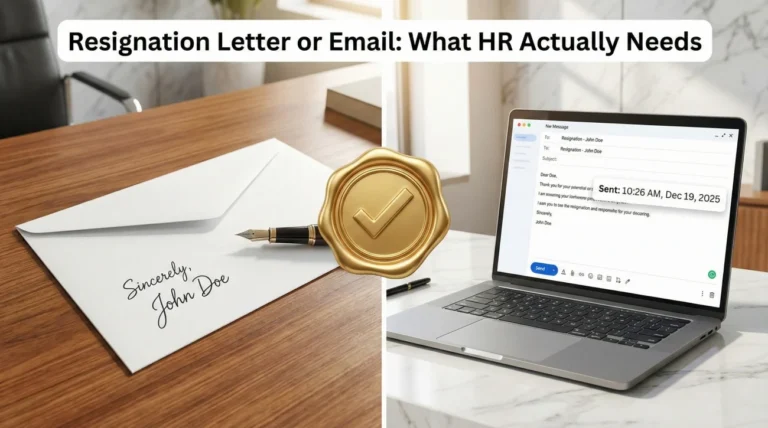
- Channel: Email is usually acceptable for part-time roles, but avoid quitting by text or disappearing without notice.
- Content: Keep it short and professional by stating your last day, giving a simple reason, and offering to finish scheduled shifts and return items.
- Edge Cases: If you must leave immediately for emergencies or unsafe conditions, give brief written notice and keep a record for yourself.
Part-Time Doesn’t Mean Unprofessional
Resigning from a part-time job involves less complexity than full-time employment transitions, but professional communication still matters – even brief employment creates references, work history gaps require explanation, and the way you exit affects future opportunities in surprising ways. A simple, professional part time job resignation letter addresses notice requirements, maintains positive relationships, and protects your employment reputation regardless of how temporary or secondary the position feels.
Part-time resignations typically involve straightforward procedures without extensive handover requirements or complex transitions. You’re likely balancing work with school, managing multiple jobs simultaneously, or working reduced hours that limit organizational attachment. However, professional resignation still requires written notice, appropriate timing, and courteous communication that preserves references and workplace relationships.
This guide provides templates for common part-time scenarios – from student jobs to second jobs, covering appropriate notice periods for hourly and part-time roles, essential elements of brief resignation letters, and how to resign while maintaining professional reputation.
How Part-Time Resignations Work Differently

What Makes Part-Time Exits Simpler
How your student job resignation letter differs from full-time professional resignations:
- ✅ Shorter notice acceptable: 1-2 weeks typical instead of 2-4 weeks for full-time roles
- ✅ Simpler communication: Brief letter sufficient without extensive transition documentation
- ✅ Minimal handover: Training replacement often covers entire transition requirements
- ✅ Casual delivery: Email resignation often acceptable instead of formal printed letter
- ✅ Flexible timing: Leaving between semesters or around school schedules generally understood
Your Part-Time Job Still Affects Your Future
| What Part-Time Jobs Affect | Why It Matters | Professional Exit Impact |
|---|---|---|
| References | Future employers verify all positions | Good exit = positive reference |
| Background checks | Employment gaps require explanation | Professional resignation = clean record |
| Industry connections | Retail/restaurant industries are small | Manager networks share information |
| Rehire eligibility | May need seasonal work later | Proper notice = eligible for rehire |
Part-time jobs appear on background checks employers conduct for professional positions. Unexplained employment gaps or negative references from “just a part-time job” create questions during full-time hiring processes. Brief professional resignation protects future opportunities.
Student Job Resignation Letters

Leaving for Academic Priorities
[Your Name]
[Your Email]
[Your Phone]
[Date]
[Manager Name]
[Job Title]
[Company Name]
Dear [Manager Name],
I am writing to formally resign from my position as [Job Title] at [Company Name], effective [Date].
This decision is necessary to focus on my academic coursework. My class schedule and study requirements have increased to the point where I cannot maintain work-life balance while meeting academic expectations.
During my remaining shifts through [date], I will:
- Complete all scheduled shifts and responsibilities
- Train my replacement on procedures I’ve learned
- Return any company materials, uniforms, or equipment
Thank you for the work experience and flexibility with my student schedule. I’ve appreciated the opportunity to develop professional skills while completing my education.
Sincerely,
[Your Name]
End of Semester Departure
[Your Name]
[Your Email]
[Date]
[Manager Name]
[Company Name]
Dear [Manager Name],
I am writing to resign from my position as [Job Title], with my last day being [Date] at the end of the current semester.
I am returning home for the summer and will not be available for continued employment. I want to provide advance notice so you have time to hire and train my replacement before semester ends.
I will complete all shifts through finals week and assist with training a replacement if needed.
Thank you for understanding student scheduling needs and providing employment during the school year.
Best regards,
[Your Name]
For additional guidance on professional transitions, see our comprehensive resignation letter samples for different positions.
Second Job and Side Hustle Resignations
Leaving Second Job for Full-Time Focus
[Your Name]
[Your Email]
[Your Phone]
[Date]
[Manager Name]
[Job Title]
[Company Name]
Dear [Manager Name],
I am writing to formally resign from my part-time position as [Job Title] at [Company Name], effective [Date].
My full-time job responsibilities have expanded, requiring evenings and weekends I previously dedicated to this position. I can no longer maintain both roles without compromising performance in my primary career.
I will work my scheduled shifts through [date] and assist with any necessary training during my remaining time.
Thank you for the supplemental employment opportunity and understanding of my career priorities.
Sincerely,
[Your Name]
Weekend Job Departure
[Your Name]
[Your Email]
[Date]
[Manager Name]
[Company Name]
Dear [Manager Name],
I am resigning from my weekend position as [Job Title], with my last shift on [Date].
I need to eliminate weekend work commitments to address family obligations and personal priorities.
I will complete my remaining scheduled shifts and return all company property.
Thank you for the weekend employment opportunity.
Best regards,
[Your Name]
Retail and Service Industry Part-Time Exits
Retail Position Standard Exit
[Your Name]
[Your Email]
[Your Phone]
[Date]
[Store Manager Name]
Store Manager
[Store Name]
Dear [Manager Name],
I am writing to resign from my position as Part-Time [Sales Associate/Cashier] at [Store Name], effective [Date].
I have accepted a full-time position in my field of study that begins on [date].
I will work all scheduled shifts through my final day and assist with training my replacement if needed. I will return my uniform, name tag, and employee discount card on my last shift.
Thank you for the retail experience and customer service training.
Sincerely,
[Your Name]
Restaurant Server/Host Exit
[Your Name]
[Your Email]
[Date]
[Restaurant Manager Name]
[Restaurant Name]
Dear [Manager Name],
I am resigning from my position as [Server/Host/Busser], with my last shift on [Date].
My schedule commitments have changed, and I can no longer maintain the availability required for this position.
I will complete my remaining scheduled shifts and assist with any necessary transition tasks.
Thank you for the restaurant industry experience.
Best regards,
[Your Name]
Seasonal Employment End
[Your Name]
[Your Email]
[Date]
[Manager Name]
[Company Name]
Dear [Manager Name],
I am writing to confirm that I will not be returning for the upcoming [season] as discussed when I was hired for temporary seasonal employment.
My seasonal commitment ends on [Date] as originally agreed.
Thank you for the seasonal employment opportunity.
Sincerely,
[Your Name]
Notice Period and Timing for Part-Time Jobs
How Much Notice to Give
Part-time positions typically require 1-2 weeks notice depending on scheduling and responsibilities. Retail and food service often accept one week notice for part-time hourly positions. Student jobs usually understand immediate-need departures related to academics, though two weeks remains professional standard when possible.
If you work consistent weekly schedule with regular customers or team dependencies, provide two weeks notice. If you work sporadic shifts with minimal continuity, one week notice acceptable. Check employment handbook for specific requirements – some companies mandate notice periods even for part-time roles.
Avoiding Peak Season Departures
While part-time jobs allow more flexibility, avoid resigning during peak business periods when possible. Your second job resignation letter creates less disruption if submitted outside holiday retail rushes, restaurant busy seasons, or academic hiring freezes. Student jobs understand semester-end departures, but mid-finals resignation creates unnecessary friction.
When Immediate Departure Is Necessary
If health issues, family emergencies, or unsafe working conditions require immediate departure, brief written notice explaining circumstances appropriate. Phone call followed by email resignation acceptable for emergency situations. Document reasons separately for your records. Most part-time employers understand genuine emergencies, but professional communication still matters for references.
Common Part-Time Resignation Mistakes
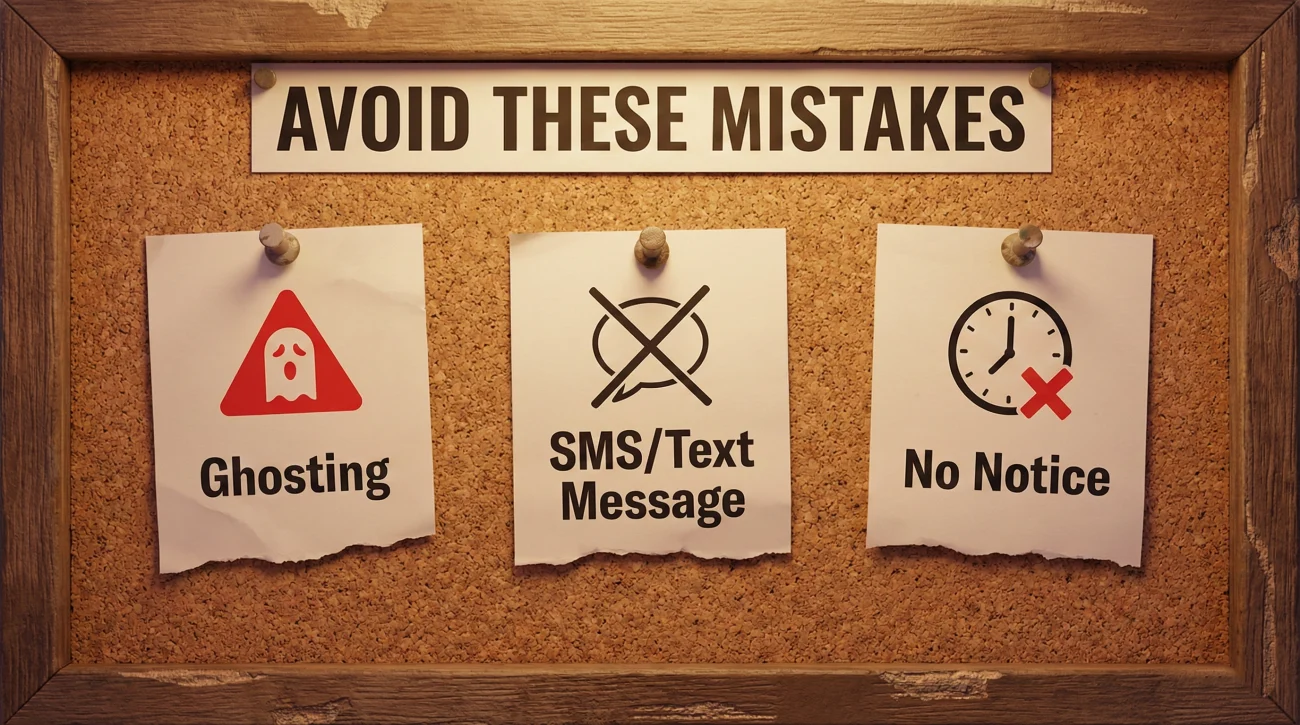
Just Stopping Without Notice
Never simply stop showing up or responding to schedule messages – this destroys references and creates negative employment record. “It’s just a part-time job” doesn’t justify unprofessional behavior. Background checks reveal employment dates, and gaps require explanation. Brief email resignation takes five minutes and protects future opportunities.
Resigning via Text Message
While part-time jobs allow casual communication, resignation still requires email minimum. Text message resignation appears unprofessional and creates no documentation for employment records. Email provides written record both parties can reference if questions arise about final pay, unused time off, or rehire eligibility.
Refusing to Give Any Reason
Brief reason helps employer understand departure isn’t performance-related and aids reference quality. “Focusing on school” or “schedule conflicts with primary job” sufficient – detailed explanations unnecessary. Reason distinguishes resignation from termination in employment records, which matters for background checks during professional job searches.
Burning Bridges Over Minor Frustrations
Part-time job frustrations feel temporary, but the relationships and references affect career permanently. Manager who schedules poorly or coworker who irritates you won’t remember conflicts years later, but they’ll remember if you quit professionally or stormed out dramatically. Industry connections are surprisingly small – retail managers network, restaurant owners share information.
❓ Part-Time Resignation Questions
⏰ How much notice should I give for a part-time job?
Provide 1-2 weeks notice for most part-time positions. Two weeks is professional standard and protects references. One week acceptable for sporadic hourly shifts with minimal continuity. Check employment handbook – some companies require specific notice even for part-time roles. Student jobs usually understand immediate departures for academic reasons, though advance notice when possible shows professionalism and maintains positive relationships for future references.
📧 Can I resign from a part-time job via email?
Yes, email resignation is acceptable for most part-time positions. While full-time professional roles often require printed letters, part-time jobs typically accept email as primary communication. Email provides written documentation both parties can reference. Address to direct manager with professional tone. Follow up with conversation if possible, but email alone suffices for part-time resignation. Never use text message – too casual and creates no proper record.
💼 Do I need to explain why I’m quitting my part-time job?
Brief reason is helpful but not required. Simple explanations like “focusing on academics,” “schedule conflicts,” or “accepted full-time position” distinguish resignation from termination and help reference quality. Detailed explanations unnecessary – one sentence sufficient. If leaving due to negative reasons (poor management, unsafe conditions), keep resignation letter brief and neutral. Document specific concerns separately if needed for unemployment or legal purposes, but resignation letter should remain professional.
🎓 I’m a student – can I just quit when semester ends?
Even for student jobs, written notice is professional. Email or brief letter confirming you won’t return next semester takes five minutes and protects references. Many students need recommendations for internships or professional jobs – part-time job managers often provide these references. Some students return to same employer different semesters or during breaks – professional resignation maintains rehire eligibility. Your student job appears on background checks for future professional employment.
🏪 What if my part-time job is toxic – do I still need to give notice?
Even in toxic environments, brief written notice protects your interests. Email resignation stating “I resign effective [date]” creates documentation without requiring detailed explanations. If environment is unsafe, immediate departure with brief written notification acceptable. Document specific issues separately for your records. References from toxic jobs may not be positive, but professional resignation prevents employer claiming you abandoned position, which appears worse on background checks than resignation with notice.
Small Jobs, Real Consequences

Part-time job resignations may feel inconsequential compared to professional career transitions, but the way you exit affects employment records, reference quality, and background checks that follow you permanently. These positions appear on every job application, every background verification, and every reference check throughout your career. “It was just a part-time job” doesn’t erase employment history or explain gaps that raise questions with future employers.
The professional world is smaller than you imagine – retail managers share information at district meetings, restaurant owners network through industry associations, and hiring managers remember which former employees quit professionally versus those who ghosted shifts or quit via text. Your approach to part-time resignation signals reliability, professionalism, and respect for workplace relationships that determine reference quality and rehire eligibility.
Provide written notice, complete scheduled shifts, communicate professionally, and treat every job – regardless of hours or pay – with the respect that protects your employment reputation. The five minutes required to send a professional resignation email saves years of explaining unprofessional departures to future employers who verify every position you’ve ever held.
⚠️ Legal Disclaimer: ResignSmartly provides general informational guidance about resignation, workplace communication, notice periods, handovers, and career transitions. Content does not constitute individualized legal advice. Employment laws, contracts, workplace policies, and individual circumstances vary, so review the requirements that apply to your situation and consult an appropriate qualified professional when needed.