
- Core warning: Toxic jobs often get worse slowly, so you normalize stress until you are stuck in “boiling frog” mode.
- Early evidence: Chronic Sunday dread plus physical stress signals (Sleep, nausea, headaches, immune crashes) means it is not “just a rough week.”
- Career damage: Hitting a growth ceiling, accepting toxic behavior as normal, and sliding into apathy shows your skills and confidence are eroding.
- Reality check: If venting becomes your personality and you tick more than 3 items on the stay-or-go checklist, you are in the danger zone.
- What to do next: Quietly prepare (Docs, achievements, networking, savings), then resign with a short neutral letter and a clean handoff plan.
The “Boiling Frog” Syndrome in Your Career
It usually starts with a subtle feeling in the pit of your stomach on a Sunday afternoon. You tell yourself it’s just the “Sunday blues.” You convince yourself that everyone hates their job sometimes, or that you’re just going through a rough patch. But weeks turn into months, and that feeling doesn’t fade – it gets heavier.
We often wait for a catastrophic event to signal our exit – a screaming boss, a missed promotion, or a blatant HR violation. However, the most dangerous career stagnations don’t happen with a bang; they happen with a whimper. Recognizing the signs you need to quit before you hit total burnout is a critical career survival skill.
Staying in a role that slowly erodes your confidence, health, and professional value is often more damaging than the uncertainty of leaving. If you are constantly trying to rationalize your misery, it’s time to look at the objective evidence. Below are the seven silent indicators that your time at this company has reached its expiration date.
1. The “Sunday Scaries” Have Become Chronic Anxiety
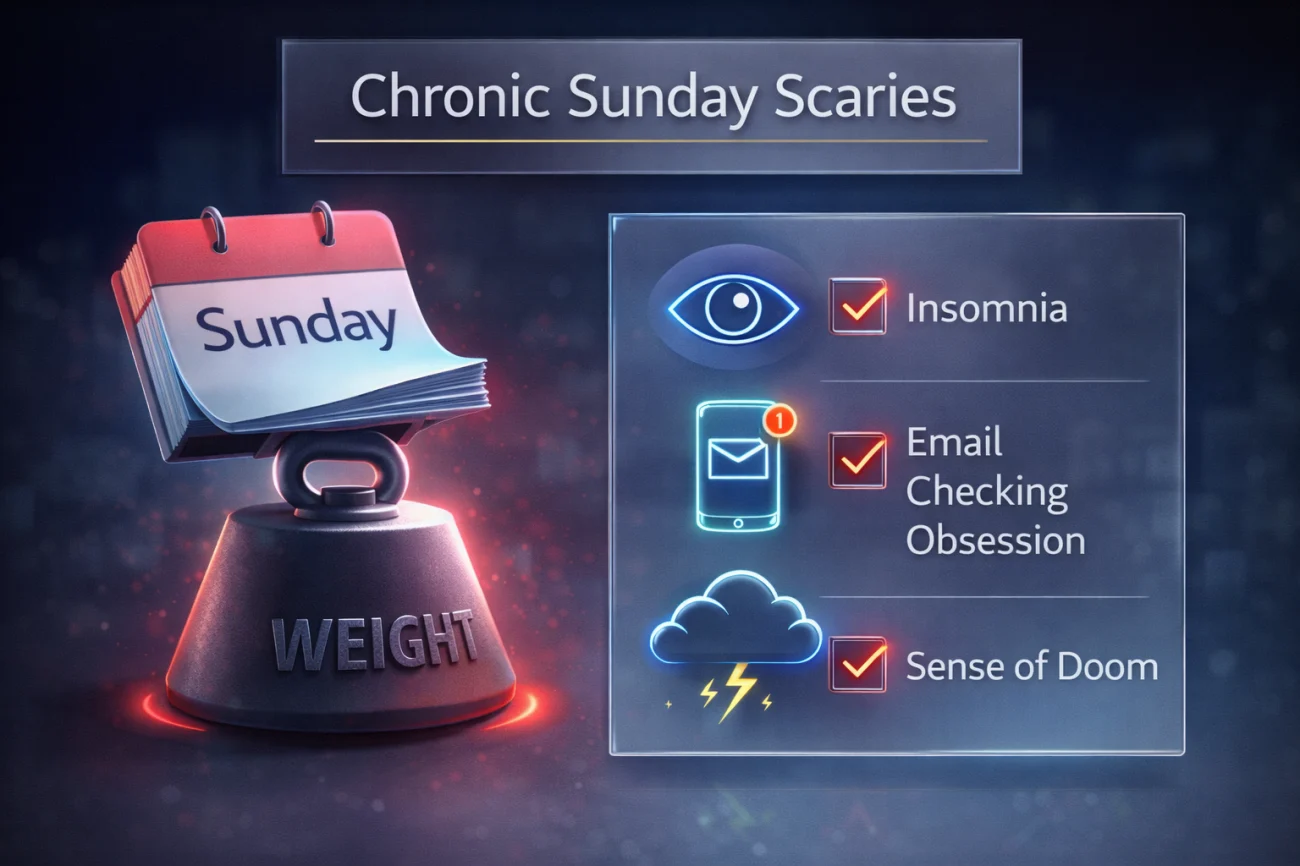
We need to distinguish between normal reluctance to end the weekend and genuine psychological distress. It is normal to wish the weekend was longer. It is not normal to feel physically ill, irritable, or paralyzed by dread as the sun goes down on Sunday.
Recognizing Severe Sunday Scaries Symptoms
When your body starts reacting to the mere thought of returning to the office, your nervous system is sending you a warning. Common sunday scaries symptoms that indicate a deeper problem include:
- Inability to sleep on Sunday nights (insomnia caused by racing thoughts).
- Checking emails obsessively on the weekend to “brace yourself” for Monday.
- A sense of impending doom that ruins your time off with family or friends.
- Physical nausea or tension headaches that appear specifically on Sunday evenings.
If your weekend is no longer a time of recovery but rather a countdown to anxiety, your job is infringing on your personal peace. This is unsustainable long-term.
2. Your Body Is screaming (Physical Symptoms)

The mind can rationalize almost anything (“The pay is good,” “The market is tough”), but the body doesn’t lie. One of the most overlooked signs you need to quit is physical deterioration that has no clear medical cause.
The Tangible Mental Health Toll of Job Stress
I have coached countless professionals who spent months treating individual symptoms without realizing the root cause was their 9-to-5. The mental health toll of job stress often manifests somatically. You might experience chronic back pain, frequent migraines, digestive issues, or a weakened immune system (catching every cold that goes around).
When you are in a constant state of “fight or flight” due to a toxic environment, your cortisol levels remain elevated. Over time, this biological response breaks you down. If you find that your physical ailments miraculously disappear when you are on vacation or taking a sick day, the diagnosis is clear: your job is making you sick.
3. You Are the Smartest Person in the Room (The Growth Ceiling)
This sounds like a compliment, but in terms of career trajectory, it is a death sentence. If you look around your department and realize there is no one left to learn from, you have hit a growth ceiling.
Professional development relies on challenge and mentorship. When you are the one solving everyone else’s problems, but no one is helping you solve yours, your skills begin to atrophy. You become comfortable, yes, but you also become obsolete. In a rapidly changing market, standing still is equivalent to moving backward. If six months have passed and you haven’t learned a new skill, tool, or strategy, you are stagnating. You need to be in a room where you are challenged, not just celebrated for what you already know.
4. You’ve Normalized Toxic Behavior (The Boiling Frog)
The metaphor of the frog in boiling water is perfect for the modern workplace. If you were dropped into a toxic culture immediately, you would leave. But when the temperature rises slowly, you adjust. You start accepting unacceptable behavior as “just the way things are here.”
Subtle Red Flags at Work You Shouldn’t Ignore
You might be missing red flags at work because you’ve become desensitized. Ask yourself if you have started rationalizing the following:
- 🚩 Passive-aggressive communication: “Per my last email” wars or silent treatments from management.
- 🚩 Boundary violations: Calls at 9 PM or expectations to work through vacations.
- 🚩 Gossip culture: Where bonding happens through tearing others down rather than collaboration.
- 🚩 Gaslighting: Being told your valid concerns are just you “being sensitive” or “not a team player.”
When you find yourself explaining your company’s dysfunction to friends with the phrase, “It’s crazy, but that’s just [Boss’s Name],” you have normalized toxicity.
5. Apathy Has Replaced Passion
Hate is not the opposite of engagement; apathy is. There is a distinct difference between having a bad day and no longer caring about the outcome of your work.
When you start doing the bare minimum not because you are lazy, but because you feel your efforts don’t matter, you have emotionally checked out. You stop offering ideas in meetings. You stop fighting for quality. You watch mistakes happen and think, “Not my problem.” This detachment is a defense mechanism. It protects you from disappointment, but it also signals that your connection to the role is severed. Staying in a job where you are indifferent is a waste of your potential and time.
6. Venting Has Become Your Personality
Take a moment to audit your conversations outside of work. When you meet friends or family, what percentage of the conversation is dominated by you complaining about your job? 50%? 80%?
When your workplace misery becomes the central theme of your life, it poisons your personal relationships. Your loved ones want to support you, but they can only listen to the same complaints for so long. If you can’t get through a dinner without rehashing the latest office drama, the job is consuming your identity. You are letting toxic workplace signs dictate your mood even when you are off the clock.
7. The “Should I Stay or Should I Go” Checklist
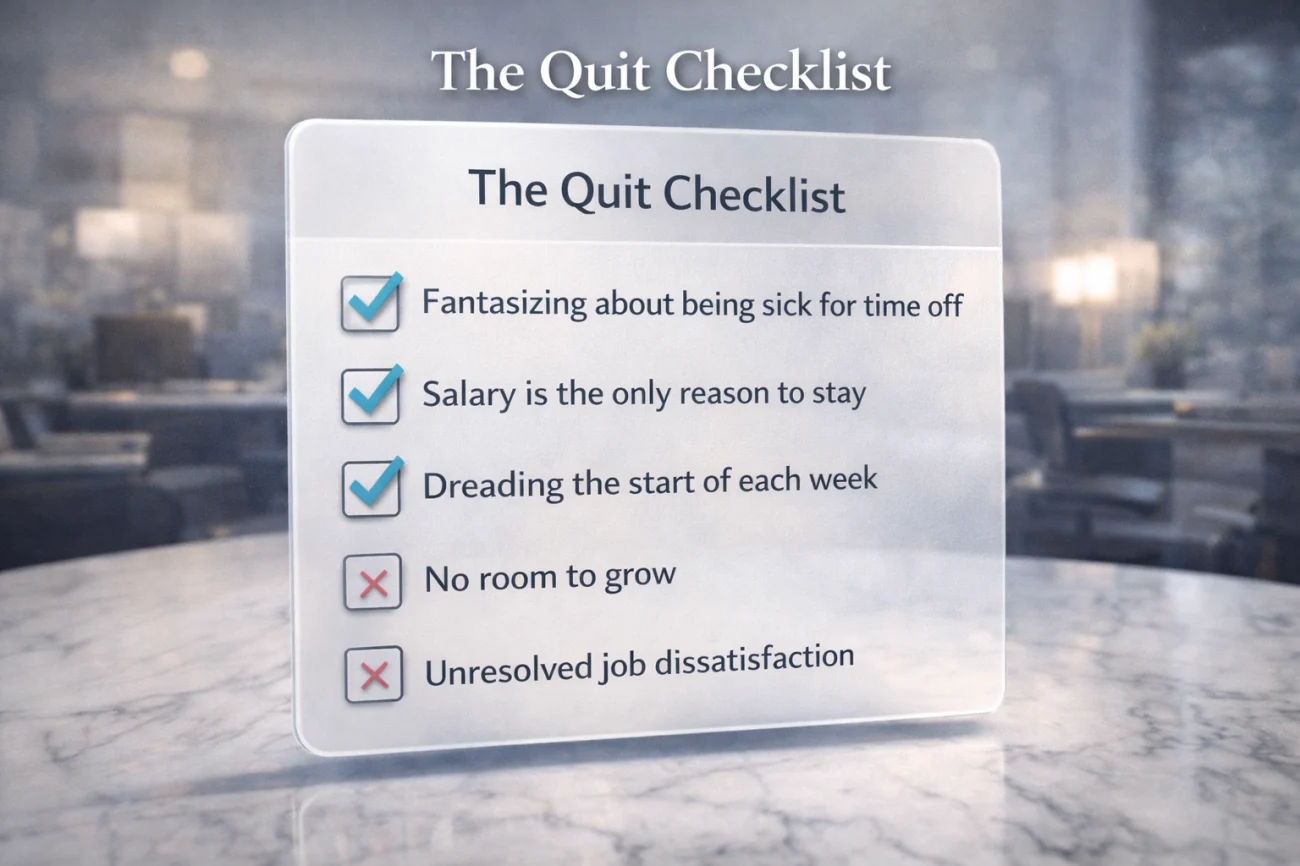
Still on the fence? Sometimes we need raw data to make a decision. Read through the following checklist. If you check more than three boxes, you are likely in the danger zone. If you check more than five, you needed to leave yesterday.
| The Quit Checklist | Yes / No |
|---|---|
| Do you fantasize about getting sick/injured just to have a few days off? | ⬜ |
| Have you cried at work (or about work) in the last month? | ⬜ |
| Do you feel you have to change your personality to fit in? | ⬜ |
| Is your salary the only reason you are staying? | ⬜ |
| Do you envy people who get fired or laid off? | ⬜ |
| Has your self-esteem dropped since taking this job? | ⬜ |
| Do you struggle to name one thing you learned this year? | ⬜ |
Strategic Exit: What to Do Next
Recognizing the signs is step one. Taking action is step two. However, realizing when to quit your job doesn’t mean you should flip a table and walk out today (unless your safety is at risk). You need a strategy.

The “Quiet Preparation” Phase
Once you mentally accept that you are leaving, the power dynamic shifts. You are no longer a victim; you are a planner. Use your remaining time to:
- Update your documentation: Gather performance reviews, quantify your achievements, and update your LinkedIn.
- Network internally and externally: Reconnect with old contacts before you need a job.
- Save aggressively: Build a financial cushion (your “freedom fund”) that gives you the confidence to resign.
Drafting the Resignation
When you are ready to pull the trigger, keep it professional. You don’t need to list the toxic reasons you are leaving in your resignation letter – that’s what exit interviews (or glassdoor reviews) are for. Keep your official notice neutral.
Here is a standard template to keep bridges intact:
[Your Name]
[Your Address]
[City, State ZIP]
[Date]
[Manager Name]
[Title]
[Company Name]
Dear [Manager Name],
Please accept this letter as formal notification that I am resigning from my position as [Your Job Title], effective [Last Working Day, typically 2 weeks out].
I have appreciated the opportunities for growth and development during my tenure at [Company Name]. However, I have decided to move on to a new opportunity that aligns with my long-term career goals.
I am committed to ensuring a smooth transition during my final weeks. I will ensure all my current projects are handed over and am happy to assist in training my replacement.
Sincerely,
[Your Signature]
[Your Name]
If you want to keep it even shorter, you can find more concise options in our guide on resignation letter templates. Remember, less is often more.
❓ FAQ
😰 How do I know if it’s burnout or just a bad week?
The key difference is persistence. A bad week can be solved by a weekend of rest or a good night’s sleep. Burnout is chronic; you feel exhausted even after resting, your cynicism is high, and your productivity has permanently dropped. If the feeling lasts more than a month, it’s not just a phase.
🚩 Can I quit without another job lined up?
Yes, but it requires financial preparation. Ideally, you should have 3-6 months of living expenses saved. If your mental health toll of job stress is severe (suicidal thoughts, panic attacks), your health must take priority over finances, but always review your budget first.
🗣️ Should I tell my boss the real reason I’m quitting?
Generally, no. In your resignation letter, keep it neutral. If you have a trusted relationship with HR, you can mention toxic workplace signs in the exit interview, but remember that the goal of resigning is to leave, not to fix the company you are leaving behind.
📅 What is the best day of the week to resign?
Friday late afternoon is often cited as the best time. It allows you and your manager the weekend to process the news, reducing immediate emotional reactions and awkwardness. For more on timing, check our guide on resignation etiquette.
⚖️ Is it better to be fired or to quit?
Quitting gives you control over the narrative and usually looks better to future employers. However, being fired (or laid off) may make you eligible for unemployment benefits, which quitting often forfeits. Weigh your financial needs against your resume’s reputation.
Final Thoughts
Acknowledging that a job isn’t working out is not a sign of failure; it is a sign of self-respect. Your career is a marathon, not a sprint, and running on a broken ankle helps no one.
If you recognized yourself in these signs, don’t panic, but don’t freeze either. Start planning your departure today. Recognizing the signs you need to quit is the first step toward reclaiming your Sunday evenings, your health, and your professional passion. You owe it to your future self to find a role where you don’t just survive, but thrive.
⚠️ Legal Disclaimer: ResignSmartly provides general informational guidance about resignation, workplace communication, notice periods, handovers, and career transitions. Content does not constitute individualized legal advice. Employment laws, contracts, workplace policies, and individual circumstances vary, so review the requirements that apply to your situation and consult an appropriate qualified professional when needed.