- What a bad reference looks like: Subtle signals like pauses, dates only confirmation, lukewarm tone, or “Wouldn’t rehire.”
- First principle: Don’t make the risky manager the gatekeeper, reroute credibility to people who saw your work directly.
- Build proof and redundancy: Collect clean performance receipts, then line up 3–5 references with clear angles.
- Create a neutral verification path: Push official checks through HR or third party verification so facts stay baseline neutral.
- Preempt and recover calmly: Tell recruiters one professional sentence, offer alternatives, and if an offer stalls ask for concerns then reopen a clean path.
When You Realize the Reference Will Be the Attack
You can handle a tough job. You can handle an awkward resignation. But the moment you suspect a manager will tank your bad reference check, your brain goes straight to panic math: “How many offers have I already lost without knowing?”
The good news is this is more controllable than it feels. You can’t force someone to like you, but you can control who speaks for you, what they’re allowed to confirm, and how you frame the situation with recruiters so it doesn’t sound like drama.
This is a damage-control playbook. It’s designed to keep your search moving while you reduce risk, create safer verification paths, and avoid escalating conflict with someone who already wants to be difficult.
What “Bad Reference” Usually Means in Real Life
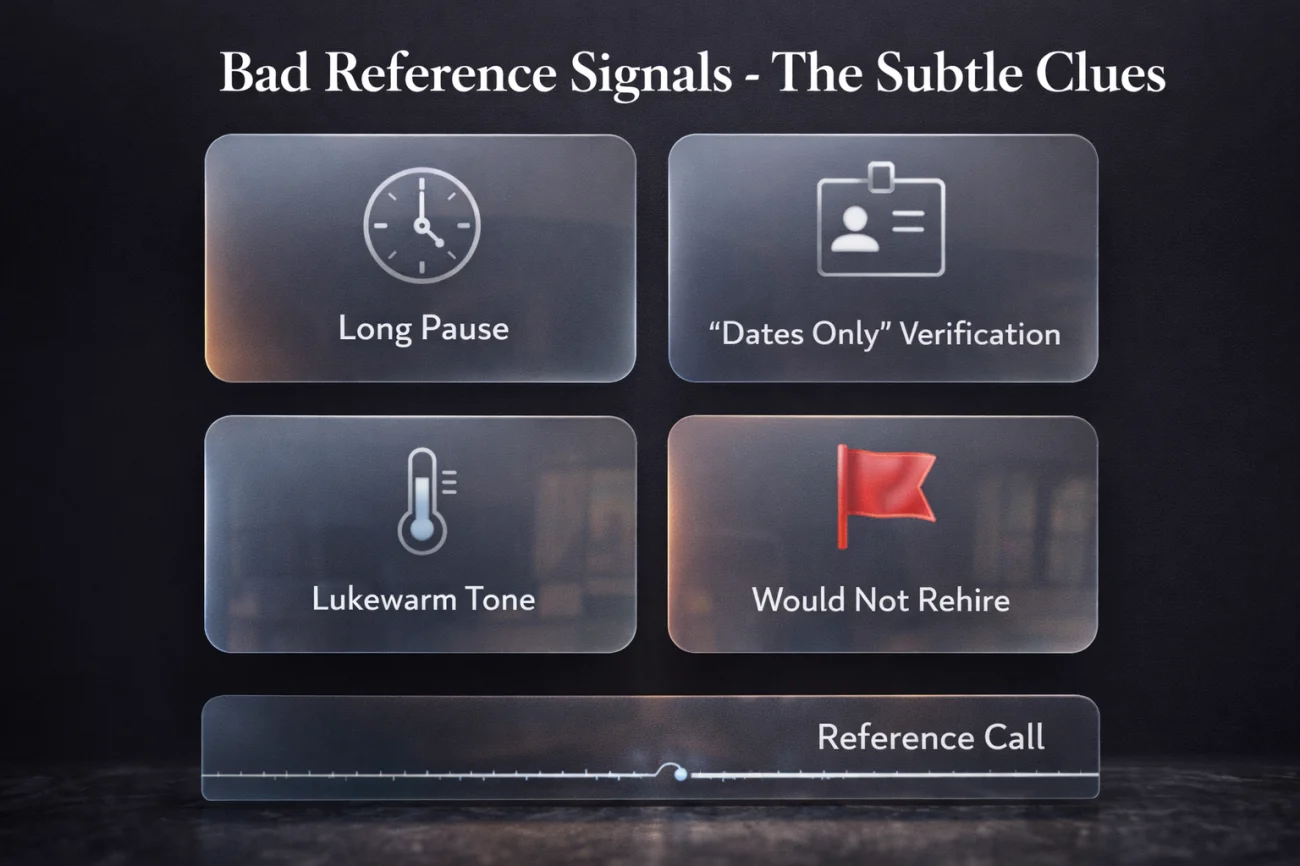
A bad reference is rarely a cinematic rant. More often it’s subtle: a long pause, “I can confirm dates only,” a lukewarm tone, or a vague warning like “I wouldn’t rehire.” Sometimes it’s actively hostile – insinuations about performance, trust, or attitude that are hard to disprove.
Also, “bad reference” can mean two different things. One is unfair sabotage. The other is a manager giving an honest negative assessment. Your strategy depends on which one you’re dealing with, so start by being brutally honest with yourself about whether the relationship is hostile, merely strained, or just not glowing.
One more reality: companies often have policies, but people still talk. Backchannel calls happen. That’s why your plan needs to cover both “official verification” and “unofficial impressions.”
The First Principle: Don’t Make Them the Gatekeeper

If you suspect a manager will be harmful, your goal is simple: stop treating them like the default authority on your entire career. You want to reroute credibility to people who actually saw your work and will describe it fairly.
This is not “hiding something.” It’s normal risk management. Recruiters understand that not every manager relationship ends well – especially in restructures, toxic environments, or leadership changes. What matters is that you can provide strong alternative references and a clean verification path.
A Step-by-Step Plan to Protect Your Job Search
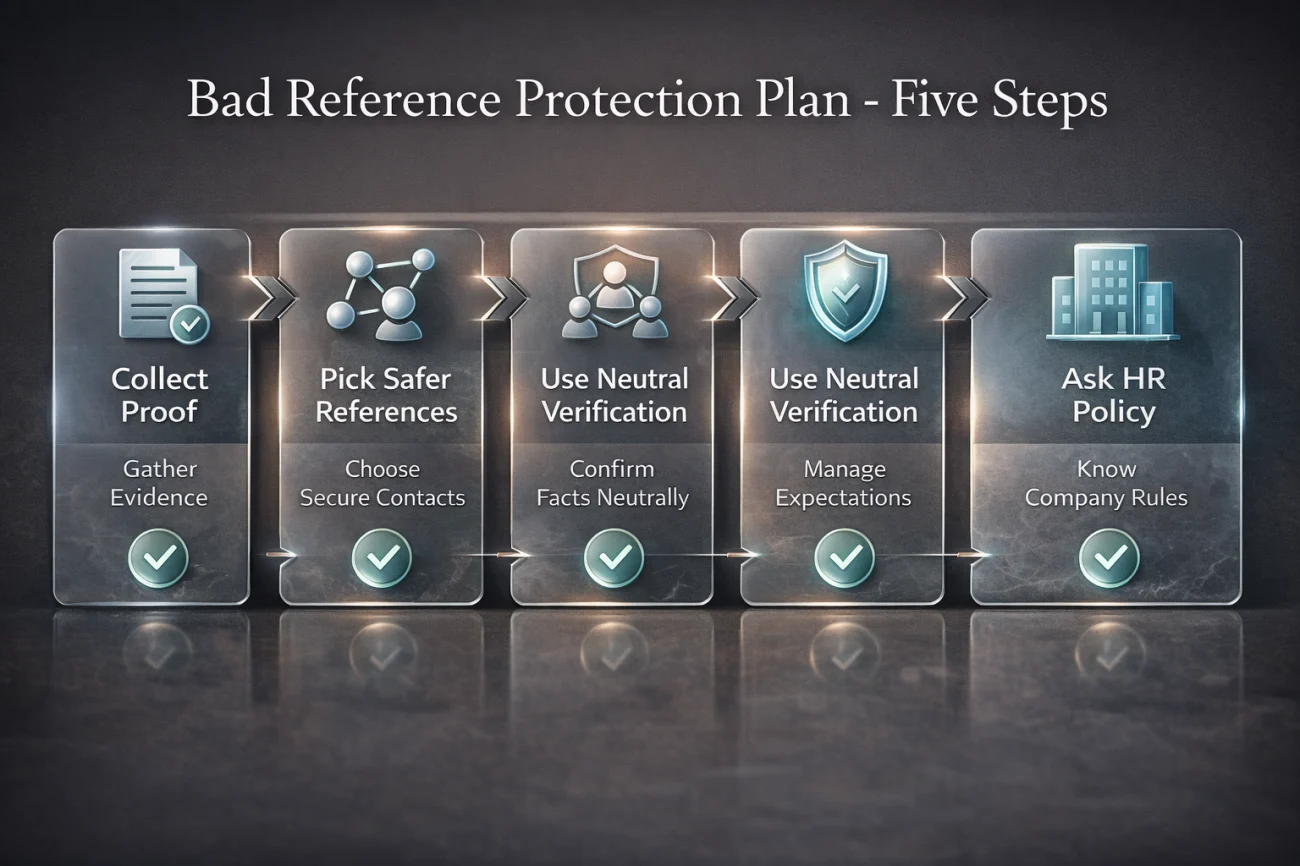
Step 1: Collect proof while you still have access
Before you resign (or while you’re still employed), quietly gather your own receipts: performance reviews, written praise, project outcomes, metrics, and emails that show impact. You’re not building a courtroom case; you’re building confidence and credibility you can reference in interviews.
Keep it clean and ethical. Save what you’re allowed to keep, avoid confidential data, and focus on outcomes you can describe without exposing internal details. A “wins list” with dates and results is often enough.
Step 2: Choose references who can speak to your work, not your politics
If your direct manager is risky, pivot to: a previous manager, a dotted-line leader, a project sponsor, a senior peer, or a cross-functional partner who depended on you. The best references are people who can describe your work with specifics, not just “they were nice.”
Build a reference roster, not a single point of failure. Ideally, you have three to five options: one leader, one peer, one stakeholder, and one “deep work” reference who knows how you operate day-to-day.
Step 3: Create a neutral verification path
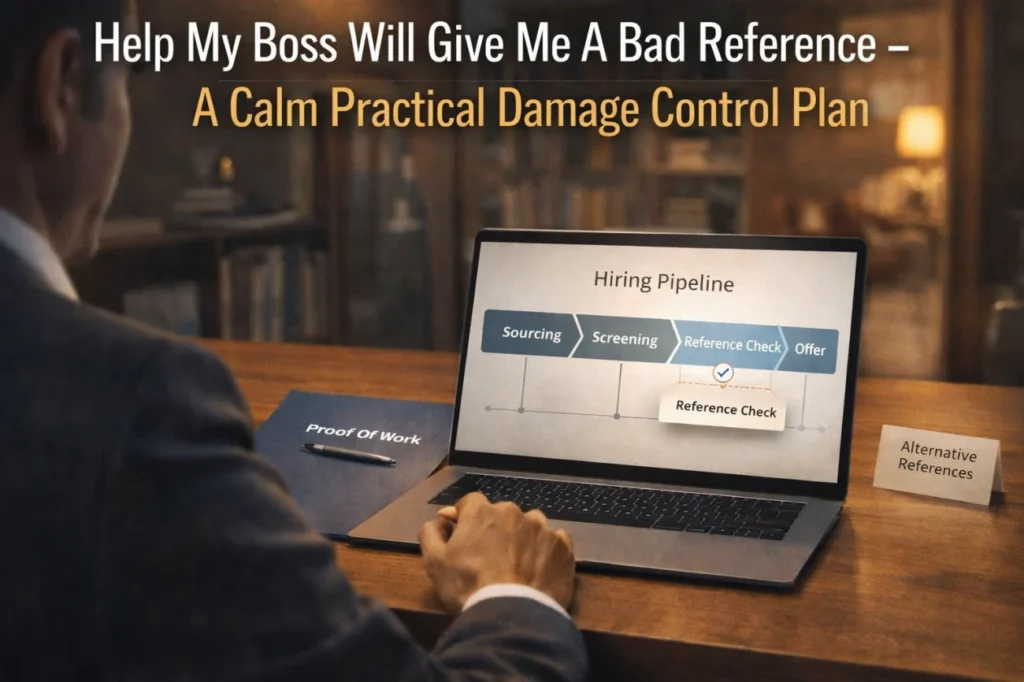
Many employers will only confirm dates, title, and employment status. That can be a gift. If your company has an HR verification process (or uses a third-party verifier), encourage recruiters to use that channel for official checks.
Neutral verification does two things: it reduces your manager’s ability to editorialize, and it gives recruiters a clean “baseline truth” that your alternative references can then enrich.
Step 4: Preempt the recruiter the right way
You don’t want to sound like you’re ranting about a boss. You want to sound like a professional who’s thinking ahead. A calm line works: “My current manager may not be the best reference due to a tense departure, but I can provide strong references from people who directly supervised my work and partners who relied on my deliverables.”
Then immediately move to solutions: offer names, roles, and the context of what each person can validate. Recruiters don’t need your full backstory – they need a reliable signal.
Step 5: Ask about reference policy without waving a red flag
If you’re still employed, you can ask HR a neutral question: “What is the company’s policy on employment verification and references?” You’re not accusing anyone. You’re clarifying process. If the policy is “dates and title only,” that’s useful to know and can reduce anxiety.
If your manager is truly hostile, avoid confronting them with “I think you’ll give me a bad reference.” That tends to escalate. Focus on routing, not arguing.
If You Think a Bad Reference Already Happened
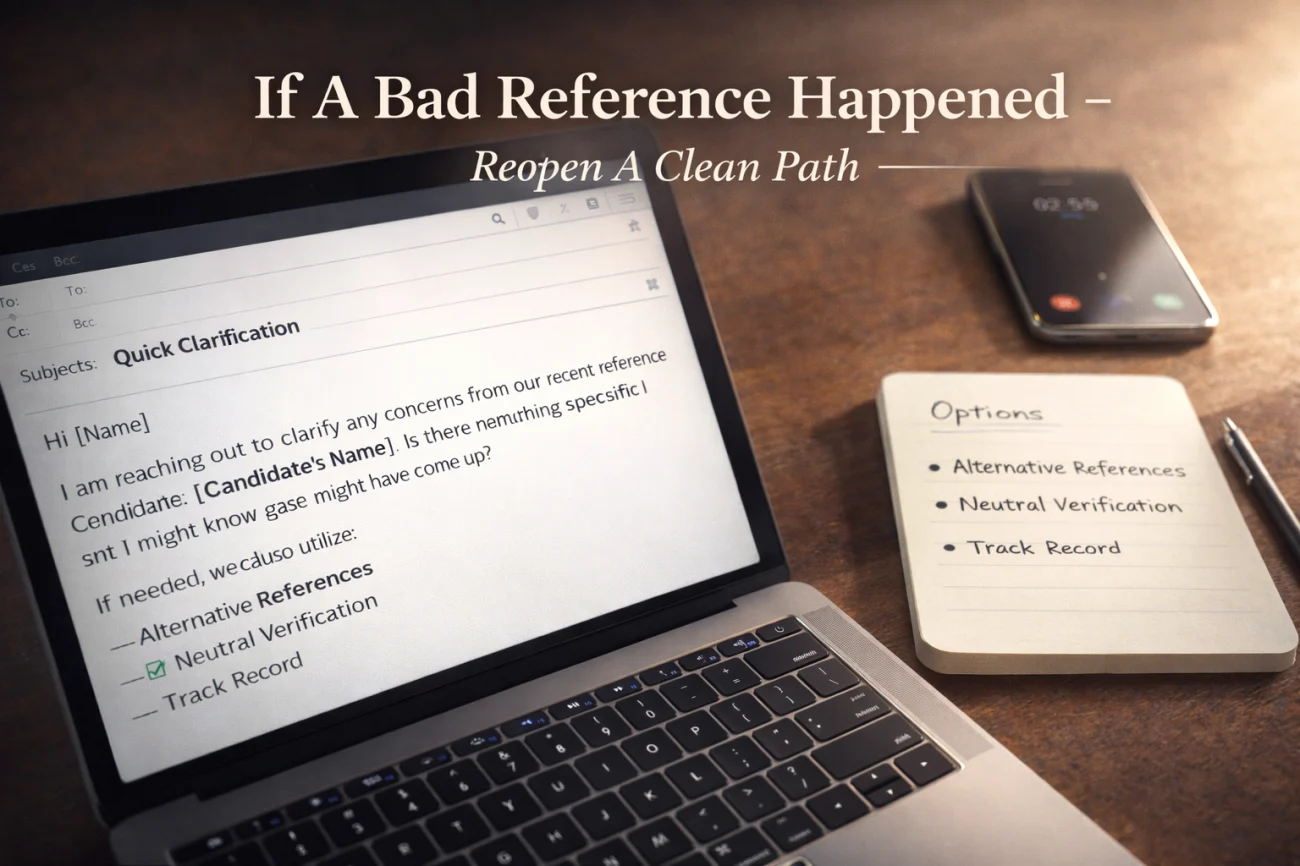
This is the moment people spiral because it feels invisible. If an offer goes cold after a reference step, you can ask the recruiter a simple, respectful question: “Was there anything in the reference feedback that concerns you? I’m happy to clarify context and provide additional references.”
Sometimes recruiters won’t share details. That’s normal. Your job is to reopen a clean path forward: offer alternate references, suggest neutral employment verification, and reinforce your track record with specific accomplishments. The goal isn’t to force a confession – it’s to reduce uncertainty.
If you believe someone is making false claims that could materially harm your career, consider documenting what you know and getting advice from a qualified professional in your jurisdiction. This guide is not legal advice, but it is a strong signal that you should treat the situation seriously and keep records.
Copy-Paste Emails That Don’t Escalate the Situation
Email 1: Asking HR for the Official Verification Route
Subject: Employment verification process
Hi [HR Name],
I’m updating my records and wanted to confirm the company’s standard process for employment verification and references. When a prospective employer requests verification, what information is typically provided and what is the preferred contact/channel?
Thank you for the clarification.
[Your Name]
Email 2: A Neutral Note to a Strong Alternative Reference
Subject: Reference request
Hi [Name],
I’m currently interviewing for new roles and would be grateful if you could serve as a reference. If contacted, it would be most helpful to speak to [specific project/work], how I performed, and the outcomes we delivered.
I’ll share the role details and timing so it’s easy for you. Thank you – I appreciate it.
[Your Name]
The Damage-Control Checklist for a Risky Reference Situation
Think of this as your “stability kit.” If you do these items, you dramatically reduce the chance that one hostile person becomes the narrator of your career. The goal is redundancy, clarity, and a clean verification path that recruiters can trust.
| Action | Why It Works | What “Done” Looks Like |
|---|---|---|
| Gather performance proof | Backs your narrative with specifics | Wins list + reviews + key emails saved |
| Build alternative references | Removes single-point-of-failure risk | 3–5 references with defined angles |
| Confirm HR verification path | Keeps official checks neutral | Known process and contact/channel |
| Preempt recruiters calmly | Reduces surprise and suspicion | One sentence + immediate solution |
| Avoid escalation | Stops conflict from getting worse | No accusatory confrontation; focus on routing |
The Goal Isn’t Revenge. It’s Control.
When someone threatens a bad reference, it’s tempting to fight them head-on. But the smarter move is to control the channel, control the narrative, and control the evidence. You’re not trying to “win” an argument with a manager – you’re trying to win your next opportunity.
If you take one thing from this: don’t let one person become the bottleneck. A bad reference check is survivable when you build redundancy, use neutral verification, and present alternatives with calm confidence.
❓ FAQ
✅ Should I confront my boss if I think they’ll give a bad reference?
Usually, no. Confrontation often escalates and can motivate someone to be even more difficult. A safer approach is to reroute references to people who can speak to your work and to use HR-based employment verification for official checks.
📅 What should I tell a recruiter about a tense manager relationship?
Keep it short and professional. Say your current manager may not be the best reference due to a strained departure, then immediately offer strong alternatives and a neutral verification path. The key is solutions, not storytelling.
💼 Can I use coworkers or clients as references instead?
Often, yes – if they can speak directly to your work and outcomes. A cross-functional partner, project sponsor, or senior peer can be powerful because they describe real deliverables, not office politics.
🧾 How do I know if a bad reference is actually happening?
It’s hard to prove because details are often confidential. If offers stall right after reference steps, ask recruiters if there are concerns and offer additional references. Focus on restoring trust and reducing uncertainty rather than forcing specifics.
🔒 What’s the single best protection against a hostile reference?
Redundancy. Build multiple credible references and route official verification through HR when possible. One hostile person is much less powerful when they are not the only voice in the process.
⚠️ Legal Disclaimer: ResignSmartly provides general informational guidance about resignation, workplace communication, notice periods, handovers, and career transitions. Content does not constitute individualized legal advice. Employment laws, contracts, workplace policies, and individual circumstances vary, so review the requirements that apply to your situation and consult an appropriate qualified professional when needed.