- Core idea: Your last day is not about production, it is about transition, closure, and leaving a clean handover.
- Productivity reset: Do not start new work you cannot finish, focus on clarity gaps, access cleanup, and teaching the one thing only you know.
- Hourly plan: Morning admin lockdown, midday social closure, afternoon physical exit, so you stay useful without looking idle.
- Say no gracefully: Decline “quick” tasks and future planning meetings by redirecting to the successor and pointing to the handover doc.
- Edge cases: Use the 30-minute rule for crises, and for remote exits set a clear boundary while staying available for urgent questions.
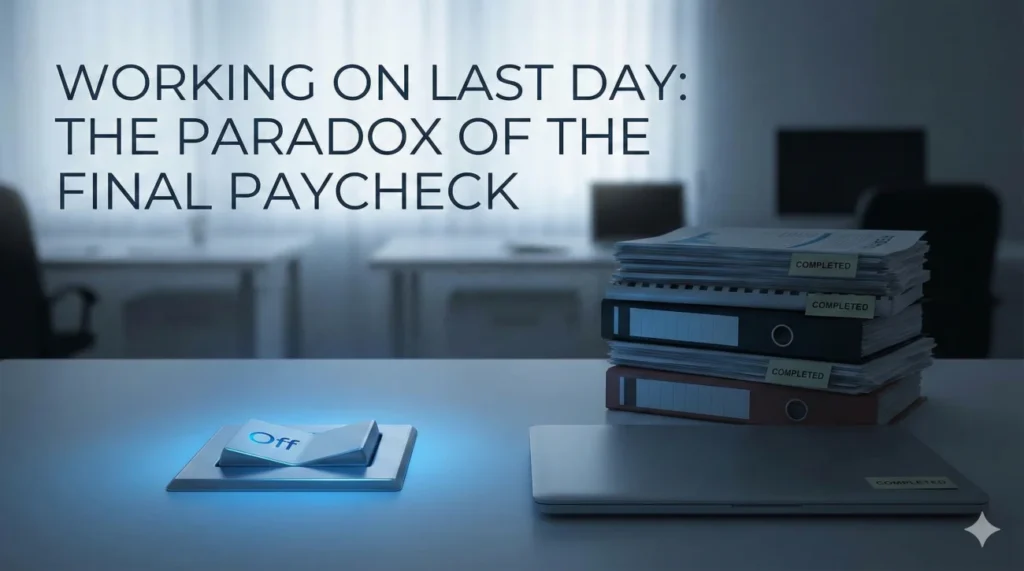
The Paradox of the Final Paycheck: Defining “Work” When You Are Walking Away
It is a strange, almost surreal feeling. You wake up, put on your professional attire, commute to the office (or walk to your home desk), and log in just like you have done for the past three years. You are technically on the payroll. You are technically an employee. Yet, the projects that defined your existence yesterday are no longer your concern today. This is the confusing reality of **working on last day** protocols.
Most employees fall into one of two extremes during these final eight hours. The first group suffers from “Over-Functioning Guilt,” where they frantically try to start new tasks or sit in meetings they don’t need to attend, simply to prove they aren’t slacking off. The second group checks out completely, sitting visibly idle for hours, creating an awkward atmosphere for colleagues who are still grinding away. Both approaches are flawed.
The truth is, your final day is not about production; it is about transition. It requires a complete mental shift. You are no longer a builder; you are an archivist. This guide delves deep into the psychology and logistics of that final shift, helping you navigate the gray area of being present, professional, yet productively detached.
Redefining “Productivity”: The Transition Matrix
To answer the gnawing question – should I work on my last day – we first need to redefine what “work” means in this context. If you define work as “coding a new feature,” “drafting a new strategy,” or “cold calling new leads,” then the answer is an emphatic no. Starting something you cannot finish is not helpful; it is actually irresponsible. It leaves a mess for your successor to untangle.
However, if you define work as “closure,” then you have a full day ahead of you. A productive last day is measured not by output, but by the quality of your handover.
| ❌ The “Busy Work” Trap (Avoid) | ✅ The “Closure” Mindset (Do) |
|---|---|
| Starting a new project phase | Reviewing handover docs for clarity gaps |
| Attending future-planning meetings | Deleting personal data/files from server |
| Training on new software | Teaching a colleague a specific trick/hack |
| Cold calling new clients | Sending thank-you notes to long-term clients |
The Anatomy of a Professional Exit: An Hourly Guide
One of the biggest sources of anxiety is simply not knowing how to fill the time. How much work to do on last day schedules often boils down to managing the clock without looking like you are loitering. Here is a realistic breakdown of what a “perfect” exit looks like.
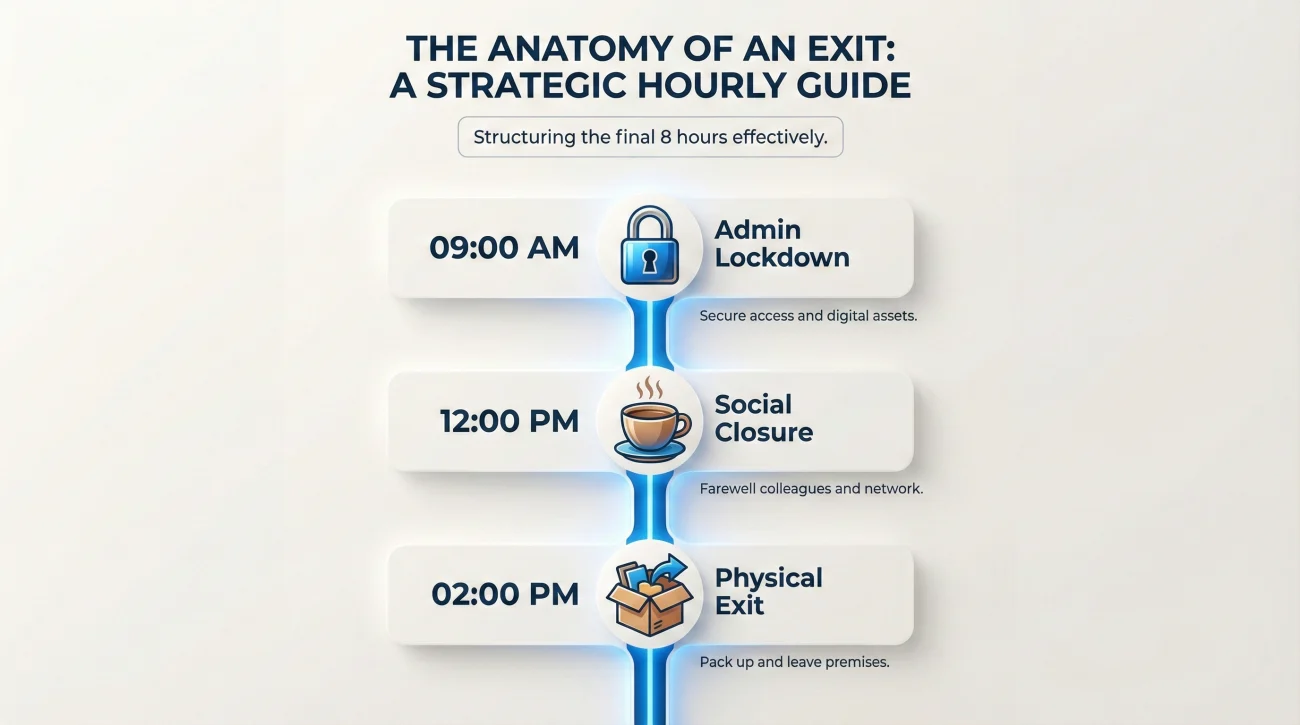
The Morning: Administrative Lockdown (9:00 AM – 12:00 PM)
This is your most active window. Use your fresh energy to ensure you are leaving a clean slate.
- The Email Finalization: Send your “Moving On” emails to clients and the wider team. Do this early so people have time to reply before you lose access.
- The Digital Scrub: Go through your desktop and downloads folder. Delete that PDF of your personal tax return, remove your saved passwords from the browser, and organize work files into logical folders for your successor.
- The “Brain Dump”: Sit with your successor (or manager) for one final hour. Ask them, “Is there anything in the documentation that doesn’t make sense?” This is doing actual work on final day that adds immense value.
The Midday: Social Closure (12:00 PM – 2:00 PM)
Lunch on the last day is rarely just lunch. It is a ritual. Whether it is a team outing or a quiet coffee with a mentor, treat this as a work activity. Strengthening these relationships is crucial for your future network. Do not skip this to sit at your desk and delete emails.
The Afternoon: The Physical Exit (2:00 PM – 4:00 PM)
This is where time drags if you aren’t careful. Shift your focus to physical logistics.
- Equipment Return: Do not just drop your laptop at IT. Get a receipt. Ensure they sign off that the device is un-damaged.
- HR Formalities: Complete your exit interview. (Refer to our guide on exit interviews for strategy here).
- The “Lap of Honor”: Walk around and say personal goodbyes. This takes longer than you think and fills the empty space of the afternoon meaningfully.
The Art of Saying “No” to New Tasks
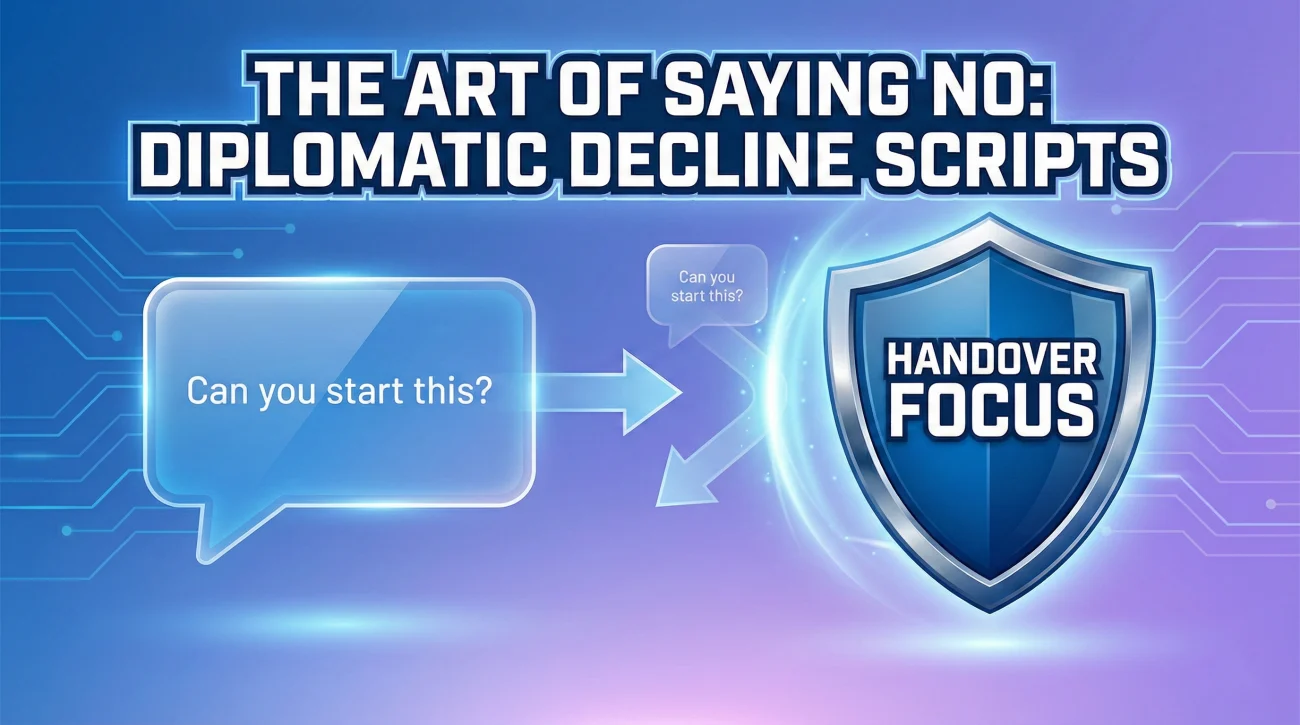
It happens more often than you think. You are three hours away from losing your keycard, and a stressed manager runs over: “Hey, can you just quickly pull this report?” or “Can you join this client call?”
This puts you in a bind. You want to be helpful, but you know you shouldn’t be starting new loops. You need a script to decline without burning a bridge.
Why Do They Do This?
Usually, it is not malicious. It is panic. They are suddenly realizing you are the only one who knows how to do X, and they are trying to squeeze one last drop of productivity out of you. Recognizing this panic helps you respond with empathy rather than annoyance.
The Diplomatic Decline Scripts
Scenario A: The “Quick” Task
“I’d love to help, but I’ve already turned in my equipment/revoked my access to that system. However, [Colleague Name] knows how to handle this, and I’ve outlined the steps in my handover doc.”
Scenario B: The Meeting Invite
“Since today is my last day, I don’t think it makes sense for me to be in a planning session for Q3. It would be better for [Successor Name] to attend so they get the context firsthand.”
Subject: RE: New Project Request
Hi [Manager Name],
Thanks for looping me in.
Since today is my final day, my primary focus is strictly on closing out my current queue and ensuring the handover to [Colleague] is watertight. I won’t have the capacity to start this new task and ensure it’s finished to my standard before I leave.
I have cc’d [Colleague] here, as they are best positioned to pick this up moving forward.
Best,
[Your Name]
Special Scenarios: Crisis and Remote Work
The standard rules apply to a standard day, but what if things go wrong?
The “Fire Drill” on Your Last Day
If the server crashes or a PR crisis hits at 2:00 PM, do you help?
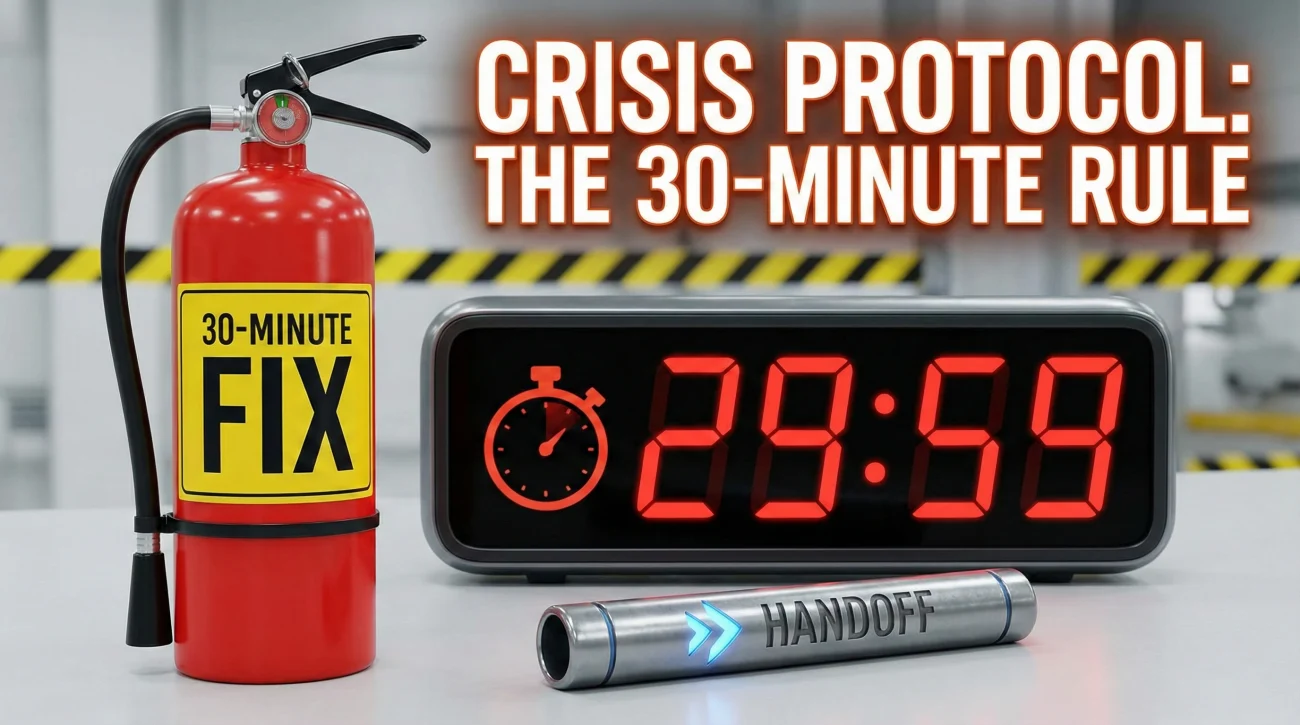
The Rule of Thumb: If you can fix it in 30 minutes, be the hero. If it requires 4 hours of troubleshooting, you must hand it off. You cannot stay until 9:00 PM on your last day to fix a legacy bug. It sets a bad precedent and legally complicates your employment status.
The Remote Worker’s Dilemma
For remote workers, “looking busy” is harder. If you finish your admin tasks by 11:00 AM, do not just jiggle your mouse to stay green on Slack. Send a note to your manager: “I’ve completed all handover checks and admin tasks. I’ll remain available on Slack for urgent questions until 4:00 PM, but I am shifting focus to archiving my files.” This sets a boundary while confirming availability.
❓ FAQ
💼 Am I legally required to work until 5:00 PM?
Unless you have a strict contract or a very rigid manager, rarely. Most companies understand that the last day is for logistics, not labor. However, do not just leave without asking. Check our guide on leaving early for scripts on how to navigate this conversation.
📉 What if I have literally nothing to do?
If you have finished your admin, cleaned your desk, and said your goodbyes, and it is only 2:00 PM, ask to leave. If you must stay, bring a book or organize your personal LinkedIn contacts. Do not distract colleagues who are working. Quiet presence is better than disruptive boredom.
💰 Do I get paid for the full day if I do “nothing”?
Yes. You are paid to be available. Transition work – answering questions, handing over keys, signing papers – is valid, billable work. Do not feel guilty about receiving your salary for a day spent mostly on administration and goodbyes.
Final Thoughts: The “Classy” Exit

Your last day is the period at the end of the sentence of your tenure. It defines how the story closes. Working on last day effectively isn’t about grinding until the final whistle; it’s about ensuring the game can continue smoothly without you.
When you focus on closure, documentation, and relationships, you leave behind a legacy of professionalism. You want your colleagues to remember you as the person who made their transition easy, not the person who left a half-finished project on their desk at 4:55 PM.
For more tools to help you navigate your departure, explore our templates for goodbye and handover emails. If you are still organizing your tasks for your successor, ensure you haven’t missed anything with our comprehensive handover email guide. For all other career transition resources, visit ResignSmartly.
⚠️ Legal Disclaimer: The resignation templates, email samples, and professional guidance provided in this guide are for informational purposes only and do not constitute legal advice. Employment laws and contract requirements vary by jurisdiction and individual circumstances. Please review your employment agreement and consult your HR department and/or a qualified attorney to ensure compliance with applicable laws and policies.