- Definition: Quiet quitting is work-to-rule, not quitting, and it becomes risky when it turns passive-aggressive.
- Tradeoff: Quiet quitting keeps income but raises reputation risk, while resignation cuts stress faster and preserves bridges.
- Safe middle: Strategic coasting means doing solid core work, stopping extra volunteering, and using the saved energy for rest and job search.
- Red line: If your output drops into “fireable” territory, you can lose control of the exit and damage references.
- Endgame: When you have an offer or the situation is unsustainable, resign professionally with a clean handover.
What Is Quiet Quitting Really?

Before you decide your next move, you need to separate the internet meme from the workplace reality. At its core, what is quiet quitting? It is not actually quitting. It is a misnomer for “work-to-rule.”
Proponents call it acting your wage – performing exactly the duties you are paid for, no more, no less. It is a rejection of hustle culture. However, there is a dark side. When this boundary-setting shifts into passive aggressive quitting – where you intentionally delay work, isolate yourself from the team, or sabotage projects through inaction – you are entering dangerous territory.
There is a fine line between “healthy boundaries” and “insubordination.” Crossing it can turn a neutral reference into a negative one.
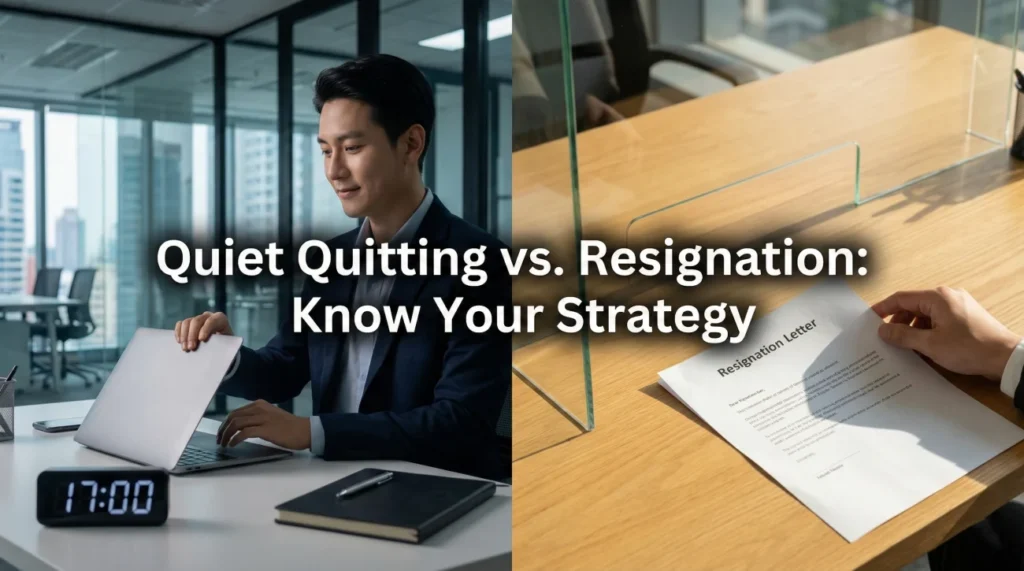
Quiet Quitting vs. Resignation: The Breakdown
Should you stay and coast, or leave and start fresh? Here is the honest comparison of how each path impacts your career.
| Feature | Quiet Quitting | Resignation |
|---|---|---|
| Income Status | ✅ Continues immediately. | ❌ Stops (unless a new job is lined up). |
| Mental Health | ⚠️ Temporary relief, but the toxic environment remains. | ✅ Immediate removal from the stressor. |
| Reputation Risk | High. You may be labeled as “lazy” or “uncooperative.” | Low. Leaving professionally preserves bridges. |
| Unemployment | No (if fired for performance/misconduct). | No (usually), unless “Good Cause” applies. |
| Endgame | Waiting to be fired or finding a new job. | A clean break and fresh start. |
The Middle Ground: “Strategic Coasting”

Instead of rage-quitting or checking out completely, consider a third option: Strategic Coasting. This is a temporary burnout recovery strategy designed to buy you time.
The goal isn’t to be a bad employee; it is to become an efficient one. You stop volunteering for extra committees. You stop staying late just to “be seen.” You redirect that reclaimed energy into two things:
- 🔋 Rest: Recovering your mental health so you don’t carry burnout into your next role.
- 🔎 Job Hunting: Polishing your resume and interviewing during your lunch breaks.
This approach protects your paycheck while you plan your exit, but it requires discipline to ensure your core work quality doesn’t drop to fireable levels.
When It’s Time to Make It Official
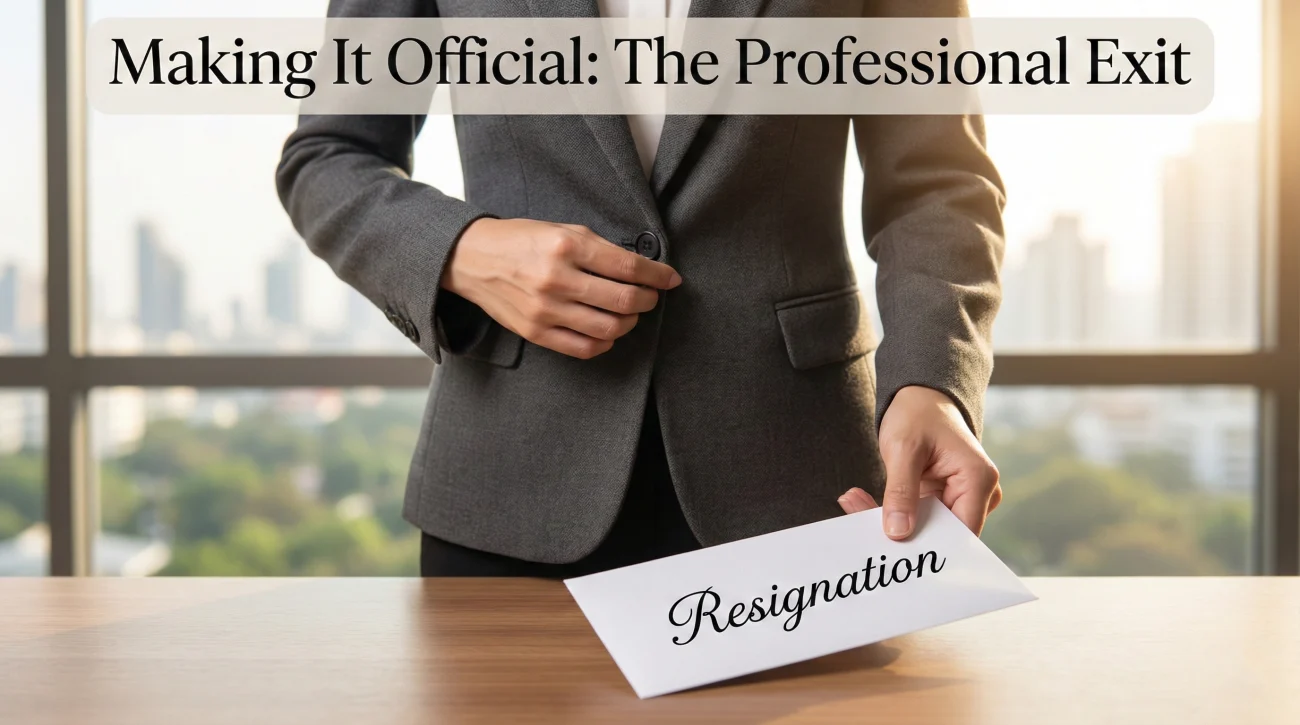
Eventually, the quiet quitting phase must end. When you have secured a new offer or decided that the environment is simply too toxic to stay in, you need to resign professionally. Do not let your “quiet” phase turn into a messy exit.
For more advice on handling this transition, check our guide on resignation etiquette.
Template 1: The Standard Professional Exit
[Your Name]
[Your Address]
[City, State ZIP]
[Date]
[Manager Name]
[Title]
[Company Name]
Dear [Manager Name],
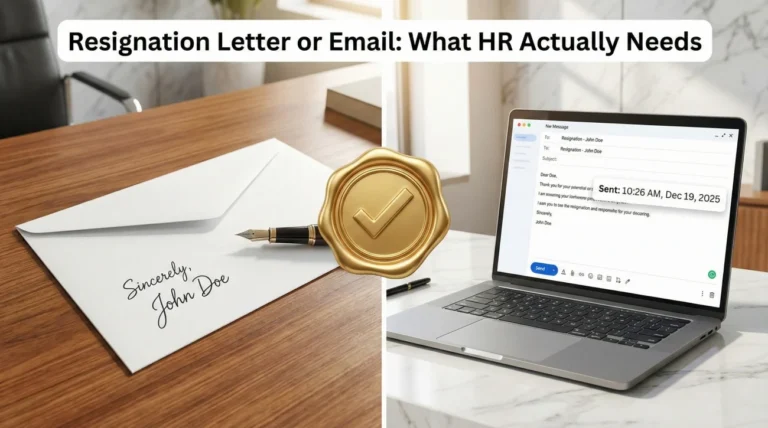
Please accept this letter as my formal resignation from my position as [Job Title], effective [Last Working Day].
I have enjoyed my time at [Company Name] and appreciate the opportunities I have had to work with the team. However, I have decided to move on to a new opportunity that aligns with my long-term career goals.
I am committed to ensuring a smooth transition during my final two weeks and will ensure all my current projects are handed over properly.
Sincerely,
[Your Signature]
[Your Name]
Template 2: Resigning Without a Job (Focus on Well-being)
[Your Name]
[Your Address]
[City, State ZIP]
[Date]
[Manager Name]
[Title]
[Company Name]
Dear [Manager Name],
Please accept this letter as notification of my resignation from the position of [Job Title]. My final day will be [Date].
This was a difficult decision, but after careful consideration, I have decided to take a career break to focus on my personal well-being and recharge. I want to thank you for the support you have shown me during my tenure.
I intend to complete [Project A] before my departure and will prepare detailed handover notes for my successor.
Sincerely,
[Your Signature]
[Your Name]
❓ FAQ
⚖️ Can I get fired for quiet quitting?
Yes. In at-will employment states, you can be fired for almost any reason. If your performance drops or you are perceived as having a “bad attitude,” your employer can terminate you, often without severance.
🗣️ Should I tell my boss I am acting my wage?
No. Using terms like “quiet quitting” or “acting my wage” can sound combative. Instead, frame it as “focusing on core priorities” or “improving efficiency.”
🕵️ Will future employers know I quiet quit?
Not directly, but they might find out through reference checks. If your former boss describes you as “doing the bare minimum” or “unenthusiastic,” it can hurt your chances.
🤒 Is quiet quitting a sign of burnout?
Often, yes. It is usually a defense mechanism against an unmanageable workload. If you feel the need to shut down emotionally, it is a sign that the job is not sustainable.
📝 Is it better to just resign immediately?
If you have savings or a new job lined up, resigning is cleaner and more professional. Quiet quitting is best used as a short-term survival strategy, not a permanent lifestyle.
Final Thoughts

There is a significant difference between setting healthy boundaries and checking out while still cashing a paycheck. While the former is necessary for survival, the latter can erode your professional standing.
Ultimately, the choice between quiet quitting vs resignation comes down to your end goal. If you are just trying to survive until you find an exit, do so strategically. But remember: the best revenge against a toxic job isn’t to be a ghost in the machine – it is to leave for something better.
⚠️ Legal Disclaimer: ResignSmartly provides general informational guidance about resignation, workplace communication, notice periods, handovers, and career transitions. Content does not constitute individualized legal advice. Employment laws, contracts, workplace policies, and individual circumstances vary, so review the requirements that apply to your situation and consult an appropriate qualified professional when needed.