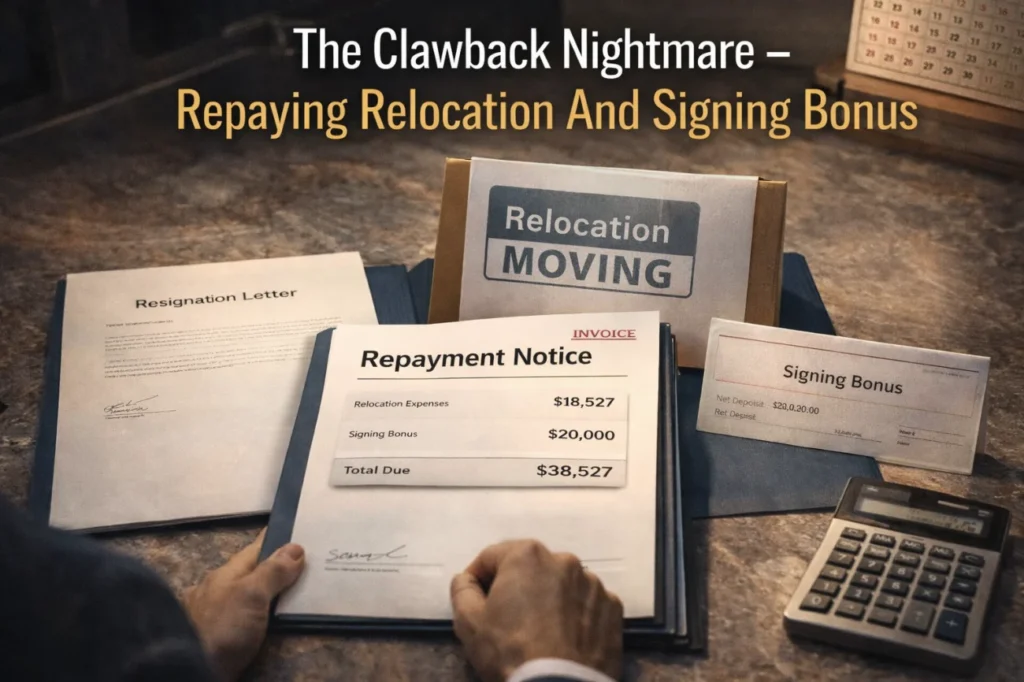
- Core risk: Relocation and signing bonuses can turn into debt if you resign before the clawback window ends.
- What decides the bill: Repayable amount, Time window, Clock start date, Prorated versus full repayment, Collection method.
- Before you quit: Pull every document, confirm the clock start, then estimate exposure so you are not guessing.
- Smart exits: Time your resignation near the cliff, Request a written payoff statement, Negotiate proration or a payment plan, Ask the new employer for a buyout.
- Damage control: Keep the exit professional with clean handover, Avoid anything that looks like bad faith, Get clarity in writing if the money is serious.
The “Free Money” That Turns Into a Debt the Moment You Quit
Relocation support and signing bonuses feel like a welcome gift when you join. The problem is that many of them come with a quiet string attached: a clawback clause. You don’t notice it when you’re excited about the offer. You notice it when you’re done with the job and your brain is screaming, “I need out now.”
This article is the practical guide to relocation payback: what clawback clauses usually mean, how to estimate what you owe, and how to resign without stepping on the financial landmine. It’s not legal advice. It’s a damage-control playbook so you can exit with clarity instead of panic.
What a Clawback Clause Really Is
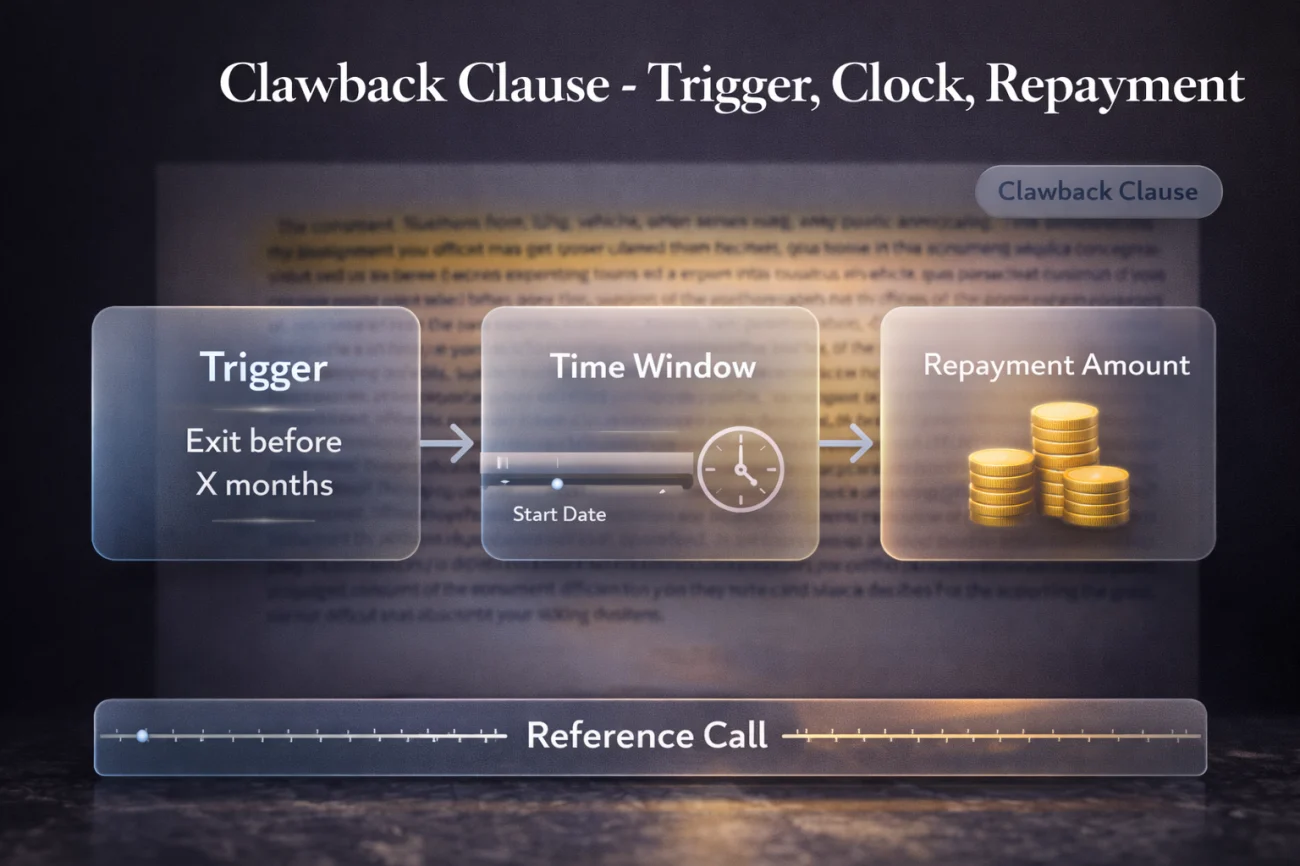
A clawback clause is a written rule that says the company can require repayment if you leave before a certain time. That repayment might apply to a signing bonus, relocation assistance, or other “one-time” benefits. It’s basically the company saying, “We invested in you. If you don’t stay long enough, we want some (or all) of it back.”
Most people assume clawbacks are rare. They’re not. They’re common in competitive hiring, especially when the company wants to discourage quick exits and protect recruiting costs.
What Usually Gets Clawed Back
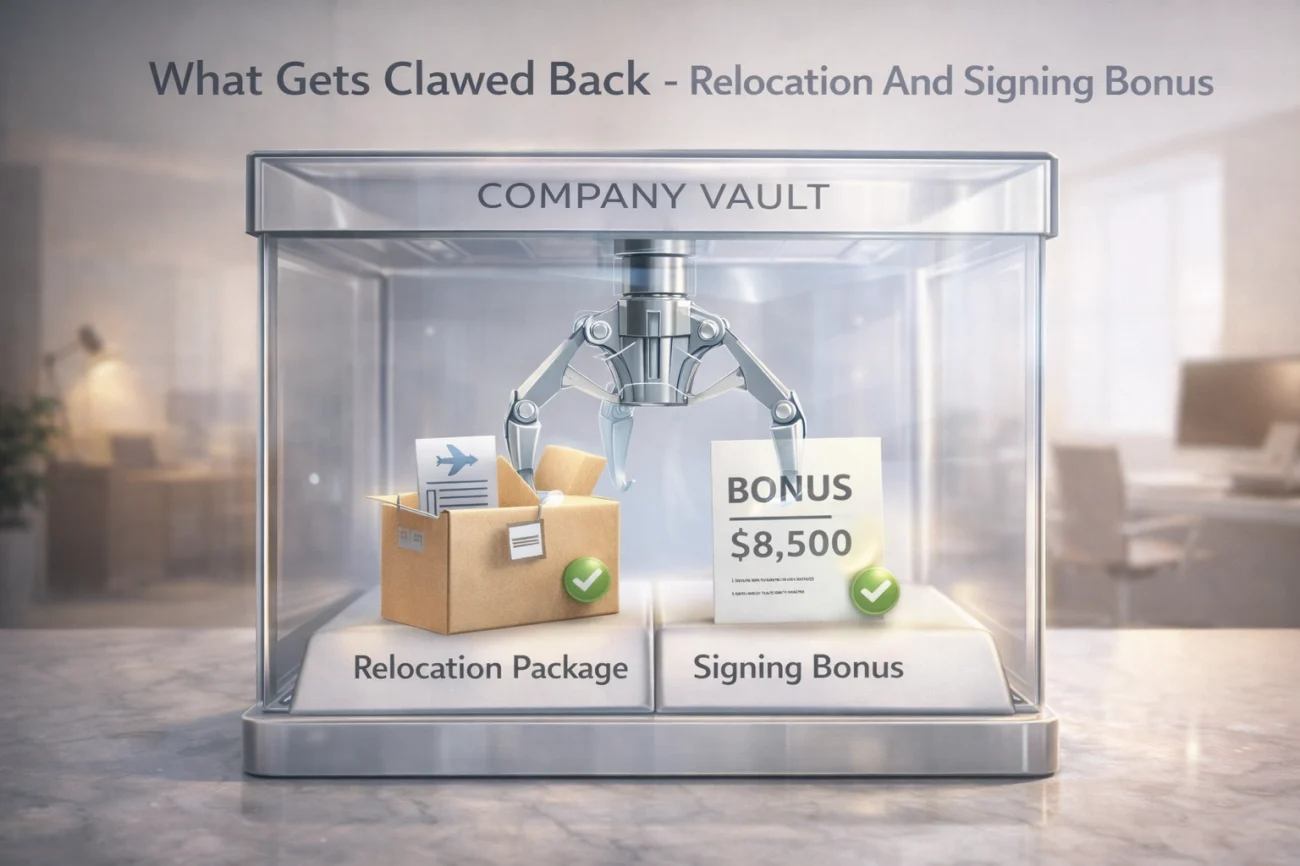
Clawback language usually targets benefits that were paid upfront. The two big ones in this context are relocation support and signing bonuses. But you may also see repayment tied to tuition reimbursement, certification costs, training programs, or special retention payments.
Relocation assistance
Relocation can show up as a lump sum, reimbursement of moving expenses, temporary housing, travel, or a relocation package managed by a vendor. Some agreements treat the whole package as repayable. Others only target the cash portion. The details matter because “relocation” can be multiple line items with different rules.
Signing bonus
Signing bonus clawbacks tend to be blunt: “If you leave within X months, you repay Y.” Sometimes it’s full repayment. Sometimes it’s prorated. Sometimes it’s framed as authorization to deduct from your final paycheck (where allowed). The wording is the difference between “annoying” and “catastrophic.”
The Only Word You Want to See: Prorated
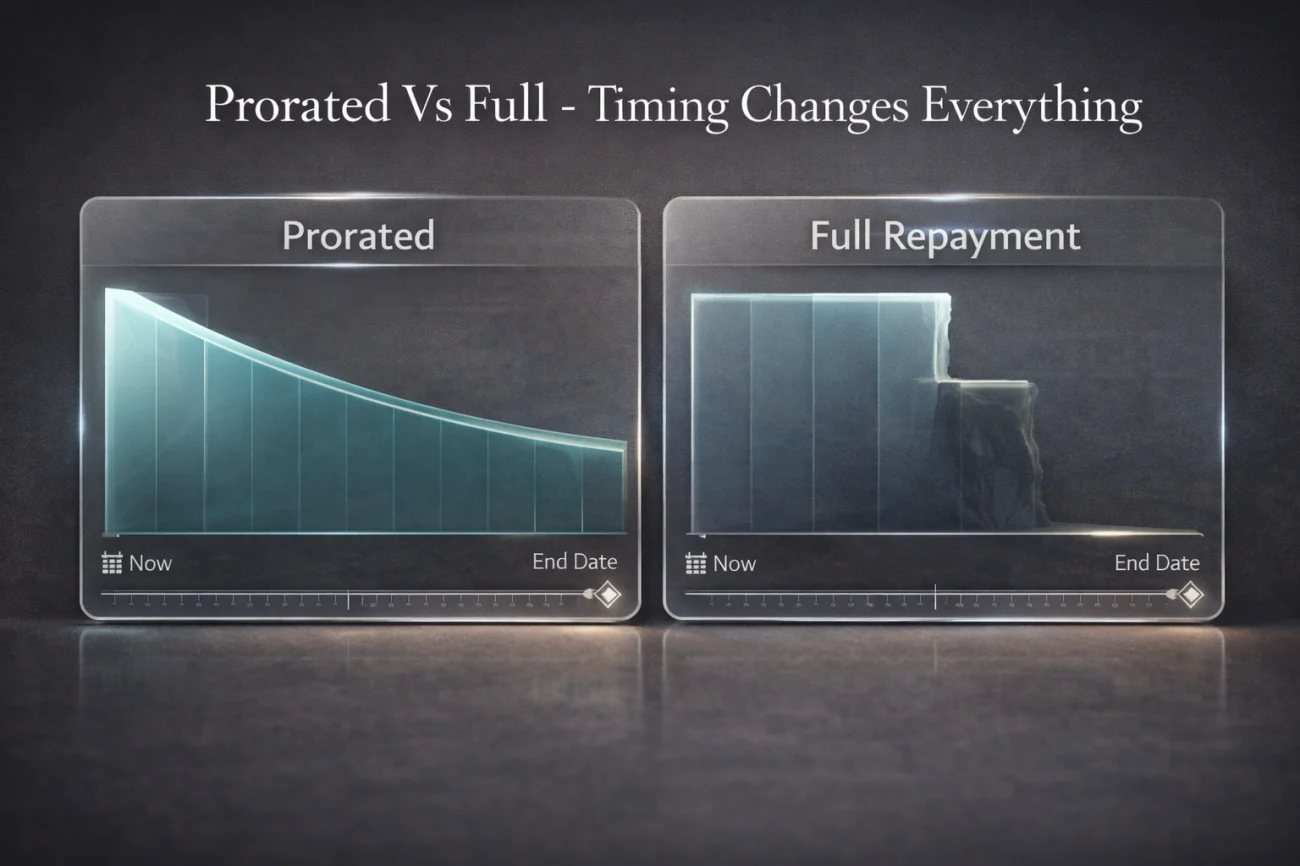
A prorated clawback means you repay only the portion tied to the time you didn’t complete. A non-prorated clawback means you might owe the full amount even if you were one week short of the commitment. That’s why this one detail changes how you time your resignation.
If you’re close to the end of the clawback window, a prorated agreement often makes the decision feel reasonable. A non-prorated agreement can turn “I’m almost done” into “I still owe everything,” which is where people get blindsided.
How to Estimate What You Owe Before You Resign
Before you make any move, you want a simple estimate. Not a perfect legal calculation – just a clear range that tells you whether the risk is small, medium, or life-changing. The easiest method is to find three numbers: the repayable amount, the time commitment, and your time served.
Start with the documents: offer letter, relocation agreement, bonus agreement, and any separate repayment addendum. Then confirm the clock start date. Sometimes it’s your start date. Sometimes it’s the bonus payment date. Sometimes it’s the relocation payout date. If you assume the wrong start date, you’ll mis-time your exit.
| What to Identify | Why It Matters | Where It Usually Appears |
|---|---|---|
| Repayable amount | Defines the maximum exposure | Bonus/relocation agreement |
| Clawback window | Defines how long you must stay | Offer letter addendum or separate policy |
| Clock start date | Determines whether you’re “close” or not | Payment date clause or start date clause |
| Prorated vs full | Determines whether timing can reduce payback | Repayment section |
| Repayment mechanism | Determines how payment is collected | Payroll authorization / repayment terms |
The Smart Exit Moves (If You Don’t Want This to Get Expensive)
Once you know the numbers, your options become clearer. The best move depends on how close you are to the end of the window and how aggressive the agreement is. The goal is not to “outsmart” the contract. The goal is to exit with the least financial damage.

Move 1: Time your resignation around the cliff
If you’re weeks away from the end of the clawback window, delaying can be rational. This isn’t “staying forever.” It’s choosing whether saving a meaningful amount is worth a short additional runway. If the workplace is toxic or unsafe, that calculus changes – but at least you’re deciding with eyes open.
Move 2: Negotiate a prorated repayment or a payment plan
Some companies will negotiate when the alternative is conflict, reputation risk, or administrative hassle. If the agreement is vague, you can ask for a clear payoff statement. If the amount is large, you can request a payment plan. It’s not guaranteed, but calm, documented requests often get further than emotional fights.
Move 3: Ask the new employer for a buyout
This is more common than people think, especially for in-demand hires. A new company may cover all or part of the clawback through a sign-on bonus, a relocation assistance package, or a one-time “make whole” payment. The key is to quantify your clawback exposure early so you’re not negotiating at the last minute.
Move 4: Don’t create a “bad faith” storyline
Even if you’re leaving for valid reasons, avoid behaviors that make the company feel justified in escalating: disappearing, taking internal files, or refusing handover. A clean resignation and professional handover doesn’t erase the clause, but it can reduce the likelihood of a company choosing the most aggressive response.
The Legal Reality (Without the Internet Lawyer Energy)
Clawback enforceability varies by jurisdiction and by how the agreement is written. Some clauses are straightforward and enforceable. Others are sloppy, overly broad, or conflict with local wage and labor rules. The practical takeaway is simple: don’t assume the clause is fake, and don’t assume it’s unbeatable.
If the amount is serious, treat it like a real financial decision. Get clarity on the terms in writing, keep your communications calm, and consider professional advice in your jurisdiction if you’re being threatened or the company is attempting aggressive collection.
Two Copy-Paste Emails to Get Clarity Without Starting a War
Email 1: Request a Written Payoff Statement (HR/Payroll)
Subject: Clarification on repayment terms for bonus/relocation
Hi [Name],
I’m reviewing my employment documents and want to confirm the repayment terms related to my signing bonus/relocation assistance. Could you please provide a written summary of (1) the applicable clawback window and start date, (2) whether repayment is prorated, and (3) the repayment process if repayment is required?
Thank you for the clarification.
[Your Name]
Email 2: Ask the New Employer for a Make-Whole Buyout
Subject: Compensation question related to relocation/bonus clawback
Hi [Name],
I want to share one item that affects my transition timing. My current employer has a clawback clause tied to relocation/signing bonus with an estimated repayment amount of [range/amount] if I leave before [date]. Is there flexibility to offset this through a sign-on adjustment or a one-time make-whole payment so I can start on the timeline we discussed?
I’m happy to provide the relevant clause details if helpful. Thank you for considering it.
[Your Name]
The Clawback Checklist Before You Resign
This checklist is here for one reason: prevent you from resigning blind. Clawback surprises usually happen because people assume the policy is “reasonable,” then find out it’s strict, non-prorated, or tied to a different start date than they thought.
| Checklist Item | What You’re Confirming | Why It Protects You |
|---|---|---|
| Find every related document | Offer letter + bonus + relocation + addendums | Stops “I didn’t know I signed that” surprises |
| Confirm the clock start date | Start date vs payout date vs payment date | Prevents timing mistakes |
| Check prorated language | Prorated vs full repayment | Determines how much timing can save |
| Request written clarification | Payoff statement and repayment process | Reduces disputes and confusion |
| Plan a clean handover | Basic documentation and transition | Reduces escalation incentives |
| Consider buyout options | New employer make-whole discussion | Turns debt into a negotiation item |
Quit With Clarity, Not With a Surprise Invoice
Clawback clauses aren’t personal. They’re contractual. But they can still hurt like a betrayal if you didn’t see them coming. The solution is boring and powerful: find the documents, confirm the dates, quantify the exposure, and choose your exit timing on purpose.
If you take one idea from this, let it be this: relocation payback becomes manageable the moment you stop guessing. When you know the number and the rule, you can decide whether to wait, negotiate, or get a buyout – without panic.
❓ FAQ
✅ Do I always have to repay relocation or a signing bonus if I quit?
Not always. It depends on what you signed and whether you’re still inside the clawback window. Some agreements are prorated, some are all-or-nothing, and some benefits may not be repayable at all. The only safe answer comes from your specific documents.
📅 How do I know what date the clawback clock starts?
Don’t assume it starts on your first day. Some clauses start on the payment date of the bonus or relocation payout. Check the wording and ask HR/payroll for a written clarification if it’s not explicit.
💼 Can I negotiate the clawback amount or repayment schedule?
Sometimes. If the amount is large or the situation is sensitive, companies may agree to prorated repayment, a payment plan, or a clearer payoff statement. Keep your request calm, written, and focused on clarity rather than conflict.
🧾 Can a new employer cover my clawback?
Sometimes, especially for strong candidates. A new employer may offset the amount through a sign-on adjustment or a one-time make-whole payment. The key is to quantify the exposure early so it’s a normal negotiation item, not a last-minute crisis.
🔒 What’s the biggest mistake people make with clawbacks?
Guessing. People resign thinking the clause is “probably prorated” or “probably expired,” then get a repayment demand. Find the documents, confirm the start date, and get the repayment terms in writing before you lock in your last day.
⚠️ Legal Disclaimer: ResignSmartly provides general informational guidance about resignation, workplace communication, notice periods, handovers, and career transitions. Content does not constitute individualized legal advice. Employment laws, contracts, workplace policies, and individual circumstances vary, so review the requirements that apply to your situation and consult an appropriate qualified professional when needed.