
- Core shift: Taxes stop being automatic, You must withhold for yourself or the first big invoice can turn into a shock bill.
- Big cost: Self-employment tax means you cover the full payroll-tax side, Not just income tax like a W-2 paycheck.
- Timing trap: Quarterly estimated payments may apply, Put deadlines on a calendar so you do not underpay and get penalties.
- Deduction rule: Write-offs are only safe with clean records, Deduct what you can calmly explain and prove with receipts.
- Simple system: Separate accounts, Auto-hold a tax percent, Track monthly, Invoice consistently, Add quarterly reminders.
Freelancing Feels Like Freedom Until the First Tax Bill Lands
The fantasy is simple: you quit, you freelance, you finally breathe. No commute. No manager. No pointless meetings. And then the first time you get paid like a real freelancer, you realize something uncomfortable: nobody is withholding taxes for you anymore. The paycheck looks bigger, but the responsibility is bigger too.
This guide is your practical map through freelance taxes. Not the scary, vague version. The version that helps you avoid penalties, avoid panic, and set up your money so April doesn’t feel like an ambush.
Quick Disclaimer
This article is general information, not tax or legal advice. Tax rules vary by country, state, and personal situation. If you’re unsure, confirm details with a qualified tax professional in your jurisdiction.
Why Freelance Taxes Feel Worse Than They Actually Are
When you were employed, taxes were invisible. Your employer withheld income taxes, paid a share of payroll taxes, and you mostly experienced taxes as a line item on a pay stub. When you freelance, that invisibility disappears. You don’t just pay taxes – you manage them.
That’s why many people underestimate taxes for freelancers. Not because the rates are magical, but because the timing and mechanics change.
| W-2 employee | Freelancer / 1099 |
|---|---|
| Taxes withheld automatically each paycheck | You set aside money yourself |
| Employer shares payroll taxes | You cover self-employment tax yourself |
| Annual filing feels “cleaner” | You may need quarterly estimated payments |
| Benefits often tied to employment | You handle insurance and retirement planning |
The Big One: Self-Employment Tax
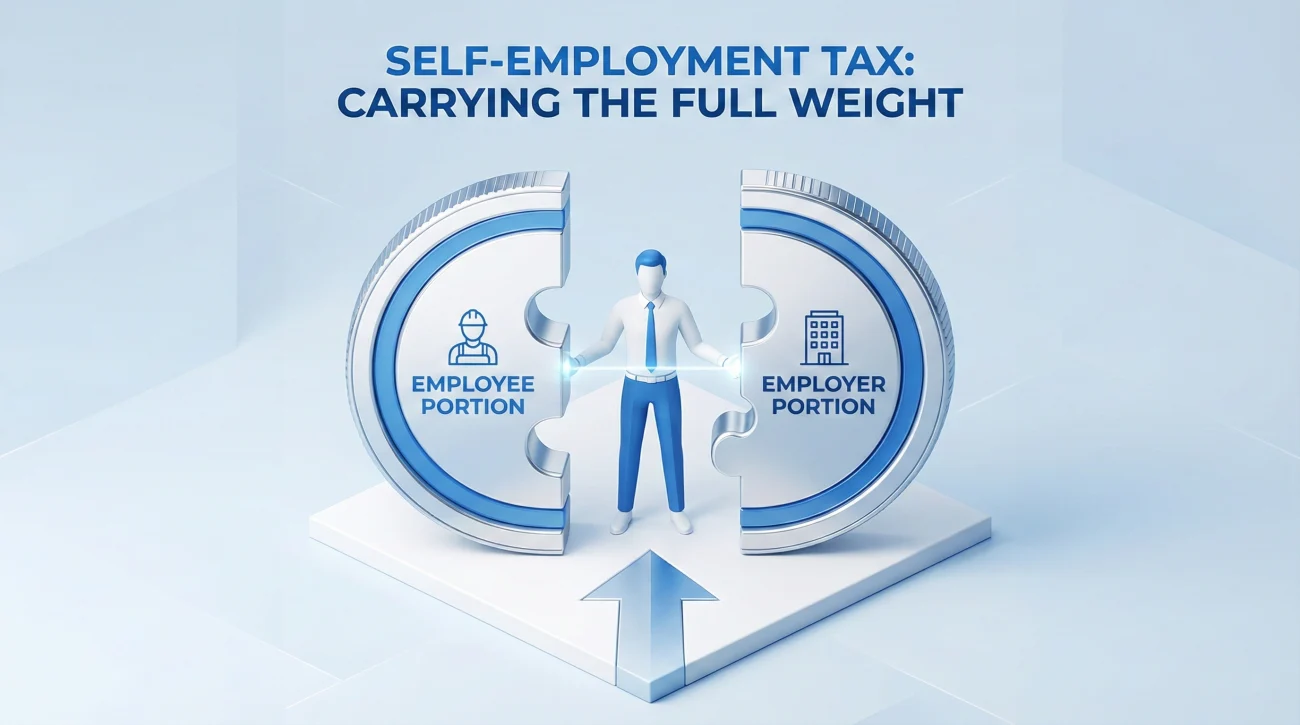
The phrase sounds like a punishment, but it’s basically the payroll taxes that were previously split between you and your employer. As a freelancer, you’re effectively both the worker and the employer, so you see the whole thing.
This is why your first year freelancing can feel like a “tax surprise.” People compare their new freelance income to their old salary, but forget that the structure of taxes is different. If you’re planning your exit, treat this as a non-negotiable line item – like rent.
What to do right now
- Decide on a “tax hold” percentage and keep it separate from your spending money.
- Assume the first year will be messier than you want, then build systems to make year two boring.
- If you’re unsure, over-save at first. It’s easier to relax later than to scramble.
Quarterly Estimated Taxes: The Part Nobody Mentions in the Motivational YouTube Videos

Freelancers often need to pay taxes throughout the year, not just at the end. That’s where estimated quarterly taxes enter the chat. The point isn’t to torture you – it’s to keep you from underpaying all year and getting hit with a big bill (and possible penalties) later.
If you’re coming from a W-2 world, this feels unnatural at first. You’re basically creating your own withholding schedule. The good news is that once you set it up, it becomes a recurring calendar task instead of a constant stress cloud.
A simple plan that works for most people
- Track income monthly (not “when you feel like it”).
- Set aside tax money from every payment the day you receive it.
- Put quarterly deadlines on your calendar and treat them like rent.
1099 vs W-2 Taxes: What Actually Changes
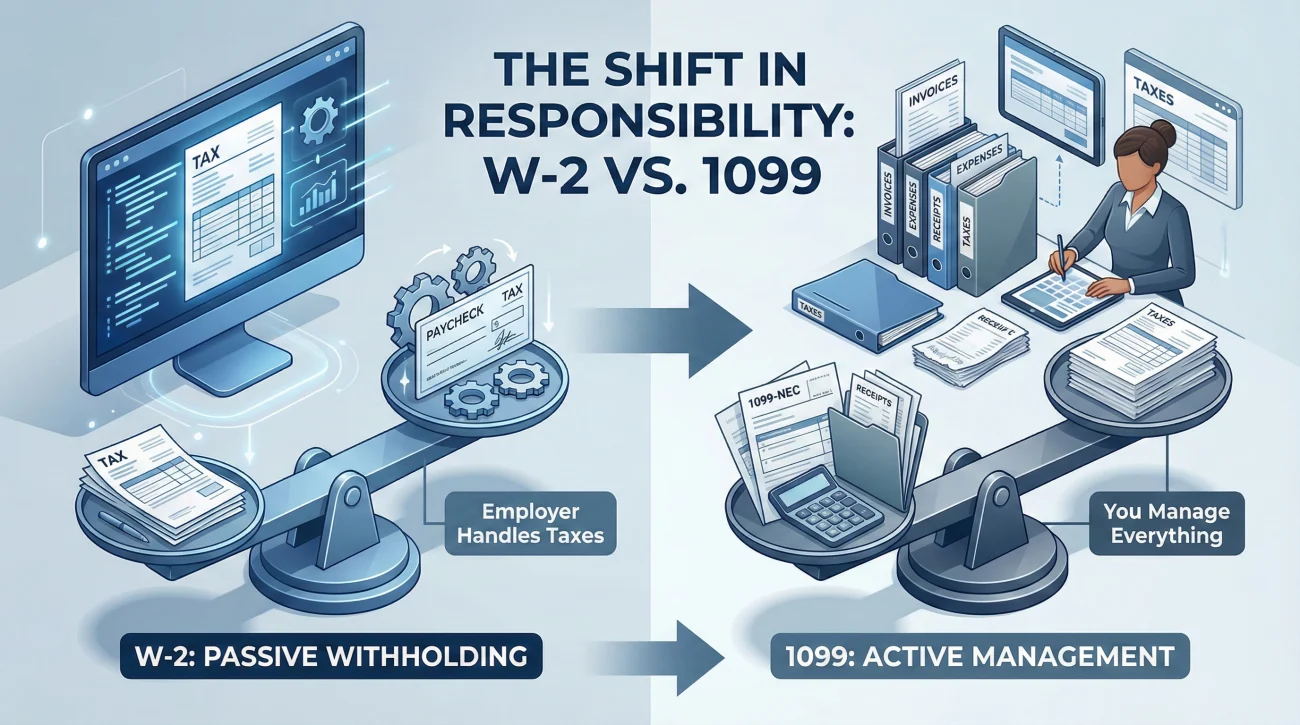
People use the phrase 1099 vs w2 taxes like it’s a mysterious financial upgrade. In reality, it’s a shift in responsibility. Your clients pay you. They don’t manage your withholding, benefits, or payroll tax split the way an employer does.
That means two practical differences:
- You’re responsible for tax planning instead of passively receiving a net paycheck.
- Your paperwork becomes your lifeline: invoices, payments, and expense records matter more than ever.
The freelancer who wins is not the one who “earns the most.” It’s the one who keeps clean records and stops taxes from becoming a quarterly panic ritual.
Freelancer Tax Deductions: The Safe Way to Think About Write-Offs
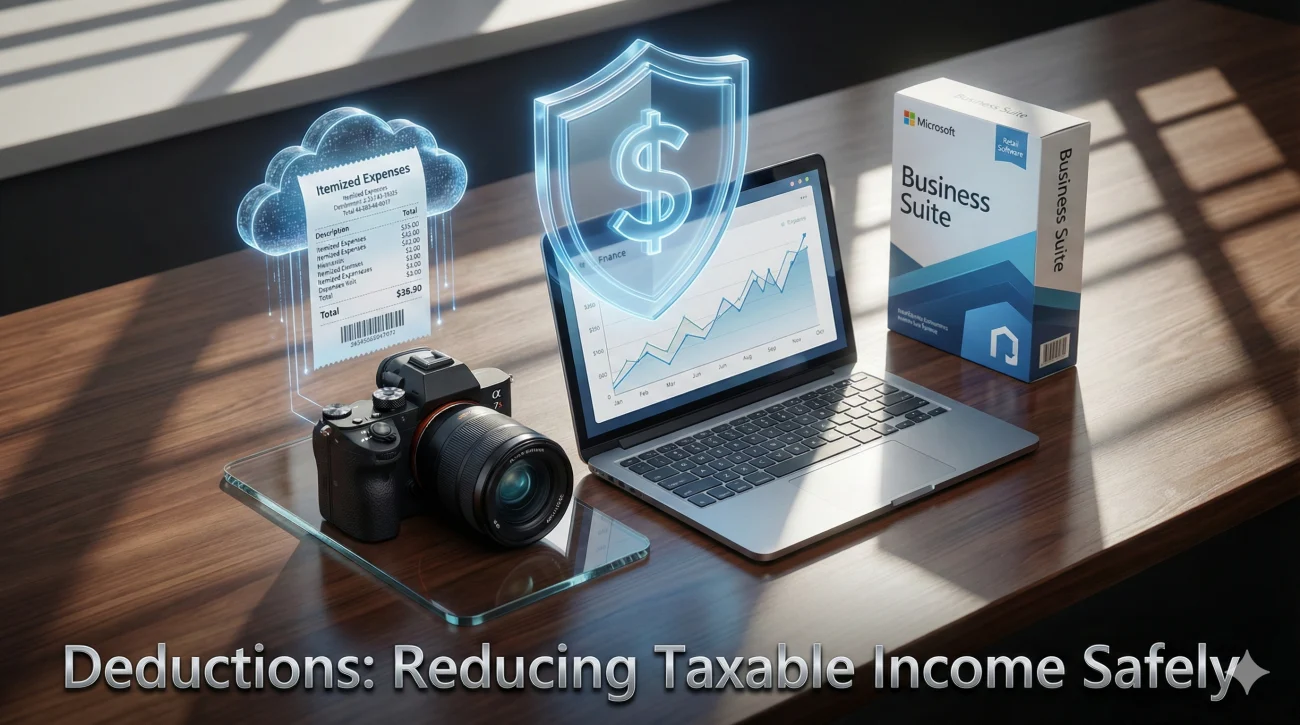
The internet loves the phrase “write-offs” like it’s free money. It’s not free money. It’s reducing taxable income by claiming legitimate business expenses. The key word is legitimate.
The safest approach to freelancer tax deductions is: only deduct what you can explain calmly and document cleanly. Don’t build your business plan around “how much you can deduct.” Build it around profitability, then use deductions as they naturally apply.
Common categories freelancers often track
- Software and tools needed for client work
- Work equipment used for business purposes
- Professional services (accounting, legal help, business banking fees)
- Business travel directly tied to work
- Education that’s clearly related to maintaining or improving your professional skills
The “paper trail rule”
If you can’t prove it, don’t count on it. Keep receipts, keep invoices, keep a clean category system. Most tax stress comes from messy records, not from taxes themselves.
The 45-Minute Setup Checklist That Prevents the Tax Nightmare
You don’t need a complicated finance stack. You need separation and consistency. This checklist is what turns “freelancing chaos” into “freelancing with adult supervision.”
| Setup step | What you do | Why it matters |
|---|---|---|
| Separate accounts | Open a dedicated business checking (and optionally savings) | Prevents mixing taxes with spending money |
| Tax holding bucket | Auto-transfer a % of every payment to “tax savings” | Makes taxes a system, not willpower |
| Simple bookkeeping | Track income/expenses monthly (spreadsheet is fine) | Reduces year-end panic and missed deductions |
| Invoice discipline | Invoice consistently, store paid invoices in one place | Creates clean income records and client clarity |
| Quarterly calendar | Add estimated payment dates + reminder buffer | Prevents late payments and “oops” penalties |
If You’re Quitting to Freelance, Your Resignation Plan Should Match Your Tax Plan
Taxes aren’t the only surprise when you leave a job. Health coverage, timing, and professionalism matter too. If your exit is sloppy, you may lose references, burn bridges, or create unnecessary stress right when you need stability. Keep your resignation boring and controlled. Start here: How to write a resignation email.
A clean “quit to freelance” sequence
- Build a runway (cash buffer) before you resign.
- Set up your tax system while you still have stable income.
- Confirm benefits timing and your last day logistics.
- Resign professionally, then transition your workload cleanly.
If you want the etiquette checklist for leaving without drama: Resignation etiquette.
❓ FAQ
💸 Why do freelance taxes feel so high compared to a salary?
Because taxes are no longer hidden inside withholding and employer contributions. As a freelancer, you see the full responsibility: your own withholding decisions, plus self-employment tax dynamics in many systems.
🗓️ Do I really need to pay quarterly estimated taxes?
In many cases, yes – especially if you have no withholding happening throughout the year. The practical goal is to avoid underpaying all year and getting hit with a big bill and potential penalties later.
📄 What’s the real difference in 1099 vs W-2 taxes?
The biggest difference is responsibility. W-2 work typically includes withholding and an employer share of payroll taxes. 1099-style freelance work usually requires you to manage withholding and handle self-employment tax mechanics yourself.
🧾 What are the safest freelancer tax deductions to start tracking?
Start with clean, clearly business-related expenses: essential tools/software, business services, and documented work expenses. The safest rule is to only deduct what you can explain and prove with records.
✅ What’s the fastest way to avoid the “tax nightmare” in year one?
Separate your money. A dedicated account and an automatic tax hold from every payment turns taxes into a system instead of a recurring panic event. Then track income/expenses monthly, not yearly.
Final Thoughts
The real tax nightmare isn’t freelancing. It’s freelancing with no system. Once you separate accounts, set a consistent tax hold, track records monthly, and respect quarterly deadlines, freelance taxes become manageable.
Freelancing can absolutely be worth it. Just don’t quit into the illusion that “it’ll work itself out.” Build the boring systems first – then enjoy the freedom without the financial ambush.
⚠️ Legal Disclaimer: The resignation templates, email samples, and professional guidance provided in this guide are for informational purposes only and do not constitute legal advice. Employment laws and contract requirements vary by jurisdiction and individual circumstances. Please review your employment agreement and consult your HR department and/or a qualified attorney to ensure compliance with applicable laws and policies.