
- Core idea: A manager resignation is a team event, so the real job is reducing ambiguity before you go.
- Timing matters: Think in two timelines (Decision timeline, Confidence timeline) and pick a date that lowers confusion, not a “perfect” week.
- Communication sequence: Tell leadership first, then HR, then key partners, then direct reports so nobody hears it through rumors.
- Transition plan that works: Leave five artifacts (Stakeholder map, Decision log, Ownership table, 30/60/90 view, Context memo) so work keeps moving.
- How to exit well: Avoid over-explaining and under-communicating, use calm templates plus a handover checklist to protect trust and relationships.
A Manager’s Exit Is a Team Event
A manager resignation rarely stays contained to one inbox. Even if you’re leaving for a great reason, your team will feel it as uncertainty: “Who owns my priorities now? Who approves decisions? What happens to our roadmap?” The difference between a clean exit and a messy one is not how fast you leave – it’s how deliberately you reduce ambiguity before you go.
This guide is built for leaders who don’t want to vanish in silence or deliver a dramatic farewell speech. You’ll learn how to communicate the change with steadiness, create a transition plan that protects your people, and leave behind a system that makes your last day feel like a handoff – not a collapse.
Choose Your Timing Like a Shock Absorber

When you resign as an individual contributor, your departure can be inconvenient. When you resign as a manager, it can change the operating temperature of a whole group. That’s why timing matters more than you think – not for the company’s comfort, but for your team’s stability.
Two timelines you should think in
Leaders often plan their resignation around their own start date, relocation, or personal deadlines. Add two extra timelines that are easy to miss:
- 🧭 Decision timeline: What decisions will stall if you leave abruptly (budget approvals, hiring, client escalations, roadmap calls)?
- 🧱 Confidence timeline: When does your team need reassurance most (end of quarter, a launch, a reorg rumor, performance cycle)?
If you can choose a date that avoids maximum confusion, you don’t just look professional – you protect the people who trusted you.
Don’t “wait for the perfect moment” forever
There’s never a perfectly calm week. The goal is not perfection; it’s reducing blast radius. If you’re leaving during a high-pressure phase, you can still exit well – just plan for extra clarity, extra documentation, and a cleaner chain of command before your last day.
How to Tell People Without Creating Panic
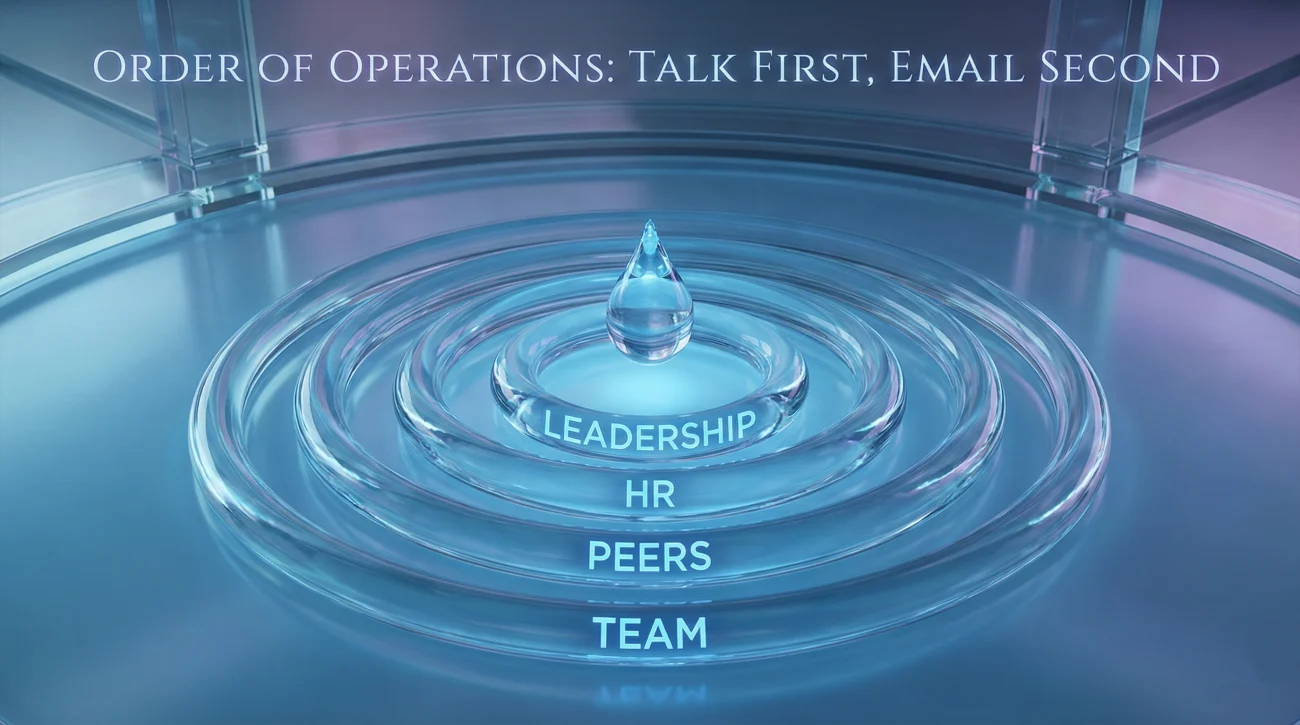
You don’t need a dramatic announcement. You need a sequence. The order matters because it controls rumors, protects trust, and prevents your team from hearing it in the worst possible way.
A simple, sane order of operations
- 1) ✅ Tell your manager / leadership first (and align on the plan)
- 2) ✅ Tell HR (timing, last day, admin steps)
- 3) ✅ Tell peers / cross-functional partners who depend on you
- 4) ✅ Tell your direct reports (with next-steps, not just news)
What you say to the team
The hardest part is telling team you are leaving without accidentally turning your announcement into a therapy session or a vague mystery. Keep it structured:
- State the decision clearly (no suspense).
- Share only as much “why” as you’re comfortable owning publicly.
- Name what stays stable (priorities, escalation path, weekly rhythms).
- Commit to a transition plan (and follow through).
If you want a quick gut-check on tone and professionalism, skim this etiquette guide before you send anything that will live forever in Slack screenshots.
Build a Leadership Transition Plan People Can Actually Use
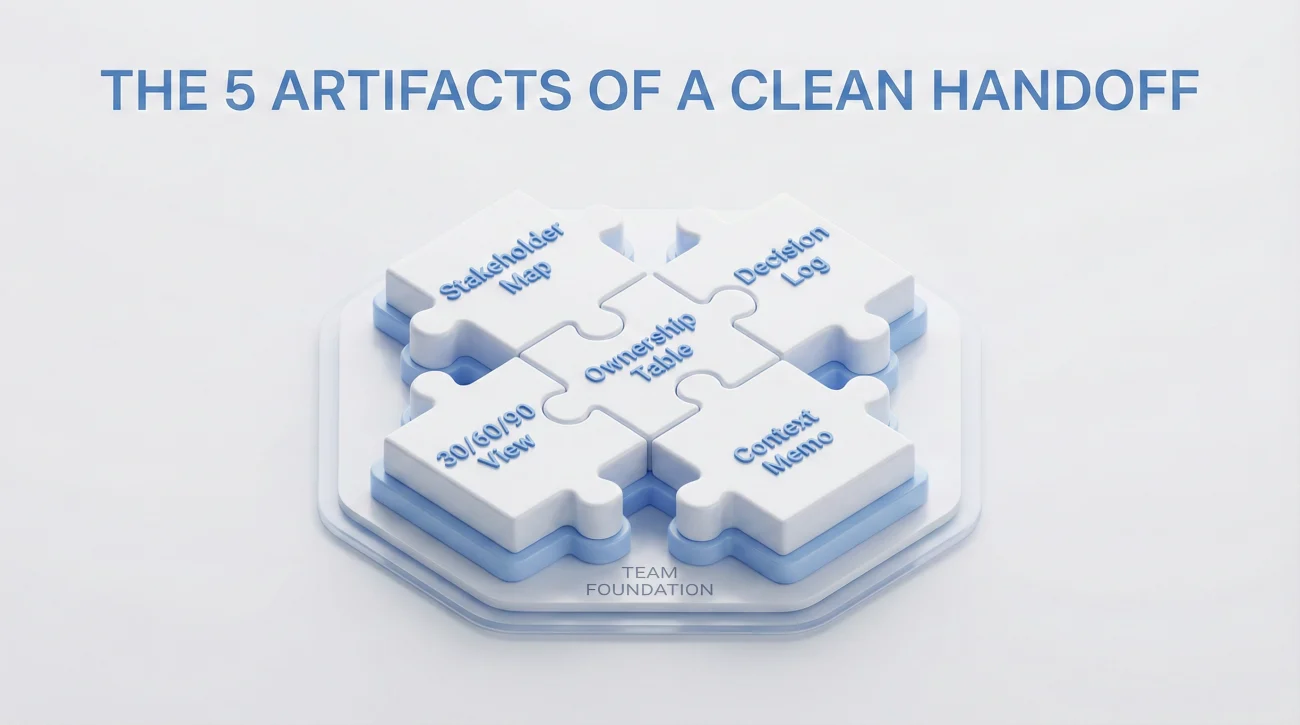
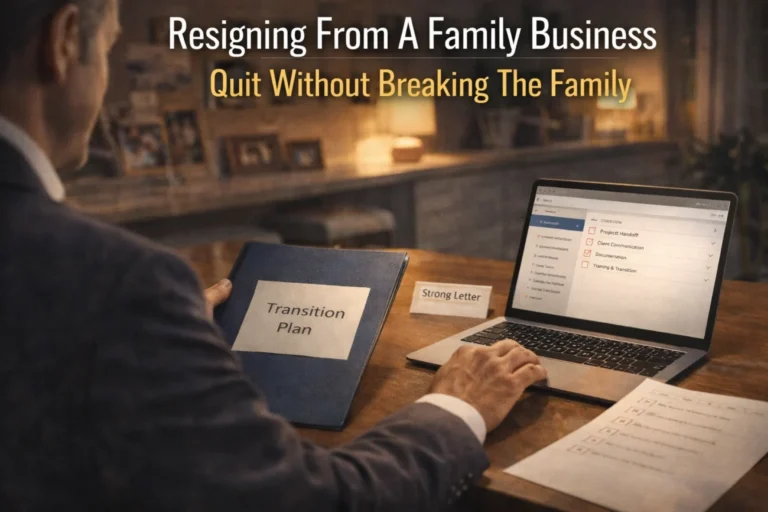
A good leadership transition plan isn’t a 30-page document nobody reads. It’s a set of practical artifacts that answer the questions your absence will create.
The five artifacts that prevent chaos
- 🗺️ Stakeholder map: Who depends on your team, what they care about, and how to reach them.
- 📌 Decision log: “We chose X because Y.” Include the tradeoffs so the next leader doesn’t re-litigate everything.
- 🧩 Ownership table: What’s owned by whom – projects, approvals, vendor relationships, budgets.
- 📅 30/60/90 view: Key deadlines, risks, and what “good” looks like over the next quarter.
- 🧠 Context memo: The unwritten rules: team strengths, known landmines, what motivates each person.
If you don’t have a successor yet
Many managers resign before a replacement is identified. In that case, you’re not handing off to a person – you’re handing off to a system. Focus on clarity: what can be paused, what cannot, and who has authority for what decisions starting immediately after your exit.
Templates You Can Copy Without Sounding Like a Robot
This section gives you two messages: one “up” (leadership/HR) and one “down” (your team). Keep them consistent. Your team doesn’t need conflicting narratives; they need stability.
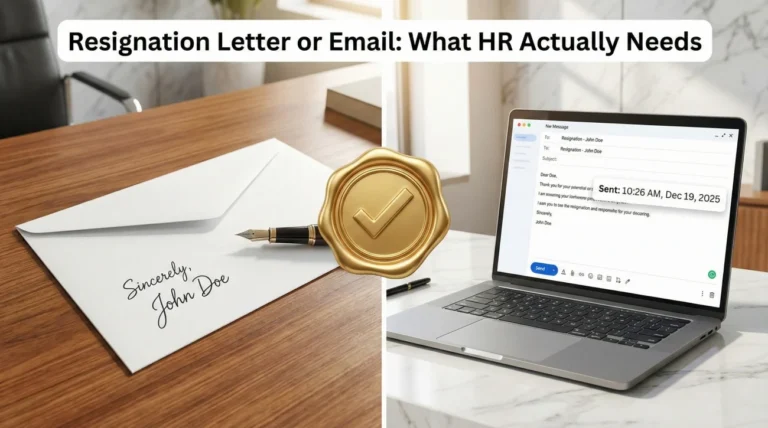
Email to leadership / HR
Subject: Notice of Resignation and Transition Plan
Hi [Name],
I’m writing to formally share my decision to resign from my role as [Role]. My intended last working day is [Date], based on my notice period.
I want this transition to be smooth for the team. Over the next [X] weeks, I will complete a handover package covering active projects, key stakeholders, upcoming deadlines, and recommended interim ownership. I’m also happy to support the communication plan for the team once we align on timing and next steps.
Please let me know the preferred process for formal documentation and any transition requirements you’d like prioritized.
Thank you,
[Your Name]
Message to your direct reports
Subject: Team Update and What Happens Next
Hi Team,
I want to share an update with you directly. I’ve made the decision to leave my role, and my last day will be [Date].
I know leadership changes can create uncertainty, so I want to be very clear about what stays stable. Our current priorities remain [Project A / Project B], and I’m working with [Leader/Interim Contact] on the transition plan so decisions and support don’t stall.
Between now and my last day, I’ll document ownership, timelines, and context for all active work, and I’ll meet with each of you to make sure your responsibilities and escalation path are clear. If you have questions or concerns, please bring them to me – I’d rather address them directly than let rumors fill the gaps.
Thank you for the work you’ve done and the way you’ve shown up for each other. I’m proud of what we’ve built.
[Your Name]
A practical handover checklist
Use this manager handover checklist to make sure your transition is real, not symbolic:
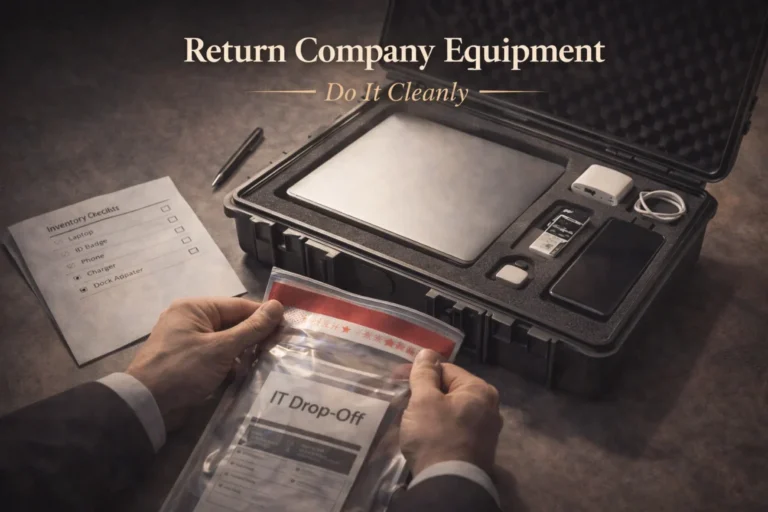
- ✅ Confirm last day, access timelines, and approvals (finance, HR, IT).
- ✅ Write a one-page “How the team runs” SOP: meetings, rituals, decision rules.
- ✅ Document project status with owners, risks, and next actions.
- ✅ Transfer vendor/client relationships with warm intros and context notes.
- ✅ Lock down critical passwords and access in the approved system (not in a personal doc).
- ✅ Clarify interim escalation: who approves time off, who resolves blockers.
- ✅ Close the loop with partners: what will change, what will not.
If you also need a clean message for the “work handoff” portion, you can borrow structure from a handover plan template and adapt it to your team’s workflow.
Lead Well on the Way Out

The last impression you leave as a leader becomes a story your team repeats – sometimes for years. If you want to exit with respect (and preserve your network), focus on behavior more than speeches.
Avoid the two classic manager mistakes
- Over-explaining: People don’t need every detail. They need clarity, direction, and calm.
- Under-communicating: Silence creates rumors. Even a short plan beats vague reassurance.
Make your departure a professional upgrade
Resigning as a manager can actually strengthen your reputation if you leave behind order. The win is simple: your team can keep moving, your peers aren’t blindsided, and leadership sees you as someone who finishes responsibly – even when you’re leaving.
❓ FAQ
🧭 Should I tell my team before leadership announces it?
Usually no. First align with leadership on timing and messaging so you don’t create conflicting narratives. Once the plan is set, tell your direct reports early enough that they hear it from you – not through rumors.
⏰ How much notice should a manager give?
Follow your contract and company norms, but consider your team’s operating reality. If you can offer extra transition support without delaying your move, it helps. If you can’t, focus on tight documentation and a clear ownership plan.
🤐 Do I have to explain why I’m leaving?
No. You can share a high-level reason (“new opportunity,” “personal reasons,” “career change”) without details. What matters most is clarity on timing and continuity for the team.
🧩 What if there’s no successor and everything depends on me?
That’s exactly why you should leave behind artifacts: ownership tables, decision logs, and a short SOP. You’re not obligated to fix structural dependency alone, but you can reduce immediate risk by creating a system others can step into.
🌱 How do I leave without burning bridges with my direct reports?
Be calm, be clear, and be present during the transition. Offer 1:1 conversations, document what they need, and avoid negative commentary about leadership. The tone you model becomes the tone they remember.
Final Thoughts
A manager’s job isn’t just to deliver results – it’s to create stability while change happens. Your exit is one more moment where that leadership shows.
If you communicate in the right order, document the right context, and leave behind a usable system, a manager resignation doesn’t have to feel like abandonment. It can feel like a handoff: clear, professional, and respectful to the people who keep the work moving after you’re gone.
⚠️ Legal Disclaimer: The resignation templates, email samples, and professional guidance provided in this guide are for informational purposes only and do not constitute legal advice. Employment laws and contract requirements vary by jurisdiction and individual circumstances. Please review your employment agreement and consult your HR department and/or a qualified attorney to ensure compliance with applicable laws and policies.