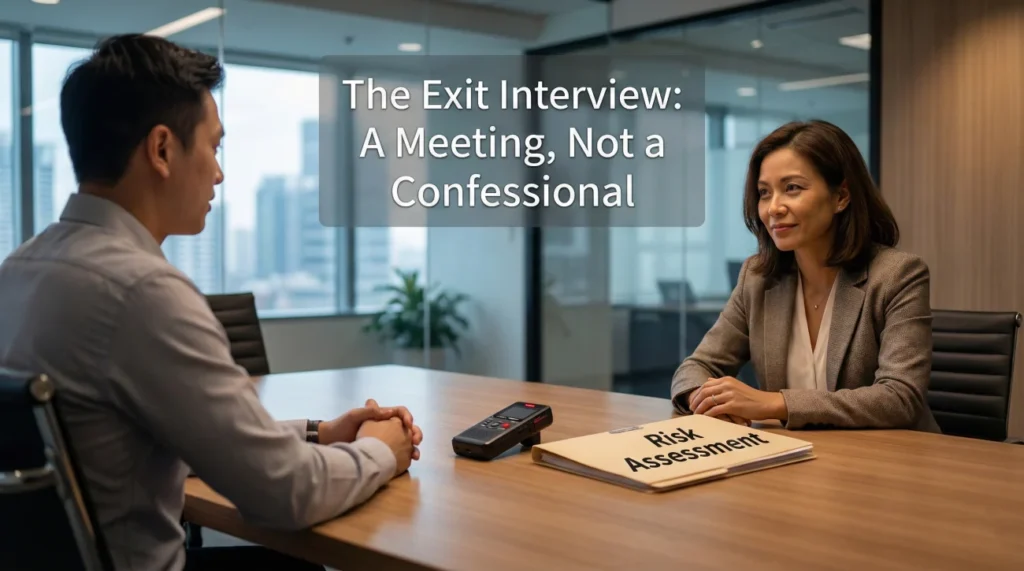
- Reality: Exit interviews are a risk assessment for the company, not a safe space to vent.
- Tactic: HR may use a friendly tone to collect info on legal exposure, insider risks, and manager liability.
- Traps: “Why are you really leaving,” “Who else is unhappy,” and “Culture fit” are designed to pull emotional details.
- Best play: Keep answers boring and forward-looking, using pull factors instead of toxic labels or complaints.
- Power move: You can decline politely and focus on a clean handover to protect your future references.
The Final Corporate Test
You have resigned. The notice period is almost over. Then, a calendar invite pops up from Human Resources: “Exit Interview.” They frame this meeting as a benevolent opportunity for you to “share your thoughts,” “help us improve,” and “leave your mark.” It sounds inviting. It feels like a safe space to finally unload years of frustration.
Do not be fooled. This is one of the most common exit interview traps in the corporate world.
The reality is harsh but simple: The moment you hand in your resignation, you are no longer an asset to be nurtured; you are a potential risk to be managed. HR is not your therapist, and the exit interview is not a confessional. It is a risk assessment meeting designed to protect the company, not to vindicate you.
Understanding the “Friendly Cop” Routine
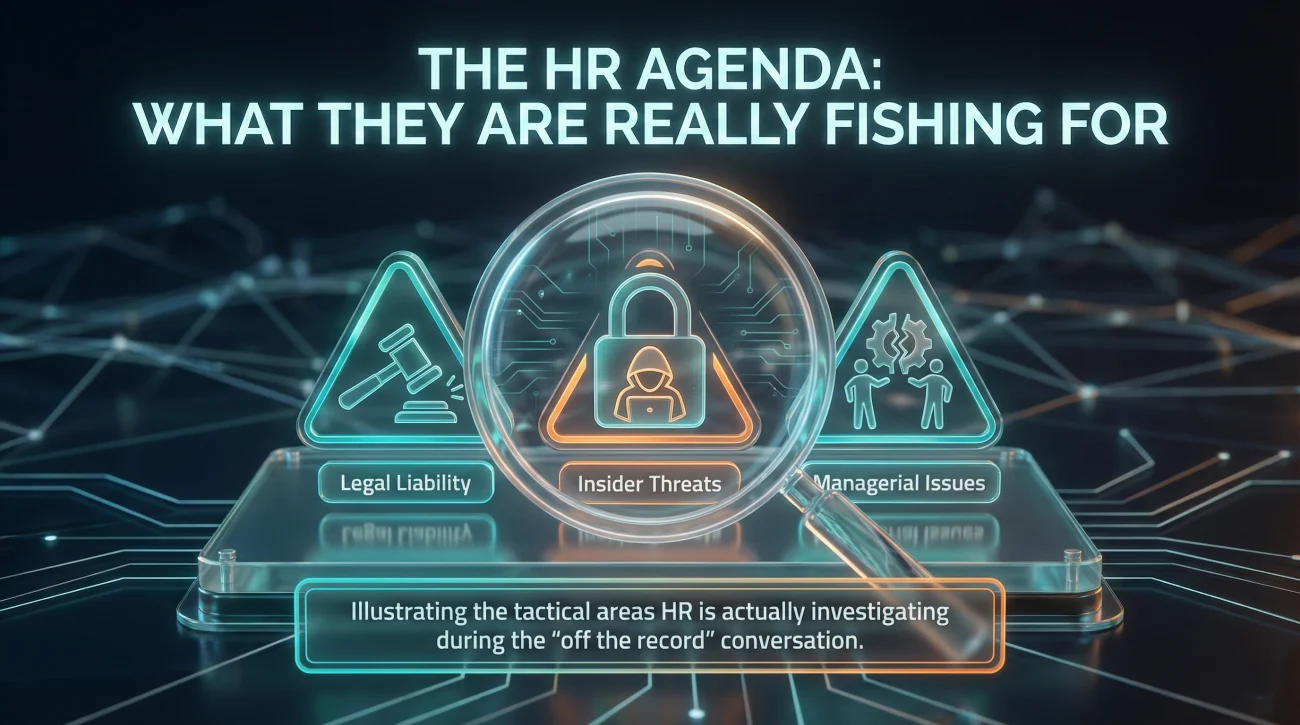
To navigate this meeting successfully, you must understand the person sitting across the table. The HR representative is likely being warm, empathetic, and encouraging. They might say things like, “This is off the record,” or “We really want to fix the toxic culture in that department.”
This is a tactical approach to lower your defenses. They are fishing for information in three critical areas:
- 🚩 Legal Liability: Are you leaving because of harassment, discrimination, or unpaid wages? If so, they need to prepare a legal defense immediately.
- 🚩 Insider Threats: Are you taking clients, data, or other employees with you?
- 🚩 Managerial Issues: Is a specific manager a liability? (Note: They rarely fire the manager based on your word; they just document the complaint to cover themselves).
When you ask yourself, “should i be honest in exit interview sessions,” remember: anything you say goes into a file. That file doesn’t disappear. It can be pulled up years later if you ever apply for a role again (boomerang employee) or if a future employer calls for a “backchannel” reference check.
3 Common Traps and How to Defuse Them
The questions asked in these interviews are designed to trigger emotional responses. Here is how to spot the trap and pivot to a safe, diplomatic answer.

Trap #1: The “Why Are You Really Leaving?” Bait
The Trap: They push past your polite answer (“better opportunity”) to find dirt. “Come on, we know things have been rough with [Manager Name]. You can tell me.”
Your Strategy: Do not badmouth your boss. Even if they are incompetent, criticizing them makes you look difficult or unmanageable.
What to Say:
“My decision is purely about the new opportunity. It offers a specific career path in [Skill/Field] that I’ve been wanting to pursue for a long time. My time here prepared me for this step, and I’m grateful for that.”
Trap #2: The “Who Else is Unhappy?” Snitch Trap
The Trap: “Is there anyone else on the team who is feeling frustrated? We want to make sure we retain them.”
Your Strategy: Never speak for others. It is not your job to be the team’s union representative on your way out. It violates trust with your former colleagues.
What to Say:
“I can only speak to my own experience. The team is talented, and I’m sure they would appreciate a direct conversation about their individual career goals.”
Trap #3: The “Culture Fit” Question
The Trap: “What did you dislike about the culture here?”
Your Strategy: Do not use words like “toxic,” “chaotic,” or “political.” Frame negatives as “style differences.”
What to Say:
“It’s a very fast-paced, reactionary environment. While that works for some, I find I thrive in environments that are more structured and process-oriented.”
The “Boring” Strategy

The best exit interview is a boring one. You want the HR rep to check the box marked “Standard Resignation” and move on. To achieve this, prepare your answers for standard exit interview questions beforehand focusing entirely on “Pull Factors.”
| Push Factors (DON’T SAY) | Pull Factors (DO SAY) |
|---|---|
| “I’m leaving because the pay here is insulting.” | “The new role offers a compensation package that better aligns with my current financial goals.” |
| “My boss micromanages everything I do.” | “I am moving to a role that offers more autonomy and ownership over project strategy.” |
| “The workload is burning me out.” | “I’m looking for a role with a hybrid schedule that allows for better work-life balance.” |
The Ultimate Power Move: Declining
Many employees do not realize that the exit interview is almost always voluntary. You are not legally required to attend (unless stated in your contract, which is rare).
If you are leaving on bad terms and fear you might lose your temper, or if you simply don’t trust the organization, declining is the safest option. It prevents you from saying something you might regret.
Subject: Re: Exit Interview Request
Hi [HR Name],
Thank you for the invitation to share my feedback.
I have given this some thought, and I prefer to let my resignation letter and my performance record speak for my time at [Company]. I want to dedicate my remaining days exclusively to ensuring a seamless handover of my projects to [Colleague Name].
I do not feel an exit interview is necessary in this instance.
Best regards,
[Your Name]
❓ FAQ
🤐 Is the exit interview confidential?
No. Never assume confidentiality. HR works for the company. Your comments can be shared with your manager, senior leadership, or legal counsel. Assume anything you say will be read by the person you are complaining about.
📝 Can I bring a witness or lawyer?
You can ask, but it turns the meeting into a hostile legal proceeding. If you feel you need a lawyer, you should probably be communicating through legal letters, not an exit interview.
📉 Can a bad exit interview hurt my reference?
Yes. While big companies often only confirm dates of employment, unofficial “backchannel” references happen all the time in specific industries. Being labeled “difficult” or “toxic” in your exit file can follow you.
💡 What if I have genuinely good feedback?
If you love the company and just outgrew the role, share the praise! Compliment specific mentors. This strengthens your network and keeps the door open for a future return.
⏳ When is the best time to schedule it?
Schedule it for your very last day, preferably in the afternoon. This minimizes the awkwardness of seeing people after you have critiqued them (if you slipped up), and allows you to leave immediately after.
Final Thoughts

It is natural to want to be heard. It is natural to want justice for the wrongs you endured. But the exit interview is not the place for it.
Your sole objective in this meeting is to protect your professional future. Dodge the hr traps, keep your answers bland and forward-looking, and save your real feelings for drinks with your friends. The best revenge is not a scathing exit review – it is a successful career elsewhere.
⚠️ Legal Disclaimer: ResignSmartly provides general informational guidance about resignation, workplace communication, notice periods, handovers, and career transitions. Content does not constitute individualized legal advice. Employment laws, contracts, workplace policies, and individual circumstances vary, so review the requirements that apply to your situation and consult an appropriate qualified professional when needed.