
- Reality: Quitting without another offer can be a strategic reset, but only if you treat it like a planned transition, not an impulse.
- Money math: Your real risk is cash, so calculate a survival runway first, with 3 months as bare minimum and 6 months as the safer standard for most people.
- Resume gap: Recruiters care less about the gap itself and more about the story and actions during it, so build a clean narrative and show progress.
- Health call: If the job is damaging your ability to function, leaving can be the lower-risk choice, but you still need professional exit etiquette.
- First week: The goal is structure, with decompression, admin cleanup, light networking, a skill audit, and real rest to avoid spiraling.
The Great Leap: Resigning Without a Safety Net
There is a specific kind of silence that follows the moment you hit “send” on a resignation email when you don’t have another offer waiting. It is a mix of absolute terror and intoxicating freedom. For some, quitting without a job is a reckless mistake born of impulse; for others, it is a calculated rescue mission for their mental health.
In a world that prizes “hustle culture” and back-to-back employment, the idea of having a gap on your resume feels like career suicide. We are told never to leave a job until we have found the next one. But what happens when the current job is so toxic, so stagnant, or so draining that you no longer have the energy to even look for something else?
This guide is not a “rah-rah” encouragement to quit blindly. Instead, it is a pragmatic, honest look at the mechanics of resigning without a backup plan. We will cover the math you need to do, the way recruiters actually view gaps, and how to spend your first seven days of “freedom” so you don’t spiral into a crisis of identity.
The Math of Freedom: The Emergency Fund for Quitting
The biggest risk of quitting with no job lined up isn’t actually the gap on your resume – it’s the depletion of your bank account. Financial stress is the quickest way to turn a “brave career break” into a desperate hunt for any job, often leading you right back into another toxic environment.
The 3 vs. 6 Month Survival Formula
Before you hand in your notice, you need to calculate your “Runway.” This is the amount of time you can survive without a single dollar coming in. Here is the breakdown of how to audit your emergency fund for quitting:
| Fund Type | Duration | Risk Level | Who is it for? |
|---|---|---|---|
| The Scrappy Fund | 3 Months | High | Single, low debt, high-demand skills (e.g., Software Dev). |
| The Strategic Fund | 6 Months | Moderate | The “Gold Standard” for most professionals. Covers mid-career pivots. |
| The Pivot Fund | 9-12 Months | Low | Those changing industries entirely or with high fixed costs (mortgage, kids). |
Do not calculate based on your current lifestyle. Calculate based on your “survival lifestyle.” If you don’t have at least three months of survival expenses saved, you aren’t ready to quit. You are just jumping from a frying pan into a fire.
The “Resume Gap” Myth: What Recruiters Really Think
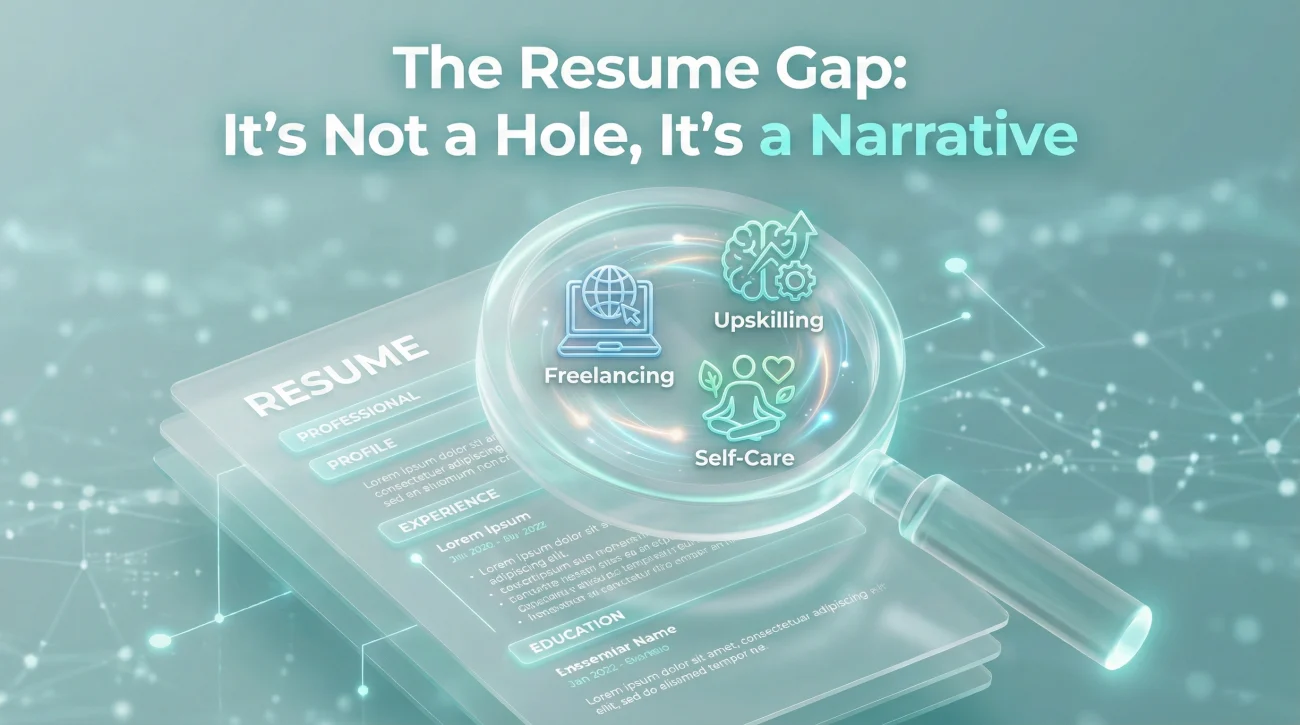
One of the primary career break risks we fear is being “unhireable.” We imagine recruiters looking at a three-month gap and assuming we were fired or lazy. However, the post-pandemic labor market has shifted significantly.
How to Frame Your Gap
Modern recruiters are less concerned that you took a break and more concerned with what you did during it. If you spend four months playing video games, that is a red flag. If you spend four months taking a specialized certification, freelancing, or handling a family matter, that is a narrative.
When you eventually interview for your next role, you need a “Reason for Leaving” that doesn’t sound bitter. Instead of saying “I quit because I hated it,” you say: “I reached a point where I wanted to focus 100% of my energy on finding a role that aligned with my new direction in [Industry], so I made the decision to move on.” Confidence is the antidote to the gap fear.
Mental Health vs. Money: When to Prioritize the Soul

We’ve discussed the math, but we must discuss the soul. There are moments when quitting without a job is the only logical choice for your survival. If you are experiencing physical symptoms of stress – chronic shingles, hair loss, daily panic attacks – the “financial risk” of quitting is often lower than the “health risk” of staying.
Money can be earned back. Your health, once broken, takes years to repair. If your job has reached a level of toxicity where you can no longer function as a human being, you have already lost your “career.” At that point, leaving without a backup is not a suicide mission; it’s a strategic retreat. However, even in a retreat, you must follow proper resignation etiquette to ensure you don’t set your future network on fire on your way out.
The First 7 Days: Strategy for the Newly Unemployed

The most dangerous time for someone who has just quit is the first week. Without the structure of a 9-to-5, your ego can take a massive hit. You wake up on Monday morning with no emails to answer, and the silence can be deafening.
Your “Freedom” Schedule
To avoid the “Post-Quit Depression,” you must create a new structure immediately. Quitting with no job lined up requires more discipline, not less. Here is a recommended schedule for your first week:
- 🕒 Days 1-2: The Decompression. Sleep. Walk. Do not look at LinkedIn. Clear the cortisol out of your system.
- 🕒 Day 3: The Admin Clean-up. Organize your files, update your portfolio, and ensure your finances are automated.
- 🕒 Day 4: The Networking Outreach. Send 5 “Catch-up” emails to people you actually like. Don’t ask for a job yet; just reconnect.
- 🕒 Day 5: The Skill Audit. Identify one gap in your resume and find a course to fill it.
- 🕒 Days 6-7: The Weekend. Truly rest. You aren’t “unemployed” – you are “in transition.”
❓ FAQ: Surviving the Leap
💸 Will I qualify for unemployment if I quit without a job?
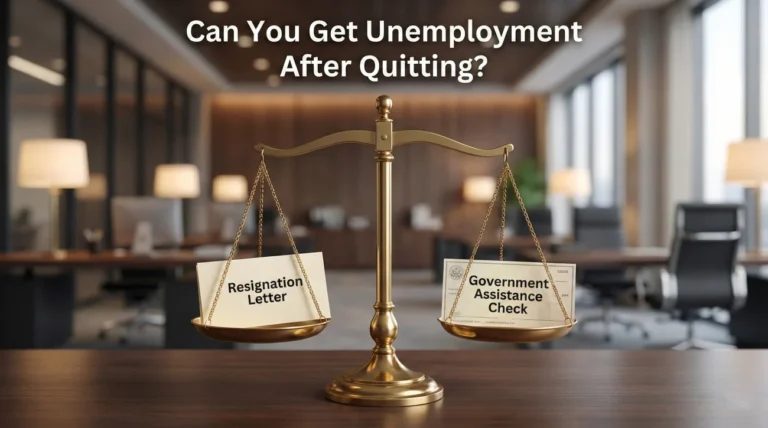
In most jurisdictions, no. Unemployment benefits are typically reserved for those who are laid off or fired through no fault of their own. If you quit voluntarily, you are usually on your own financially. This is why the emergency fund for quitting is non-negotiable.
🤝 Should I tell my current boss I don’t have a new job?
You are under no obligation to disclose your next move. If they ask, you can simply say: “I’ve decided to take some time to focus on personal projects and professional development before my next chapter.” It sounds sophisticated and planned, even if you’re actually terrified.
📉 How long is “too long” for a career gap?
Gaps of 3-6 months are very common and rarely raise eyebrows today. Gaps over a year require a more robust explanation, such as caregiving, travel, or career pivoting. The key is to show that you didn’t remain stagnant during that time.
🆘 What if I run out of money before I find a job?
This is the career break risk materialized. You must have a “trigger point” – a date on the calendar where, if you haven’t found your “dream job,” you start applying for “survival jobs” (freelancing, retail, consulting) to keep the lights on.
📝 What should I write in my resignation letter if I’m quitting to nothing?
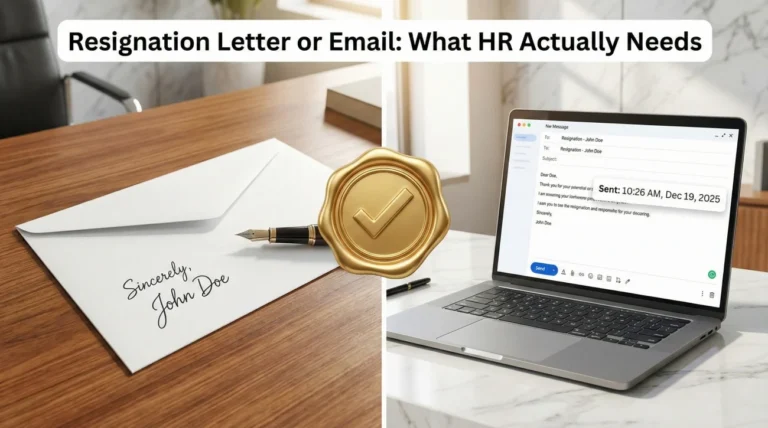
Keep it simple and professional. You do not need to mention that you are “unemployed.” Use a standard resignation letter template and focus on your last day of work. The “why” is for the exit interview, not the letter.
Final Thoughts: Brave Move or Career Suicide?

So, is quitting without a job career suicide? Only if you do it without a plan. If you have the savings, the discipline to maintain a routine, and a clear narrative for your gap, it can be the best decision you ever make. It allows you to search for your next role from a place of choice rather than a place of desperation.
Remember, your job is what you do, not who you are. If the “who you are” part is being destroyed by the “what you do” part, it’s time to go. Trust your math, trust your gut, and don’t look back.
⚠️ Legal Disclaimer: ResignSmartly provides general informational guidance about resignation, workplace communication, notice periods, handovers, and career transitions. Content does not constitute individualized legal advice. Employment laws, contracts, workplace policies, and individual circumstances vary, so review the requirements that apply to your situation and consult an appropriate qualified professional when needed.